
Key Facts
- A short‑lived annual herb in the nightshade family.
- Produces small white star shaped flowers followed by small round berries.
- Commonly treated as an agricultural weed and invasive in disturbed sites.
- Spreads primarily by seed including contaminated crop seed and animal dispersal.
- Tends to establish on bare or disturbed ground and in open sunny areas.
- Contains solanaceous alkaloids that can be toxic if eaten by livestock or pets.
- Managed by crop hygiene, hand pulling before seed set, and seed cleaning.
Hairy Nightshade (Solanum physalifolium) is a short lived annual in the nightshade family that commonly appears in disturbed and agricultural ground. It produces small white star shaped flowers followed by small round berries and contains alkaloids that can be toxic if eaten by animals.
Identification
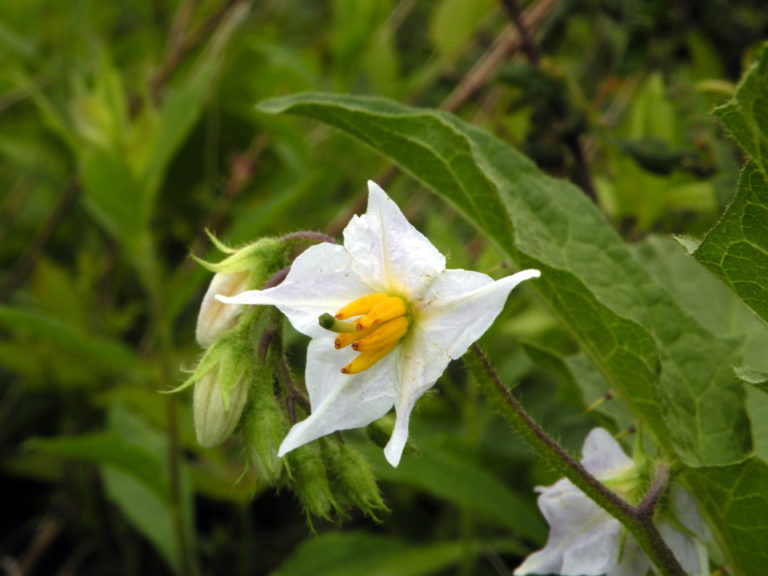
This plant is an erect annual herb typically reaching about 20 to 60 centimetres tall when mature. It bears small white star shaped flowers that develop into small round berries. Plants usually occur as individual stems or loose patches rather than dense mats which helps separate it from spreading perennial weeds.
Where it appears and best uses
Hairy Nightshade establishes on bare or disturbed ground and prefers open sunny sites. It is treated as an agricultural weed and is not recommended for intentional planting in home gardens. In cultivated ground the primary role is as a species to manage to protect crops and pastures rather than a useful ornamental.
Planting and propagation
Propagation is almost entirely by seed. Seed spreads in contaminated crop seed and on machinery and is carried by livestock and birds. Seedlings establish best on exposed soil in warm seasons so preventing bare soil and cleaning incoming seed lots are the main ways to limit new infestations.
Watering and soil
Hairy Nightshade tolerates a wide range of soils and often grows where fertility and compaction vary. It prefers well drained conditions and waterlogged soils reduce establishment. In garden beds improving cover and drainage reduces seedling survival while persistent irrigation of bare patches can encourage emergence.
After flowering and seed control
Control focuses on preventing seed set. Hand pull or remove plants before berries mature and dispose of plant material so berries cannot ripen and spread. For larger areas promote crop hygiene and clean seed to reduce introduction. Repeated removal while flowering continues will deplete local seedbanks over time.
Managing spread and toxicity
Hairy Nightshade contains solanaceous glycoalkaloids that can cause gastrointestinal upset and sometimes neurological signs in livestock and pets if eaten. Keep animals away from infested areas and remove plants before berries develop. Clean machinery, clothing and seed lots to avoid accidental transport of seed between fields and gardens.
Frequently asked questions
- How fast does Hairy Nightshade grow?
- It is a fast maturing annual that commonly reaches its mature height within a single growing season. Speed varies with light soil and moisture but plants often establish quickly on bare, sunny ground.
- Are the berries poisonous?
- Yes. The plant contains glycoalkaloids and berries and green plant parts can be toxic to livestock and pets. Avoid ingestion and remove plants from areas where animals graze.
- How do I control it in a vegetable bed?
- Remove seedlings and flowering plants before seed forms, keep beds mulched or planted to reduce bare soil, and inspect incoming seed for contamination to prevent new introductions.
- Will it invade lawns and garden beds?
- It can establish in bare or thin turf and open beds but does not form dense mats. Maintaining healthy cover and promptly removing seedlings stops local infestations.
- Can I save seeds to grow it intentionally?
- Because it is a common agricultural weed and has toxic parts, intentional propagation is not advised. Where it is present focus on removal and preventing seed distribution.
Related Plants


Mentioned In (1)
Plants
22 Poisonous Plants in Montana
When consumed, poisonous plants can cause disease, metabolic abnormalities, mortality, or other health issues in animals. This plant strain affects…