
Key Facts
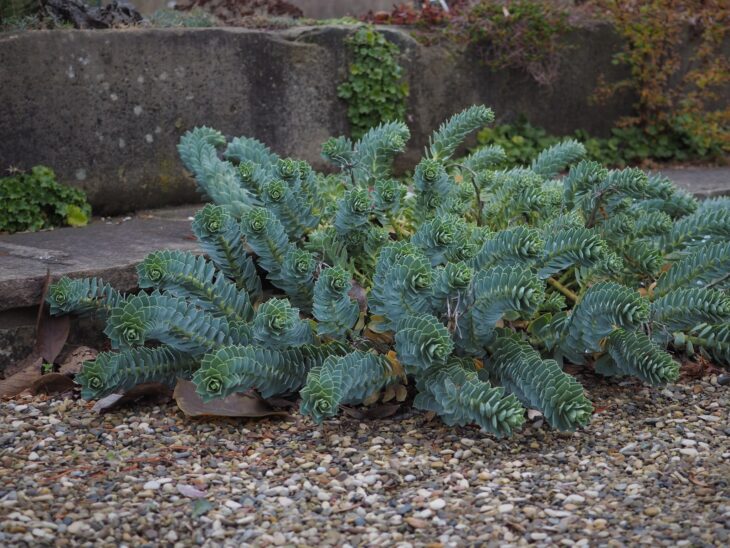
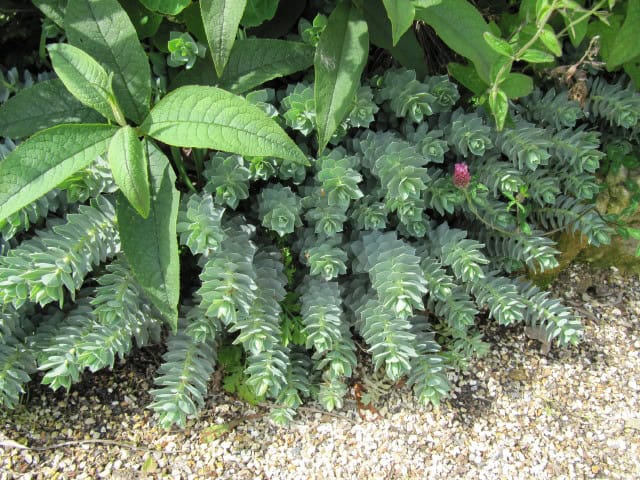
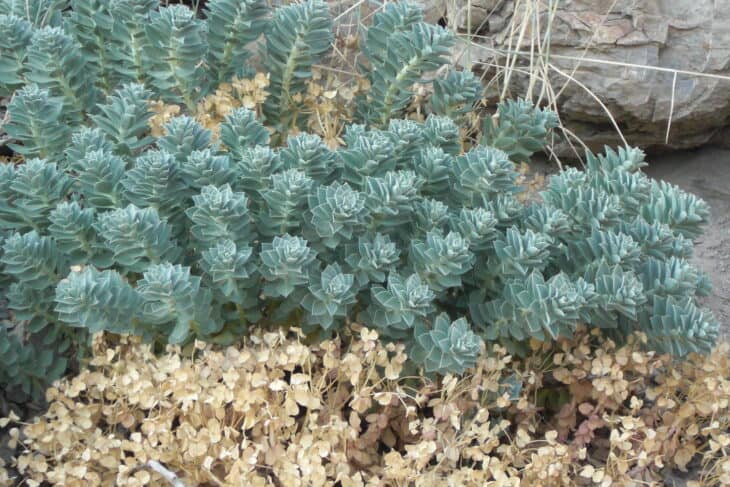
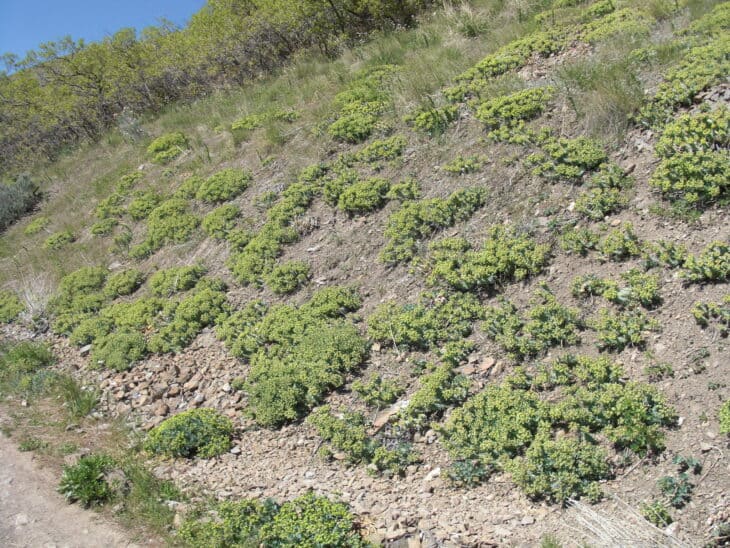
- Low spreading evergreen succulent groundcover.
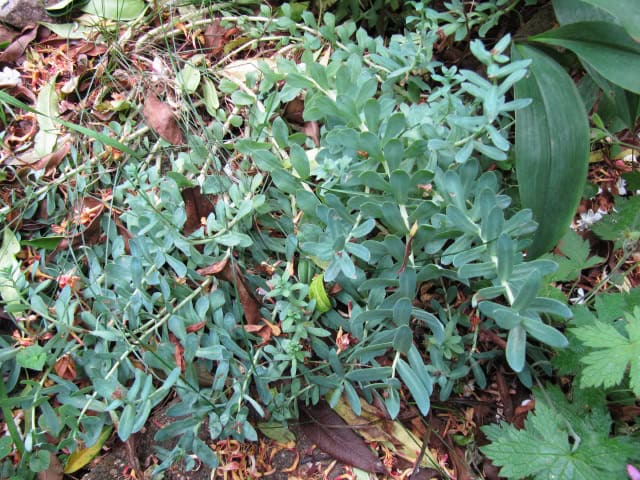
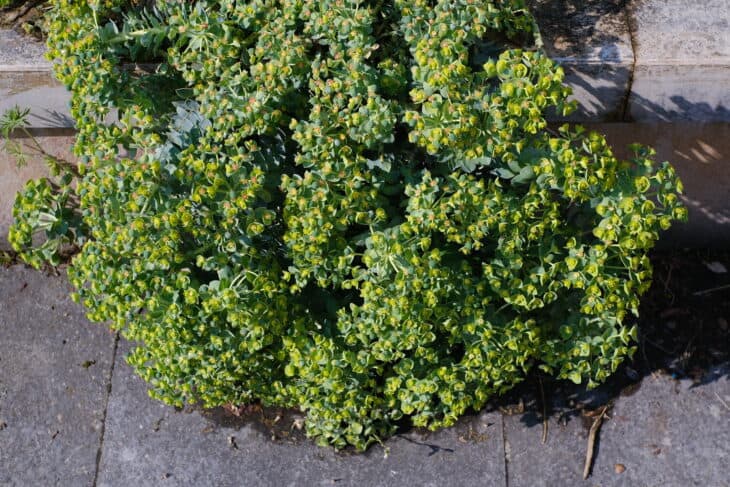
- Forms trailing mats from brittle stems that root at nodes.
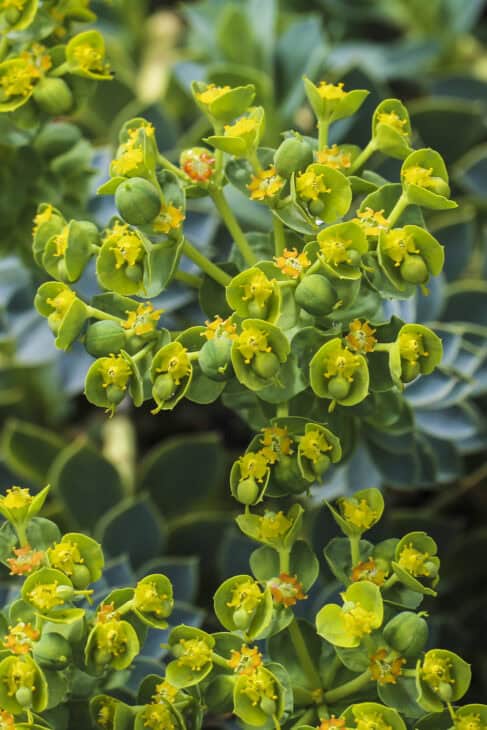
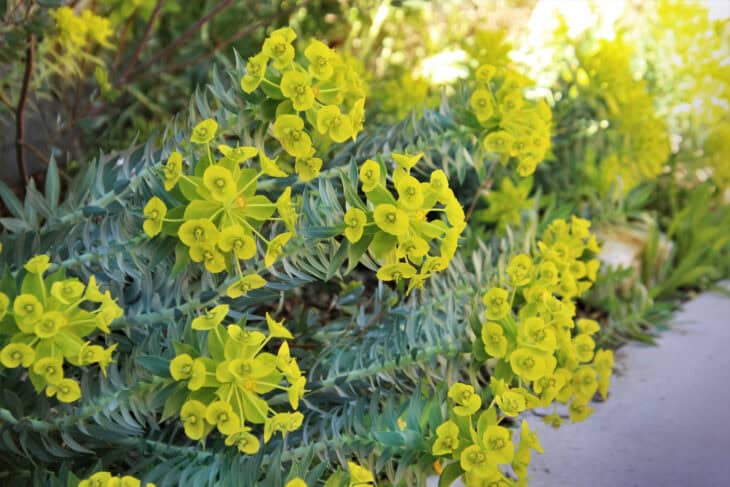
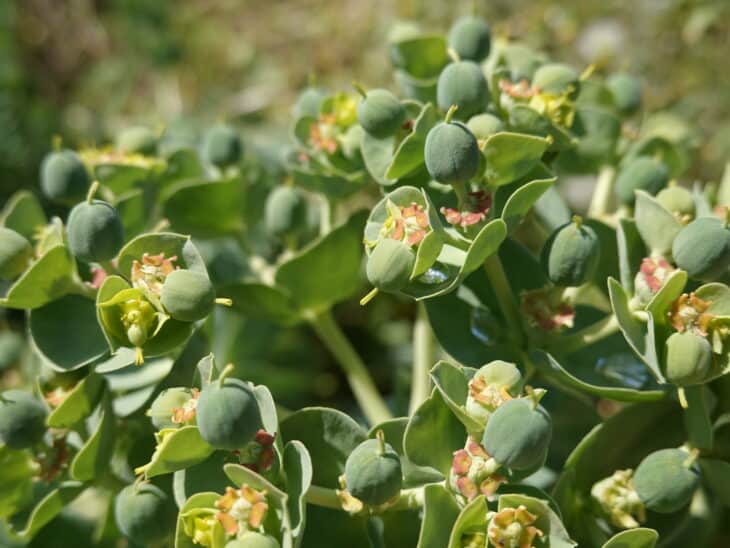
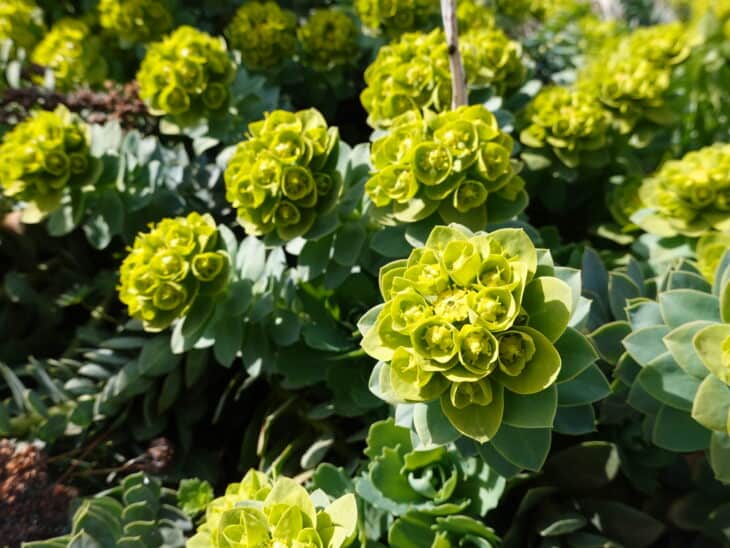
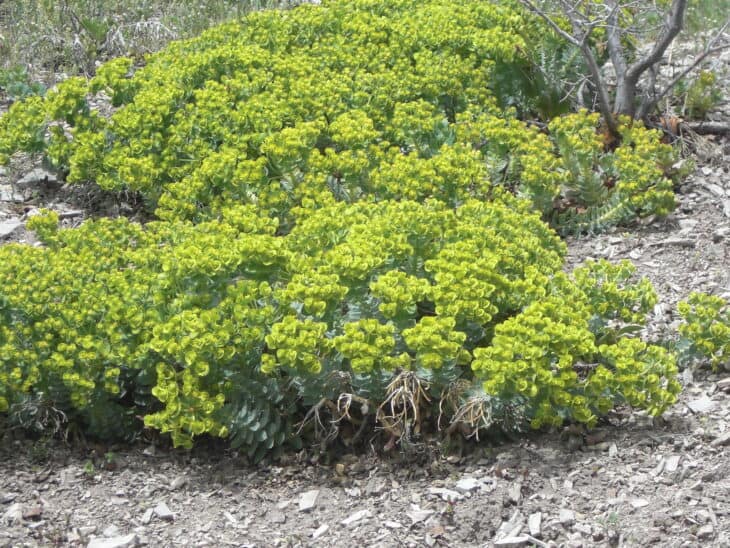
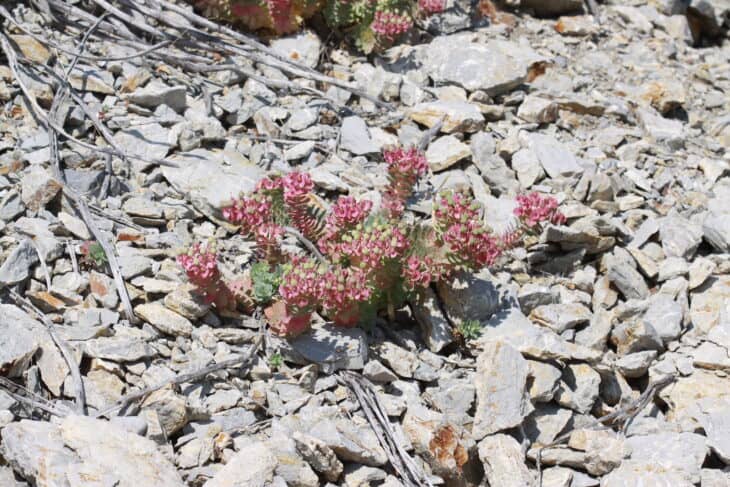
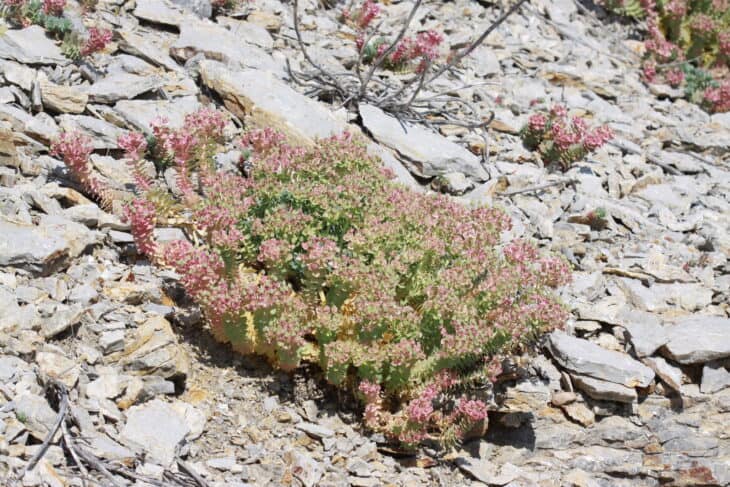
- Small yellow to chartreuse cyathia open in spring.
- Milky latex sap can irritate skin and eyes.
- Drought tolerant once established and prefers well drained soils.
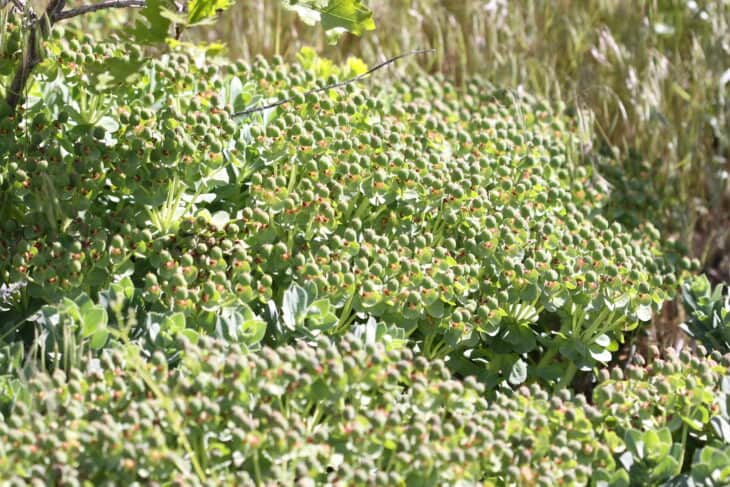
- Spreads by seed and by viable stem fragments.
- Valued for dry sunny slopes but considered weedy or invasive in some areas.
- Propagates readily from stem cuttings and crown divisions.
Myrtle spurge is a low evergreen succulent groundcover that forms trailing mats and brings yellow chartreuse spring blooms to dry sunny sites. It is valued for dry slopes and rocky soils but produces a milky latex that can irritate skin and eyes and spreads readily by seed and stem fragments.
Identification
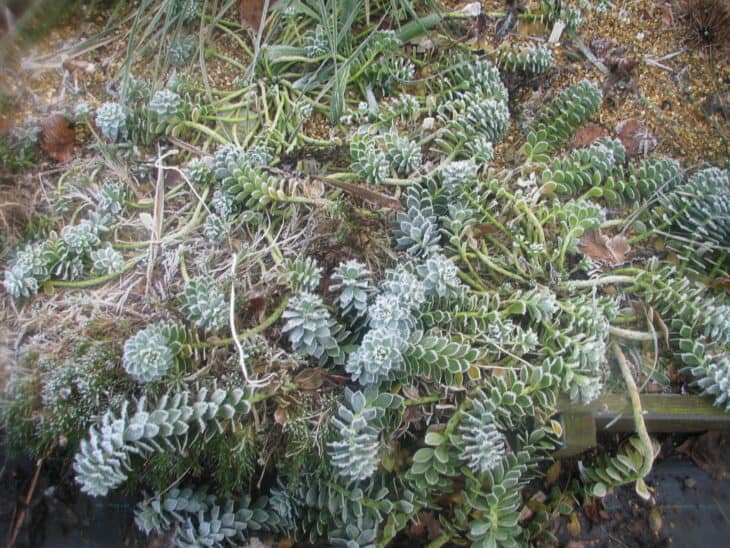
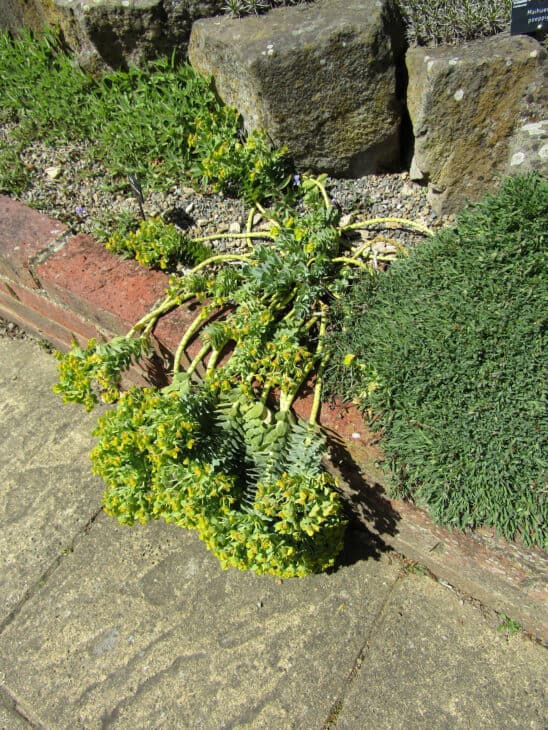
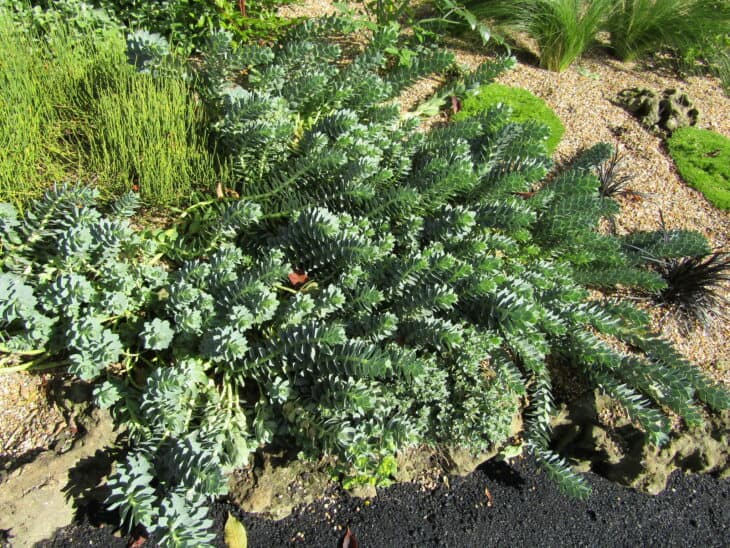
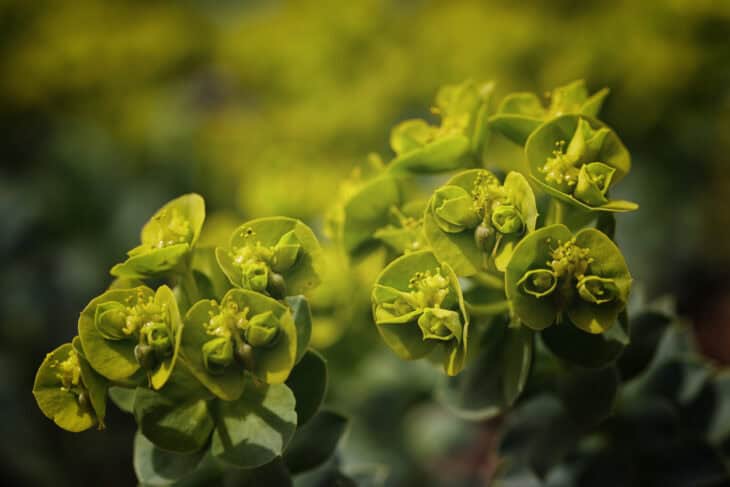
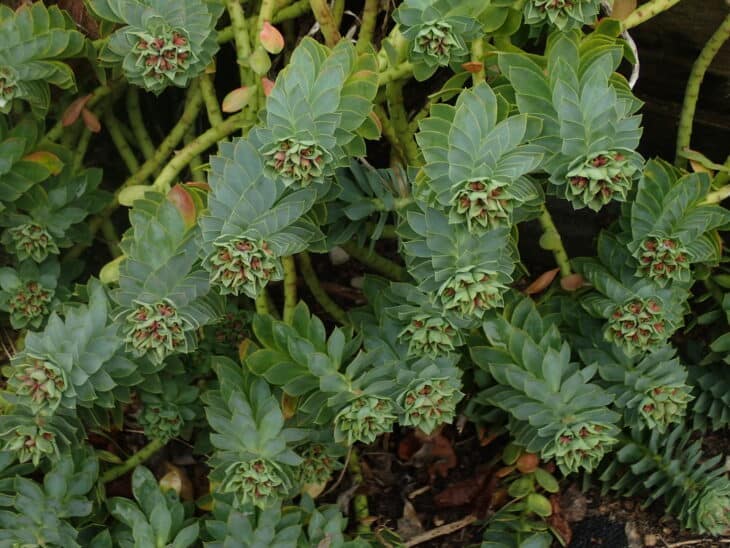
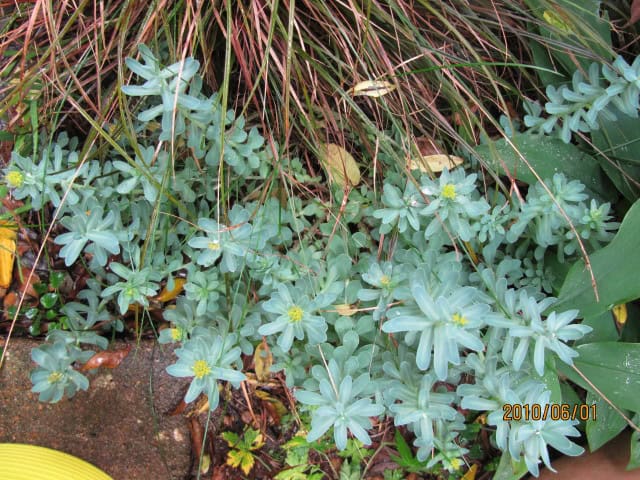
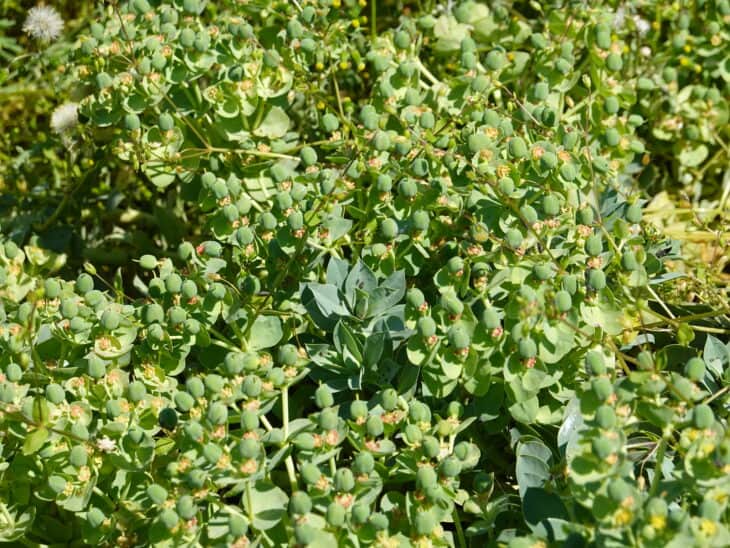
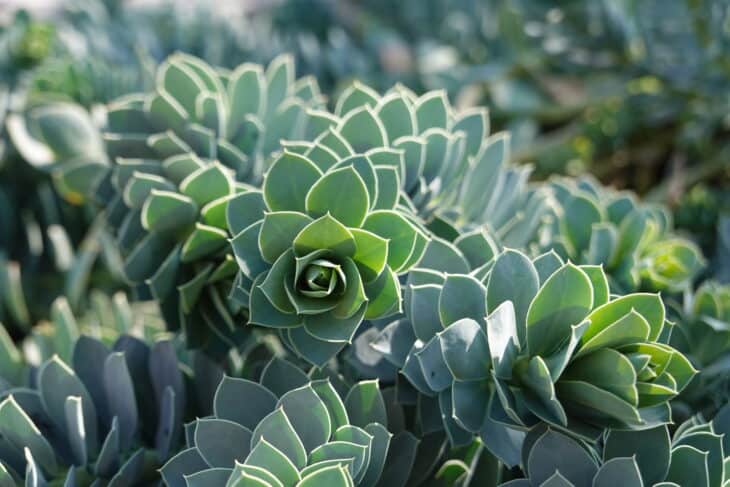
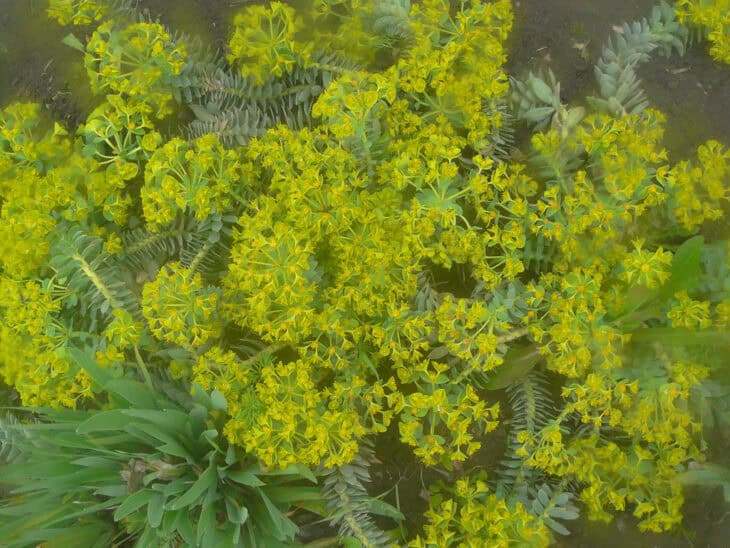
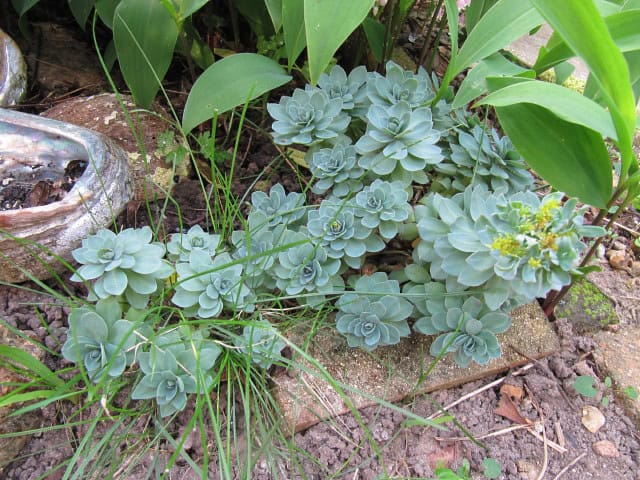
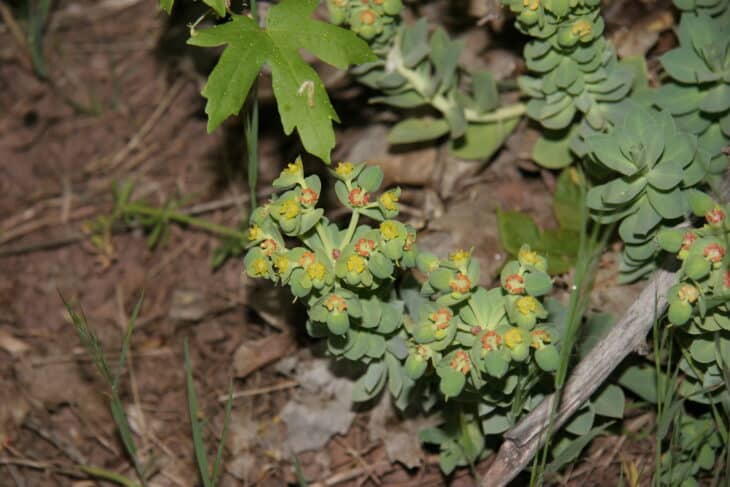
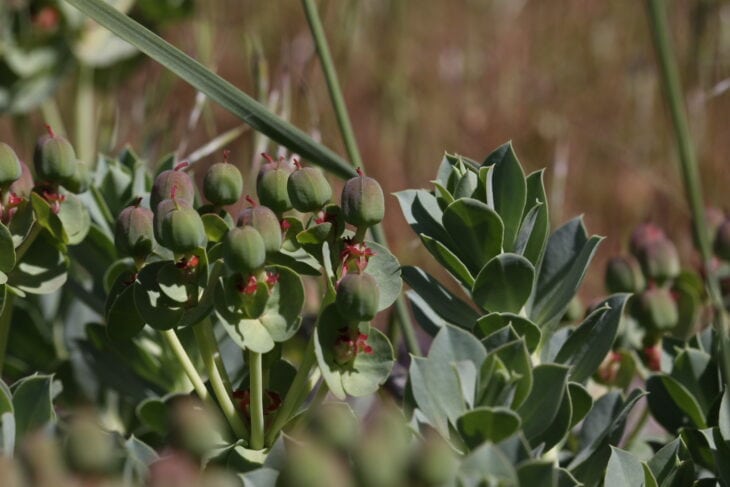
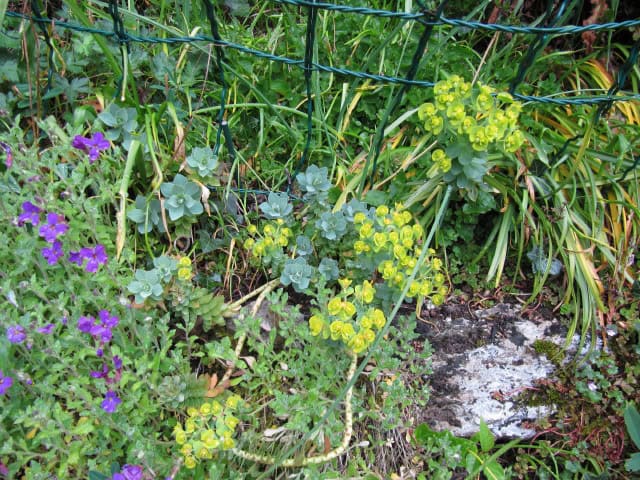
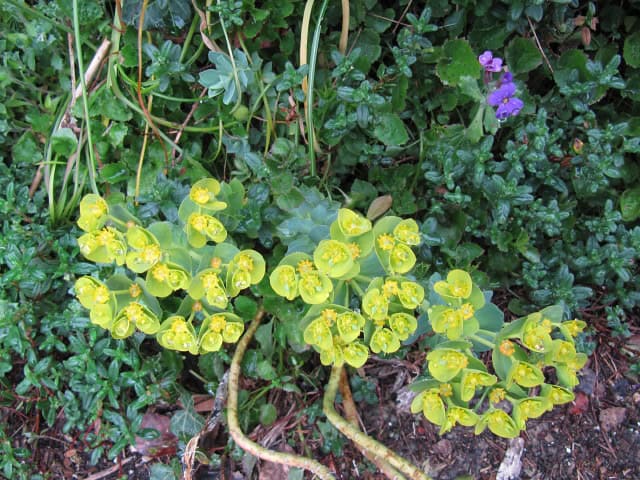
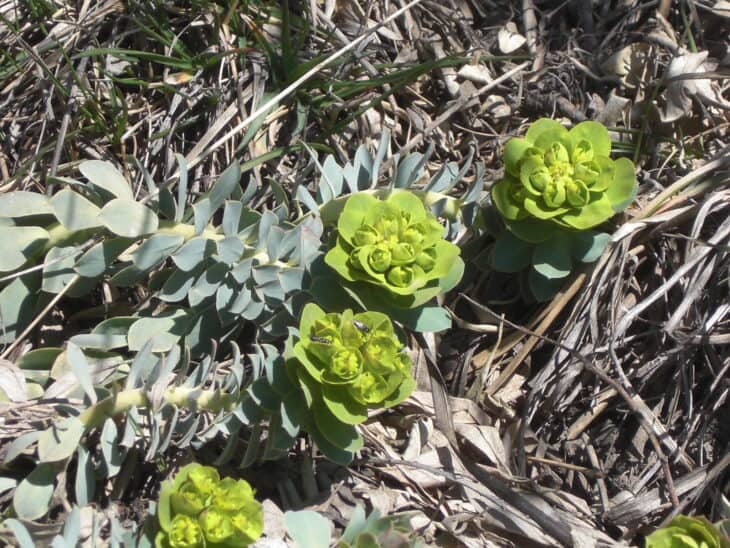
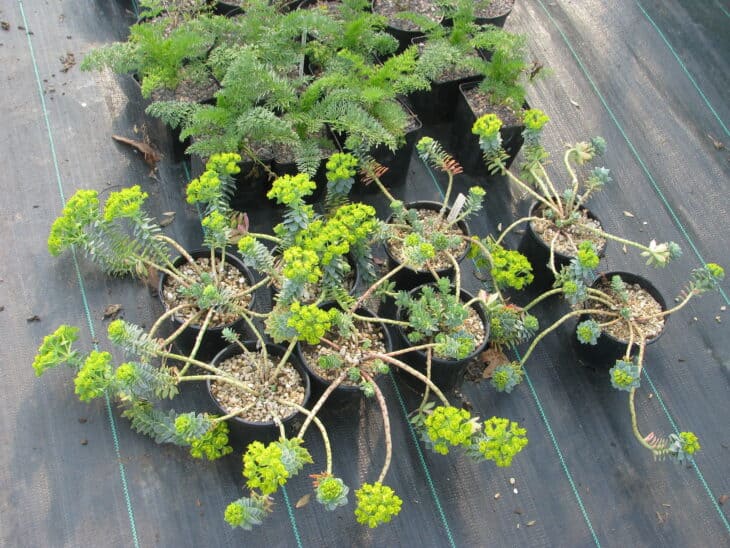
This succulent stays very low to the ground at about 2 to 6 inches tall and forms mats 1 to 3 feet wide or more over time. Leaves are fleshy and the small yellow green cyathia appear in spring. Stems are brittle and will root at nodes which helps the plant spread across open ground.
Best uses and where to grow
Use Myrtle spurge as a dry sun groundcover on slopes, rock gardens and poor soils where drought tolerance is needed. It prefers full sun for denser growth but tolerates light shade. It is generally hardy in USDA zones 4 to 9 depending on climate so check local conditions before planting.
Planting and spacing
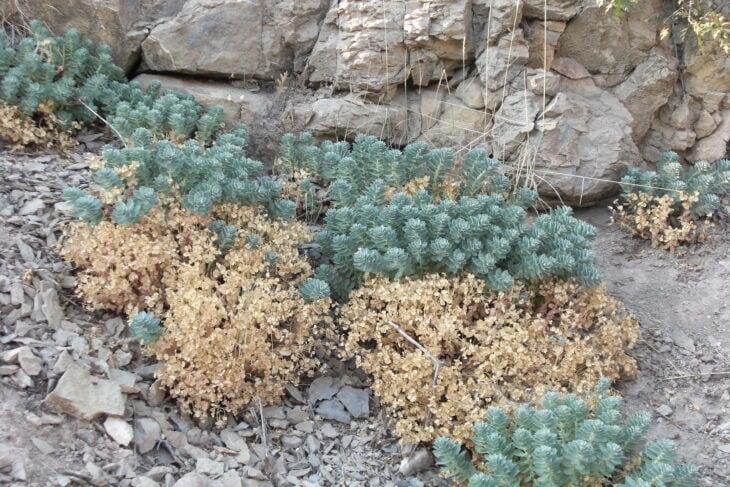
Space plants about 12 to 36 inches apart to allow mats to fill in and reduce long term maintenance. Plant where soil drains freely because wet winter soils increase risk of rot. In colder climates expect winter dieback to the crown while milder sites may remain evergreen and spread more aggressively.
Soil light and watering
Grow in well drained poor to average soils such as rocky or sandy mixes. Myrtle spurge is drought tolerant once established and needs little supplemental water. Overwatering or heavy wet soils lead to root loss and poor winter survival in cold climates so keep soils dry to moderately moist.
After flowering and maintenance
Cut back spent flower stems and trim mats to tidy edges and slow self-seeding. Because stems and fragments root easily remove clippings and any broken pieces promptly. Avoid frequent heavy fertilizer which is unnecessary for plants adapted to poor soils and can encourage weak, floppy growth.
Controlling spread and invasive concerns
Myrtle spurge spreads by seed and viable stem fragments and is considered weedy or invasive in some regions. Monitor seeded areas and remove emerging seedlings. Check state extension or local invasive species lists before planting and avoid sites where it could escape into natural areas.
Propagation and safety
Propagate easily by stem cuttings and crown division and by seed. Take care when handling because the milky latex sap can irritate skin and eyes. Wear gloves and eye protection when cutting or dividing and keep plants away from pets and children to avoid accidental ingestion.
Frequently asked questions
- How fast does Myrtle Spurge grow?
- Growth rate varies with site and climate. It typically forms mats 1 to 3 feet wide over several seasons. Warm dry sites and fragmenting stems speed expansion.
- Is Myrtle Spurge invasive?
- It is considered weedy or invasive in some areas because it spreads by seed and rooting stem fragments. Confirm local invasive status before planting.
- How do I remove unwanted patches?
- Remove whole mats and any rootable fragments and collect seedheads. Repeated digging and disposal of fragments reduces reestablishment.
- Can pets eat Myrtle Spurge?
- No. Euphorbia species can be toxic to cats and dogs if ingested and the sap causes irritation. Keep pets away and contact a veterinarian or poison control for exposure guidance.
- What protective gear is recommended when handling?
- Wear gloves and eye protection to avoid sap contact. Wash tools and clothing after handling plant material.
Gallery
Related Plants


Mentioned In (4)
Plants
22 Poisonous Plants in Montana
When consumed, poisonous plants can cause disease, metabolic abnormalities, mortality, or other health issues in animals. This plant strain affects…
Plants
23 Poisonous Plants in New Mexico
New Mexico is a State in the United States of America that is located in the Southwestern region. It is…

Plants
22 Poisonous Plants in Idaho
There are several beautiful types of plants in Idaho that can be dangerous or even fatal to touch or eat.…

Plants
25 Poisonous Plants in Colorado
Colorado is home to abundant species of plants, including some poisonous varieties that might appear benign but can do significant…