
Key Facts
- A tall evergreen eucalyptus relative native to eastern Australia.
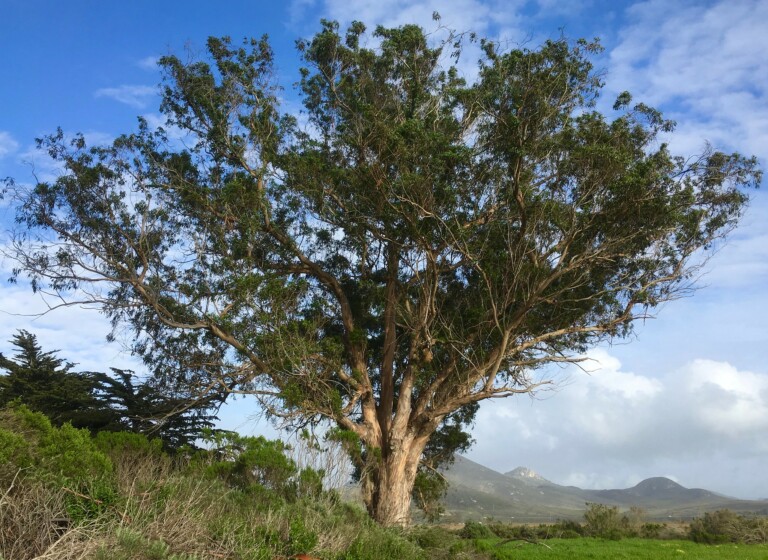
- Smooth mottled trunk with pale patching typical of spotted gums.
- Large lance-shaped adult leaves compared with some other spotted gums.
- Commonly used as a shade and street tree in suitable climates.
- Tolerates a range of well drained soils but dislikes waterlogging.
- Prefers full sun for best form and flowering.
- Eucalyptus type leaves and oils can be toxic if ingested by pets or people.
- Propagated readily by seed and less reliably by cuttings.
Large-Leaved Spotted Gum is a tall evergreen tree from eastern Australia known for its smooth mottled trunk and larger lance shaped adult leaves. It is grown as a shade and street tree where climate and space allow and performs best in full sun on well drained soils.
Identification
This tree has a smooth spotted trunk with pale patching typical of spotted gums and noticeably large lance shaped adult leaves compared with some relatives. It is an evergreen eucalyptus relative and carries aromatic leaf oils that can irritate skin and be toxic if eaten.
Best uses and where to grow
Used as a shade or street tree in suitable climates it suits parks and wide streets where a large canopy is wanted. It prefers subtropical to warm temperate locations and is generally suited to USDA zones 9 to 11 as a guide. Verify local hardiness before planting.
Planting and spacing
Allow plenty of room for a mature canopy that often spans 9 to 18 meters across. Space single specimens at least the expected mature spread apart to avoid crowding and potential root competition. Select a site clear of buildings and overhead wires because mature height can reach 15 to 40 meters in favorable conditions.
Soil and light
Plant in full sun for best form and flowering on well drained soils such as sandy or loamy mixes. The tree tolerates poorer soils and a range of pH from slightly acidic to slightly alkaline but will suffer in sites with prolonged waterlogging.
Watering and maintenance
Keep soil free draining to prevent root decline and reduced vigor. Young trees will benefit from regular watering until established. Once established the species tolerates drier conditions but continued poor drainage will lead to problems.
After flowering and pruning
Prune lightly for structure and to remove dead or crossing branches to maintain a safe street tree form. Avoid heavy root disturbance when pruning or staking and remove any diseased wood promptly to preserve canopy health.
Propagation
Raised readily from seed which is the primary propagation method. Cuttings are possible but less reliable and may need specialist techniques and rooting hormones for success. Verify nursery protocols for cultivar propagation requirements.
Toxicity and safety
Leaves and essential oils can cause poisoning if ingested by pets or people and oils may irritate skin. Keep children and animals away from fallen leaves and oils and consult local poison control for species specific advice if ingestion is suspected.
Frequently asked questions
- How fast does Large-Leaved Spotted Gum grow?
- Growth rate varies with climate soil and care. In warm favorable conditions it can become a large tree relatively quickly but rates differ by site and watering.
- What hardiness zones does it suit?
- As a general guide it suits USDA zones 9 to 11. Check local conditions and microclimate before planting.
- Can I grow it in a container?
- It is not suitable for long term container culture because it becomes a very large tree at maturity.
- When does it flower?
- Flowering timing varies by locality and climate and is not consistent across regions. Expect seasonal variation depending on where it is grown.
- Are seeds or cuttings better for propagation?
- Seed is the primary and most reliable method. Cuttings are possible but less reliable and often require specialist care.
Related Plants


Mentioned In (1)
Plants
7 Plants That Look Like Eucalyptus
Eucalyptus trees have a distinctive fragrance that is easily recognizable but can be tricky to identify visually. There are several…