
Key Facts
- Ornamental flowering tobacco in the nightshade family.
- Tubular flowers often fragrant in the evening.
- Commonly grown as an annual but can be a short lived perennial in warm climates.
- Attracts night pollinators and hummingbirds.
- Mostly propagated by seed and sometimes by cuttings.
- Prefers rich well drained soil and regular moisture.
- Contains nicotine and related alkaloids and is toxic if ingested.
Nicotiana is an ornamental flowering tobacco prized for tubular blooms that release a sweet scent in the evening and for its summer into fall display. It is usually grown as an annual in cool climates and can behave as a short lived perennial in warm regions.
Identification and varieties
Nicotiana has upright stems with tubular, often scented flowers in single colors or mixed palettes. Typical bedding types reach about 12 to 36 inches tall and commonly spread 12 to 18 inches, though sizes vary by cultivar. Evening fragrance is a hallmark and helps identify plants in mixed borders.
Where to grow and best uses
Grow Nicotiana in full sun to part shade with afternoon shade in hot regions to protect blooms. Use it in mixed borders, cottage garden beds, evening scent pockets near patios or massed as bedding to attract night pollinators and hummingbirds. It performs as a perennial in roughly USDA 9 to 11 and is treated as an annual elsewhere.
Planting time depth and spacing
Start seeds indoors before the last frost and transplant after danger of frost has passed or direct sow outdoors once soils warm. Seeds are very fine and benefit from light so surface sow rather than burying deeply. Space plants about 12 to 18 inches apart to match typical spread and allow airflow between clumps.
Soil watering and common problems
Provide rich well drained soil with a slightly acidic to neutral pH around 6.0 to 7.0 and keep moisture consistent. Nicotiana dislikes waterlogged conditions because poor drainage leads to root rot. In extreme heat flower set may decline so protect plants with afternoon shade or mulch to keep roots cool and evenly moist.
Care after flowering and managing spread
Plants often bloom from summer into fall until frost. Allow seed pods to form if you want plants to self seed otherwise remove spent flowers to tidy beds. In cool climates plants die with frost and in warm zones they can live as short lived perennials. Pull seedlings if you want to limit naturalizing.
Propagation
Seed is the primary propagation method. Sow indoors for earlier bloom or direct sow after frost. Some varieties will root from softwood cuttings and many types will self seed where conditions suit them. Seed germination often responds to surface light so avoid deep covering of seed.
Toxicity and safety
Nicotiana contains nicotine and related alkaloids and is toxic if ingested by people and pets. Handling can irritate sensitive skin. Keep plants away from curious children and animals and contact your local poison control or veterinary service for guidance in ingestion cases.
Frequently asked questions
- How fast does Nicotiana grow?
- Growth speed varies by cultivar and conditions. Many types reach flowering size within the same season from seed when started early or transplanted after frost.
- Are Nicotiana perennial?
- They are commonly grown as annuals outside warm climates and can be short lived perennials in USDA zones about 9 to 11.
- How should I water Nicotiana?
- Keep soil consistently moist but not waterlogged. Good drainage prevents root rot and mulch helps retain even moisture and cool roots.
- Can Nicotiana self seed?
- Yes many plants will drop seed and self seed in the garden. Remove seed pods or pull volunteer seedlings to control spread.
- Are Nicotiana safe for pets?
- No they contain toxic alkaloids and can be poisonous if eaten. Consult your veterinarian or poison control for specific concerns.
Related Plants


Mentioned In (2)

Plants
9 Plants That Look Like Basil
There are many types of basil worldwide. All of them are edible and differ in color, leaf shape, and taste.…
Plants
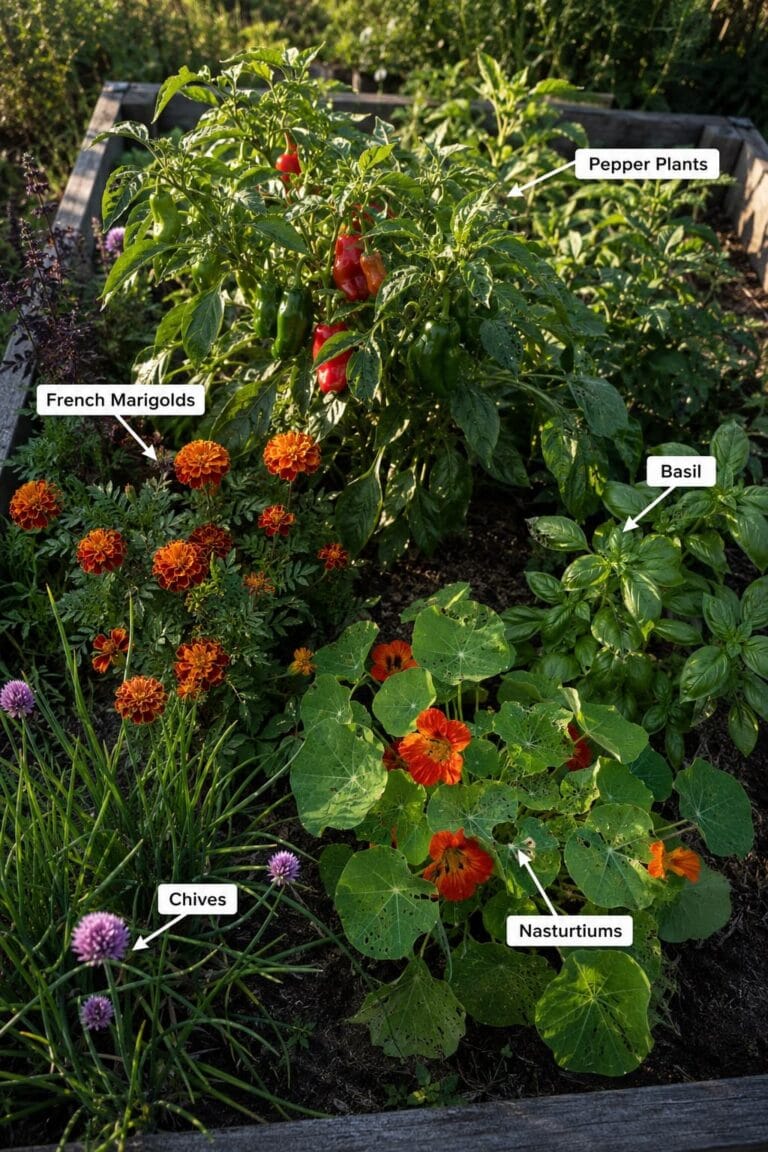
Companion Plants for Peppers: What Works and Why
Peppers are a magnet for aphids and thrips from the moment they go in the ground, and a plant this…