
Key Facts
- Genus of bromeliads native to eastern Brazil.
- Rosette forming plants that produce a central flower spike.
- Grown as terrestrial or occasionally epiphytic bromeliads.
- Commonly propagated by offsets called pups and by seed.
- Prefer bright filtered light rather than full hot sun.
- Need a well draining organic mix rather than permanently wet soil.
- Generally frost sensitive and best in warm climates.
- Leaves may be rigid or serrated and can be sharp to the touch.
Quesnelia is a genus of Brazilian bromeliads that forms striking rosettes and produces a central flower spike. They make eye catching container plants and sheltered landscape accents but are frost sensitive so they perform best in warm, protected sites or as moveable patio specimens.
Identification and form
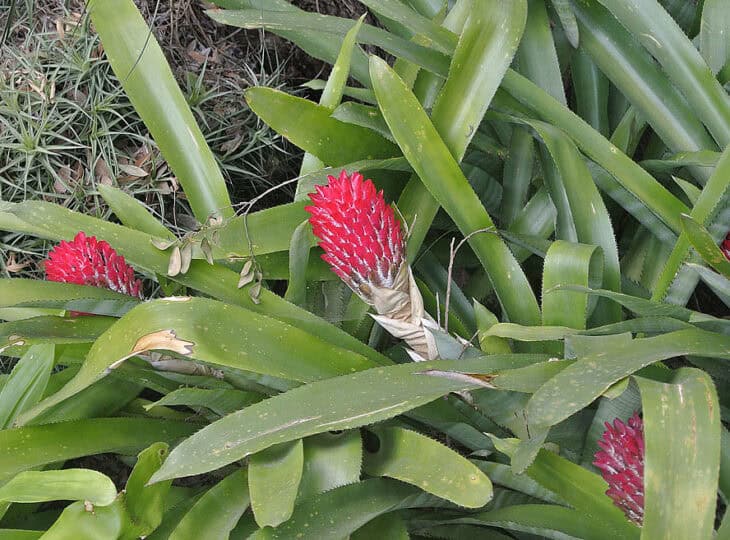
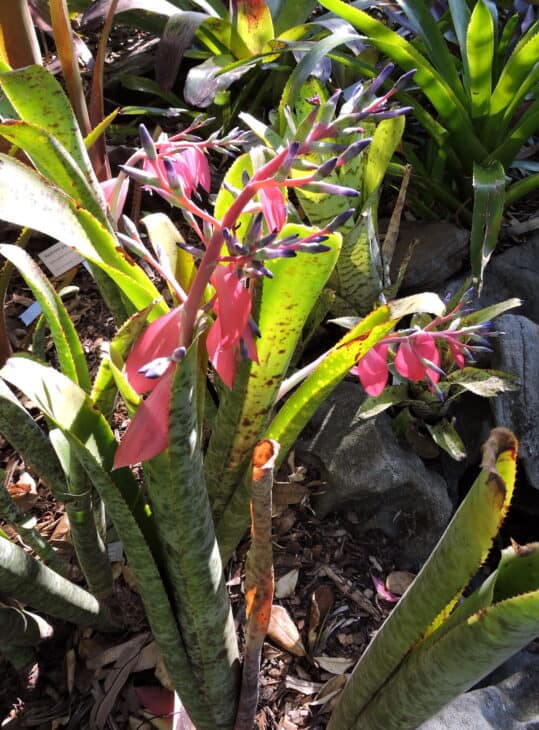
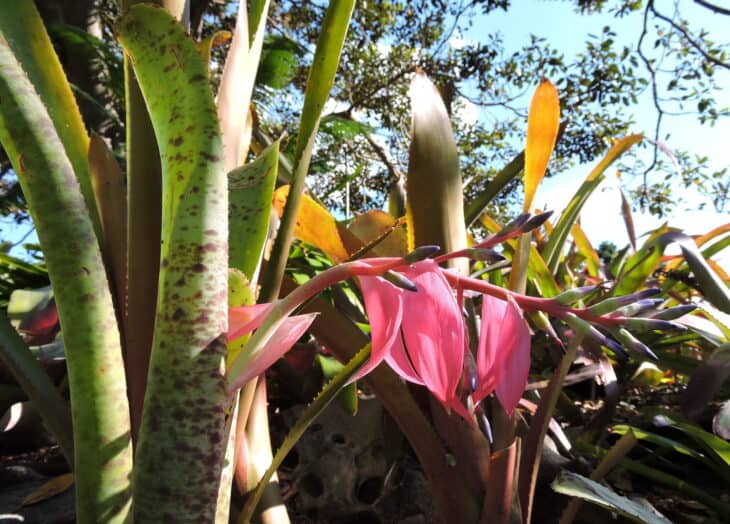
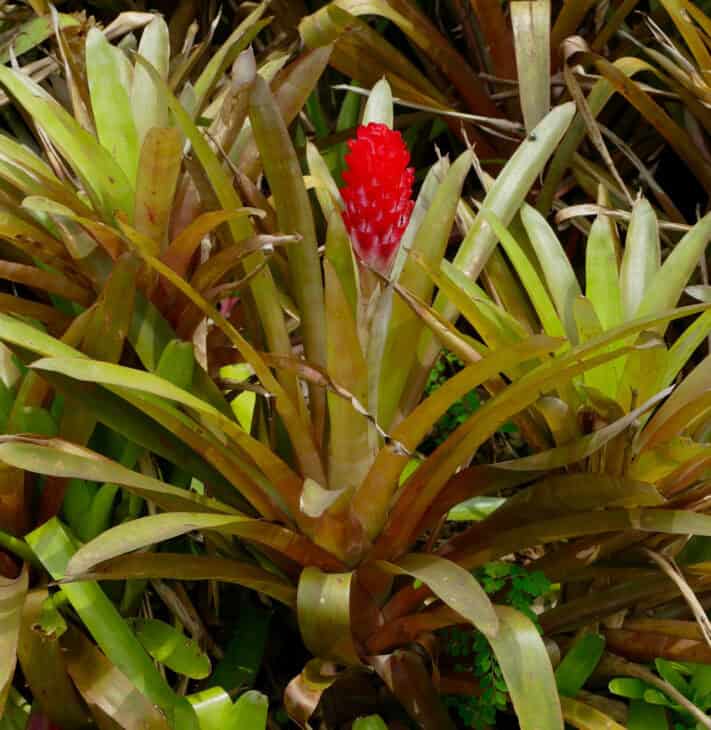
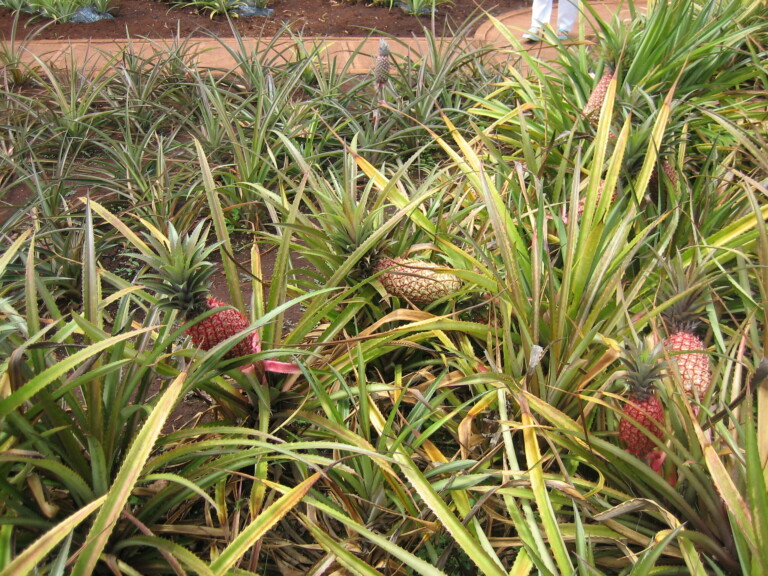
Quesnelia plants form a basal rosette of stiff leaves and send up a central flower spike that can be showy depending on the species. Many species grow as terrestrial bromeliads and some appear epiphytic in their native habitat. Leaves can be rigid or serrated and may feel sharp to the touch.
Where to grow and best uses
Grow Quesnelia in warm climates roughly USDA 10 to 11 where they remain evergreen and vigorous. Use them as focal plants in tropical style beds, as container specimens on shaded patios or indoors in bright filtered light. In cooler regions keep plants in containers so they can be moved out of frost.
Light and soil
Provide bright filtered light or part shade and protect leaves from hot afternoon sun which causes scorching. Use a porous, well draining organic mix such as orchid bark or a commercial bromeliad mix for containers. Avoid soils that remain soggy because poor drainage leads to root rot.
Watering and feeding
Keep the potting mix moist but never permanently wet and make sure containers drain freely. Soils that stay waterlogged will cause root damage and dieback while overly dry conditions will slow growth and brown leaf tips. Feed lightly during the active growing season with a balanced fertilizer formulated for bromeliads or houseplants.
Planting and containers
Plant Quesnelia in open mixes that promote air around the roots. They suit pots that provide good drainage and allow you to move them when cold weather threatens. In landscape beds choose sheltered sites with filtered light and amend heavy soils with coarse organic material to improve drainage.
Propagation and after flowering care
Propagate by removing offsets called pups and by seed. Remove pups when they reach about one third to one half the size of the parent and pot them on separately. After flowering the parent rosette often declines so leave pups in place until they are established and then remove the spent flowering stem.
Pests, toxicity and handling
Quesnelia is listed as non toxic to cats and dogs by the ASPCA for bromeliads in general. Leaves can have sharp edges that cause minor cuts or irritation so handle with gloves when planting or dividing. Watch for common soft plant pests in humid conditions and treat early.
Frequently asked questions
- How fast does Quesnelia grow?
- Growth rate varies by species and growing conditions. Many Quesnelia show moderate growth and produce pups after flowering which gradually replace the parent rosette.
- Is Quesnelia safe for pets?
- Bromeliads are listed as non toxic to cats and dogs by the ASPCA. Leaves may still cause minor cuts so keep curious pets away from sharp foliage.
- Can Quesnelia tolerate frost?
- Quesnelia is frost sensitive and best suited to warm climates near USDA 10 to 11. In cooler areas grow plants in containers that can be moved indoors when cold threatens.
- How do I propagate Quesnelia?
- Remove offsets called pups when they are about one third to one half the size of the parent and pot them in a free draining bromeliad mix. Seed propagation is also possible but less commonly used by home gardeners.
- Does Quesnelia need special soil?
- Use a well draining organic rich mix such as orchid bark or a commercial bromeliad mix. Avoid soils that retain too much moisture because that leads to root rot.
Gallery
Related Plants


Mentioned In (1)
Plants
7 Plants That Look Like Pineapples
Pineapples form part of the Bromeliacae family and are native to tropical and subtropical America, and can be found worldwide.…