
Key Facts
- Deciduous, native shrub of eastern North America.
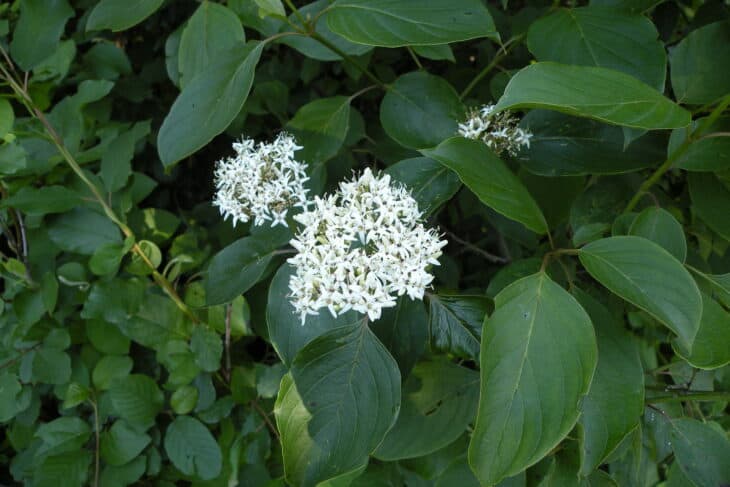
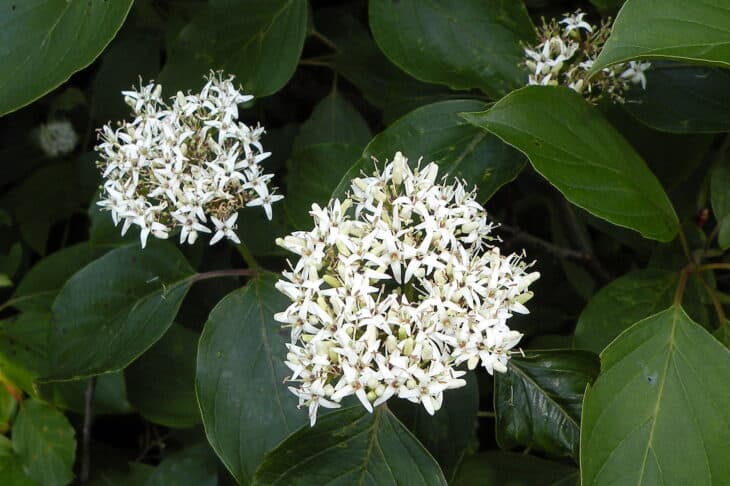
- White flower clusters appear in late spring.
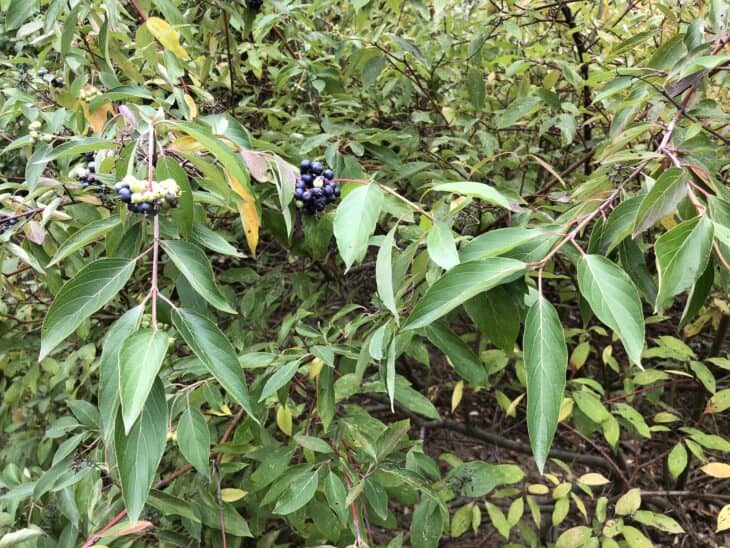
- Blue to bluish-white drupes ripen in summer and feed wildlife.
- Prefers moist to wet soils and tolerates periodic flooding.
- Commonly used in riparian restoration and wetland plantings.
- Spreads by suckers and can form thickets.
- Does well in full sun to part shade.
Silky Dogwood (Cornus amomum) is a native deciduous shrub noted for late spring white flower clusters and blue to bluish white summer drupes that feed birds. It prefers moist to wet soils and is commonly used along streams and wetland edges where periodic flooding can occur.
Identification
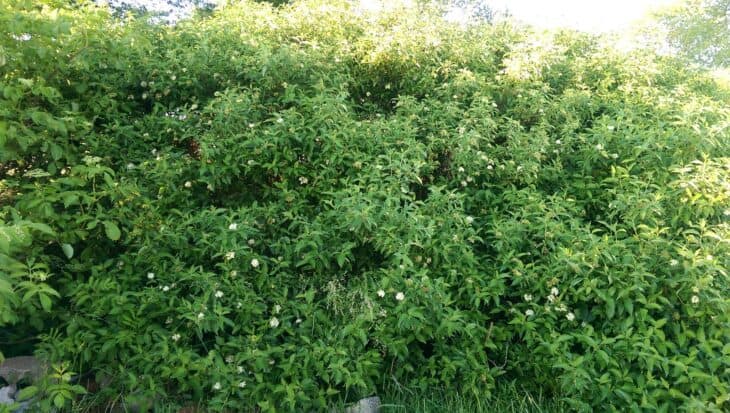
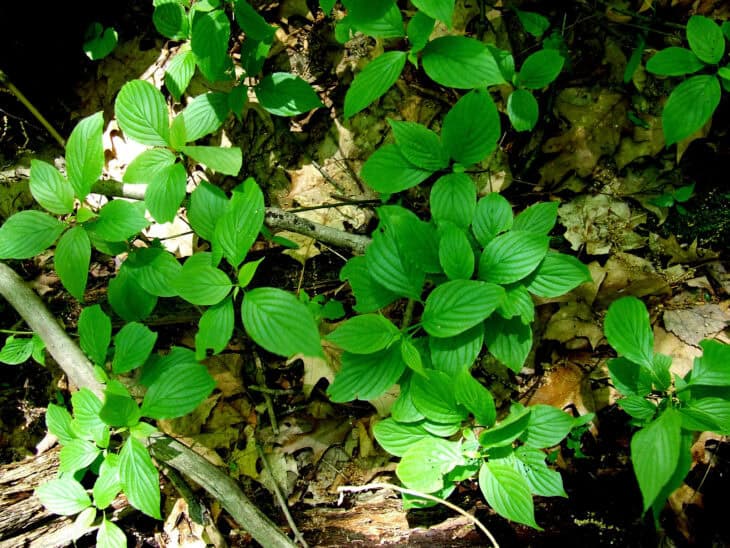
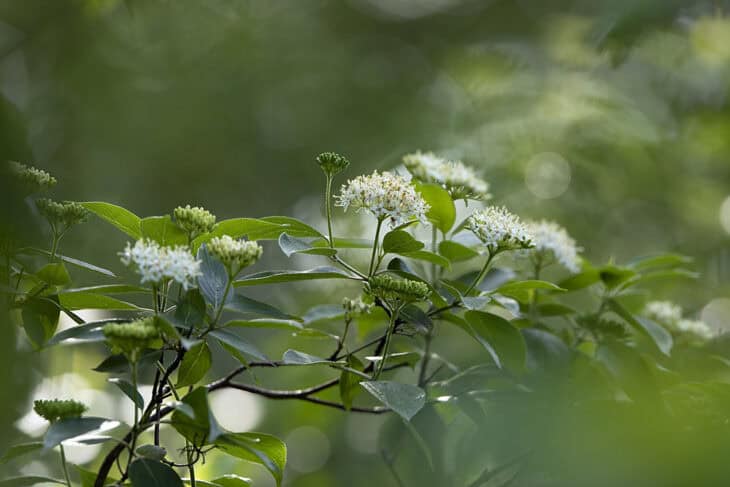
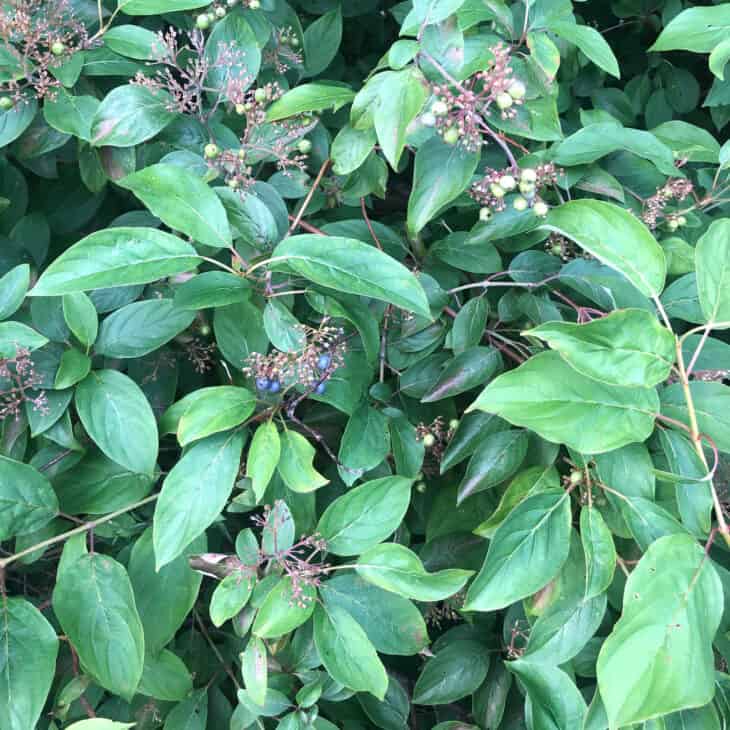
Silky Dogwood grows as a multi stemmed shrub reaching about 6 to 12 feet tall and equally wide in favorable sites. It produces rounded clusters of white flowers in late spring and blue drupes in summer. The species spreads by root suckers and can form dense colonies over time.
Best uses and where to grow
Use Silky Dogwood for riparian restoration, wetland buffers, wildlife gardens and informal hedgerows where soil stays moist. It performs well in full sun to part shade and tolerates clay soils and periodic flooding. In dryer sites plants become stunted and fruiting declines, so pick a consistently moist location for best results.
Planting and spacing
Place plants so the root crown sits level with the surrounding soil and water in well at planting. Space plants roughly their mature spread apart, about 6 to 12 feet, to allow room for thicket formation. For a dense screen plant closer and plan to manage suckers to maintain a tighter line.
Soil light and watering
Silky Dogwood prefers consistently moist to wet soils and adapts to acidic to neutral pH. Rich loam and heavier clay are acceptable and the shrub tolerates occasional flooding. In dry locations expect poor growth and reduced fruiting. Keep soil evenly moist during establishment and supplement irrigation in prolonged dry periods.
After flowering care and pruning
Prune after flowering to shape the shrub and remove damaged or crossing stems. Because the plant flowers on older wood, light renewal pruning is best done immediately after bloom to avoid cutting next year s flower wood. Remove unwanted suckers at the base or dig them out to limit spread.
Propagation and spread control
Propagate by seed, softwood or semi ripe cuttings, stem layering and by dividing suckers. Suckering encourages colony formation, so control spread by removing new shoots at the root or by root pruning. Layering and cuttings are useful to produce clones when you want to preserve specific traits.
Pests and safety
Fruit is eaten by birds and supports wildlife. Berries and other parts are not generally listed as highly toxic but ingestion can cause mild gastrointestinal upset in people or pets, so avoid deliberate consumption and check with local poison control for definitive guidance. No widespread serious pest issues are documented here.
Frequently asked questions
- How fast does Silky Dogwood grow?
- Growth rate varies with site quality. In moist fertile locations plants reach the 6 to 12 foot range and can form thickets via suckers. In poorer or drier soils growth is slower and plants stay smaller.
- How tall does Silky Dogwood get?
- Mature height commonly ranges from 6 to 12 feet depending on light and soil moisture.
- Is Silky Dogwood invasive?
- The shrub spreads by root suckers and can form dense colonies. It is useful for naturalizing and restoration but requires management if you want to prevent thicket formation.
- Are the berries poisonous to pets?
- Berries are eaten by birds and are not listed as highly toxic. They can cause mild gastrointestinal upset in people or pets, so consult your local poison control for specific safety recommendations.
- When does Silky Dogwood bloom?
- Flowering occurs in late spring, roughly May to June in the northern hemisphere, with exact timing varying by latitude and climate.
Gallery
Related Plants


Mentioned In (1)

Plants
11 Plants That Look Like Elderberry
The red or purplish-black drupe-shaped fruit of the elderberry makes a star ingredient for jelly or pie. With a current…