
Key Facts
- Evergreen or semi evergreen oak native to mountainous areas of the southwestern United States and northern Mexico.
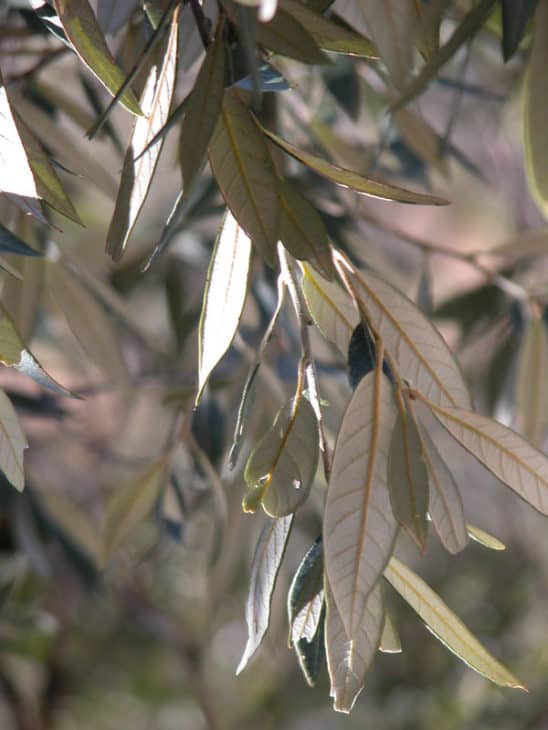
- Leaves have a silvery or white underside that gives the tree its common name.
- Usually grows as a large shrub or small tree.
- Prefers well drained rocky or sandy soils and tolerates alkaline conditions.
- Drought tolerant once established.
- Produces acorns that feed wildlife.
- Propagation is commonly by seed and sometimes by nursery grafting or cuttings.
- Performs best in full sun to light shade.
Silver Leaf Oak is a small evergreen oak from mountainous parts of the southwestern United States and northern Mexico. Its leaves have a silvery underside that brightens slopes and dry gardens while the species stays drought tolerant once established.
Identification
Leaves are evergreen or semi evergreen with a pale silvery or white underside that gives the tree its common name. It usually grows as a large shrub or a small tree reaching about 10 to 30 feet tall and spreading roughly the same distance depending on site and pruning.
Best uses and placement
Use Silver Leaf Oak as a specimen shrub tree on rocky slopes or in native plant gardens where lower water use is needed. It works well for slope stabilization and mixed native hedges but allow room for a broad crown and for wildlife that feed on the acorns.
Soil and light
Prefers well drained sandy or rocky soils and tolerates shallow alkaline substrates that limit other plants. Avoid heavy poorly drained clay which causes root problems. Plant in full sun to light afternoon shade for best form and leaf color.
Planting and spacing
Space plants according to the expected mature spread which is about 10 to 30 feet or 3 to 9 meters. Set root crowns at grade in well drained soil and mulch to conserve moisture. Plan spacing for a single specimen or allow closer spacing if you intend to form a dense native screen.
Watering and care
Establish new plants with regular deep watering until roots are set then reduce frequency. Once established this oak is drought tolerant and shows reduced growth if overwatered. Monitor for poor drainage and eliminate standing water to prevent root decline.
Pruning and spread control
Keep pruning minimal to maintain a natural shrub or small tree silhouette. Prune in dry weather to remove crossing branches and to shape. This species forms a broad crown so periodic thinning controls spread and reduces wind damage without forcing excessive regrowth.
Propagation
Propagate mainly by seed using fresh acorns sown soon after collection. Stored acorns often need cold stratification before sowing. Nursery grafting and container grown stock are common and cuttings or air layering are possible though more difficult for consistent results.
Wildlife and toxicity
Produces acorns that provide food for birds and mammals. Acorns contain tannins and can cause digestive upset in livestock that eat large quantities and in pets that ingest many acorns. Consult local poison control or veterinary resources for guidance about risks to specific animals.
Frequently asked questions
- How fast does Silver Leaf Oak grow?
- Growth is moderate and depends on soil and water. Plants commonly reach 10 to 30 feet over several years with faster height gain in deeper soils and with supplemental water while establishing.
- What USDA hardiness zones suit it?
- Reports indicate it grows in approximately USDA zones 6 to 9 but verify for your microclimate and elevation before planting.
- Can it tolerate alkaline soil?
- Yes it tolerates alkaline and shallow rocky soils and often does well where other trees struggle.
- Are acorns useful for wildlife?
- Yes acorns are an important food for wildlife but can be harmful to livestock in large amounts and may upset pets if eaten in quantity.
- Is it suitable for containers?
- Generally better planted in the ground where roots can spread. Container culture is possible for limited periods in large pots but will restrict mature size.
Gallery
Related Plants


Mentioned In (1)

Trees
Trees of Arizona: Desert, Mountain & Oak Trees
Arizona is not just desert. Its elevation ranges from about 70 feet near Yuma to over 12,600 feet on Humphreys…