
Key Facts
- Evergreen conifer native to high elevations of the Sierra Nevada.
- Needles arranged in bundles of five.
- Slow growing and long lived.
- Prefers rocky, well drained soils.
- Wind pollinated with inconspicuous flowers.
- Cones are small, woody and resinous.
- Often forms compact crowns compared with lowland pines.
- Propagation is commonly by seed and sometimes by grafting.
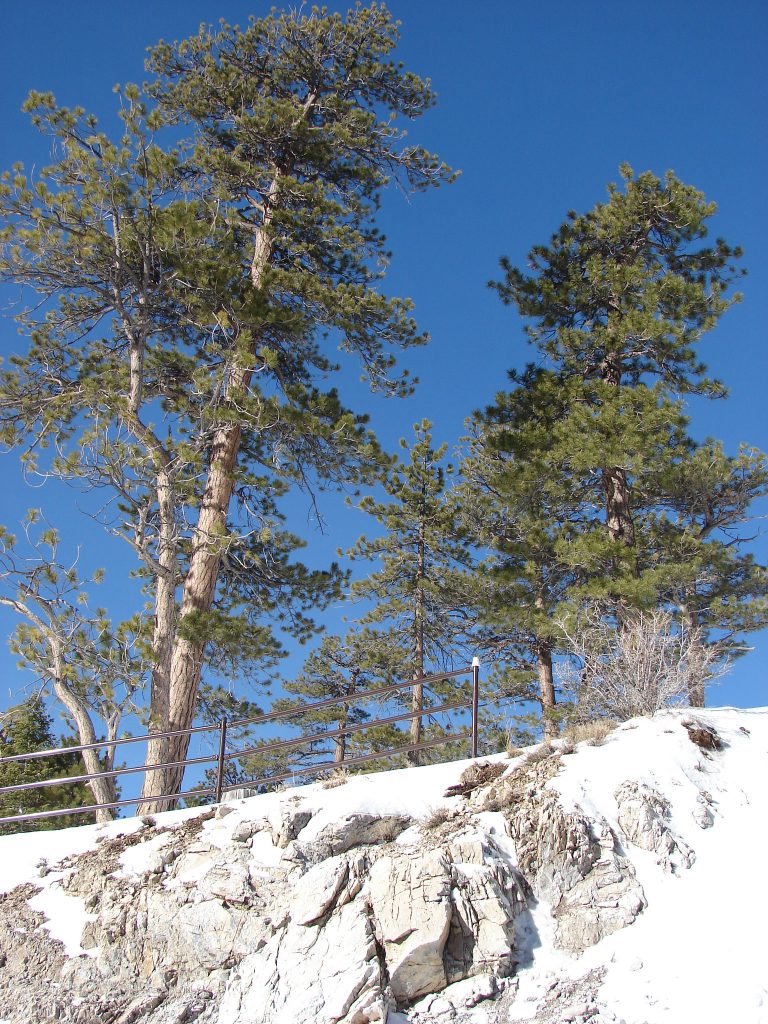
Southern Foxtail Pine is a high elevation evergreen conifer native to the Sierra Nevada. It is slow growing and long lived, with compact crowns and five-needle bundles that give it a distinctive, refined silhouette for exposed, rocky sites.
Identification
This small to medium pine has needles in bundles of five and small, woody resinous cones. Mature southern subspecies typically reach 10 to 40 feet tall with a crown spread of about 6 to 20 feet. Crowns tend to be more compact than many lowland pines, especially on exposed ridgetops.
Where to grow and best uses
Occurring naturally at high elevations, this pine suits cold, well drained, rocky settings and alpine style plantings. It performs best in roughly USDA zones 5 to 8 and makes a fine specimen for rock gardens, small native-tree plantings or wind-sheltered exposed sites where a long lived, compact pine is desired.
Soil and light
Prefers full sun and very well drained rocky or sandy soils often derived from granitic parent rock. It tolerates low fertility and acidic to neutral pH. Avoid heavy clay or areas with poor drainage because root loss and winter heaving increase where soils stay wet.
Planting and spacing
Choose a sunny, freely draining site and allow room for a 6 to 20 foot mature crown spread when siting specimens. On exposed ridges expect smaller stature and narrower crowns. Do not plant in spots that remain waterlogged; amendments that retain moisture are not recommended for long term health.
Watering and maintenance
Once established the tree requires minimal supplemental irrigation in typical high elevation settings. Young plants benefit from regular deep watering until roots establish and some temporary wind protection. Pruning needs are minimal; avoid heavy trimming into old wood on slow growing specimens.
Propagation
Propagate primarily by seed for the best genetic fidelity. Seed often requires cold stratification and sometimes scarification. Valuable clones are sometimes grafted onto compatible rootstock. Cuttings are difficult and show variable success in conifers.
Pests and problems
Poor drainage is the principal cultural hazard because it leads to root rot and winter heaving. Exposed sites can limit size but reduce some pest pressures. Monitor young trees for establishment stress rather than frequent insect outbreaks typical of lower elevation pines.
Toxicity and safety
Not widely reported as highly toxic to people or pets but ingestion of needles or bark may cause gastrointestinal upset. Handling fresh resin or cut material can cause skin irritation in sensitive individuals. Confirm pet and human toxicity with ASPCA or local poison control for your area.
Frequently asked questions
- How fast does Southern Foxtail Pine grow?
- It is described as slow growing and long lived. Annual growth is modest, and mature size is often reached over many decades, especially in exposed high elevation sites.
- What USDA hardiness zones are suitable?
- Estimated roughly for USDA zones 5 to 8, reflecting its cold tolerant, high elevation habit. Local microclimate can shift effective hardiness.
- How are these pines propagated?
- Commonly propagated by seed, which typically needs cold stratification and sometimes scarification. Grafting onto compatible rootstock is used for select clones.
- Will it survive at low elevations?
- Performance declines in warmer, low elevation winters and hot summers. Stress from heat or low-elevation winters can reduce survival, so choose cooler sites where possible.
- What are the identifying features?
- Needles in bundles of five, small woody resinous cones and a compact crown compared with many lowland pines. Mature height 10 to 40 feet and spread about 6 to 20 feet.
Related Plants


Mentioned In (1)

Pine
51 Common Types of Pine Trees in North America (photos)
Wherever you go in North America, it is difficult not to see pine trees. These are tall, elegant trees that…