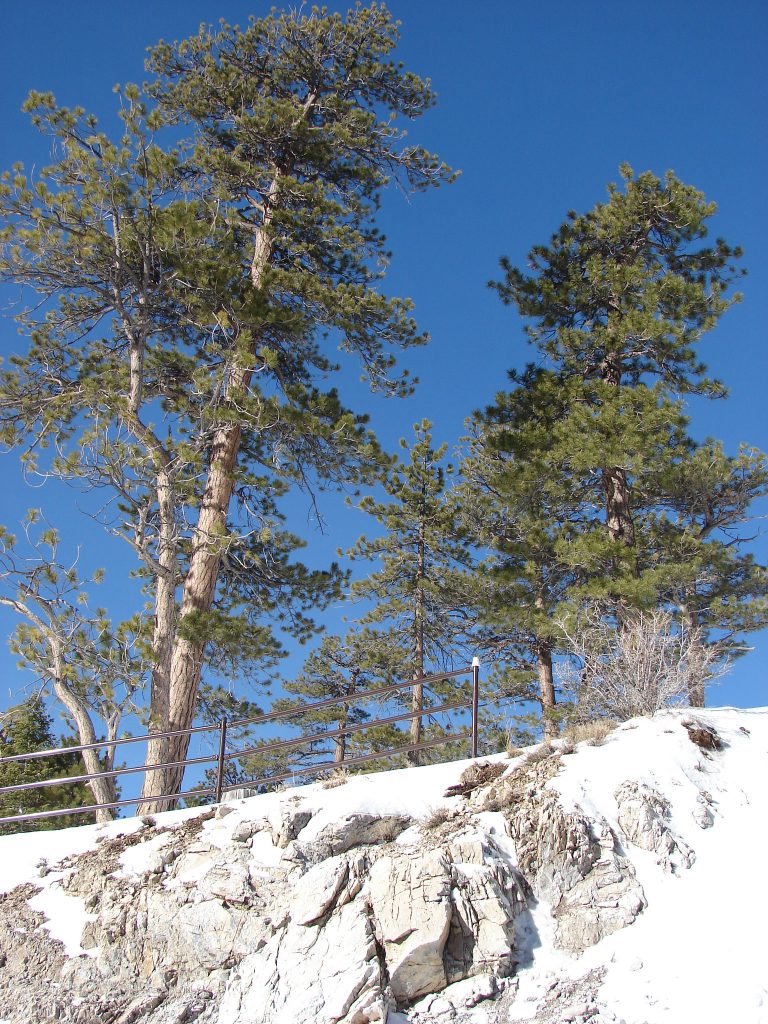
Key Facts
- Evergreen conifer native to the southwestern United States.
- Needles in bundles of two which gives the common name.
- Produces edible seeds known as pinyon nuts.
- Very drought tolerant and adapted to dry, rocky sites.
- Slow growing and often forms low, broad crowns.
- Valued for wildlife cover and edible seed production.
- Prefers full sun and well drained soils.
Two-needle Pinyon Pine is an evergreen, slow growing native pine prized for edible pinyon nuts and wildlife cover. It forms low broad crowns and performs best on sunny, rocky sites with well drained soils.
Identification
This evergreen conifer carries needles in bundles of two which gives the common name. Mature trees commonly reach about 10 to 30 feet tall with a similar spread when site conditions are favorable. Cones produce edible seeds known as pinyon nuts and the crown is often low and rounded rather than tall and columnar.
Where to grow and best uses
Native to the southwestern United States this pine suits dry, exposed sites and alkaline or poor soils. Use it as a specimen for xeriscapes for wildlife cover or in dry windbreaks where water is limited. It prefers full sun and open locations to maintain form and maximize seed production.
Planting and spacing
Choose an open, sunny site with well drained sandy or rocky soil and avoid poorly drained areas that cause decline. Allow 10 to 25 feet between plants to match mature spread and prevent crowding. Set plants at natural soil level and do not plant deeply in compacted or waterlogged soils.
Watering and general care
The species is very drought tolerant once established and thrives with minimal supplemental water. Excessive irrigation or poor drainage commonly leads to root disease and dieback. Provide regular water during the first few years to help roots establish and then reduce frequency so the tree adapts to dry conditions.
After flowering and seed harvest
Pollen release and cone development typically occur in spring to early summer depending on elevation. Seed production varies by climate and site and is best in full sun. Harvest mature cones for pinyon nuts but expect irregular heavy and light seed years depending on local conditions.
Propagation and sourcing
Propagate from fresh seed with cold stratification for best germination results. Grafting is used for named cultivars and commercial stock. Seedlings are slow to establish and performance varies by seed source so verify identity when sourcing seed or nursery plants to avoid confusion with other regional pinyons.
Landscape management and controls
Growth is slow and trees do not typically invade surrounding plantings but plan spacing to accommodate a broad crown. Prune selectively to remove dead wood and maintain structure if needed. Check local hardiness guidance since USDA zone reports vary and local conditions influence winter dieback and seed production.
Frequently asked questions
- How fast does Two-needle Pinyon Pine grow?
- It is slow growing. Mature height is commonly 10 to 30 feet and growth is slower on exposed dry sites.
- What soils suit this pine?
- Well drained sandy or rocky soils suit it best and it tolerates low fertility and alkaline conditions. Avoid waterlogged or poorly drained soils.
- Can I harvest edible pinyon nuts?
- Yes. Cones produce edible seeds known as pinyon nuts. Seed production varies with site, elevation and climate.
- What light does it need?
- Full sun produces the best form and greatest seed production. Trees become lanky and produce fewer seeds in shade.
- Is it safe for pets and people?
- Seeds are edible and have long been used as food. No major toxicity is widely reported but check local poison control for pet specific guidance and rare human reactions.
Gallery


Related Plants