
Key Facts
- Native to Madagascar and widely planted in tropical and subtropical landscapes.
- Not a true palm but a member of the Strelitziaceae family related to bird of paradise.
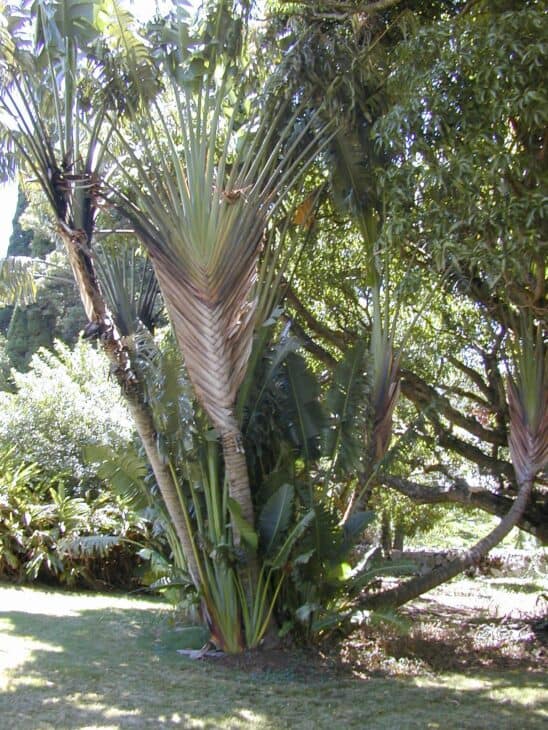
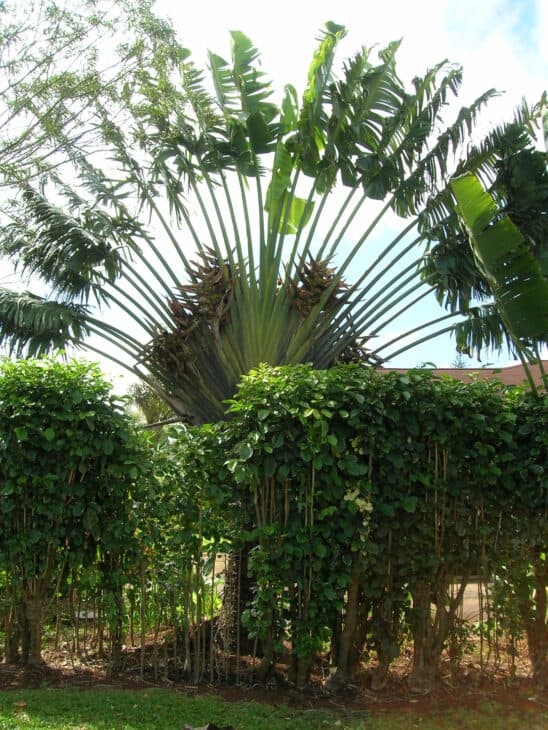
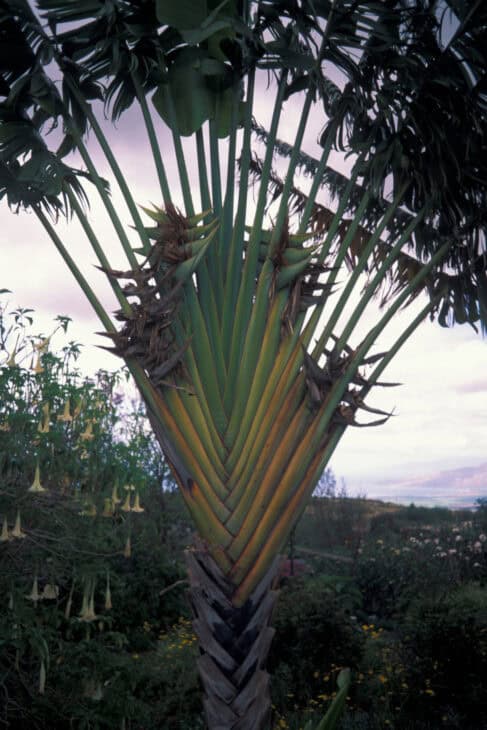
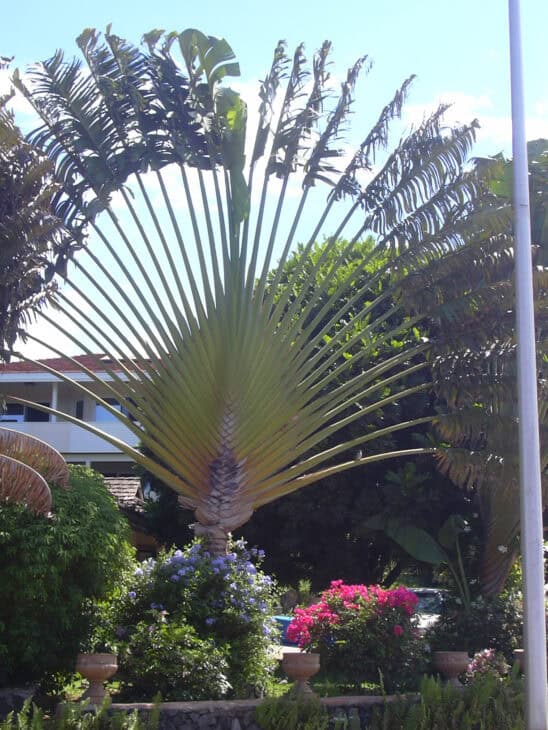
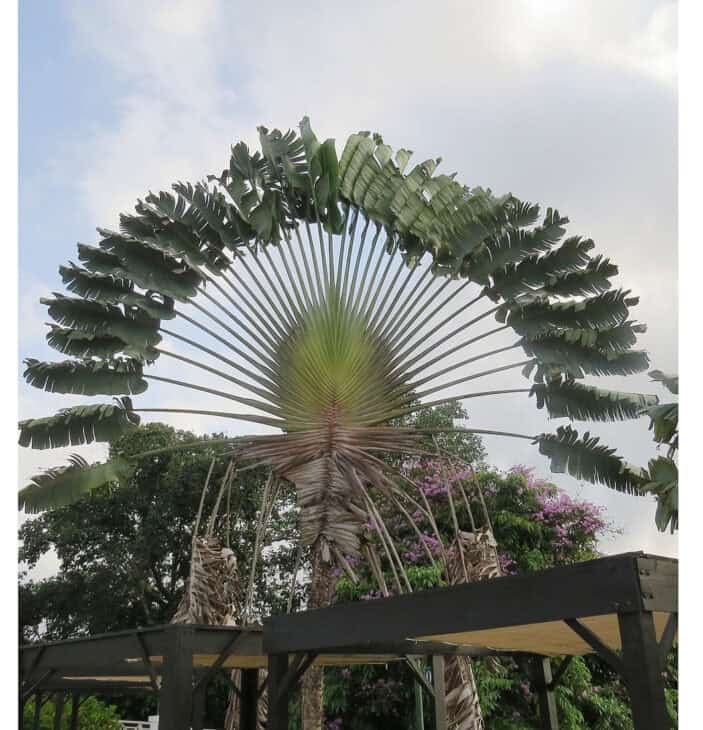
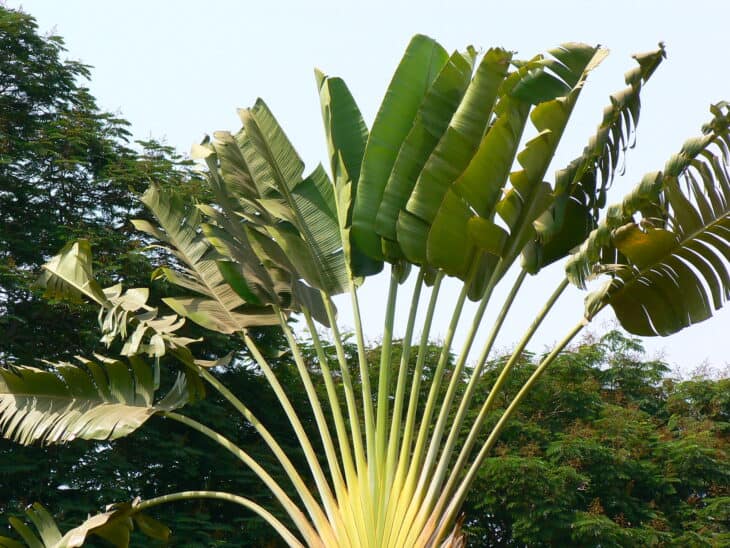
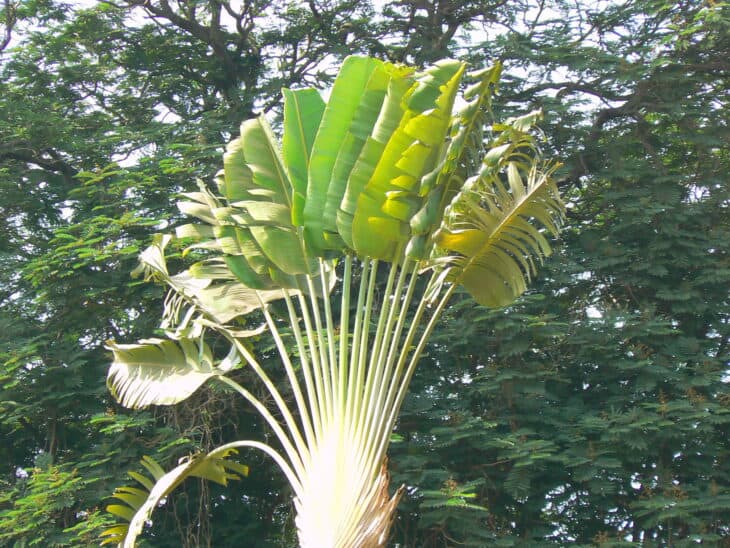
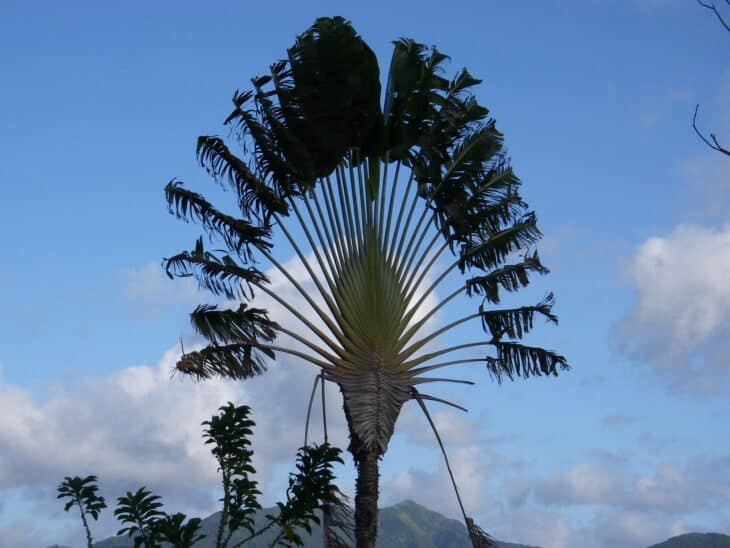
- Leaves form a distinctive fan arrangement on a single trunk.
- Grown as a specimen plant for dramatic architectural foliage.
- Usually propagated from seed in cultivation.
- Prefers warm frost free climates and struggles with hard freezes.
- Performs best in rich, moist, well drained soils.
- Tolerates coastal conditions in many warm climates.
The Traveler’s Palm (Ravenala madagascariensis) is a large tropical ornamental valued for its dramatic fan of paddle shaped leaves and single trunk silhouette. It makes a striking specimen in warm, frost free landscapes but requires space and protection from hard freezes.
Identification
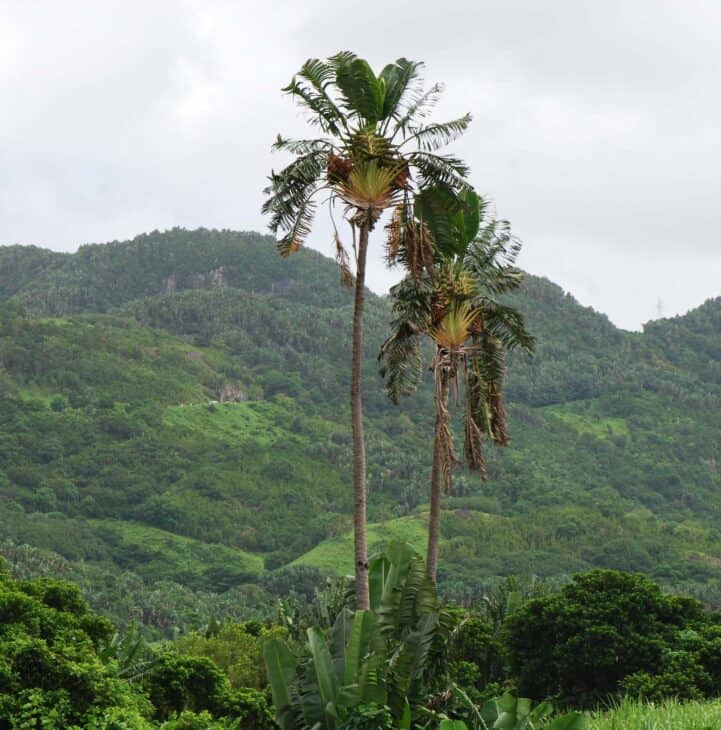
Not a true palm but a member of the Strelitziaceae family related to bird of paradise, this plant forms a distinctive fan of large leaves on a single upright trunk. Mature specimens commonly reach tree like proportions and display a broad, architectural canopy rather than multiple branching stems.
Best uses and where to grow
Use as a focal specimen in tropical or subtropical gardens where its scale complements open lawns and poolside plantings. It tolerates coastal exposure in many warm climates but needs frost free conditions to avoid damage. In cooler areas grow it in a large container and move indoors or under cover during cold weather.
Planting and spacing
Place plants where the fan can reach full size without crowding; mature spread typically ranges from about 3 to 9 meters across so allow ample clearance from buildings and other trees. Planting in well prepared, fertile soil improves establishment; avoid tight beds where the wide leaves will be restricted.
Soil and watering
Performs best in rich, moist, well drained soils and tolerates sandy to loamy textures. Provide consistent moisture because poor drainage or prolonged waterlogging leads to root decline. Mulch the root zone to conserve moisture and keep soil evenly damp but not waterlogged to prevent rot.
Light and temperature
Grows best in full sun to part shade with the best form usually produced in bright sun in warm climates. It is suited to USDA zones 9 through 11 in protected or frost free sites. Expect dieback or plant loss if exposed to hard freezes in colder zones.
Propagation and maintenance
Usually propagated from seed for landscape use. Large plants sometimes produce offsets or suckers that can be transplanted but avoid disturbing roots of mature single trunk specimens. Routine maintenance is limited to removing damaged leaves and giving regular fertilizer and irrigation for steady growth.
Containers and small sites
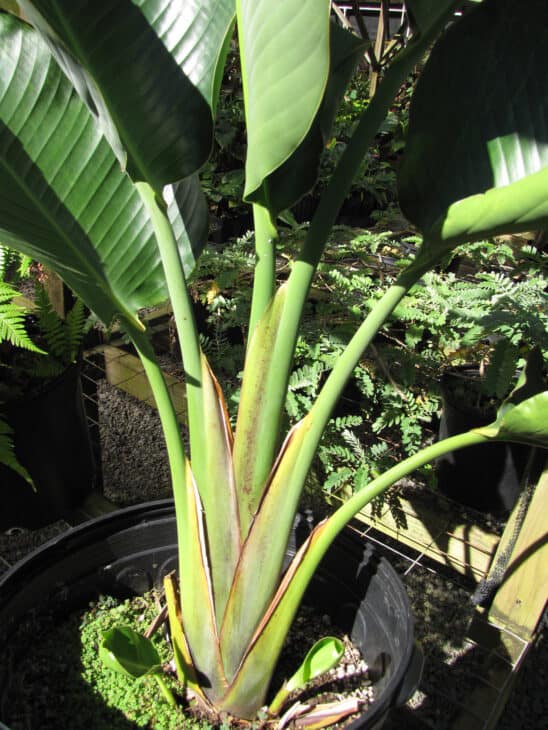
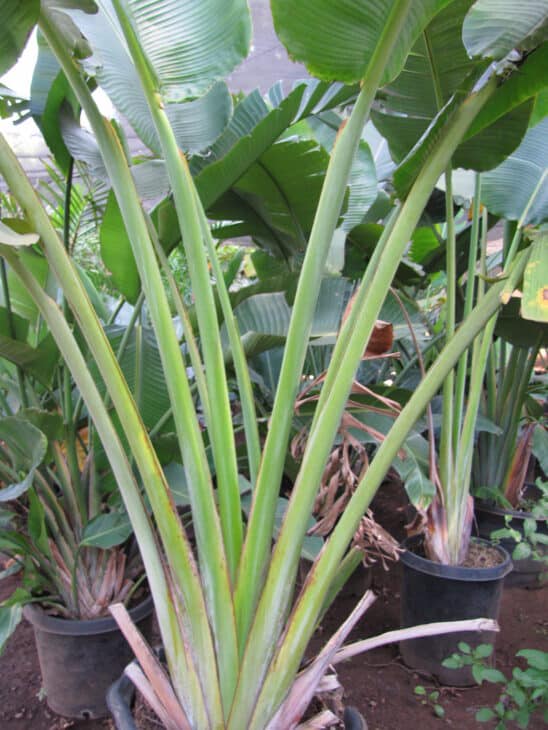
Container culture keeps size manageable and protects plants from frost but requires a large, deep container and frequent watering. Use a rich, free draining potting mix and move containers into shelter when temperatures approach freezing. Expect slower growth than in-ground specimens.
Frequently asked questions
- How fast does The Travelers Palm grow?
- Growth rate varies with climate, water and soil fertility. In warm, well watered sites it can reach a tree like height of about 9 to 15 meters over many years but will be much slower in containers or cooler climates.
- Is it a true palm?
- No. It belongs to the Strelitziaceae family and is related to bird of paradise rather than true palms.
- Can it tolerate coastal conditions?
- Yes. It tolerates coastal exposure in many warm climates but still needs fertile, well drained soil and regular moisture to perform well.
- How should I propagate The Travelers Palm?
- Seed is the primary method for landscape plants. Division or transplanting of offsets is possible where suckers occur, taking care not to disturb roots of older single trunk plants.
- Will it survive frost?
- It is best suited to frost free or mild frost areas. In USDA zones below 9 expect significant frost damage or loss unless grown under protection or kept in containers and sheltered.
Gallery
Related Plants


Mentioned In (2)

Plants
5 Plants That Look Like Banana Trees
Banana trees are what most people think of when speaking about tropical plants. Surprisingly bananas are classified botanically as berries,…

Plants
5 Plants That Look Like Bird Of Paradise
The bird of paradise is a flowering shrub indigenous to South Africa. It derives its name from the shape of…