
Key Facts
- Low perennial groundcover with trifoliate leaves.
- Produces small sweet red berries typically in spring and early summer.
- Spreads by aboveground runners called stolons.
- Forms mats often used as edible groundcover.
- Prefers well drained, fertile soil with slight acidity.
- Best fruit set in full sun but tolerates partial shade.
- Edible fruits are safe for people and commonly foraged.
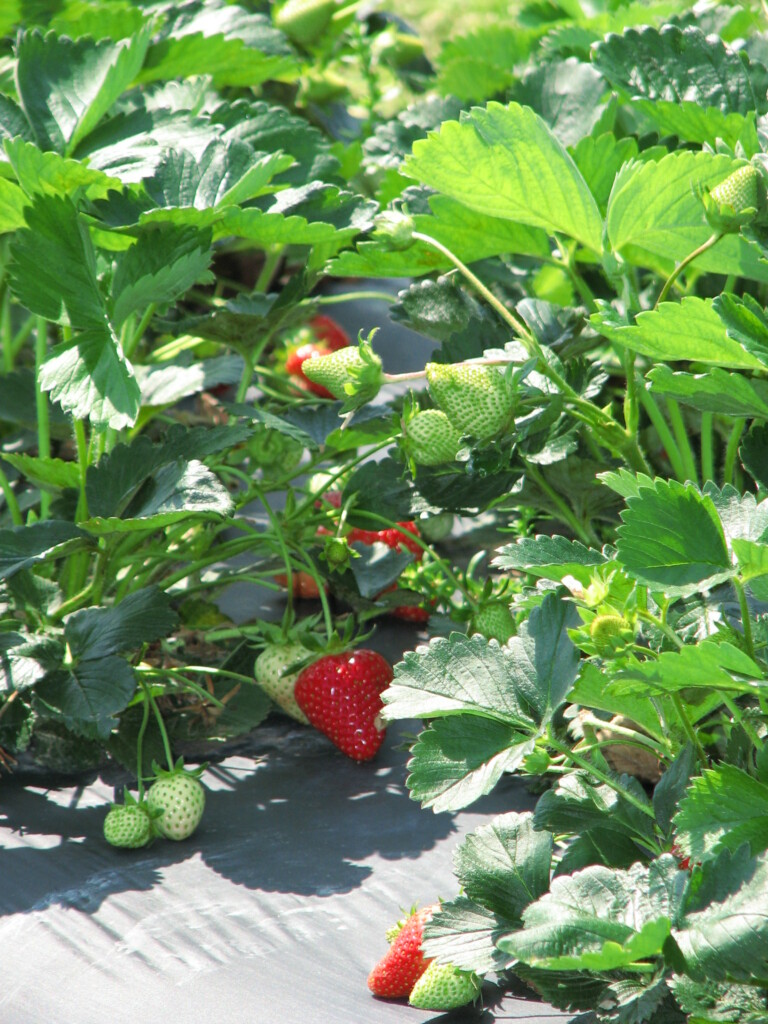
Wild Strawberries (Fragaria vesca) are a low perennial groundcover that forms mats and produces small sweet red berries in spring and early summer. They spread by aboveground runners and make an edible, low maintenance groundcover where their spread is welcome.
Identification
Plants stay very low, usually 2 to 8 inches tall, with trifoliate leaves and small white flowers that open in spring. Fruits are small, bright red and sweet when ripe. Runners or stolons produce daughter plants that root a short distance away creating dense mats over time.
Best uses and where to grow
Use wild strawberries as an edible groundcover in borders, between stepping stones or under light canopy where low growth is acceptable. They perform best in full sun for fruiting but tolerate partial shade. In USDA zones 3 to 8 plants persist outdoors and can remain active longer in warmer climates.
Soil and light preferences
They prefer well drained fertile loam with slightly acidic pH around 5.5 to 7.0 and will tolerate poorer soils if not waterlogged. Fruit set is best with at least six hours of sun, though afternoon shade can help in hot climates to reduce heat stress.
Planting and spacing
Space transplants or planted runners roughly 6 to 24 inches apart so mats can form without overcrowding. Establish new patches during active growth so runners root quickly. Avoid planting in heavy, waterlogged sites where crowns sit in standing water.
Watering and feeding
Keep soil evenly moist while plants establish. Good drainage is critical because waterlogged conditions reduce plant health and fruiting. Moderate fertility encourages flowering and berry production; heavy nitrogen can favor leaf growth over fruit.
After-flowering care and harvest
Flowers appear in spring and early summer and ripen to small red berries. Harvest berries when fully colored and fragrant. Allow some runners to root if you want the patch to naturalize; remove excess runners or thin crowded patches to maintain plant vigor and reduce disease risk.
Controlling spread and maintenance
Control spread by removing or pinching off runners, installing a root barrier or growing in containers. Divide crowded patches to rejuvenate plants and reduce shading of crowns. Regular light cleanup of old leaves helps airflow and lowers fungal disease pressure.
Containers and small spaces
Planting in containers or raised beds limits spread while still providing fruit and groundcover effect. Choose a well drained potting mix and place where plants get at least partial sun. Containers make harvesting easy and prevent accidental naturalizing in nearby beds.
Frequently asked questions
- How fast does Wild Strawberries grow?
- Growth is low but spreading. Plants reach 2 to 8 inches tall and spread by runners about 6 to 24 inches or more over time, with faster expansion in favorable conditions.
- Are wild strawberries safe to eat?
- Yes. Fruits are edible and commonly foraged. They are generally listed as non toxic to dogs and cats but large amounts can cause stomach upset; consult poison control or a veterinarian for concerns.
- When do wild strawberries bloom and fruit?
- They flower in spring with fruit appearing in spring to early summer. Exact timing varies with local climate and cultivar.
- How do I propagate wild strawberries?
- Propagate easily by runners for clones, by seed, or by dividing crowns. Runners are the quickest method to establish patches.
- What soil and light do they need?
- They prefer well drained fertile soil with slight acidity around pH 5.5 to 7.0 and do best in full sun but tolerate partial shade.
Related Plants

Mentioned In (1)

Plants
7 Plants That Look Like Strawberries (and How to Tell Them Apart)
The plant most often mistaken for a strawberry is mock strawberry, a creeping weed with the same three-part leaves and…