
Key Facts
- Tropical evergreen vine or scrambling shrub from Brazil.
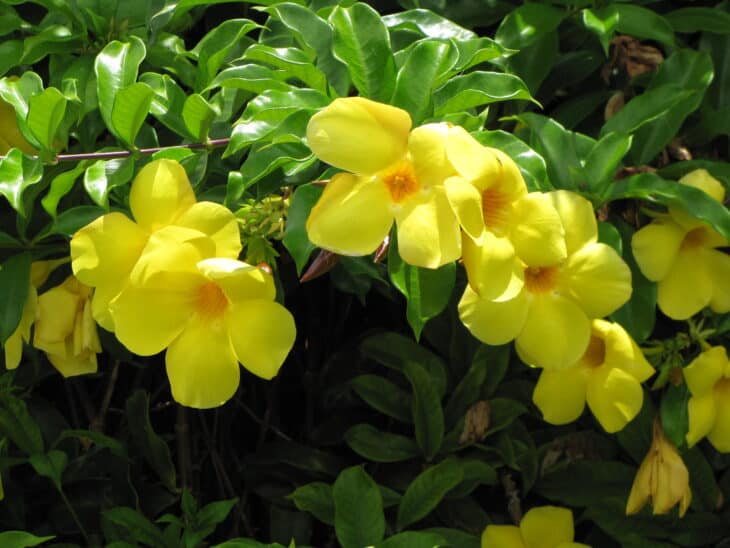
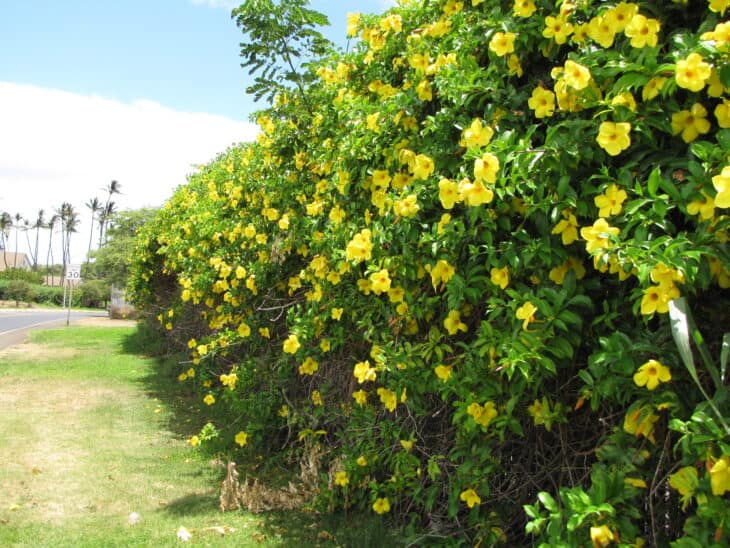
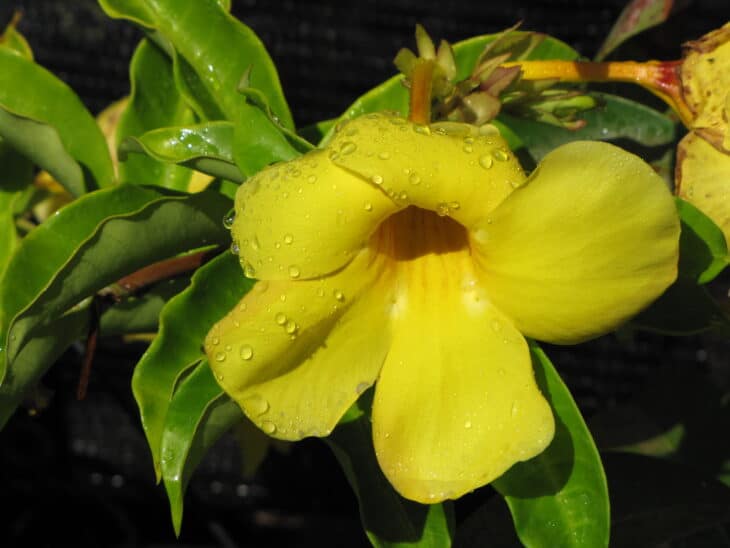
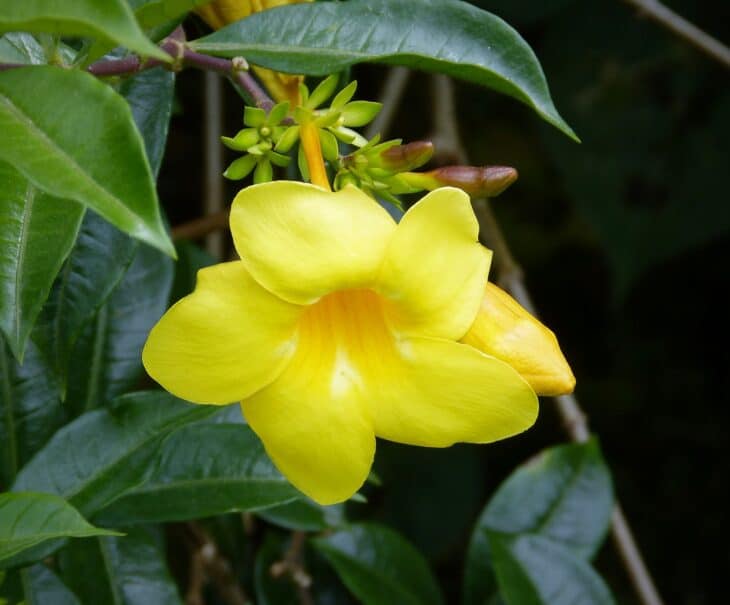
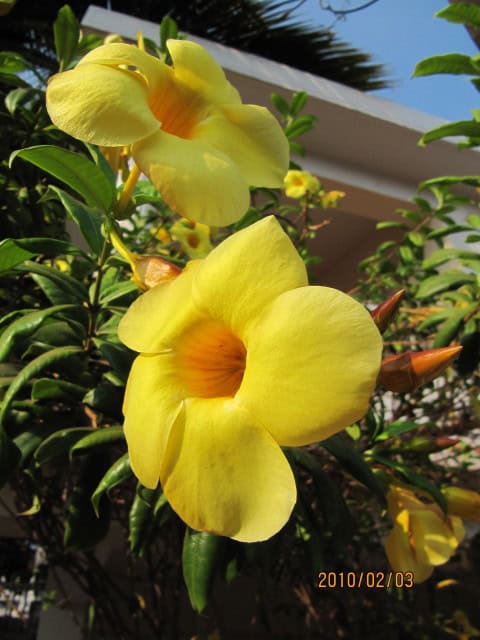
- Showy trumpet shaped yellow flowers used as ornamentals.
- Flowers repeatedly in warm, frost free conditions.
- Best flowering occurs in full sun.
- Prefers fertile, well drained soil and dislikes waterlogged sites.
- Commonly propagated by cuttings. Seed propagation is possible.
- All parts are considered toxic if ingested and the sap can irritate skin.
- Grows vigorously in warm climates and can require pruning to control spread.
Yellow Allamanda is a tropical evergreen vine or scrambling shrub with bright yellow trumpet flowers used for bold ornamental displays. It flowers repeatedly in warm, frost free conditions but is tender to cold and performs best where frost is unlikely.
Identification
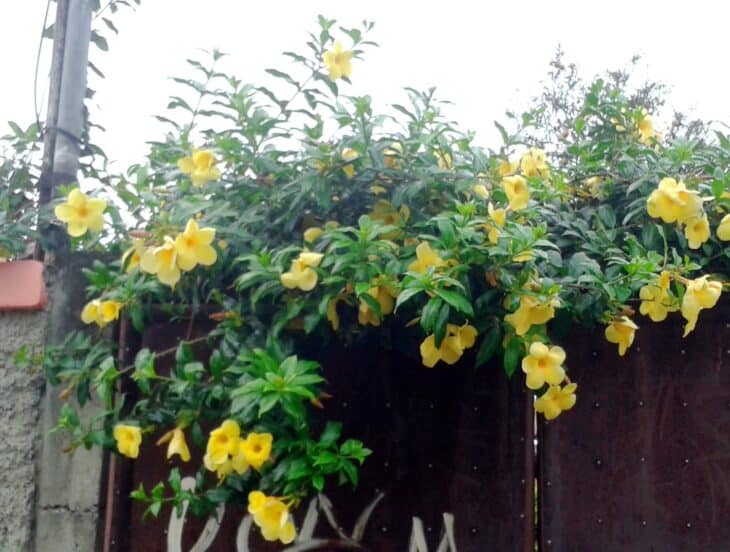
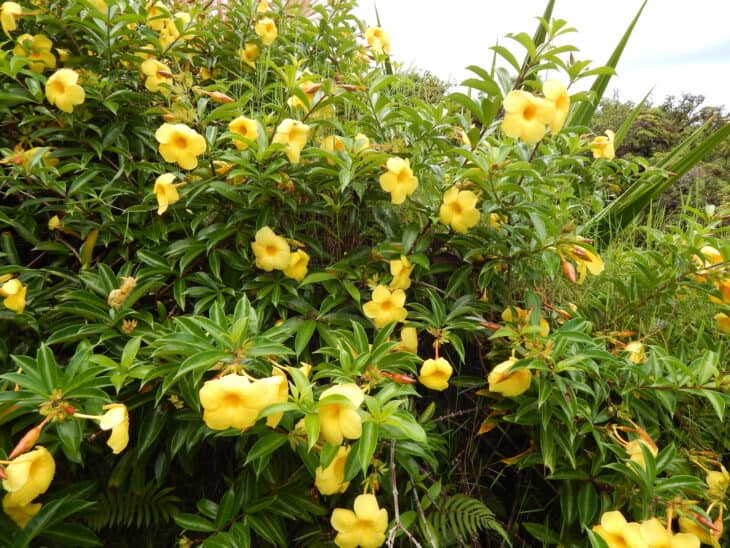
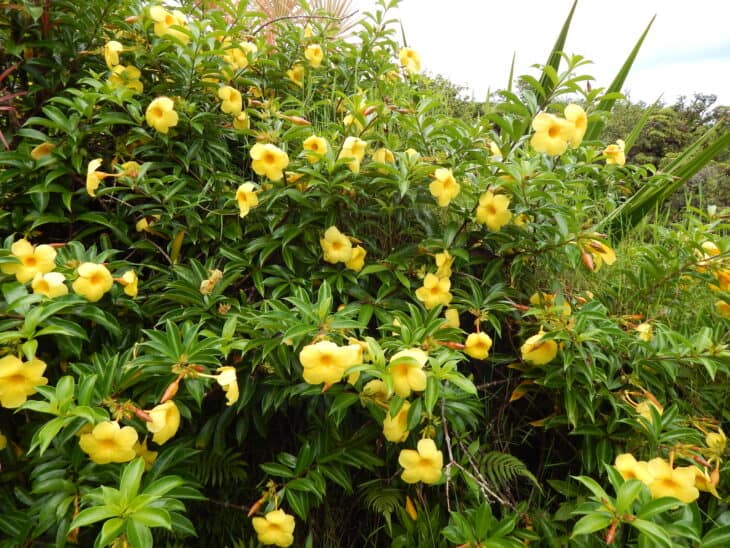
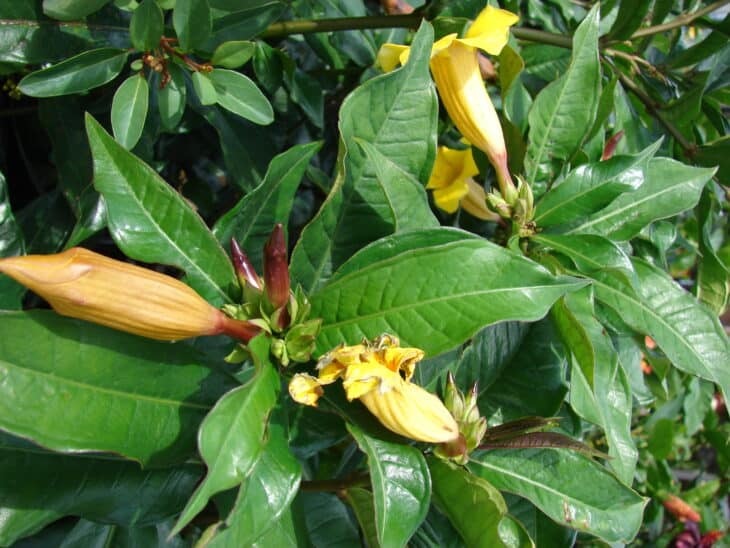
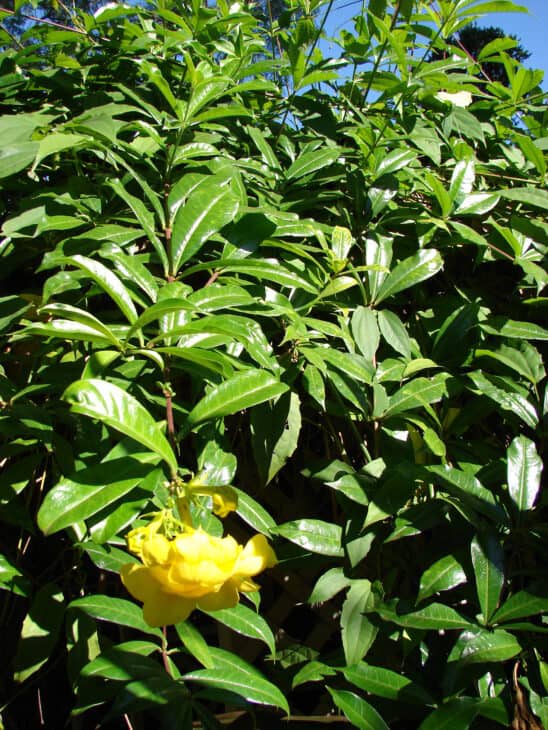
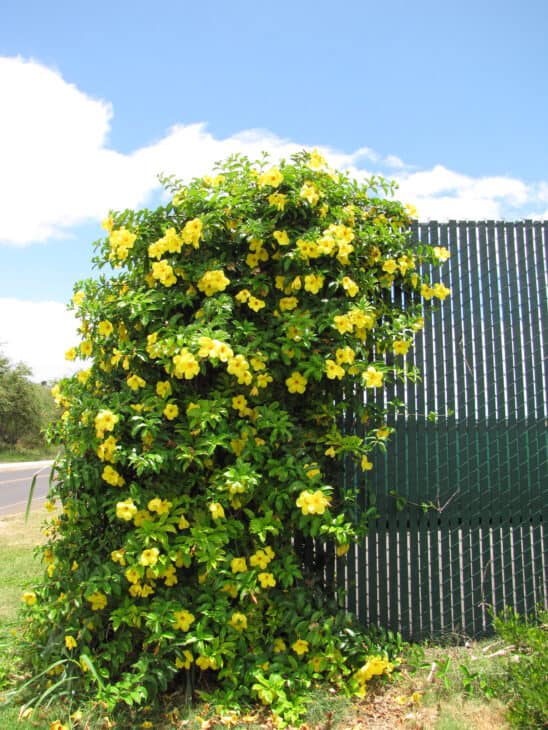
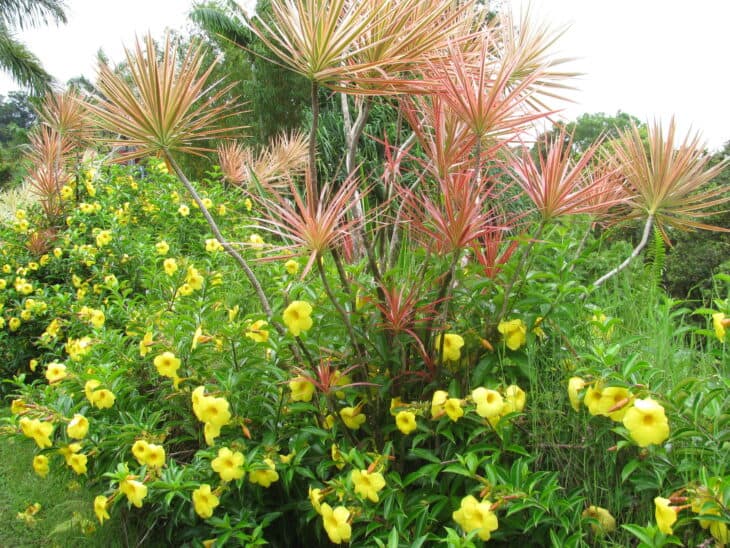
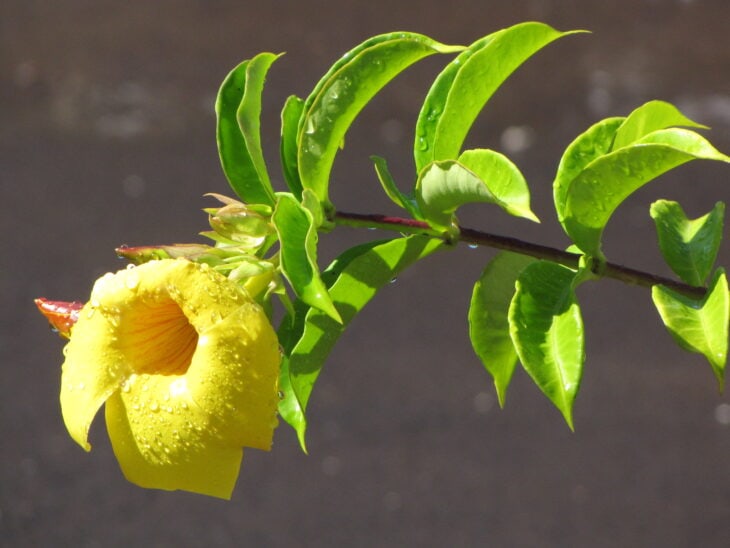
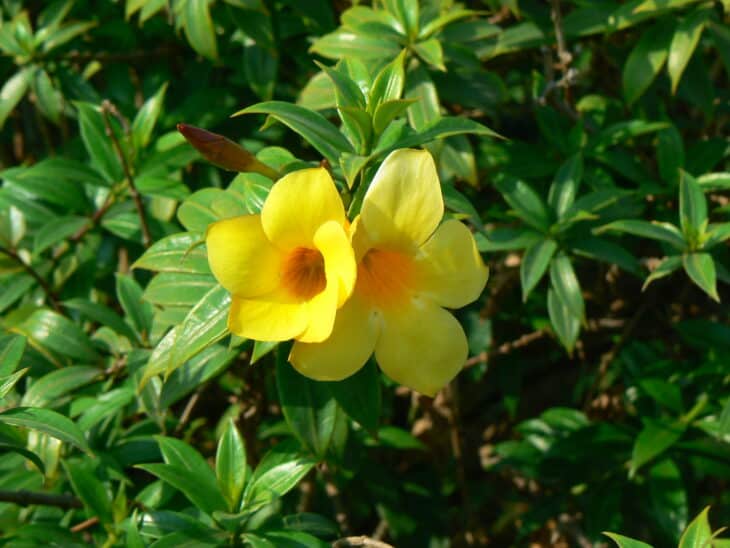
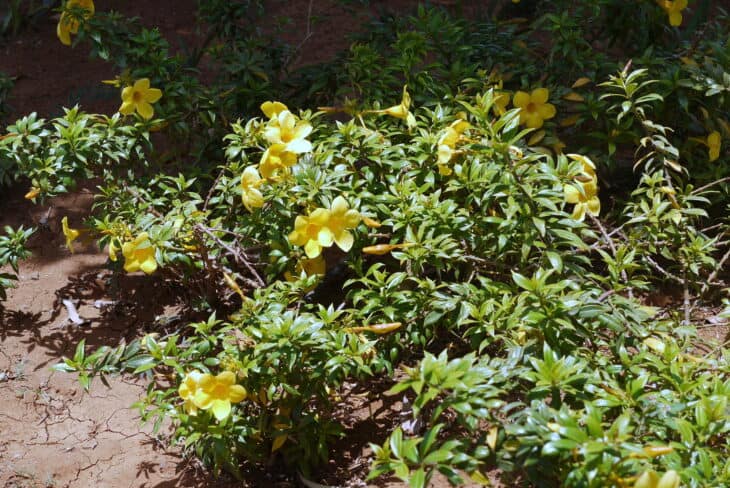
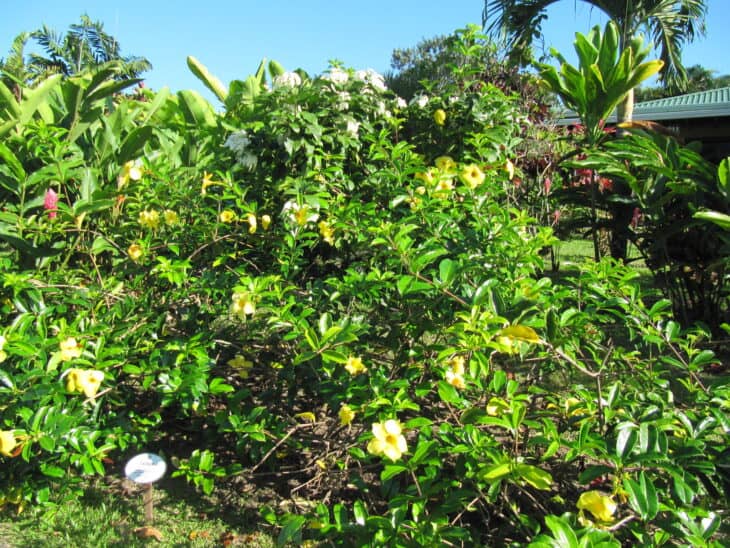
Showy trumpet shaped yellow flowers appear on a glossy leaved evergreen vine or shrub. Typical height is about 6 to 12 feet when grown as a vine or scrambling shrub and spread varies from about 3 to 8 feet depending on pruning and training. The plant has a milky sap that can irritate skin.
Where to grow and best uses
Plant in full sun for the best flowering. Use Yellow Allamanda on a trellis or pergola to create a bright screen or train it as a large flowering shrub. In warmer frost free zones the plant stays evergreen and blooms most freely. In colder areas grow in a container and move the plant to shelter for winter or treat it as a seasonal specimen.
Hardiness and climate
Generally suited to warm climates classified around USDA 10 to 11 and may survive in very sheltered spots in 9b with winter protection. In cooler climates the plant will suffer dieback and may be kept in containers or provided winter cover.
Planting and spacing
Choose a sunny site with fertile well drained soil. Space plants about 3 to 8 feet apart depending on whether you want a dense shrub or a trained vine on a support. Avoid waterlogged sites because poor drainage leads to root decline and reduced vigor.
Watering and soil
Yellow Allamanda prefers fertile soil that drains well. Keep soil evenly moist while the plant is establishing. Excess moisture around roots causes decline while drought and shade reduce flowering.
After flowering care and pruning
Prune to control vigorous growth and to shape the plant. Regular pruning limits spread and encourages new flowering wood. Remove weak or crossing stems and trim back heavy stems after the main flush of bloom to maintain size and shape.
Propagation and containers
Vegetative propagation by semi hardwood or hardwood cuttings is the usual method for preserving cultivar traits. Seed propagation is possible for the species but may not produce true to cultivar offspring. In colder climates grow Yellow Allamanda in large containers so plants can be moved to shelter over winter.
Cautions
All parts of the plant are considered toxic if ingested and the milky sap can irritate skin and eyes. Keep the plant away from children and pets and wear gloves and eye protection when pruning. The species grows vigorously in warm climates and may require regular pruning to prevent it from spreading into surrounding plantings.
Frequently asked questions
- How fast does Yellow Allamanda grow?
- Growth is vigorous in warm climates and the plant can quickly reach several metres when supported. Rate depends on light soil fertility water and pruning.
- Is Yellow Allamanda toxic?
- Yes all parts are considered toxic if ingested and the milky sap can irritate skin. Take care around children and pets and wear protection when handling.
- When does it bloom?
- In frost free tropics it can bloom year round. In warm but not fully tropical climates it typically flowers most from spring through fall.
- Can I grow it in a container?
- Yes containers are a good option in cooler areas. Containers allow you to move the plant indoors or to a protected location before cold weather.
- How do I propagate Yellow Allamanda?
- Cuttings are the most common method and root readily. Seeds can be used for the species but may not preserve specific cultivar traits.
Gallery
Related Plants


Mentioned In (1)

Plants
24 Poisonous Plants in Florida
When we think about plants, we usually think about how magnificent and beautiful they are. They are a source of…