
Key Facts
- A hybrid bramble grown for large sweet aggregate berries.
- Fruit ripens to dark red or black and is used fresh or for preserves.
- Canes are vigorous and typically thorny.
- Spreads by root suckers and can be propagated by tip layering.
- Performs best in full sun with well drained fertile soil.
- Benefits from annual pruning to renew fruiting wood.
- Susceptible to reduced vigor in poorly drained soils.
Youngberry (Rubus cecaesius) is a hybrid bramble prized for large, sweet aggregate berries that ripen dark red to black and suit fresh eating or preserves. The plant has vigorous, typically thorny canes and spreads by root suckers, so it rewards well planned placement and regular maintenance.
Identification
Youngberry produces large aggregate berries that turn dark red to black at maturity. Canes are vigorous and typically thorny and fruiting canes generally reach about 3 to 6 feet in height. Plants form new shoots from the crown and by root suckers, creating a clumping or spreading habit if left unchecked.
Best uses and where to grow
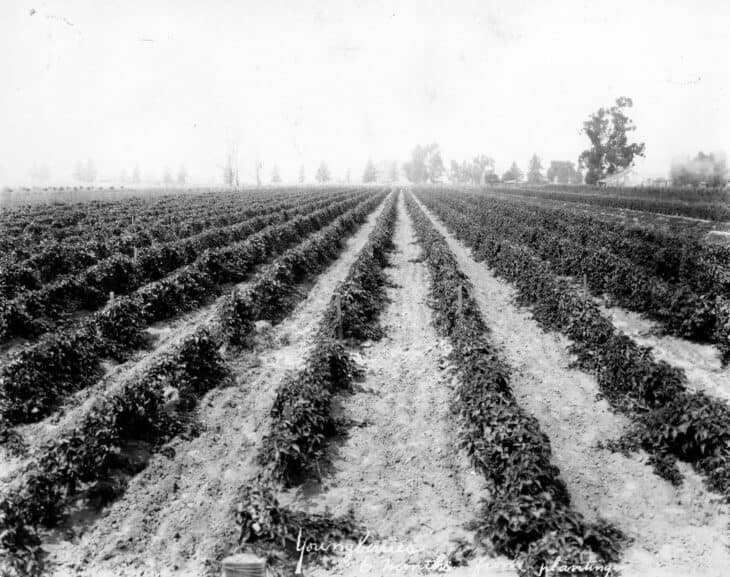
Use Youngberry for edible hedges, small fruit patches or mixed berry beds where regular harvesting and maintenance are feasible. It performs best in full sun with fertile, well drained soil and is suited to home orchards or allotments where its spreading habit can be managed.
Soil and light
Youngberry prefers full sun for best fruit set and will tolerate light afternoon shade. Soils should be well drained loam to sandy loam and slightly acidic, around pH 5.5 to 6.5. Poorly drained sites commonly reduce vigor and increase risk of root problems.
Planting and spacing
Space plants to allow 3 to 6 feet between crowns so canes and suckers have room to develop without overcrowding. Plant crowns at the soil level so roots are covered but the crown sits near the surface. Good air circulation and sun exposure improve fruiting and reduce disease pressure.
Watering and common problems
Youngberry needs consistent moisture during establishment and fruiting but does not tolerate waterlogged soil. Poor drainage leads to reduced vigor and possible root rot. Canes are susceptible to crown decline in heavy wet soils and dense shade increases disease and lowers yields.
Pruning and after-flowering care
Annual pruning to renew fruiting wood improves yields and plant health. Remove weak or dead canes and thin crowded shoots to maintain airflow. Regular removal of spent canes and management of suckers keeps the patch productive and easier to harvest.
Propagation and spread control
Youngberry spreads by root suckers and can be propagated by tip layering, crown division or hardwood cuttings. Control spread by removing unwanted suckers, installing root barriers or regularly digging out new shoots. Tip layering is a reliable home method for producing new plants from established canes.
Frequently asked questions
- How fast does Youngberry grow?
- Canes are described as vigorous and typically reach about 3 to 6 feet in height. Actual growth rate depends on site, soil fertility and climate and will vary by region and cultivar.
- What hardiness zones suit Youngberry?
- Youngberry is typically grown in USDA zones 6 to 9. Colder zones may experience cane dieback and reduced vigor while warmer areas often encourage stronger growth and more suckering.
- Are Youngberries safe for pets?
- The fruit is edible and not known to be toxic. Canes bear thorns that can injure skin. Consult a poison control or veterinary source for specific ingestion concerns or medical advice.
- How should I control Youngberry spread?
- Manage root suckers by cutting or digging them out, use root barriers or narrow rows to contain spread and remove unwanted shoots promptly. Regular maintenance reduces naturalizing and keeps the planting tidy.
- How should I prune Youngberry?
- Prune annually to renew fruiting wood by removing weak or dead canes and thinning crowded growth. Focus on maintaining air circulation and an open structure to support healthy fruit production.
Gallery
Related Plants


Mentioned In (1)

Plants
5 Plants That Look Like Blackberries
Blackberries are a superfood as they contain vitamin A, a range of B vitamins, vitamin C, vitamin E, and vitamin…