
Key Facts
- Tropical aroid commonly grown as a houseplant.
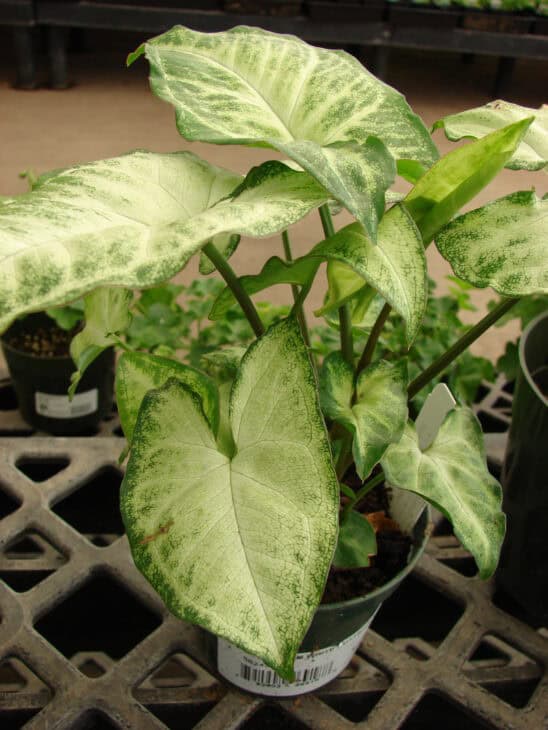
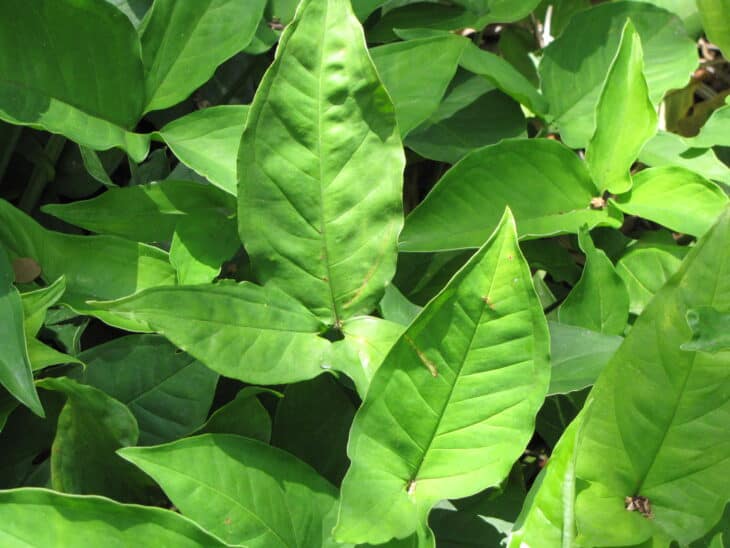
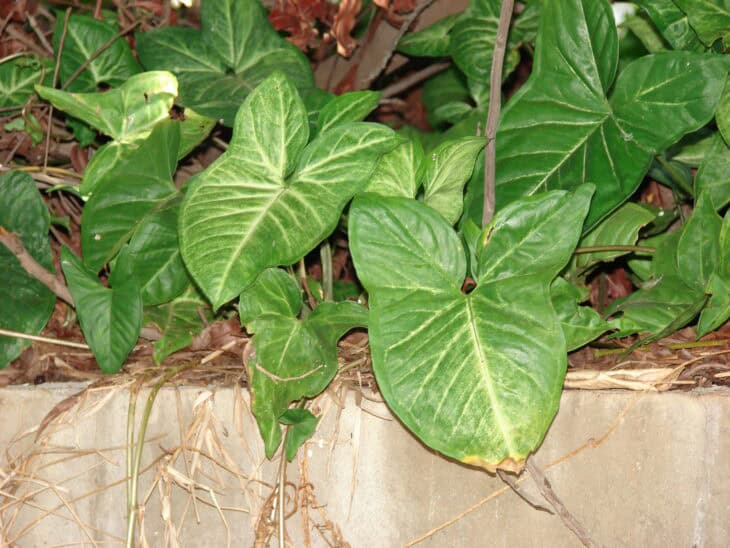
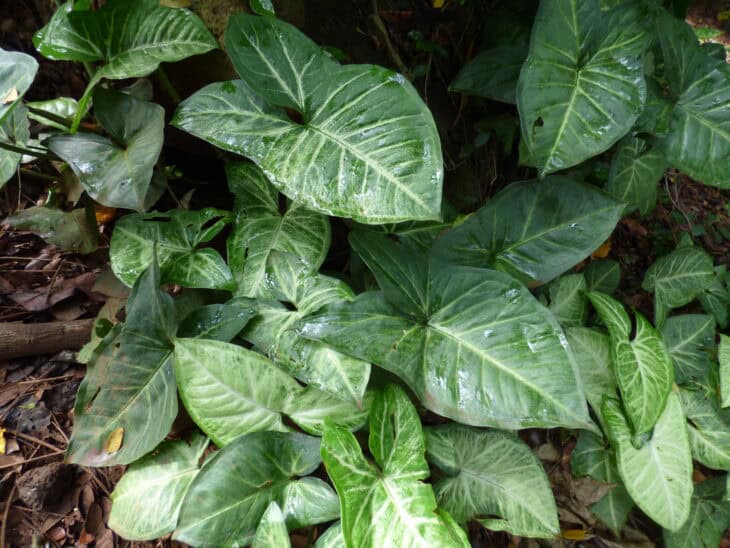
- Leaves are arrowhead shaped with white or cream variegation.
- Growth habit is climbing or trailing depending on support and pruning.
- Prefers bright indirect light to maintain variegation.
- Likes evenly moist, well draining soil and dislikes standing water.
- Easily propagated from stem cuttings taken in water or potting mix.
- All parts contain calcium oxalate crystals and are toxic if chewed or swallowed.
Variegated Arrowhead Vine is a tropical aroid grown for decorative arrowhead leaves with white or cream variegation, useful as a trailing basket plant or trained to climb a moss pole. It performs best as a houseplant where bright indirect light preserves variegation and frost is absent.
Identification
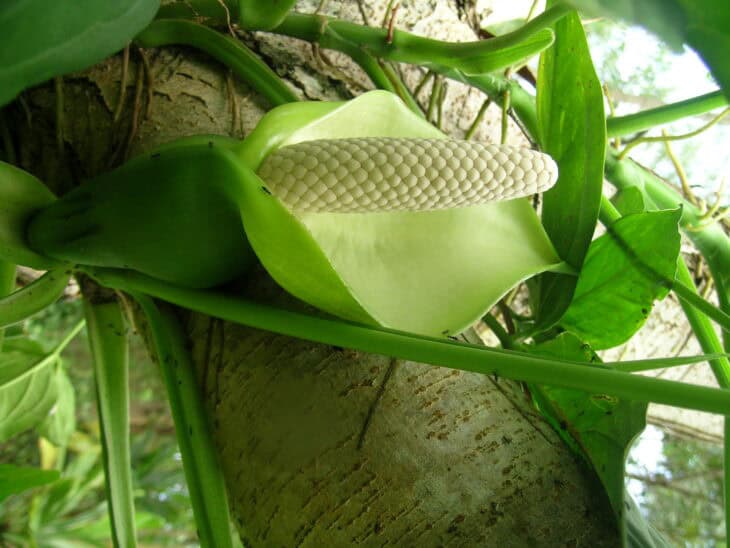
Leaves are arrowhead shaped with white or cream variegation on a tropical vine. The plant can climb or trail depending on support and pruning and rarely flowers indoors, producing small aroid spathes only under warm humid outdoor conditions.
Where to grow and common uses
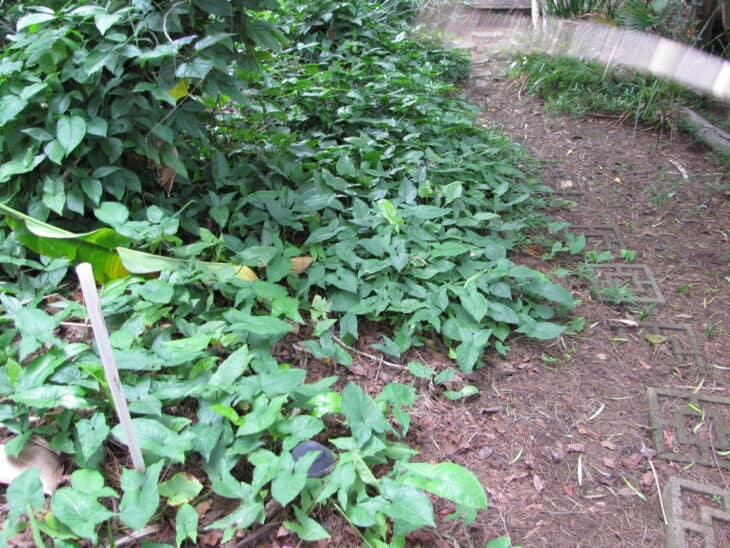
Use as a container houseplant for shelves and hanging baskets or train to climb a support to create a compact indoor accent. Outdoors it is suitable only in frost free areas corresponding to USDA zones 10 to 12 where growth can become more vigorous and semi woody.
Light
Bright indirect light maintains the best variegation. The plant tolerates lower light but variegation may fade and stems can become leggy. Avoid prolonged direct sun because leaves can scorch.
Soil and potting
Plant in a rich well draining potting mix that still retains moisture. A slightly acidic to neutral pH around 5.5 to 7.0 suits most plants. Avoid heavy mixes that stay waterlogged because root rot can follow.
Watering and visible signs
Keep the soil evenly moist but not waterlogged. Dry periods cause drooping and slowed growth while standing water leads to yellowing leaves and root decline.
Size and growth habit
Indoors the plant typically reaches about 12 to 48 inches depending on whether it is allowed to trail or is trained to climb. Spread is similar and controlled by pruning or by providing a support.
Pruning and training
Pinch or cut back long vines to encourage bushier growth and to control spread. Training onto a moss pole or trellis produces larger, semi woody stems and a more vertical display.
Propagation
Propagate easily from stem cuttings rooted in water or potting mix. The plant also divides readily and can be air layered for larger pieces.
Toxicity and safety
All parts contain calcium oxalate crystals and are toxic if chewed or swallowed. Chewing causes oral irritation and swelling and contact can irritate skin and eyes. Keep out of reach of children and pets and seek advice from poison control or a veterinarian if ingested.
Frequently asked questions
- How fast does Variegated Arrowhead Vine grow?
- Growth is moderate to fast in bright indirect light with regular moisture and feed. Indoors it commonly reaches 1 to 4 feet depending on support and pruning.
- Can it be grown outdoors?
- Yes outdoors only in frost free locations roughly USDA zones 10 to 12. In cooler climates grow it as a houseplant or bring containers indoors before cold weather.
- How should I treat yellowing leaves?
- Check for waterlogged soil and reduce watering if the pot is retaining too much moisture. Yellow leaves can also result from low light or nutrient deficiency.
- What potting mix works best?
- A rich well draining mix that holds some moisture works well. Avoid heavy garden soils that stay waterlogged.
- Is the variegation stable?
- Variegation can fade in low light. Provide bright indirect light to maintain white or cream patterns and prune back non variegated growth if needed.
Gallery
Related Plants


Mentioned In (1)

Plants
8 Plants That Look Like Pothos / Devil’s Ivy (but are not)
Pothos (Epipremnum aurem), also known as devils ivy, are popular tropical vining plants. They are easy to care for and…