
Key Facts
- Native to eastern North America.
- Herbaceous perennial from a corm.
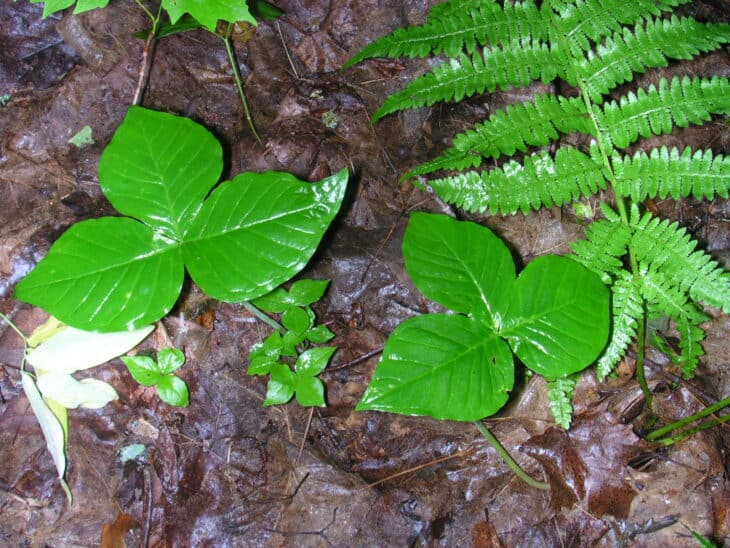
- Leaves typically in groups of three leaflets.
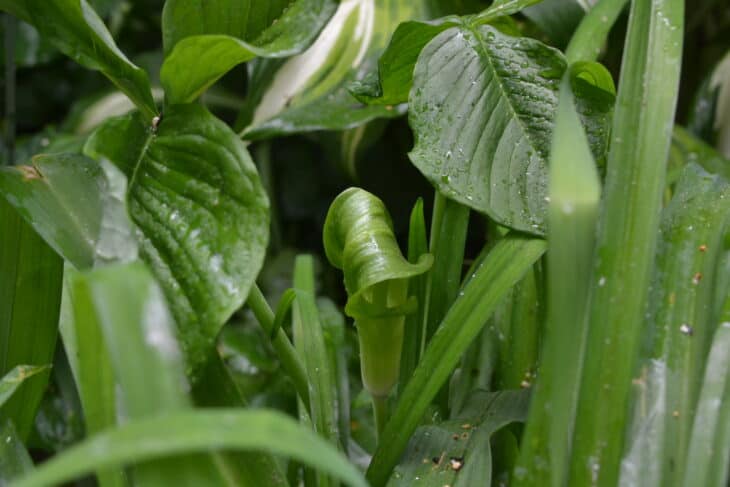
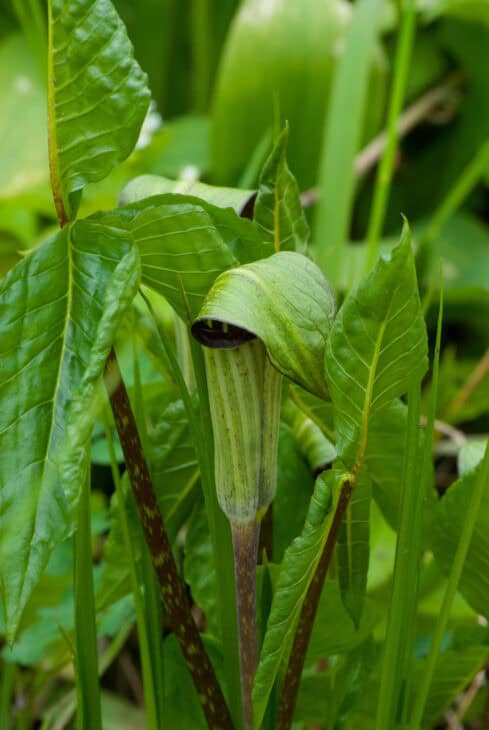
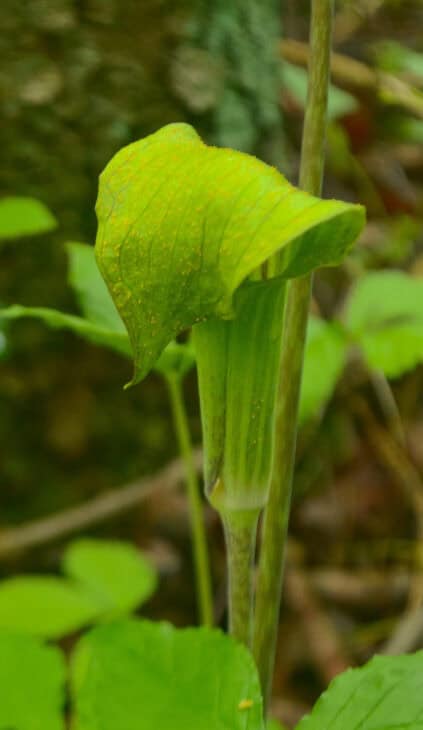
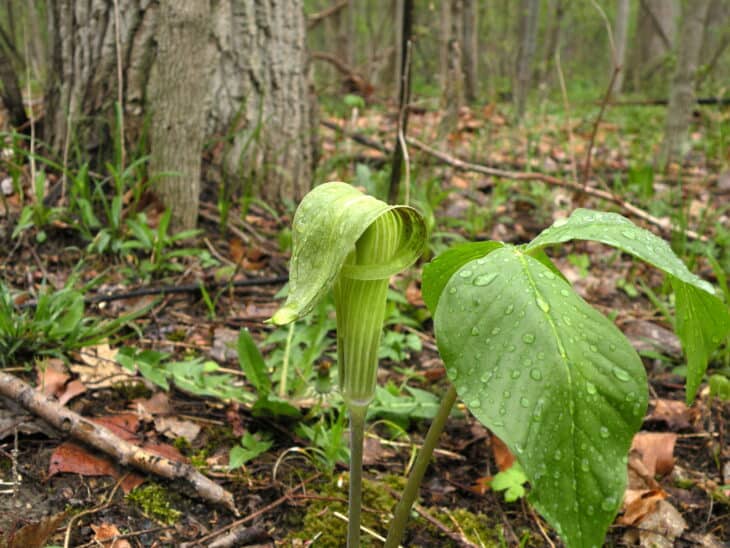
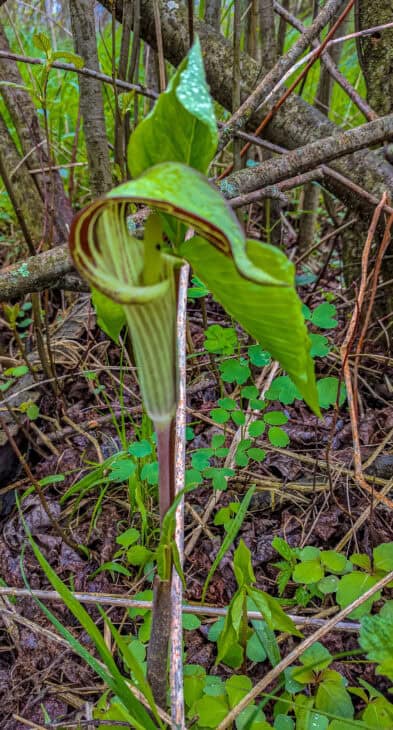
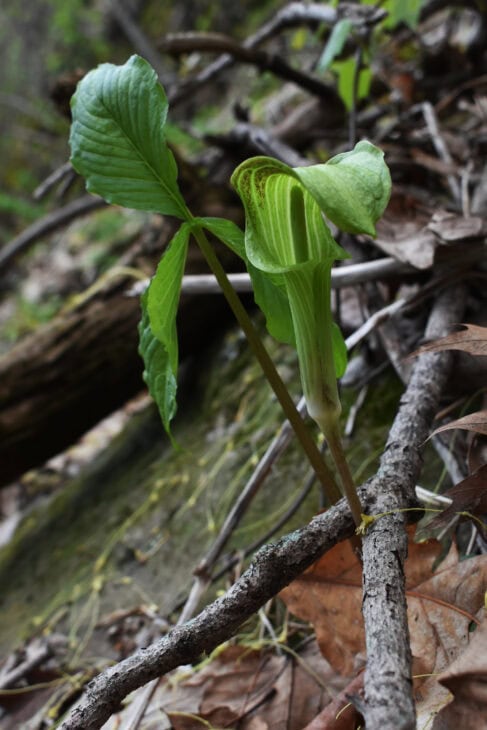
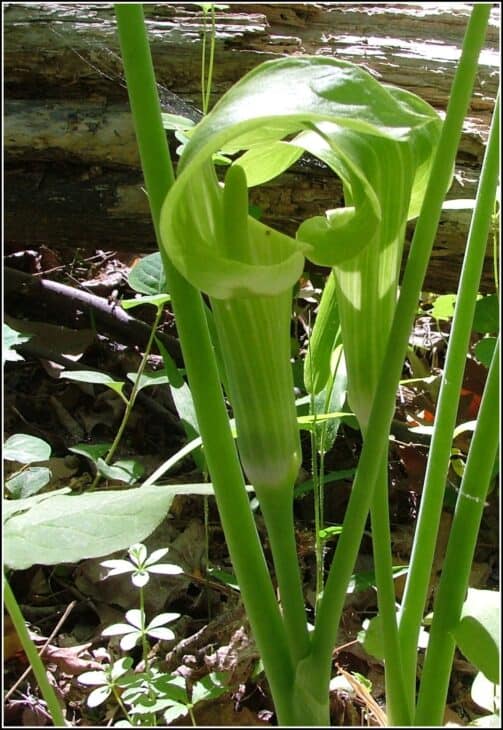
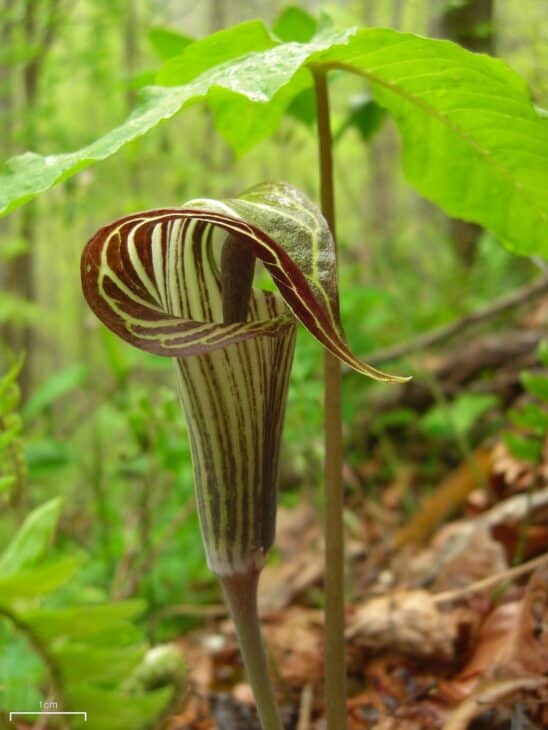
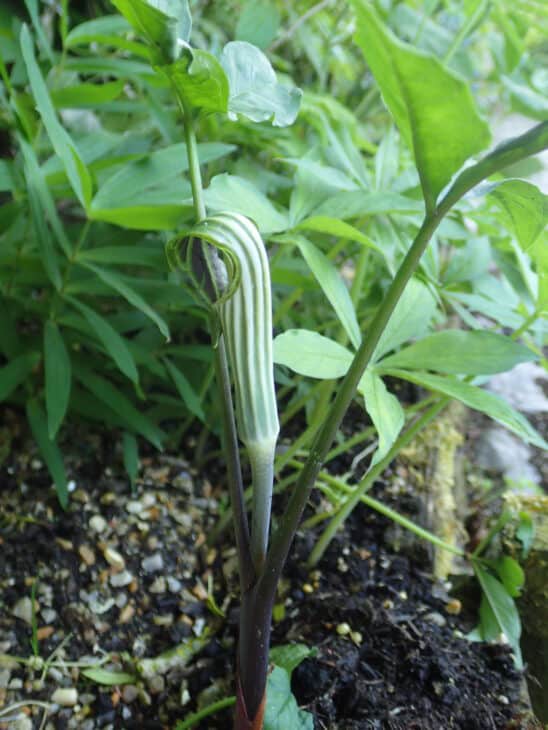
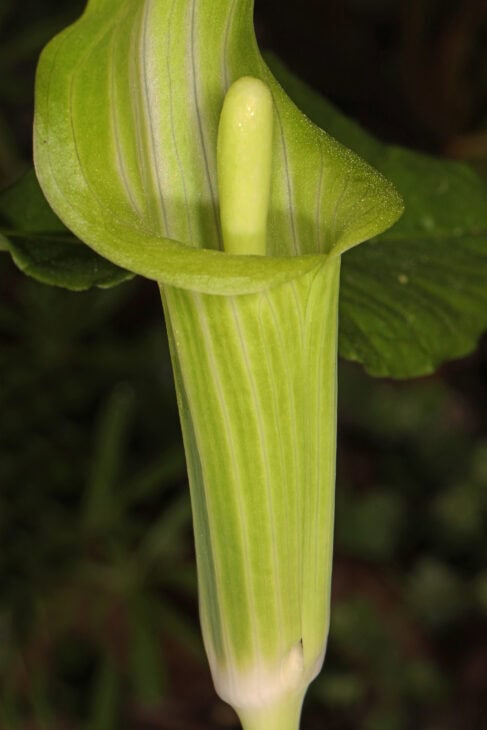
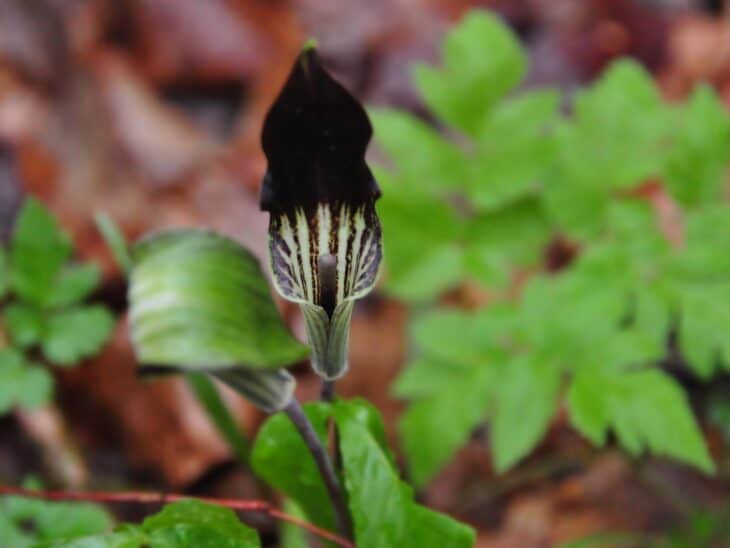
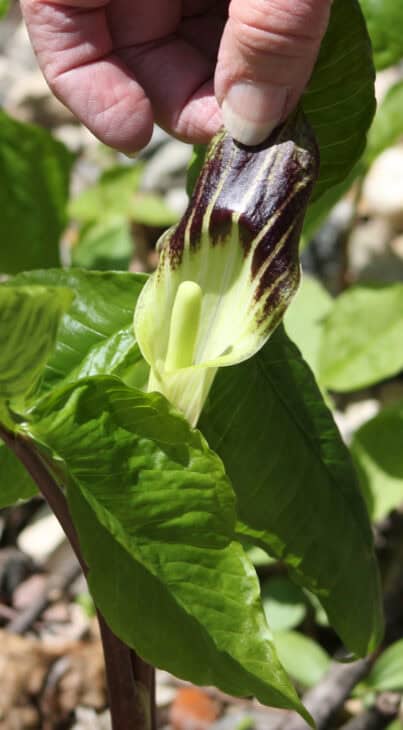
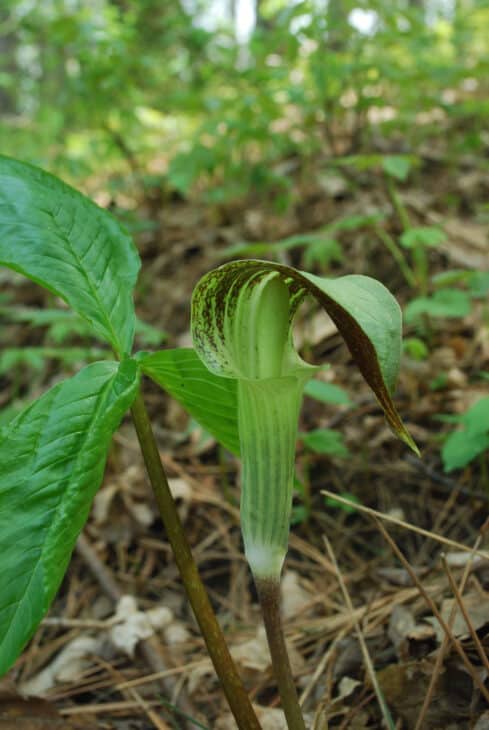
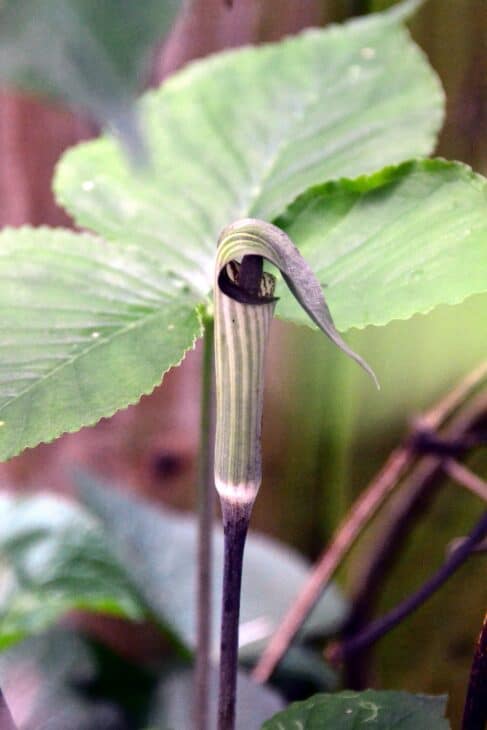
- Showy hooded spathe and central spadix in spring.
- Prefers rich moist woodland soils.
- Tolerates deep shade and understory conditions.
- Reproduces by seed and by dividing corms.
- All parts can cause oral and skin irritation if handled or eaten.
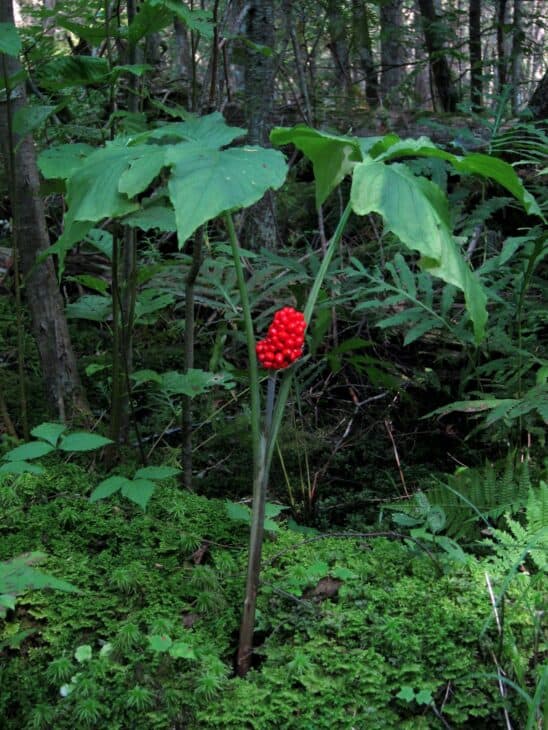
Jack-in-the-pulpit is a shade-loving woodland perennial noted for a hooded spathe surrounding a central spadix in spring. It grows from a corm and fits sheltered shady borders and naturalized woodland plantings where moisture and humus are available.
Identification
Plants reach about 8 to 24 inches tall with leaves usually in groups of three leaflets. The spring flower is a hooded spathe that encloses a central spadix. Plants arise from a corm and commonly form small colonies over time.
Where to grow and best uses
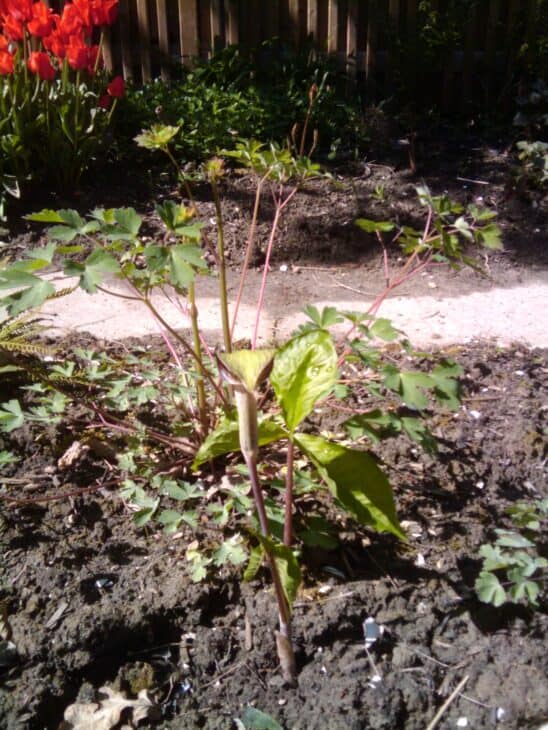
Use Jack-in-the-pulpit in woodland gardens, shaded borders and under trees where soil stays rich and moist. It works as a low understory specimen or for naturalizing in shady groundcover pockets. Note that all parts can irritate skin and mouth so place away from areas frequented by pets or children unless you can control access.
Planting and spacing
Choose a spot with part to full shade and humus-rich, well drained soil. Space plants about 12 to 24 inches apart to allow clump expansion by corm offsets and to match reported mature spread.
Soil, light and watering
Prefers rich moist soil with good drainage and acidic to neutral pH. In dry soils plants may go dormant or produce reduced foliage. In poorly drained or waterlogged soil corm rot is likely, so avoid sites that stay soggy through winter.
Bloom time and hardiness
Flowers appear in spring, typically April to June in much of eastern North America. Reported hardiness covers approximately USDA zones 4 to 9 with stronger dormancy and reliability in the cooler part of that range.
After flowering and maintenance
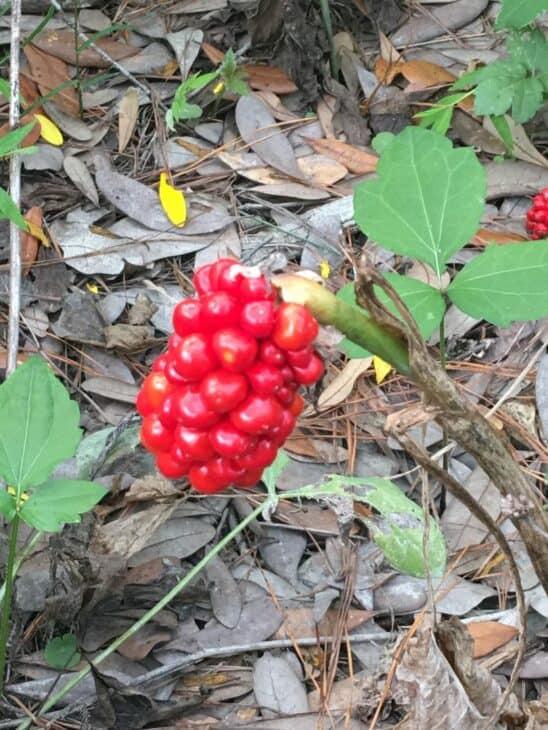
Plants typically die back after the growing season. To encourage larger clumps divide corms or allow seed to set for naturalizing. Remove seed clusters if you want to limit self-seeding. Division of corms is the fastest way to make new plants or relocate clumps.
Propagation
Propagate by seed or by dividing corms. Seed usually needs cold stratification and can take multiple years to produce flowering plants. Division produces flowering-size plants much faster than seed.
Safety and cautions
All parts contain irritant calcium oxalate crystals that can cause burning, swelling and gastrointestinal pain if ingested and may irritate skin. Consider plants toxic to humans and pets and handle with gloves when dividing or digging.
Frequently asked questions
- How fast does Jack-in-the-pulpit/Indian Turnip grow?
- Growth is slow to moderate. Mature height ranges from about 8 to 24 inches and the plant spreads gradually by corm offsets and by seed. Seed-grown plants often take several years to reach flowering size.
- Is Jack-in-the-pulpit toxic to pets and people?
- Yes. All parts contain calcium oxalate crystals that cause oral and skin irritation. Treat the plant as toxic to humans and pets and avoid ingestion.
- Will it naturalize or become invasive?
- It tends to form small colonies by corm offsets and by seed. It is not generally listed as invasive but can naturalize where conditions favor seed set and clump expansion. Remove seed heads or dig offsets to limit spread.
- Which USDA zones will it grow in?
- Reported hardiness is approximately USDA zones 4 to 9 with more reliable dormancy in cooler zones.
- How should I water Jack-in-the-pulpit?
- Keep soil consistently moist and rich in humus. If soil dries the plant may go dormant or produce reduced foliage. Avoid waterlogged sites to prevent corm rot.
- How do I propagate it?
- Propagate by dividing corms for quick results or by seed with cold stratification. Seed is slow and may require several years before flowering.
Gallery
Related Plants


Mentioned In (3)
Plants
22 Poisonous Plants in Ohio (and What to Do After Contact)
The poisonous plants that cause the most trouble in Ohio are poison ivy and wild parsnip, which injure skin, and…

Plants
18 Poisonous Plants in Michigan (and What to Do After Contact)
The poisonous plants you are most likely to meet in Michigan are poison ivy, poison sumac, wild parsnip and giant…
Plants
25 Poisonous Plants in Pennsylvania (and What to Do After Contact)
The poisonous plants you are most likely to meet in Pennsylvania are poison ivy, which grows in every county, and…