
Key Facts
- Evening-blooming tubular flowers open late afternoon and often stay open overnight.
- Tuberous-rooted plant usually grown as a tender perennial in warm climates or as an annual where frosts occur.
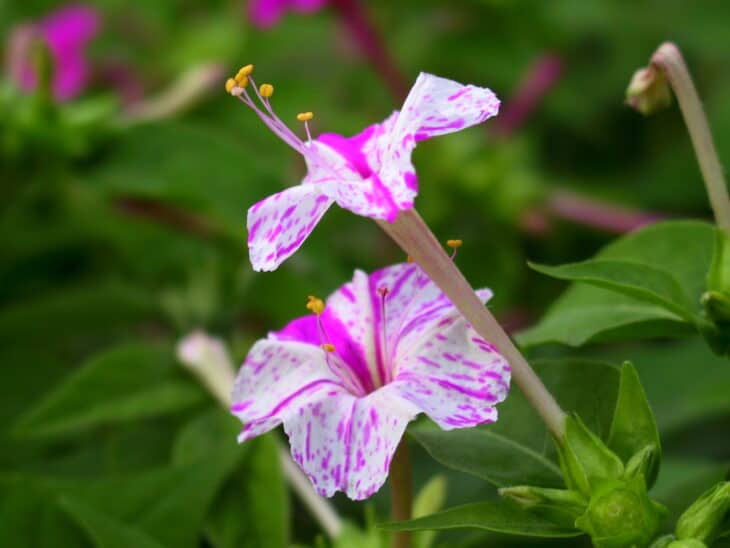
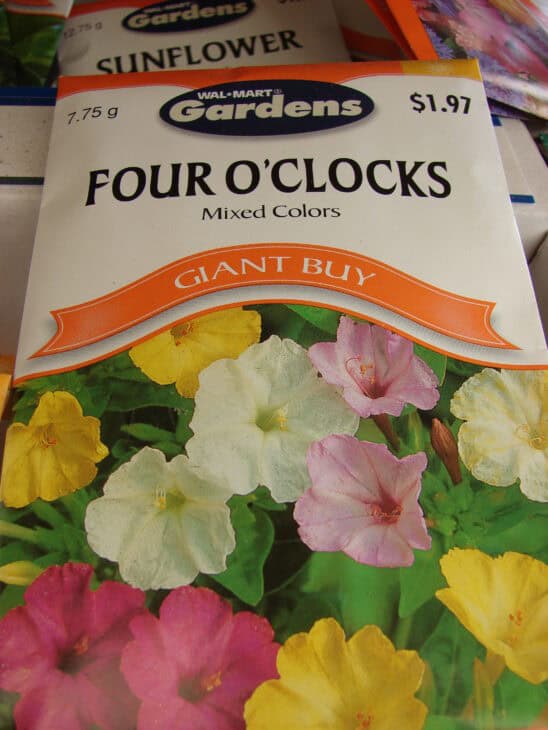
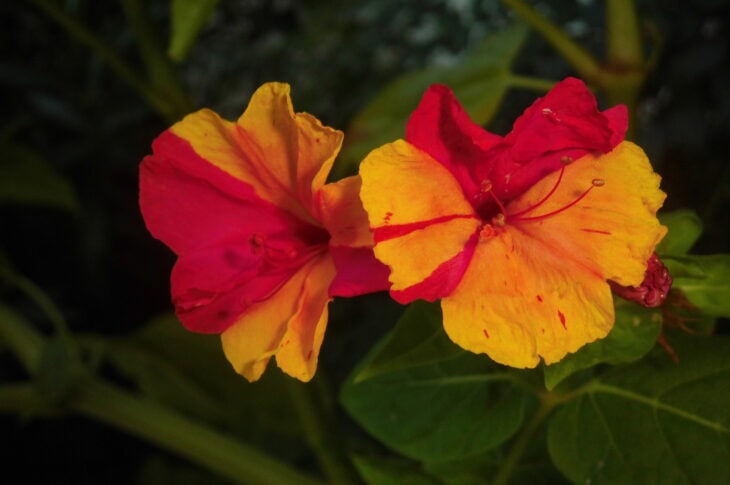
- Flowers come in mixed colors and some cultivars are variegated or bicolored.
- Attracts hummingbirds and night-flying pollinators.
- Propagates by seed and by dividing tuberous roots.
- Tolerates average garden soils and some drought once established.
- Poor drainage can cause tuber rot.
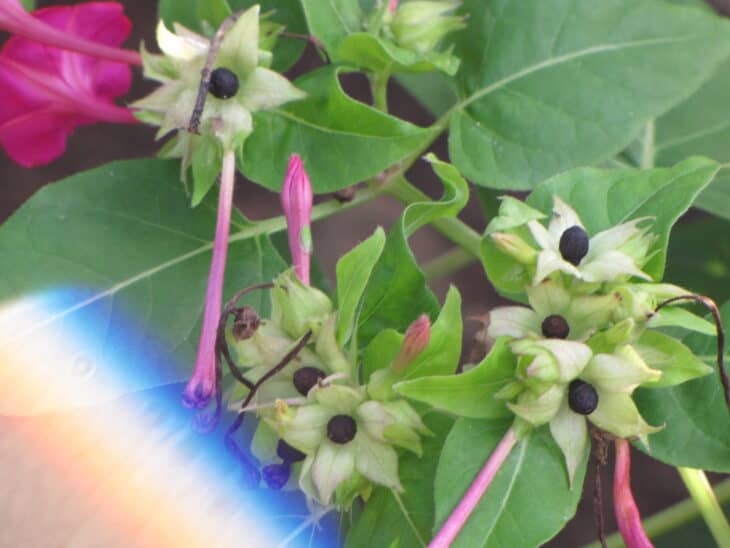
- Plant parts and especially seeds are reported as toxic if ingested.
Four O’clocks / Marvel of Peru (Mirabilis jalapa) is a tuberous flowering plant with trumpet‑shaped blooms that open in late afternoon and often stay open overnight. It is grown as a tender perennial where winters are mild and as an annual where frosts occur.
Identification
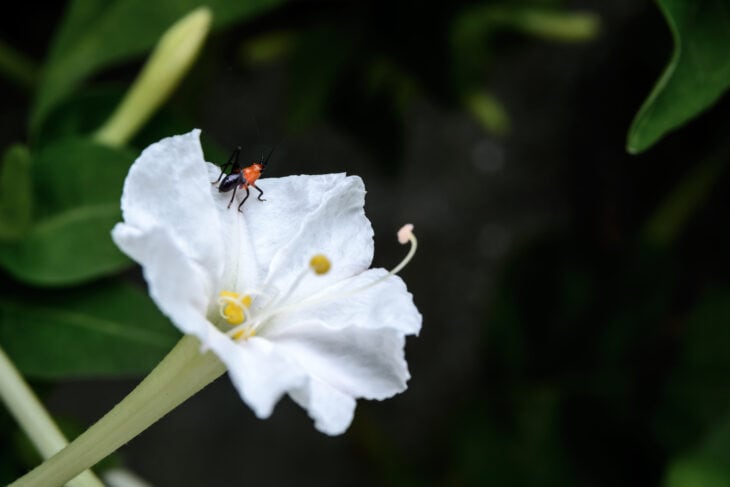
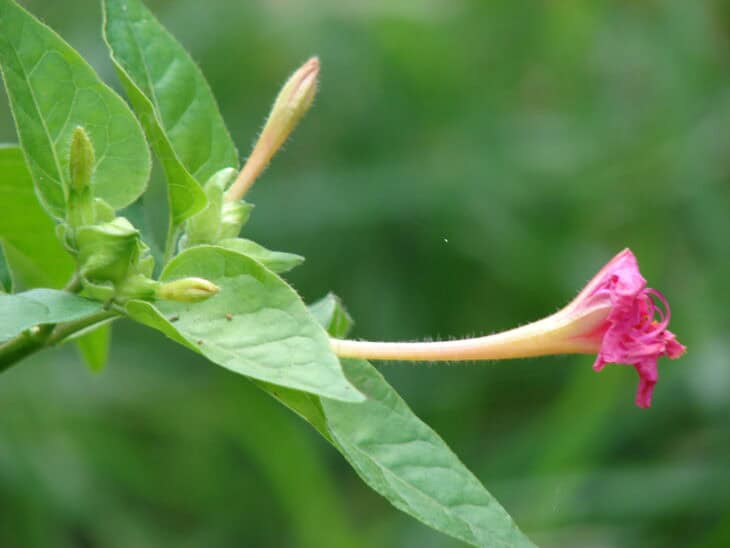
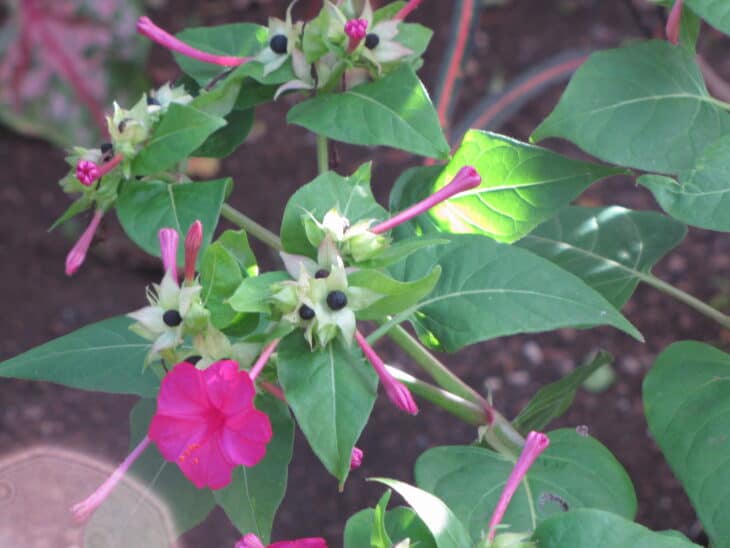
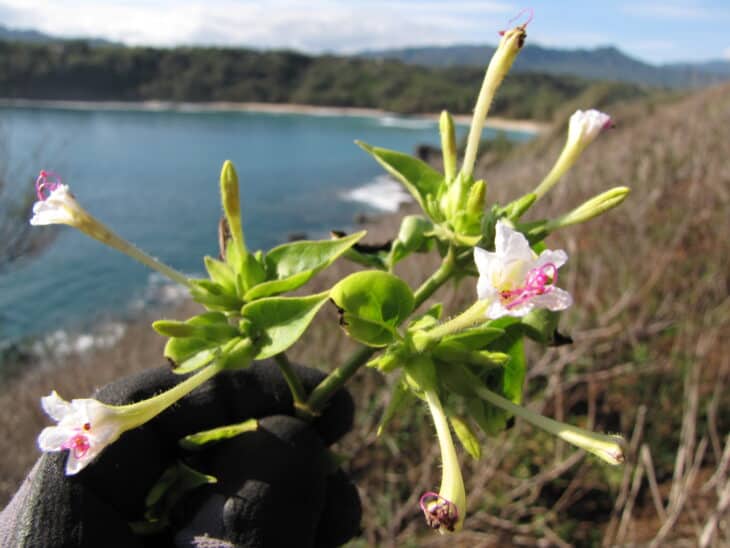
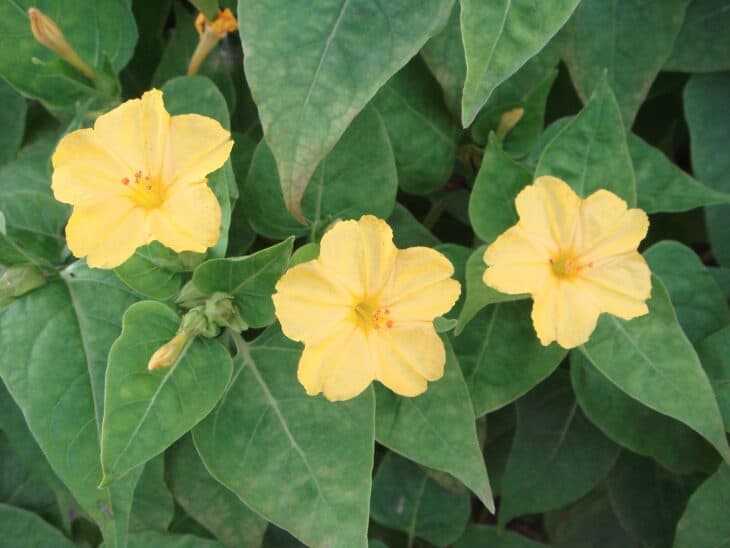
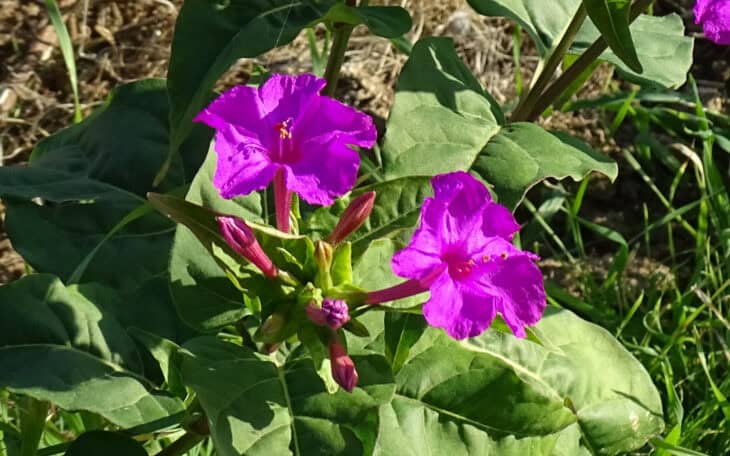
This plant forms clumps 1 to 3 feet tall with a similar 1 to 2 foot spread. Flowers are tubular and appear in mixed colors; some cultivars are bicolored or variegated. Blooms open in the late afternoon and continue into the evening, attracting hummingbirds and night‑flying pollinators.
Where to grow and best uses
Grow Four O’clocks in beds and borders where evening color is desired and where self‑seeding is acceptable. It works well in cottage borders and informal masses and can naturalize from tubers and seed in favorable climates. In frost areas treat plants as annuals or lift tubers for winter storage.
Light and soil
Plant in full sun to part shade. More flowers form in full sun, but plants benefit from afternoon shade in very hot locations. Choose fertile, well‑drained soil. Poor drainage can cause tuber rot while the plant tolerates average garden soils and some drought once established.
When to plant and spacing
Sow seed in spring after the last frost or place tubers in the ground when soil has warmed. Space plants about 12 to 24 inches apart to allow clumping and air circulation that reduces rot.
Watering and common problems
Water regularly until plants are established. Once established they tolerate some drought, but avoid waterlogged conditions because heavy, poorly drained soil leads to tuber rot. Watch for natural self‑seeding if you prefer to limit spread.
After flowering and winter care
Flowers continue from summer into fall until frost. In regions where tubers will not survive hard freezes lift and store tubers in a cool dry place for winter or treat plants as annuals and replant in spring. Dividing clumps in spring helps keep plants vigorous.
Propagation and controlling spread
Propagate by seed sown in spring or by dividing the tuberous roots. To reduce self‑seeding deadhead spent flowers and remove developing seed pods. To remove established colonies dig up tubers and any volunteer seedlings.
Toxicity and safety
Plant parts are reported as toxic if ingested and seeds are especially implicated. Keep plants away from children and pets and consult a regional poison‑control or veterinary source for clinical guidance if ingestion occurs.
Frequently asked questions
- How fast does Four O’clocks/Marvel of Peru grow?
- It is fast growing in a single season and typically reaches 1 to 3 feet tall from seed or planted tubers during the first summer.
- When do Four O’clocks bloom?
- They bloom from summer into fall and usually continue until the first frost, with individual flowers opening in late afternoon or evening.
- Can Four O’clocks survive winter?
- They are tender in frost areas. Tubers can survive in roughly USDA zones 7 to 10; in colder areas lift and store tubers or grow as annuals.
- Will Four O’clocks take over the garden?
- The species readily self‑seeds and can naturalize from tubers and seed in favorable climates. Deadhead, remove seedlings or dig tubers to control spread.
- How should I propagate Four O’clocks?
- Propagate by sowing seed in spring or by dividing tuberous roots in spring or fall.
Gallery

Related Plants


Mentioned In (5)
Plants
24 Poisonous Plants in Alabama
There are dangers lurking in the world of toxic plants, even those that look harmless. Many plants contain poisons that…

Plants
25 Poisonous Plants in Colorado
Colorado is home to abundant species of plants, including some poisonous varieties that might appear benign but can do significant…

Plants
21 Poisonous Plants in Maryland
When the warmer weather nears, many people may look forward to spending more time outdoors, which also includes natural landscapes…

Plants
18 Poisonous Plants in Nevada
The large State of Nevada is located in the country's Western region. Its borders meet Oregon, California, Idaho, Arizona, and…

Plants
24 Poisonous Plants in Oklahoma
You can find several types of poisonous plants in the state of Oklahoma in a variety of natural landscapes. So,…