
Key Facts
- Tender perennial grown for large silvery white felted foliage.
- Often used as an annual in colder climates.
- Produces small yellow daisy like flowers that are frequently removed to preserve foliage.
- Prefers well drained soil and tolerates sandy poor soils.
- Performs best in full sun to part shade.
- Can suffer root rot in poorly drained soils.
- Easily propagated from stem cuttings and by seed.
- Contains compounds associated with toxicity in the Senecio genus.
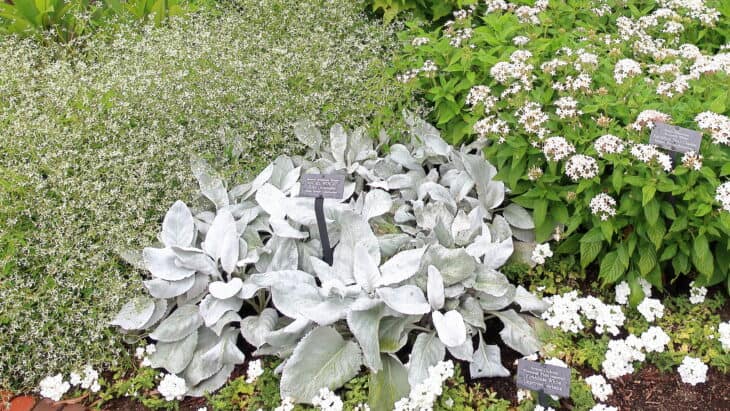
Angel Wings (Senecio candicans) is a tender perennial grown for large silvery white felted leaves, often used for striking foliage contrast in borders and containers. It performs best in sunny sites and is frequently treated as an annual in colder regions.
Identification
Large, soft, silvery white leaves form a low mound roughly 12 to 24 inches tall and 18 to 36 inches wide. Plants produce small yellow daisy like flowers that many growers remove to keep the foliage tidy.
Where to grow and common uses
Use Angel Wings as a foliage focal point in mixed borders, a silver contrast in drought tolerant beds, or as an annual accent where winters are too cold to overwinter the plant. In USDA zones 8 to 11 it can persist as a tender perennial; outside those zones grow it as an annual or provide frost protection.
Planting and spacing
Space plants according to their mature spread, about 18 to 36 inches apart so each clump can form a clear silver mound without crowding. In climates where it is treated as a perennial, plant after the last hard frost or when soil is workable.
Soil and watering
Choose well drained soil. Angel Wings tolerates sandy or poorer soils but will decline if soils stay wet; poor drainage leads to root rot. Water to establish new plants and reduce frequency once established; soggy conditions are the main cause of sudden decline.
Light and temperature
Full sun to part shade suits this species. In very hot sites some afternoon shade reduces leaf scorch. In cooler winter climates protect or lift plants before hard freezes because the plant is tender.
After flowering and maintenance
Remove flower stalks if you want to preserve the leaf display, since the small yellow blooms are not the main feature. Trim away any damaged or browned foliage to keep clumps tidy and to reduce disease risk from decaying material.
Propagation
Angel Wings roots readily from soft stem cuttings and can be started from seed. Division of larger clumps is possible. Cuttings give the quickest true to type results for named cultivars.
Problems and safety
Poor drainage is the primary cultural problem because it invites root rot. Plants in the Senecio genus contain pyrrolizidine alkaloids and can be toxic if ingested. Keep plants away from livestock and pets and avoid ingestion. Confirm specific risks with a poison control authority or veterinary toxicology source if you have concerns.
Frequently asked questions
- How fast does Angel Wings grow?
- Growth varies by site but plants commonly reach about 12 to 24 inches tall and 18 to 36 inches wide in favorable conditions; rate depends on climate and care.
- Is Angel Wings toxic to pets?
- Members of the Senecio genus contain compounds associated with toxicity. Keep plants out of reach and check with poison control for specifics.
- Can Angel Wings survive winter?
- In USDA zones 8 to 11 it can persist as a tender perennial. In colder zones grow it as an annual or protect it from frost.
- How should I propagate it?
- Soft stem cuttings root easily and give true to type plants. It can also be grown from seed and divided when clumps are large.
- Should I remove the flowers?
- Many growers remove the small yellow flowers to maintain the foliage display and to limit self-seeding.
Gallery
Related Plants


Mentioned In (1)

Plants
11 Plants That Look Like Lamb’s Ear
The plants that look most like lamb's ear are other silver, woolly-leaved plants: common mullein, rose campion, dusty miller, snow-in-summer,…