
Key Facts
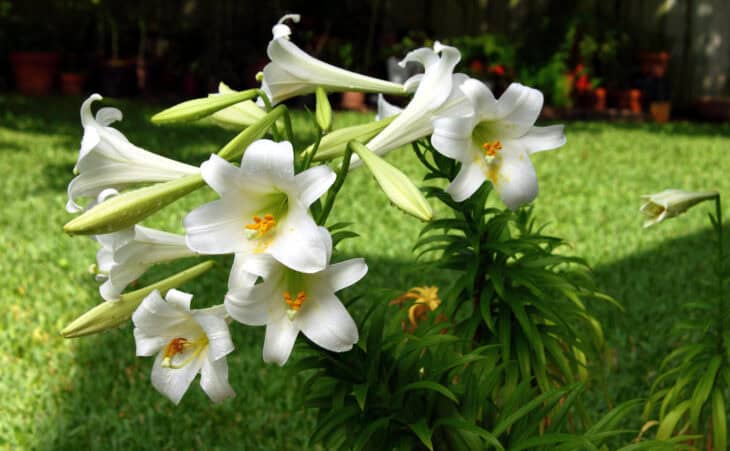
- A bulbous perennial producing large trumpet shaped white fragrant flowers.
- Commonly sold as a potted or cut-flower for Easter displays and religious observances.
- Typically grows about 2–3 ft (60–90 cm) tall.
- Prefers rich, well drained soil and full sun to part shade.
- Propagated mainly by bulbs or bulb scales rather than seed for consistent traits.
- Highly toxic to cats and can cause fatal kidney injury if ingested.
- Often forced indoors to bloom earlier than its natural outdoor season.
Easter Lily is a bulbous perennial prized for large white trumpet flowers and a strong fragrance, often sold as a potted plant or cut flower for Easter displays. It reaches about 2 to 3 feet tall with a compact 12 to 18 inch spread and suits borders, containers and floral use.
Identification
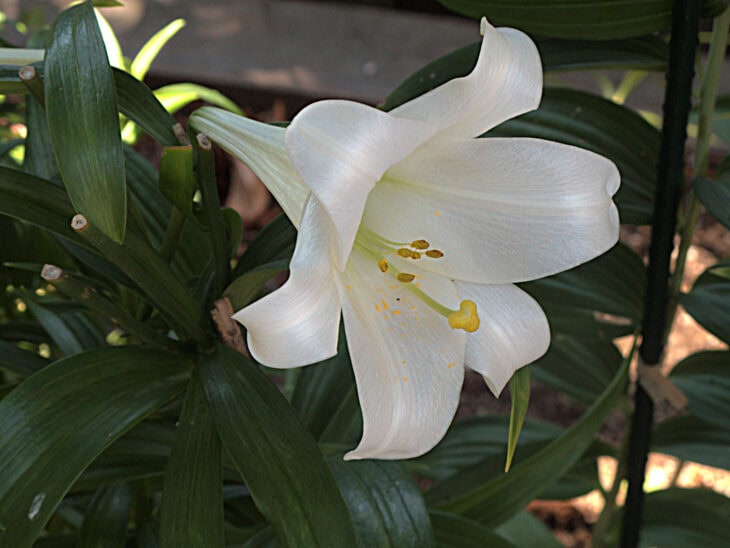
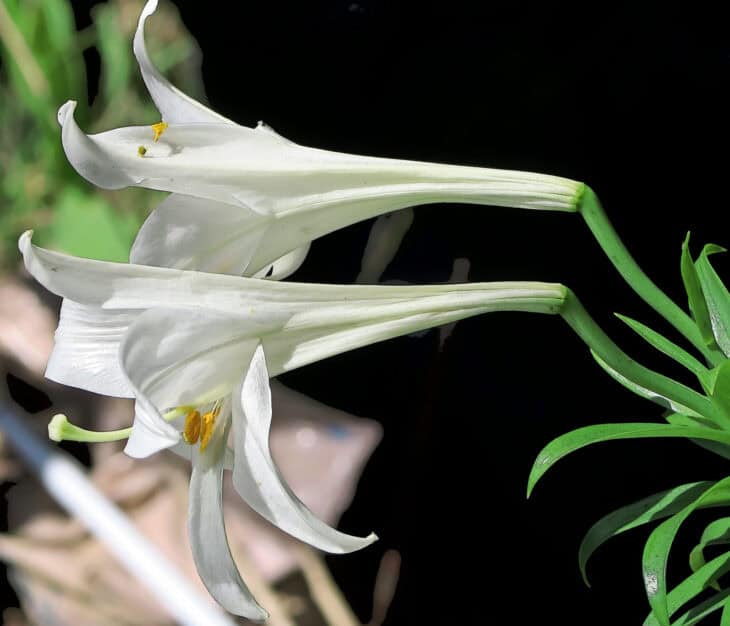
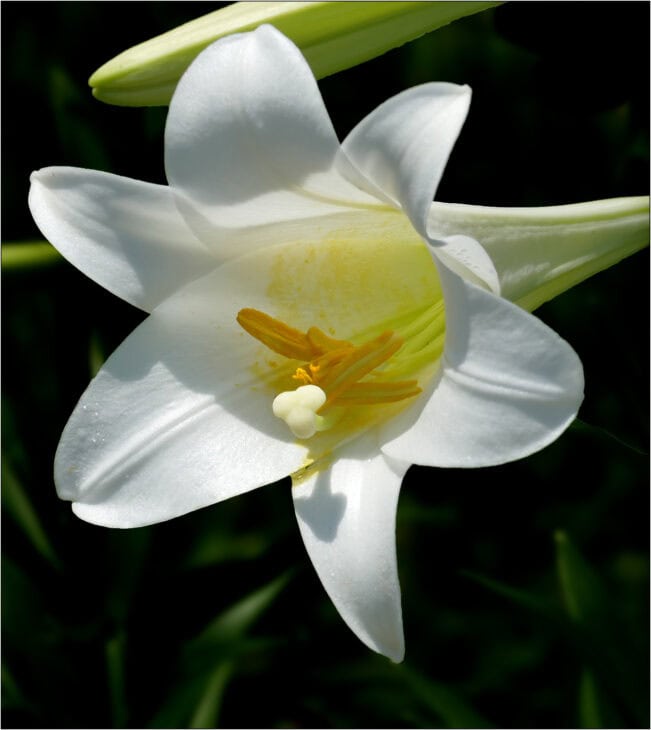
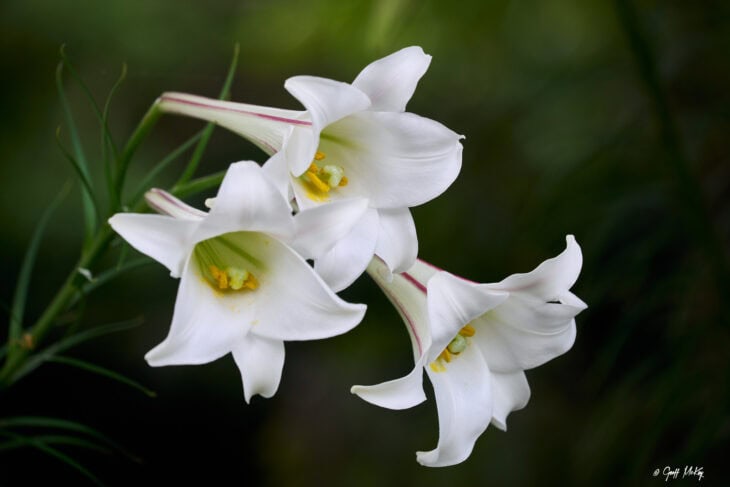
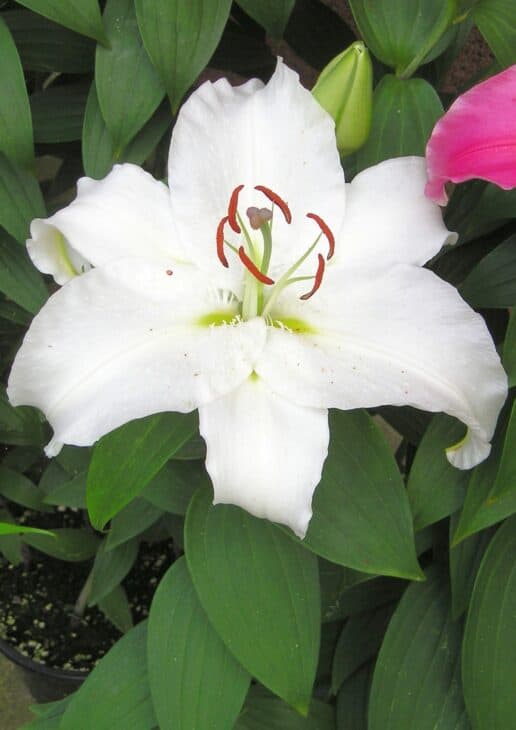
Large white, trumpet shaped blooms and a notable sweet fragrance identify this lily. Plants form from bulbs and typically stand 2 to 3 feet tall with a spread near 12 to 18 inches. Flowers are produced on upright stems in spring outdoors or earlier when bulbs are refrigerated and forced for holiday bloom.
Where to grow and best uses
Grow Easter lily in garden beds for spring color, as a container specimen, or for cutting because blooms hold well in arrangements. It prefers full sun to part shade so provide afternoon shade in hot climates. Hardy in USDA zones 4 to 8, it performs best where bulbs receive a period of winter chill.
Planting and soil
Plant in rich, moist but well drained soil to avoid bulb rot. Aim for spacing that matches the typical spread of 12 to 18 inches to allow air circulation and healthy foliage. A neutral to slightly acidic soil pH around 6.0 to 7.0 suits most plants, and avoid waterlogged planting sites.
Watering and feeding
Keep soil evenly moist while plants are growing to encourage strong flowering and prevent stress. Poor drainage or standing water promotes bulb rot and declines in the clump. Provide light feeding during the active season with a general-purpose fertilizer to support bloom and bulb development.
After-flowering care and propagation
Remove spent flowers to tidy the plant but allow leaves to die back naturally so the bulb can store energy for next year. Propagate by dividing bulbs or using bulb scales for true-to-type plants. Seed propagation is possible but uncommon for named cultivars and not generally used by nurseries.
Containers and forcing for Easter
Bulbs are commonly forced in pots to bloom indoors for holiday display. Forcing typically follows a cold period so bulbs or potting material are refrigerated before bringing them into warmth and light. Container-grown plants offer flexibility but still need well drained compost and regular moisture while flowering.
Controlling spread and overwintering
Easter lily forms discrete clumps that can naturalize without aggressive spread, making them easy to manage in borders. In colder zones foliage dies to the ground and bulbs benefit from winter cold. In warmer areas bulbs may not receive enough chill and sometimes require refrigeration before planting to flower reliably.
Toxicity and safety
All parts of Easter lily are highly toxic to cats and can cause fatal kidney failure if ingested. Humans and dogs may experience gastrointestinal upset from ingestion. Keep plants and floral clippings out of reach of pets and handle bulbs with gloves if you have skin sensitivity concerns.
Frequently asked questions
- How fast does Easter Lily grow?
- Growth from planting to bloom varies with temperature and whether bulbs are forced. Plants typically reach mature flowering height of 2 to 3 feet within the season after shoots emerge in spring.
- Are Easter lilies poisonous to cats?
- Yes. All parts of the plant are highly toxic to cats and can cause fatal kidney failure. Keep lilies away from homes with cats and contact a veterinarian or poison control immediately if ingestion is suspected.
- Can Easter lilies be planted outside?
- Yes. They are commonly planted outdoors where winters provide chilling, generally suited to USDA zones 4 to 8. Choose a sunny to partially shaded site with well drained soil.
- When do Easter lilies bloom?
- Outdoors they bloom in spring. Bulbs that are refrigerated and forced will bloom earlier in late winter to early spring for holiday displays.
- How do you force an Easter lily to bloom for Easter?
- Commercial forcing uses a cold storage period followed by warmth and light to time flowering. Home forcing involves a refrigeration period for bulbs before potting and bringing them into a warm, bright spot to encourage bloom.
Gallery



Related Plants


Mentioned In (1)

Plants
24 Poisonous Plants in Tennessee
Interested in learning about the poisonous plants in Tennessee to protect yourself when hiking the great outdoors in the state?…