
Key Facts
- A short-lived perennial or biennial herb in the pea family.
- Forms rounded pink to red flower heads that attract bees.
- Fixes nitrogen through a symbiosis with Rhizobium bacteria.
- Commonly used as a forage crop and cover crop.
- Prefers full sun and fertile well drained soils.
- Can reseed and spread where conditions suit.
- May present a bloat risk to grazing ruminants if eaten fresh in quantity.
Red Clover is a short-lived perennial legume grown for forage, cover cropping and pollinators, producing rounded pink to red flower heads and fixing nitrogen in the soil. It suits sunny, well drained garden sites and will naturalize by reseeding where conditions favor germination.
Identification
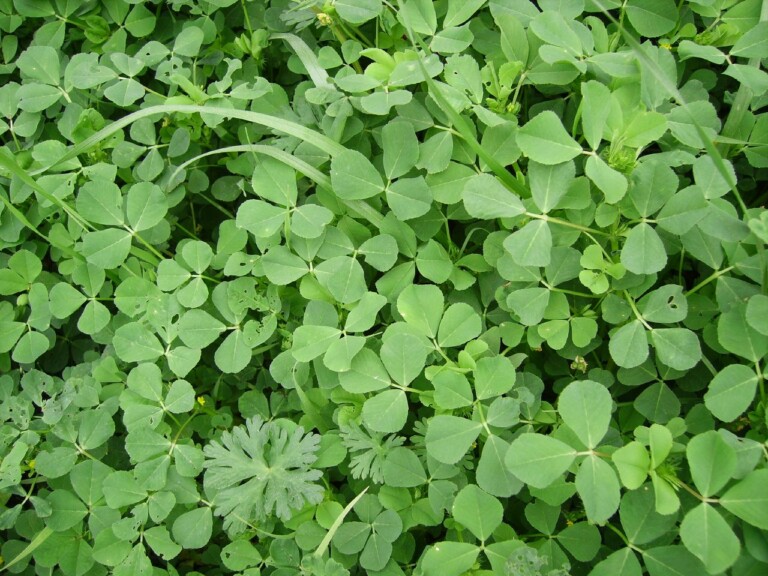
Trifolium pratense is a herb in the pea family that forms clumps of trifoliate leaves and dense rounded flower heads in shades of pink to red. Plants commonly reach about 8 to 24 inches tall with a spread of roughly 6 to 18 inches at maturity, and the flowers are highly attractive to bees.
Best uses and where to grow
Use red clover as a forage species, a green manure or a pollinator-friendly patch in sunny beds or meadow edges. It performs best in full sun to partial shade and is typically listed for USDA hardiness zones 3 to 8. Avoid waterlogged ground and choose fertile, well drained soil for best vigor.
Planting and propagation
Establish red clover from seed sown in spring or autumn, which is the standard method for forage and cover crop seeding. Good seedbed contact improves germination and inoculation with an appropriate Rhizobium strain helps nitrogen fixation. Division is possible but uncommon for home gardeners.
Soil, light and watering
Red clover prefers fertile, well drained loam with a neutral to slightly acidic pH around 6.0 to 7.0 and tolerates a range of soils if drainage is adequate. Provide full sun for best flowering. Poor drainage invites crown rot while low fertility reduces shoot growth and floral display.
Bloom, size and timing
Flowering generally occurs from late spring into mid summer with peak bloom around May to July in the Northern Hemisphere. Expect rounded pink to red flower heads on stems rising from low clumps. Plants are usually short lived or behave as biennials, with vigor and height influenced by fertility and moisture.
After-flowering care and managing spread
Red clover readily reseeds where conditions suit, which is useful for cover cropping but can let it naturalize in flower meadows. To limit spread remove or mow seed heads before they mature. For forage or cover crop use allow flowering where pollinators are a priority and manage seed set where containment is needed.
Toxicity and livestock notes
Red clover is not considered highly toxic to people or common pets but can cause bloat in grazing ruminants when eaten fresh in quantity and contains isoflavones with estrogenic activity that may affect livestock reproduction if consumed in large amounts. Consult veterinary extension guidance before using as pasture.
Frequently asked questions
- How fast does Red Clover grow?
- Red clover establishes quickly from seed and often produces flowering stems the first season when sown in spring under favorable conditions, though growth rate varies with soil fertility and moisture.
- Will Red Clover fix nitrogen?
- Yes. Red clover forms a symbiosis with Rhizobium bacteria and contributes nitrogen to the soil, especially when properly inoculated at planting.
- Is Red Clover safe for pets and livestock?
- It is generally non toxic to people and common pets but poses a bloat risk to cattle and sheep if grazed heavily, and contains phytoestrogens that can affect livestock reproduction in large amounts.
- When does Red Clover bloom?
- Bloom season typically runs from spring into mid summer, commonly peaking between May and July in the Northern Hemisphere, with timing affected by local climate.
- Can Red Clover be used as a cover crop?
- Yes. It is widely used as a cover crop and forage species to improve soil nitrogen and provide pollinator forage, though management is needed to control reseeding.
Related Plants


Mentioned In (1)
Plants
7 Plants That Look Like Clover
Clover is loved, used, or seen as a lawn pest. The reaction depends on the degree of horticultural insights one…