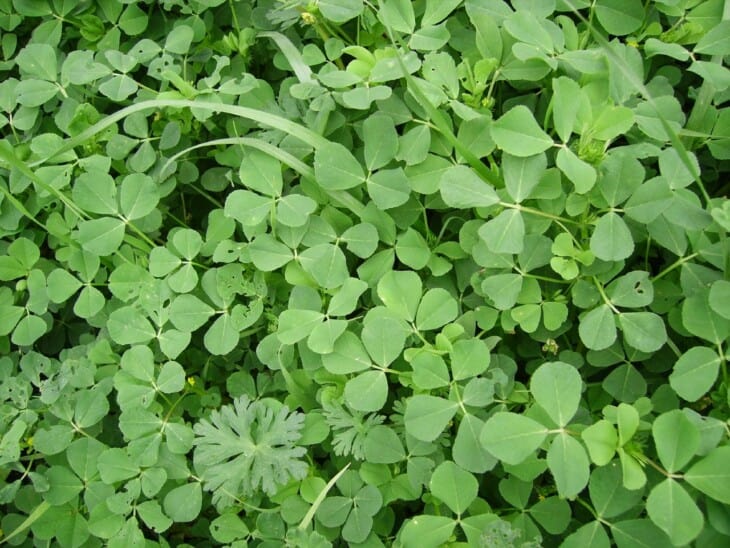
The plants most often mistaken for clover are wood sorrels (Oxalis) and black medic. Wood sorrels have heart-shaped leaflets that fold down at night and five-petaled yellow, pink or white flowers. Black medic has tiny yellow flower heads and a small point at the tip of each leaflet. True clovers (Trifolium) have oval or rounded leaflets, often with a pale “V” mark, and flowers packed into round heads. Other clover lookalikes are bird’s-foot trefoil and alfalfa, and some plants sold as clovers, such as hop clover and the Irish shamrock, are true clovers.
Contents
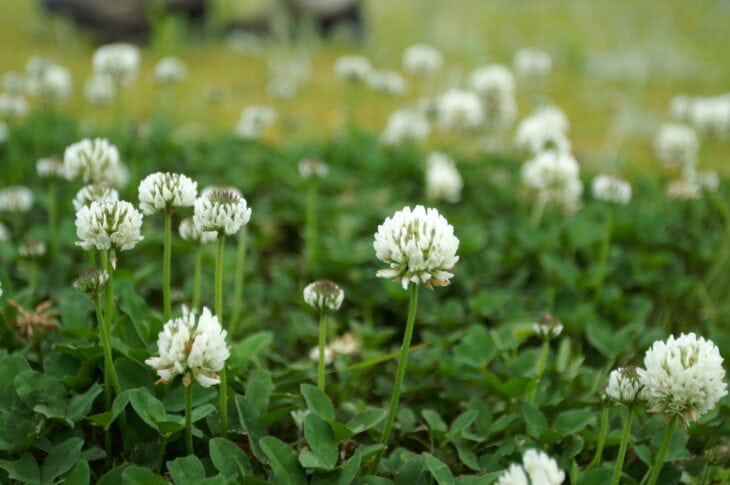
White clover (Trifolium repens) is the clover of lawns. It is a low, creeping perennial in the pea family, and like other legumes it has nodules on its roots with Rhizobium bacteria that take nitrogen from the air and feed it to the soil. That is why clover stays green in lawns that are never fertilized, and why farmers sow it as forage and green manure. Each leaf has three oval leaflets, usually with a whitish chevron, attached at one point. The flowers are small, round heads of white or pale pink florets, very popular with bees. There are about 250 to 300 species of clover worldwide.
- Clover Lookalikes That Aren’t Clover
- Clovers You May Not Recognize as Clover
- What About Four-Leaf Clovers?
- How to Tell Clover From Its Lookalikes
| Plant | Botanical name | Flowers | Leaves | True clover? |
|---|---|---|---|---|
| Yellow Wood Sorrel | Oxalis stricta | Yellow, five petals | Heart-shaped; fold at night | No |
| Common Wood Sorrel (Shamrock) | Oxalis acetosella | White with purple veins | Heart-shaped; fold at night | No |
| Pink Wood Sorrel | Oxalis articulata | Pink, five petals | Heart-shaped, hairy | No |
| Iron Cross Oxalis | Oxalis tetraphylla | Pink to red | Four leaflets with a purple band | No |
| Black Medic | Medicago lupulina | Tiny yellow heads | Oval, toothed; tiny point at the tip; middle leaflet on a stalk | No |
| Bird’s-Foot Trefoil | Lotus corniculatus | Yellow, pea-like, in a ring | Five leaflets (three plus two at the base) | No |
| Alfalfa | Medicago sativa | Purple, in short spikes | Narrow, toothed at the tip | No |
| Red Clover | Trifolium pratense | Pink-purple, large round heads | Oval, with a pale V; hairy | Yes |
| Lesser Clover (Suckling Clover) | Trifolium dubium | Small, pale yellow heads | Small, oval; middle leaflet stalked | Yes |
Clover Lookalikes That Aren’t Clover
Yellow Wood Sorrel (Oxalis stricta)
Read our guide to Yellow Wood Sorrel

Yellow wood sorrel is the plant most often called “clover” in gardens and lawns. Its leaves have three heart-shaped leaflets, each with a crease down the middle, and they fold down like a closed umbrella at night and in strong sun. Clover leaflets are oval and don’t fold like that. It has small, five-petaled yellow flowers and upright, okra-like seed pods that shoot out seeds when touched. The leaves taste sour and lemony, which is why it is called sourgrass. They are edible in small amounts, but they contain oxalic acid, which can harm the kidneys in large amounts or in grazing animals. Creeping wood sorrel (Oxalis corniculata) is similar but creeps along the ground and often has purple leaves.
Common Wood Sorrel (Shamrock) (Oxalis acetosella)

Common wood sorrel is a small woodland plant of Europe and Asia, with a native relative (Oxalis montana) in the cool forests of northeastern North America. It has three heart-shaped, bright green leaflets and delicate white flowers with fine purple veins in spring. It is one of the plants sometimes offered as the “true” shamrock, and the shamrock plants sold in pots around St. Patrick’s Day are usually wood sorrels. The traditional Irish shamrock, though, is a clover: most often lesser clover (Trifolium dubium), below.
Pink Wood Sorrel (Oxalis articulata)
Read our guide to Pink Wood Sorrel
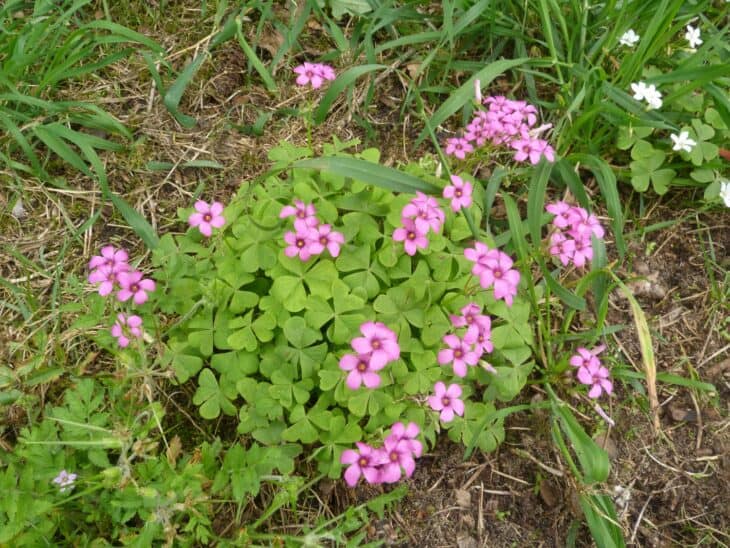
Pink wood sorrel is a South American wood sorrel grown in gardens for its clumps of clover-like leaves and bright pink flowers in spring and summer. The leaflets are heart-shaped, soft and slightly hairy, and like all wood sorrels they close at night. It grows from a knobby, woody rhizome and is hardy in zones 7 to 10. It escapes from gardens in some warm areas. Clover never has pink, five-petaled flowers like these.
Iron Cross Oxalis (Oxalis tetraphylla)
Read our guide to Iron Cross Oxalis

Iron cross is a Mexican wood sorrel often sold as a “lucky four-leaf clover”. Each leaf has four triangular leaflets, and a purple-brown band near the base of each one forms a dark cross in the middle of the leaf. In summer it has pink flowers. It grows from small bulbs and is hardy in zones 8 to 10. In colder areas it is grown in pots or lifted for the winter. The leaves close at night like other wood sorrels.
Black Medic (Medicago lupulina)

Black medic is a low, sprawling annual or short-lived perennial in the pea family, like clover, and it also fixes nitrogen. Its leaves have three oval leaflets and look very like clover, but the middle leaflet sits on a short stalk of its own, and each leaflet has a tiny point at its tip. Its bright yellow flowers are in small, round heads, which turn into tight clusters of black, coiled seed pods, the “black” in its name. Its stems are slightly hairy. It is common in thin, dry lawns and along paths.
Bird’s-Foot Trefoil (Lotus corniculatus)

Bird’s-foot trefoil is a low, sprawling perennial with clusters of bright yellow, pea-like flowers, often tinged with red, in a ring at the top of each stem. At a glance its leaves look like clover leaves with three leaflets, but there are two more small leaflets at the base of the leaf stalk. Its seed pods spread out like a bird’s foot. It comes from Europe and is planted as livestock forage, but it is invasive in native grasslands in parts of the Midwest.
Alfalfa (Medicago sativa)

Alfalfa is a close relative of black medic and has three narrow, oblong leaflets that are toothed near the tip, with the middle one on a short stalk. It grows upright to 2 or 3 feet, much taller than most clovers, and has short spikes of purple, pea-like flowers. It is the most important forage crop in the U.S. and often escapes to roadsides and field edges.
Clovers You May Not Recognize as Clover
Red Clover (Trifolium pratense)

Red clover is a true clover, but it looks different from white clover. It is taller and grows in upright clumps 1 to 2 feet high instead of creeping. The leaflets are longer and more oval, often with a pale V-shaped mark, and the stems and leaves are slightly hairy. Its flowers are large, round heads of pink-purple florets, an inch or more across, loved by bumblebees. It is the state flower of Vermont and is widely planted for hay and as a cover crop.
Lesser Clover (Suckling Clover) (Trifolium dubium)
Read our guide to Lesser Clover (Suckling Clover)

Lesser clover, also called suckling clover or lesser trefoil, is a true clover with yellow flowers, which surprises people who think of clover as white or pink. It is a small, sprawling annual with tiny heads of 10 to 20 pale yellow flowers that turn brown as they age. It is easy to confuse with black medic, but the leaflets have no point at the tip, and the seed heads turn brown, not black. It is the plant most often identified as the Irish shamrock. Hop clover (Trifolium campestre) is similar, with larger, denser yellow heads that look like tiny hops.
What About Four-Leaf Clovers?

A four-leaf clover is not a separate plant. It is an ordinary white clover leaf that has grown a fourth leaflet, caused by a mix of genetics and growing conditions. Estimates vary, but roughly one leaf in 5,000 to 10,000 has four leaflets, and five- and six-leaf clovers are much rarer still. Some white clover plants produce them again and again, and seed companies sell selections bred to make many four-leaf clovers. The “four-leaf clovers” sold in pots, such as iron cross, are wood sorrels.
How to Tell Clover From Its Lookalikes
- Leaflet shape: clover leaflets are oval or rounded, often with a pale V mark. Heart-shaped leaflets with a crease down the middle belong to a wood sorrel.
- Night test: wood sorrel leaves fold down at night and on hot afternoons. Clover leaves stay open.
- Middle leaflet: in white and red clover, all three leaflets meet at one point. In black medic and alfalfa, the middle leaflet sits on a short stalk.
- Flowers: clover flowers are packed into round heads. Wood sorrels have single, five-petaled, open flowers.
- Taste: a sour, lemony leaf is wood sorrel.
See also plants that look like dandelions, the other common lawn weed.