
Key Facts
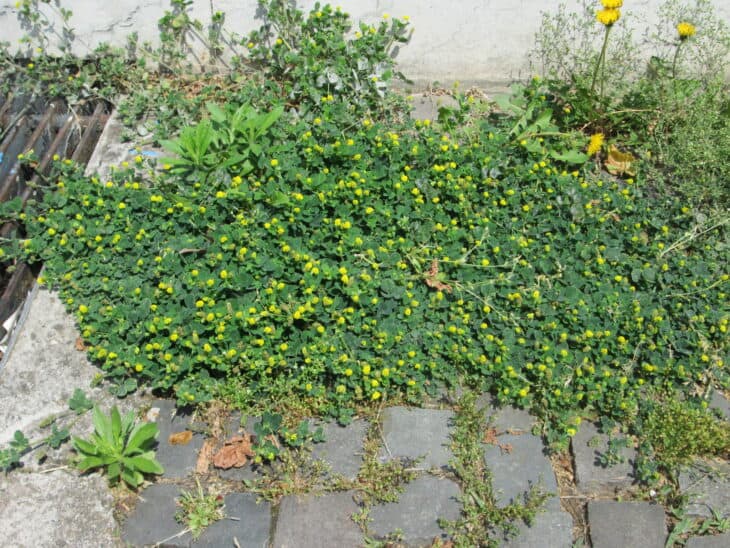
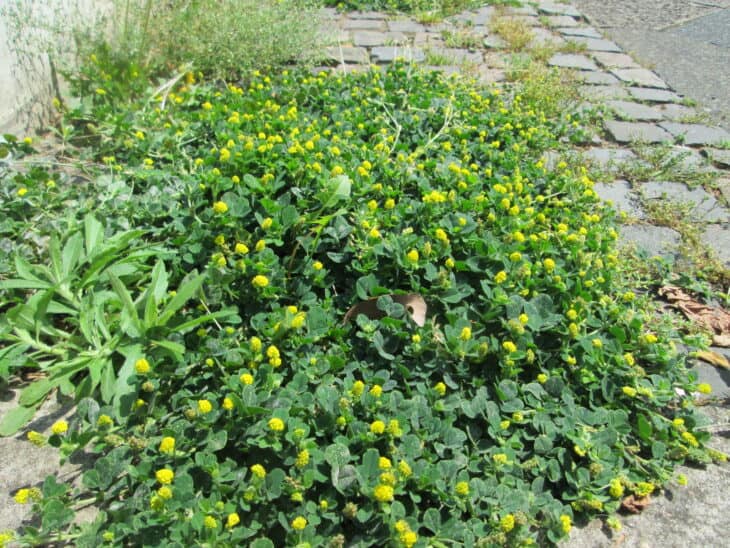
- Low growing legume that forms matlike patches.
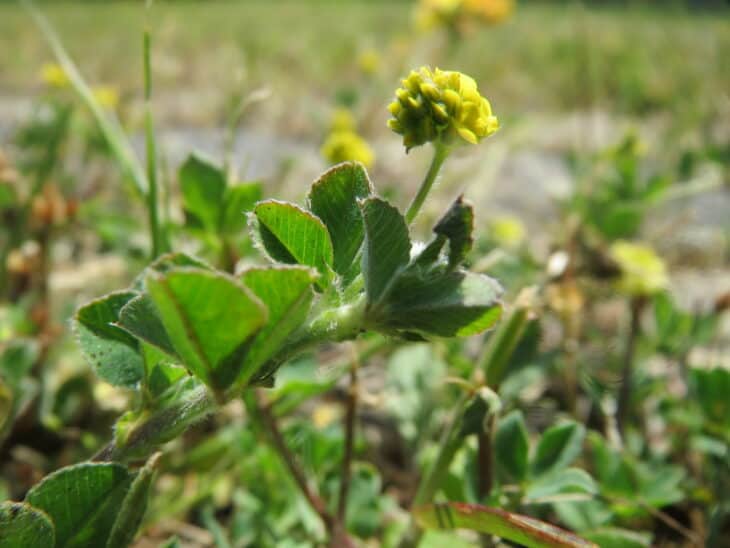
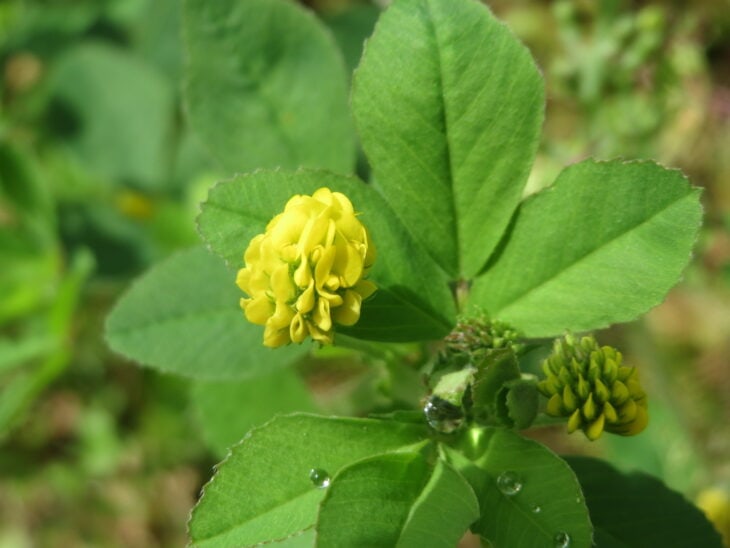
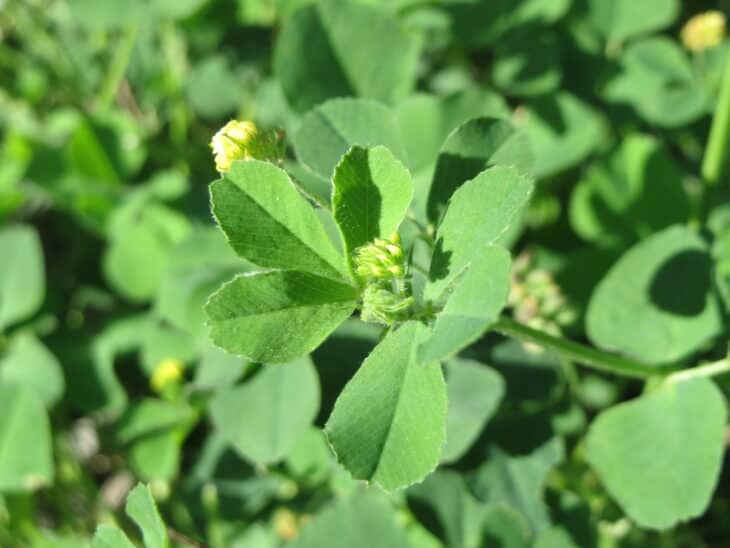
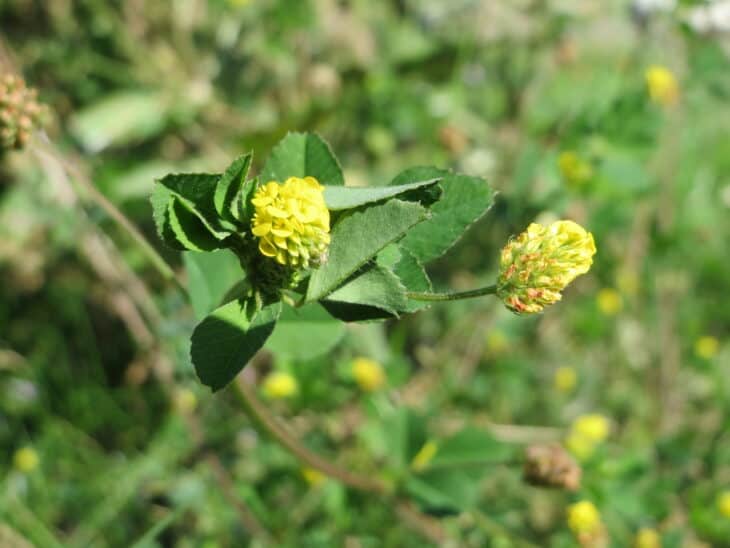
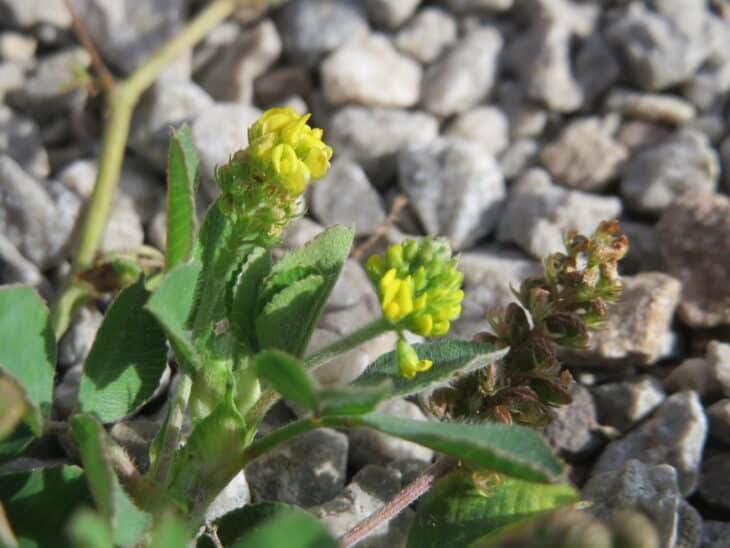
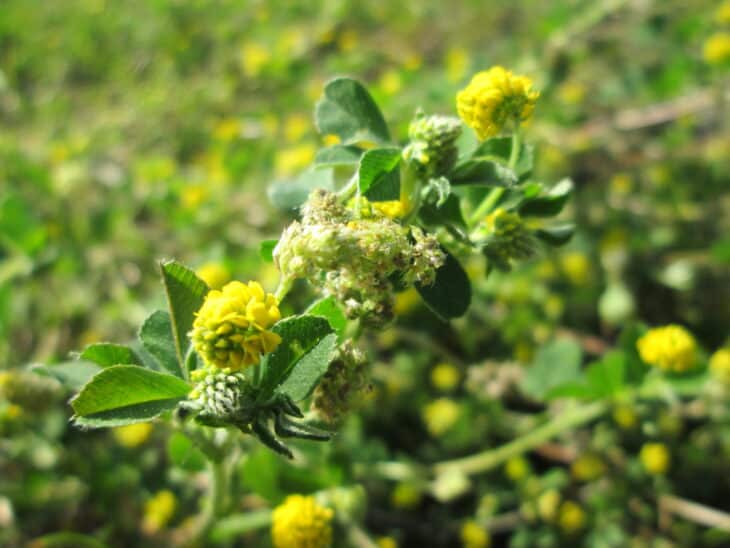
- Small clustered yellow flowers that attract pollinators.
- Reproduces primarily by seed and self-seeds readily.
- Fixes nitrogen through root nodules.
- Common in lawns, disturbed ground, and poor soils.
- Native to Eurasia and widely naturalized elsewhere.
- Can behave as an annual or short lived perennial depending on climate.
Black Medic is a low growing yellow flowered legume that forms matlike patches in lawns and disturbed ground. It fixes nitrogen through root nodules and spreads mainly by seed, so it can improve poor soils while also appearing as a persistent volunteer in turf and bare spots.
Identification
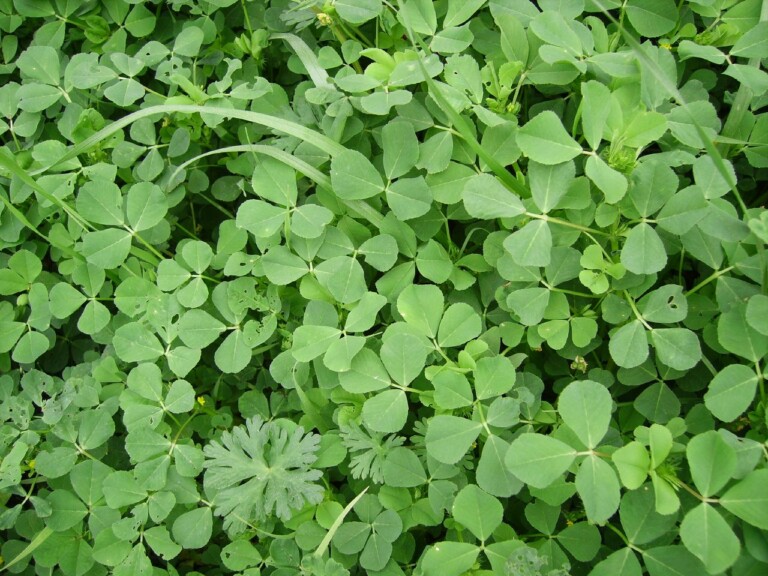
Plants reach about 2 to 8 inches tall and form low mats that can spread from many seedlings. Flower heads are small and yellow and attract pollinators while foliage stays close to the ground. The overall habit is a low, spreading patch that is easy to spot when in bloom and when established across open ground.
Best uses and where to grow
Use Black Medic as a low groundcover on poor or compacted soil where other plants struggle, or allow it to green bare patches in lawn and roadside verges. It prefers full sun to light shade and is common in disturbed ground. USDA hardiness is roughly zones 4 to 9 so persistence varies with winter severity.
Planting time and establishment
Black Medic reproduces by seed and self seeds readily, so plan establishment when you can monitor seedlings. Seedlings establish best in open sunny spots with well drained soil. Dense turf and mulch reduce establishment, while bare or thin soils encourage rapid colonization from local seed sources during the growing season.
Water and soil
The plant tolerates poor, compacted and dry soils and does best on well drained sites. Waterlogged ground reduces vigor and prolonged wetness limits its growth. In richer or moister spots plants may grow slightly taller but the typical low mat habit remains, and flowering is strongest in full sun compared with heavier shade.
After flowering care and controlling spread
Because Black Medic spreads mainly by seed, remove or mow flower heads before they set seed to limit spread. Hand pulling small patches is effective when seedlings are young. Maintaining dense turf, adding mulch in beds or overseeding with desired species reduces volunteer establishment and the formation of larger mats.
Propagation
Propagation is almost entirely by seed and plants self sow readily where conditions suit them. Division is uncommon for propagation. Mature patches often measure 6 to 24 inches or larger as many seedlings join, so new colonies are usually the result of local seed rain rather than transplanted clumps.
Frequently asked questions
- How fast does Black Medic grow?
- Growth is low and mat forming. Individual plants stay 2 to 8 inches tall and many seedlings can produce a visible mat within a single growing season depending on conditions and seed availability.
- Will Black Medic survive my winter?
- Survival varies by climate. Across USDA zones roughly 4 to 9 plants may die back or fail to persist in colder areas and persist year round in warmer regions where they can spread more aggressively.
- Is Black Medic useful in lawns?
- Yes. It greens bare spots and adds nitrogen to poor soils but it also self seeds and can form patches that some find undesirable in fine turf.
- How do I stop it spreading?
- Prevent seed set by removing flower heads or mowing, pull seedlings while small, and maintain dense turf or mulch to reduce new establishment.
- Does it need rich soil to flower?
- No. It flowers in poor and compacted soils, and full sun improves flowering and keeps the habit compact.
Gallery
Related Plants


Mentioned In (1)
Plants
7 Plants That Look Like Clover
Clover is loved, used, or seen as a lawn pest. The reaction depends on the degree of horticultural insights one…