
Key Facts
- Native shrub of the central United States.
- Forms multi stem clumps and suckering thickets.
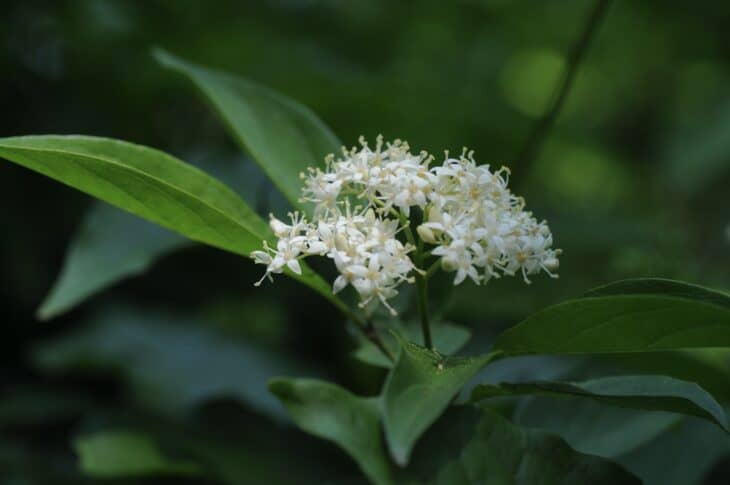
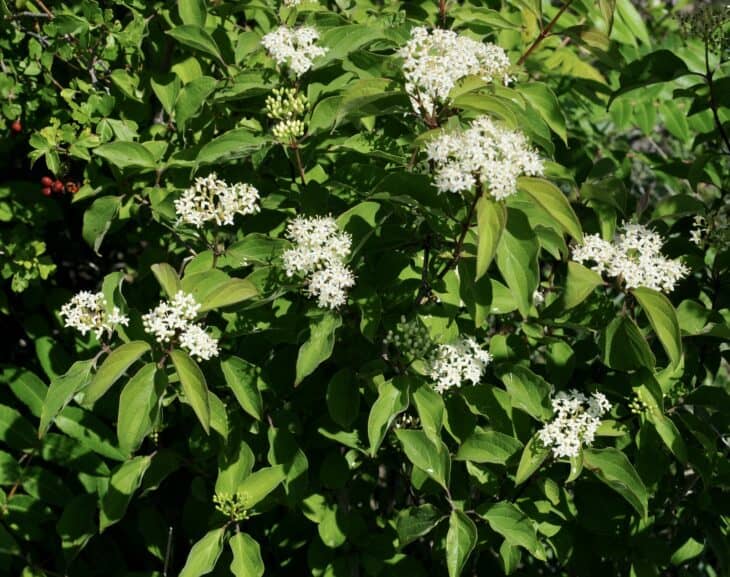
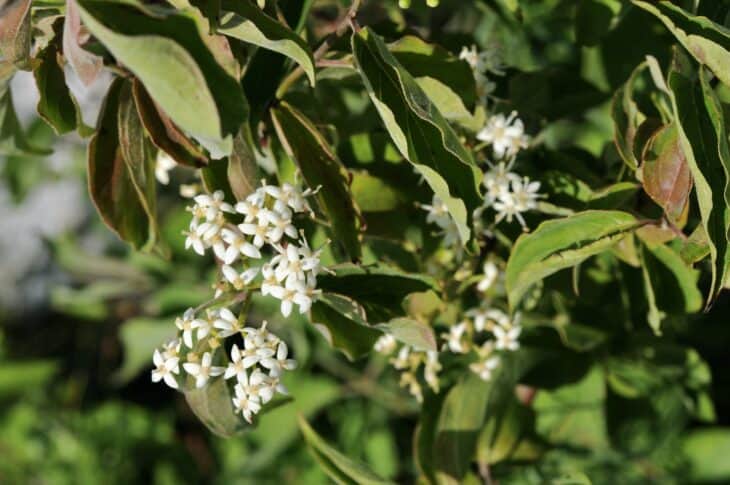
- Showy flat clusters of white flowers in spring.
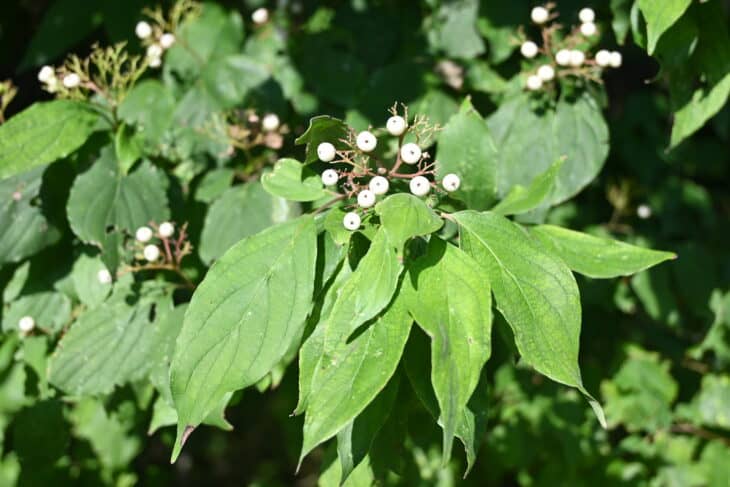
- Produces white to bluish white berries that feed birds.
- Tolerates clay and seasonally moist soils.
- Grows well in full sun to part shade.
- Used in hedgerows and wildlife plantings.
Roughleaf Dogwood is a native multi stem shrub that produces flat clusters of white flowers in spring and white to bluish berries that feed birds. It makes a durable hedgerow or wildlife planting and will form suckering clumps that require management in small landscapes.
Identification
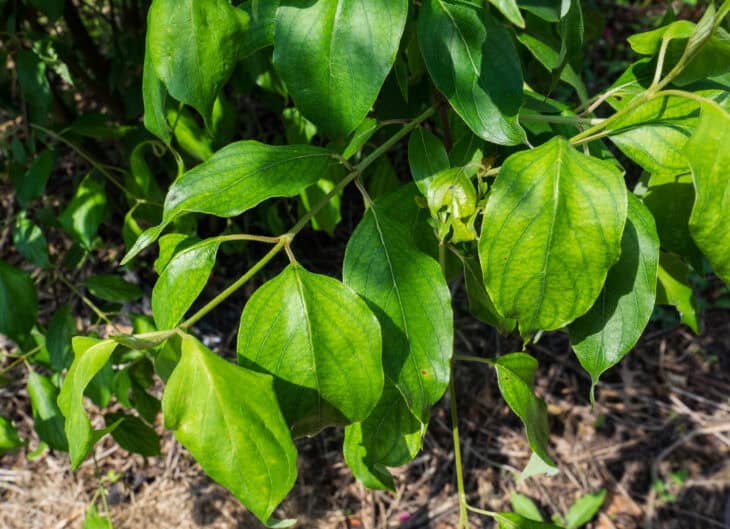
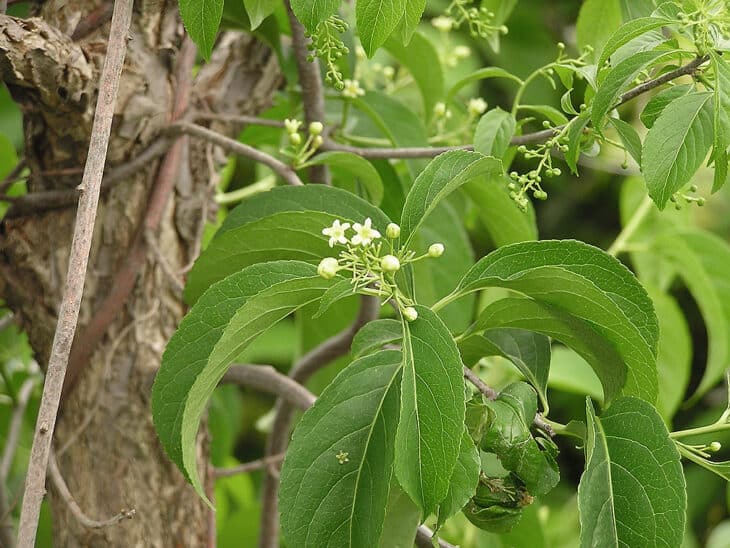
Multi stem shrub typically reaching 6 to 20 feet tall with a 6 to 16 foot spread as plants sucker and form colonies. Flowers appear in spring, typically May and June in much of its range, as flat clusters of white blooms followed by white to bluish white fruit that persist for birds to eat.
Where to grow and best uses
Native to the central United States, this dogwood performs well in hedgerows, wildlife buffers and naturalized edges. It tolerates full sun to part shade and adapts to clay and seasonally moist soils, making it a good choice for sites where heavier soils limit other shrubs.
Planting and spacing
Space plants at roughly their mature spread depending on use. For a formal hedge use spacing near 6 to 10 feet apart, and for natural screens allow 12 to 16 feet to let suckers form a colony. Set the root ball so the top sits level with the surrounding soil and firm soil around roots to remove air pockets.
Watering and soil
Tolerant of clay and seasonal moisture, this dogwood does not like prolonged standing water and will decline in poorly drained sites. Provide regular water while plants establish and then water only during extended dry spells. Poor drainage leads to root decline while drought shows as leaf wilting and sparse flowering.
After flowering care and pruning
Flowers finish in late spring and fruit follow. Remove dead or damaged stems and thin the oldest stems to encourage new growth and better flowering. Control suckering by removing unwanted shoots at the root or by cutting back stems to maintain shape and limit colony expansion.
Controlling spread and naturalizing
Plants spread by root suckers and can form dense thickets if left unmanaged. Contain spread by regular removal of suckers, installing root barriers where space is limited or by maintaining a clipped edge. In warmer areas expect more aggressive suckering and plan for ongoing maintenance.
Propagation
Propagate by seed, root suckers, layering or from cuttings. Seed germination often needs cold stratification while vegetative methods produce true to type material and speed establishment. Suckering provides an easy way to expand a planting but also requires attention when containment is desired.
Frequently asked questions
- How fast does Roughleaf Dogwood grow?
- Growth is moderate. Plants commonly reach several feet in a few years and can attain their 6 to 20 foot mature height over time depending on site quality and light.
- Is Roughleaf Dogwood good for wildlife?
- Yes. Flowers attract insects and the white to bluish berries are eaten by many bird species making it valuable in wildlife plantings.
- Is it invasive?
- It can naturalize by root suckers and form colonies. In small landscapes manage suckers to prevent unwanted spread.
- What soil does it prefer?
- Tolerant of clay and seasonally moist soils and adapts to neutral to slightly alkaline pH. Avoid sites with prolonged standing water.
- Are the berries toxic to pets?
- Cornus species are listed by the ASPCA as non toxic to dogs and cats but human ingestion may cause mild stomach upset. Check local poison resources for specific concerns.
Gallery

Related Plants


Mentioned In (4)

Trees
37 Most Common Trees in Texas
Texas is located in the Southernmost region of the United States and is bordered by New Mexico and other Mexican…

Trees
27 Terrific Flowering Trees For Texas Yards
Are you looking to plant flowering trees in Texas? Well, you will be immensely pleased to know that despite its…

Trees
17 Best Flowering Trees For Oklahoma Yards
Are you planning to beautify your garden with some spectacular flowering trees in Oklahoma? Well, you’re in luck! The Sooner…
Trees
Pros And Cons Of Dogwood Trees
Dogwoods (Cornus spp.) are super popular ornamental trees that are native to the US. Horticulturalists have selectively bred them for…