
Key Facts
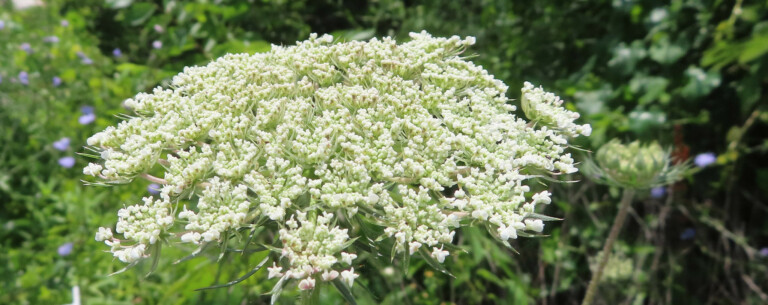
- Herbaceous Apiaceae with compound leaves and flat umbels of white flowers.
- Native to Europe and parts of western Asia and North Africa.
- Typically forms tall flowering stems in summer.
- Attracts a range of pollinators including bees and flies.
- Spreads readily by seed and can self-seed in suitable sites.
- Prefers moist, fertile soils and tolerates heavier soils.
- Grows in meadows, roadside verges and light woodland edges.
- Sap can cause skin irritation and in some individuals phototoxic reactions.
- Usually grown as a perennial or long-lived herbaceous plant.
Hogweed is a tall herb in the carrot family with flat white umbels and compound leaves that blooms in summer. It suits moist fertile sites and attracts bees and flies but carries a risk of skin irritation from its sap so handle with care.
Identification
Hogweed belongs to the Apiaceae family and forms flowering stems about 100 to 150 cm tall. Flower heads are flat umbels of white blooms and the plant often appears as clumps with large compound leaves. It is a summer flowering perennial that draws a range of pollinators.
Best uses and where to grow
Grow hogweed in meadows, roadside verges or the edge of light woodland where moist fertile soil is available. It performs in full sun to part shade and tolerates heavier soils. The plant provides summer nectar for insects but can self seed and spread in suitable sites.
Planting and timing
Propagate hogweed by seed sown in autumn or spring and by dividing mature clumps in spring. Space plants roughly 30 to 90 cm apart to allow for their clump and seedling spread. Plants typically flower in June and July in temperate Northern Hemisphere locations.
Watering and soil
Hogweed prefers moist fertile well drained soils and will tolerate heavier clay soils. Very dry soils can stunt growth and reduce flower production. Avoid permanent waterlogging which weakens crowns and causes decline.
After flowering and maintenance
Cut or remove flowering umbels before seeds ripen to limit self seeding. Established plants can be cut back after flowering to reduce biomass and to tidy clumps. Divide crowded clumps in spring to renew vigour and to propagate where desired.
Controlling spread and safety
Hogweed spreads readily by seed so remove seed heads and pull seedlings before they set seed. Wear gloves and eye protection when handling plants because the sap can cause skin irritation and phototoxic reactions in sensitive people. Distinguish this species from giant hogweed which causes more severe burns and follow local guidance for removal if needed.
Frequently asked questions
- How fast does Hogweed grow?
- Hogweed typically produces flowering stems about 1 to 1.5 meters tall during the growing season once established and spreads readily by seed.
- Is hogweed the same as giant hogweed?
- No. Heracleum sphondylium is generally smaller and less severe in its sap effects than giant hogweed Heracleum mantegazzianum though both can cause skin irritation.
- Is hogweed poisonous to pets?
- Information on pet poisoning is limited. The sap can cause skin irritation in people so keep pets away from fresh plant sap and consult local poison control for guidance on ingestion.
- How do I stop hogweed from seeding?
- Remove and dispose of flowering umbels before seeds form and pull seedlings early. Regular monitoring in the season reduces new plants from establishing.
- When does hogweed bloom?
- Hogweed typically flowers in June and July in temperate Northern Hemisphere areas though bloom months vary with latitude and local climate.
- How do I propagate hogweed?
- Propagate by sowing seed in autumn or spring and by dividing established clumps in spring. Seed readily self sows so control seed heads if spread is undesirable.
Related Plants


Mentioned In (1)
Plants
6 Plants That Look Like Queen Anne’s Lace
Queen Anne's lace, or Daucus Carota, is a flower native to Europe, and its tiny white flowers look like lace.…