
Key Facts
- A small herb in the carrot family Apiaceae.
- Usually an annual that reproduces by seed.
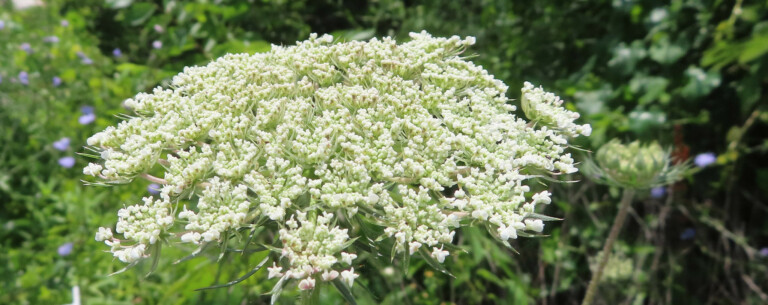
- Produces small white umbels of flowers in summer.
- Common on roadsides, hedgerows and other disturbed ground.
- Leaves pinnate and somewhat feathery in appearance.
- Spreads readily by self seed and can behave like a weed.
- Not widely used as a garden ornamental.
Hedge Parsley (Torilis arvensis) is a small annual herb in the carrot family that appears on roadsides and hedgerow edges. It produces feathery pinnate leaves and summer umbels of small white flowers and persists mainly by reseeding rather than by clonal spread.
Identification
Plants reach about 20 to 60 centimetres tall when in flower and have pinnate leaves that look finely divided. Flower heads are white umbels typical of Apiaceae and appear in summer. Individual plants are modest in size but the species often forms scattered groups where seed has been shed.
Where to grow and best uses
Hedge Parsley is not widely grown as a garden ornamental and is best left to wild margins or naturalised strips where self seed is acceptable. It works as a low maintenance filler in uncultivated edges but can quickly colonise disturbed ground so avoid planting it where you do not want volunteers.
Planting and propagation
Propagation is by seed and the species self seeds freely. Sow in spring or allow natural reseeding from existing plants. Seed is readily transported on clothing and animals so monitor surrounding areas if you do not want new plants popping up around the garden.
Water and soil
Hedge Parsley prefers well drained soils and tolerates poor dry or disturbed ground. It performs poorly in waterlogged sites. Light conditions range from full sun to part shade which explains its common occurrence at hedgerow edges and on roadside verges.
After flowering and control
Plants set seed after flowering and will reappear from seed the following season. Prevent unwanted spread by removing plants before seed ripens and by cutting or hand pulling flowerheads. Good mulch and maintaining dense desirable vegetation reduces space for seedlings to establish.
Frequently asked questions
- How fast does Hedge Parsley grow?
- As an annual it completes its life cycle in a single season and can reach flowering height within a few months depending on site fertility and moisture.
- Is Hedge Parsley invasive?
- The species spreads readily by self seed and can behave like a weed in disturbed sites or naturalised margins which makes it undesirable in some gardens.
- How do I stop it spreading?
- Remove plants before seeds form and collect or dispose of flowerheads. Reduce bare ground and maintain mulches or dense plantings to limit seedling establishment.
- Can I grow Hedge Parsley in a pot?
- It is not commonly grown as a container plant. While it will grow from seed in a pot the risk of reseeding into the garden makes it a poor choice for decorative container culture.
- Is Hedge Parsley poisonous?
- Safety information for this species is limited. Avoid ingestion and consult a local poison control or extension service for definitive guidance regarding pets and children.
Related Plants


Mentioned In (2)
Plants
12 Plants That Look Like Queen Anne’s Lace (Some Are Deadly)
The most dangerous plants that look like Queen Anne's lace are poison hemlock and water hemlock, which can kill if…

Plants
9 Plants That Look Like Parsley (3 Are Deadly)
Most plants that look like parsley are its relatives in the carrot family (Apiaceae), and several of them are among…