
Key Facts
- Deciduous stone fruit tree grown for edible nuts.
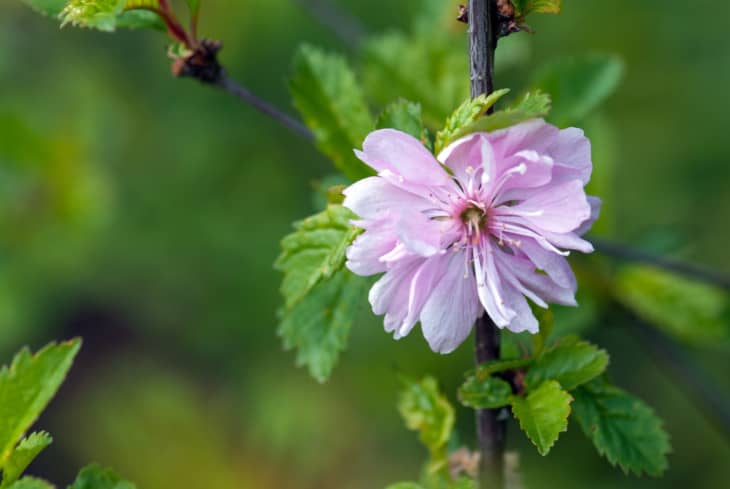
- Produces light pink to white flowers in early spring.
- Commercial trees are usually grafted onto rootstocks.
- Many cultivated varieties are partially or fully self-incompatible and need pollinators.
- Prefers a Mediterranean climate with warm, dry summers and mild winters.
- Sensitive to late spring frost which can damage blossoms and reduce yield.
- Seeds of bitter almonds contain cyanogenic compounds that can release cyanide if crushed or chewed.
Almond (Prunus dulcis) is a deciduous stone fruit tree grown for edible nuts and for early spring pink to white flowers. It suits warm temperate to Mediterranean climates and rewards full sun and good drainage while remaining sensitive to late spring frost.
Identification
Almond is a small to medium tree reaching about 3 to 8 m tall with a similar canopy spread when unpruned. It produces light pink to white single flowers in early spring before or with the leaves and sets a hard shelled nut. Commercial varieties are usually grafted onto rootstocks.
Best places to grow
Almonds perform best in Mediterranean style climates with warm dry summers and mild winters and are generally suited to USDA zones 6 to 9 with best results in zones 7 to 9. Plant in a sheltered sunny site where late spring frosts are unlikely to settle on open blossoms.
Planting and spacing
Plant almond trees with enough room for a 3 to 6 m canopy spread so trees do not crowd as they mature. Place trees where soil is deep and drains freely to avoid root diseases. Establish trees while dormant and avoid planting into waterlogged sites.
Soil and light
Almond prefers deep well drained loamy to sandy soils with a pH around 6.0 to 8.0. Full sun is essential with at least 6 to 8 hours of direct light daily for reliable flowering and nut set. Poor drainage increases risk of root rot and reduced yields.
Watering and care
Almonds need supplemental water during long dry periods to sustain growth and fill nuts but overwatering or poor drainage causes root decline. Warm climates reduce cold injury but increase seasonal drought needs. Protect blooms from late spring frost which can sharply reduce yield.
Pollination and flowering
Almonds bloom in early spring typically between February and April in many northern hemisphere regions. Many cultivated varieties are partially or fully self incompatible and need compatible pollinating varieties or bees to set a reliable crop.
After flowering care and harvest
Watch for frost damage during bloom because lost blossoms reduce nut yield. Maintain tree vigor with balanced nutrition and summer irrigation in dry areas. Prune to manage size and air flow which helps fruiting and reduces disease pressure.
Propagation and rootstocks
Commercial and hobby varieties are usually propagated by budding or grafting onto selected rootstocks. Seed is commonly used to produce rootstock material. Choice of rootstock depends on soil pests salinity tolerance and local nursery availability.
Toxicity and safety
Bitter almond seeds contain amygdalin which can release cyanide when crushed or chewed while sweet almonds sold for eating are low in that compound. Pits and other Prunus parts can be toxic to pets if ingested and present a choking hazard for children and animals.
Controlling size and spread
Home trees are kept compact by regular pruning and training and will usually stay within a 3 to 6 m canopy when managed. Untended trees can become broader. Select dwarfing rootstocks or prune annually to limit height and keep trees within a desired space.
Frequently asked questions
- How fast does Almond grow?
- Growth rate varies with rootstock site and care. Under good conditions trees commonly reach their mature height of about 3 to 8 m over several years and respond quickly to regular water and nutrients.
- Do almond trees need another tree to produce nuts?
- Many cultivated varieties are partially or fully self incompatible and perform best with nearby compatible varieties and active pollinators such as bees.
- What soils should I avoid?
- Avoid heavy poorly drained soils and sites that stay waterlogged since these conditions increase root rot and tree loss.
- Are all almonds safe to eat?
- Sweet almonds sold for eating are low in cyanogenic compounds. Bitter almonds contain amygdalin which can produce hydrogen cyanide and should not be consumed raw.
- How sensitive are blossoms to frost?
- Blossoms are sensitive to late spring frost and damage can sharply reduce yield so choose sheltered sites or frost protected microclimates when possible.
Gallery


Related Plants


Mentioned In (2)

Trees
6 Trees Similar To Cherry Blossom
Few trees can rival the exquisite displays of cherry blossoms’ spectacular flowers, in all of their splendiferousness, during the spring…

Trees
32 Most Common Trees in Hawaii
Hawaii is the only state in the United States to be made up of all islands. This makes it a…