
Key Facts
- Deciduous small to medium sized ornamental tree.
- Native to Korea and parts of East Asia.
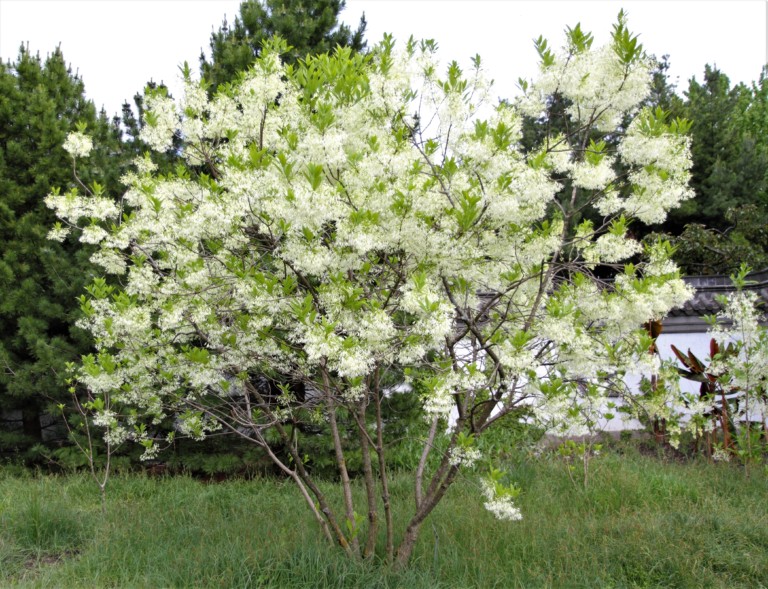
- White flowers open in spring.
- Orange to red pome fruits persist into autumn.
- Prefers well drained soils and tolerates a range of soil types.
- Does best in full sun to part shade.
- Used as a specimen and street tree in temperate gardens.
- Propagated by seed and by grafting or nursery propagation methods.
Korean Mountain Ash (Sorbus alnifolia) is a small to medium deciduous tree prized for white spring flowers and clusters of orange to red fruit that persist into autumn. It serves well as a specimen or street tree in temperate gardens while preferring well drained sites and full sun to light shade.
Identification
Leaves and overall habit identify this tree as a compact ornamental Sorbus with a rounded crown. White flowers appear in spring followed by orange to red pome fruits in autumn. Mature landscape specimens commonly reach about 20 to 35 feet tall with a similar 20 to 30 foot canopy spread depending on cultivar and site conditions.
Best uses and where to grow
Use Korean Mountain Ash as a specimen tree, small street tree, or focal planting in temperate landscapes. It performs best in full sun to part shade and suits yards where a moderate sized ornamental is wanted. Avoid poorly drained sites because waterlogged soil reduces vigor and increases root problems.
Site and soil
Choose a well drained location with loam or clay soils that do not remain saturated. The species tolerates a range of soil types and prefers slightly acidic to neutral pH. In heavy poorly drained soils expect slower growth and higher risk of root decline so improve drainage before planting.
Planting and spacing
Plant with the root flare at or just above the final soil line and avoid burying the trunk. Space single specimens roughly 20 to 30 feet apart to allow the mature canopy room to develop. Mulch the root zone to conserve moisture while keeping mulch away from direct contact with the trunk.
Watering and winter performance
Keep young trees evenly moist during establishment to encourage deep roots. Once established Korean Mountain Ash is adapted to temperate conditions but performs best in USDA zones 4 to 7. In colder sites growth may be slower and occasional winter dieback can occur while warmer edges may have reduced fruiting.
After flowering care and pruning
Light formative pruning maintains a single trunk or multi stem habit and controls canopy spread. Prune structural problems in late winter while the tree is dormant to reduce stress. Removing crossing branches and dead wood improves crown health and helps maintain a tidy street tree silhouette.
Propagation
Propagate by seed for seedling stock and by grafting onto compatible rootstocks to obtain true to type ornamental cultivars. Semi ripe cuttings may be used in some cases but grafting or nursery propagation is standard for named varieties because seedlings often vary from the parent.
Frequently asked questions
- How fast does Korean Mountain Ash grow?
- Growth rate varies by soil fertility water and climate. It typically reaches a mature height around 20 to 35 feet over several years with faster early growth on favorable sites.
- What light does it need?
- Full sun to part shade produces the best flowering and fruiting. Increased shade can reduce flower display and fruit set.
- What hardiness zones suit this species?
- It is generally suited to temperate climates around USDA zones 4 to 7 with performance depending on local microclimate.
- Are the autumn fruits long lasting?
- Yes the orange to red pome fruits often persist into autumn providing seasonal interest and wildlife food into the cooler months.
- How is Korean Mountain Ash propagated?
- Common methods include seed for seedlings and grafting for true to type nursery cultivars. Cuttings are used in some propagation programs but grafting is standard for named varieties.
Related Plants


Mentioned In (1)

Trees
10 Magnificent Flowering Trees for Maine
Maine is arguably one of the most naturally beautiful US states. It is home to a wide variety of flowering…