
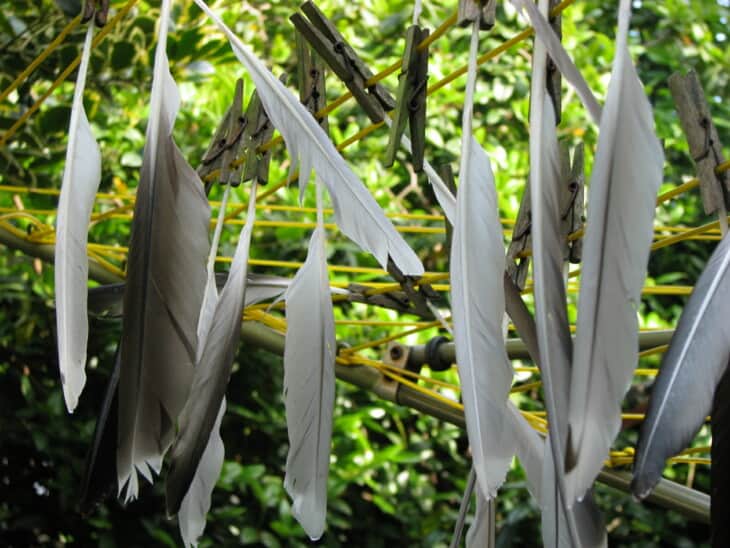
Texture plants play an integral role in creating a beautiful, well-balanced garden. Combining complementary and contrasting landscape elements and plants creates a harmonious and memorable garden. Have you ever considered adding a feathery touch to your garden?
Contents
- 1. Pampas Grass (Cortaderia selloana)
- 2. Plumed Cockscomb (Celosia argentea var. plumosa)
- 3. Mexican Feather Grass (Nassella tenuissima)
- 4. Partridge Feather (Tanacetum)
- 5. Maiden Grass (Miscanthus sinensis)
- 6. Peacock Plant (Calathea makoyana)
- 7. Feather Reed Grass (Calamagrostis x acutiflora ‘Karl Foerster’)
- 8. Asparagus Fern (Asparagus setaceus or A. plumosus)
- 9. Mimosa Tree (Albizia julibrissin)
- 10. Goat’s Beard (Aruncus dioicus)
- 11. Astilbe (Astilbe spp.)
- 12. Bottlebrush (Callistemon spp.)
- 13. Tamarisk (Tamarix spp.)
- 14. Purple Fountain Grass (Pennisetum setaceum ‘Rubrum’)
- 15. Russian Sage (Perovskia atriplicifolia)
Nature offers a wild and wonderful selection of plants that you can use to add a touch of texture to your garden landscape. From dramatic, 10-foot-tall Pampas grass to wispy ornamental grasses, and vibrant Celosia blooms, there are an array of interesting, feather-like plants perfect for your yard.
Our list features the top 15 plants with feather-like plumes or flowers. They are all easy to care for and effortlessly transform your garden into a beautiful landscape with rich texture. Better yet, these soft, fluffy plants attract bees, butterflies, and hummingbirds to your yard.
1. Pampas Grass (Cortaderia selloana)
Read our guide to Pampas Grass

Pampas grass (Cortaderia selloana) is the ultimate architectural plant for adding texture to your home landscape. The tall, thin stalks shoot upward and boast unmistakable feathery plumes in white, silver, or pink hues. The plumes are bold, dramatic, and absolutely beautiful!
These majestic plants are easy to grow, requiring lots of sunlight and well-draining soil. You can admire the feathery flowers gracefully dancing in the wind from summer through fall with minimal care.
The ornamental grass grows to an impressive 10 feet high and 6 feet wide. However, the dwarf variety (Cortaderia selloana ‘Pumila’) is better suited to pots and smaller garden areas. This compact grass variety grows 5 feet tall and boasts pale yellow to ivory plumes.
2. Plumed Cockscomb (Celosia argentea var. plumosa)
Read our guide to Plumed Cockscomb

Plumed cockscomb or Celosia is an exotic plant with showy flowers in vibrant red, magenta, pink, orange, and yellow shades. Of the three common varieties, celosia plumosa has the closest resemblance to feathers. It boasts soft, feathery flowers from midsummer to early fall.
Celosia’s decorative flowers are used to add a unique touch to summer gardens or indoor areas. They grow between 12 and 36 inches, making a fantastic focal point and attraction for pollinators in your garden.
These fluffy plants are frost-tender and require an abundance of heat and water. They grow as perennials in USDA zones 10 and 11 but are otherwise annual growers. We recommend bringing your celosia indoors before the first frost.
3. Mexican Feather Grass (Nassella tenuissima)
Read our guide to Mexican Feather Grass

Mexican feather grass (Stipa Tenuissima) is an ornamental grass that brims with grace and beauty. It offers a display of thin, bright green stems and foliage that boast clusters of silky hairs, giving the plant a feather-like appearance. The most gentle breeze can send the delicate, feather-like flowers into full motion.
You can incorporate Mexican feather grass into almost any landscape area. It is a fast grower, reaching 12 to 24 inches tall. We love using ornamental grass to add a soft, light texture to bare spaces.
Although practical and aesthetic, Mexican feather grass is a fast grower and drought-tolerant. It has a bad rep for being invasive in some regions and requiring a hefty amount of landscape maintenance when removing unwanted growing seedlings.
4. Partridge Feather (Tanacetum)

Partridge feather is the perfect plant if you’re looking for an attractive ground cover or ways to spruce up your rock garden. The feathers, or rather the leaves, resemble actual Partridge feathers. The foliage is the plant’s greatest appeal!
The Partridge feather plant has mounds of frilly leaves in a greyish-white to blue cast that last year-round. In late spring, the Partridge feather showcases clusters of yellow button-like blooms right above the fray. These flowers are excellent for attracting butterflies and other pollinators.
This evergreen perennial only grows 3 to 5 inches tall, but the plant spreads up to 24 inches wide. It is highly drought-resistant and thrives in direct sunlight and well-draining rock soil with USDA zones 4 to 9.
5. Maiden Grass (Miscanthus sinensis)

Maiden grass (Miscanthus Sinensis), otherwise known as Chinese silver grass, is a flowering ornamental grass with gracefully arching blades and feathery plumes. The flower heads range from pale silver to buff and burgundy to copper.
The flower heads appear in late summer and transform into silvery-white plumes in early fall. The silver-green blades also turn into a beautiful golden bronze after the first frost.
Maiden grass is a popular addition to gardens and landscaping thanks to its attractive plumage and low-maintenance needs. They mature to 8 feet tall and are ideal for adding medium texture to perennial beds and shrub borders. These plants grow best in USDA hardiness zones 4 to 9. They are drought-resistant and tolerate most soil types.
6. Peacock Plant (Calathea makoyana)
Read our guide to Peacock Plant

The Peacock plant (Calathea Makoyana) is a theatrical master like its namesake. It boasts wide, glossy bi-colored leaves in eye-catching patterns that resemble feathers.
The leaves rise during the day and curl shut at night. This unusual pattern has won the plant another unique nickname – the Prayer plant. The foliage patterns vary in shades of white, cream, green, pink, and gray.
Calatheas are beautiful plants but picky with particular care requirements, making them a real challenge for novice plant owners. The peacock plant requires filtered light and plenty of moisture and humidity. Many people prefer to keep them as indoor plants as it’s easier to mimic their native habitat.
7. Feather Reed Grass (Calamagrostis x acutiflora ‘Karl Foerster’)

Feather reed grass (Calamagrostis x acutiflora) is an attractive ornamental grass derived from a hybrid between Calamagrostis Arundinacea and Calamagrostis Epigejos. The plant boasts pinkish-purple flower spikes that resemble feathers.
Feather reed grass grows up to 3 feet long. Unlike most ornamental grasses that flop after blooming, feather reed grass stays upright year-round. The pinkish-purple flower spikes gradually mature into golden seeds that last well into the winter but slowly scatter off the stalk.
The grass has a moderate growth rate. You can plant it in the spring or fall. It is best suited for USDA hardiness zones 4 to 9. However, it is highly adaptable to wet or dry conditions and full to partial sun.
8. Asparagus Fern (Asparagus setaceus or A. plumosus)
Read our guide to Asparagus Fern

The Asparagus Fern is a delicate, airy plant often mistaken for a true fern due to its fine, feathery foliage. Its bright green, soft-textured fronds branch out in a light, cloud-like form that closely resembles lace or feathers.
Popular in hanging baskets or as a potted indoor plant, it adds an elegant, ethereal touch to interiors and shaded gardens. While dainty in appearance, it’s actually a hardy plant and can tolerate moderate neglect.
It thrives in indirect light with consistent moisture and can sprawl or climb with support, making it versatile for decorative arrangements.
9. Mimosa Tree (Albizia julibrissin)

The Mimosa Tree, also known as the Silk Tree, stands out for its exquisite, feather-like leaves and fluffy pink flower clusters that resemble small silk pom-poms. Its bipinnate leaves fold at night and create a soft, airy canopy that adds a tropical feel to any setting.
Native to Asia but popular in warm climates worldwide, this small deciduous tree grows quickly and flowers abundantly in summer, attracting hummingbirds and butterflies.
The flowers look almost like feathers themselves, and the overall form of the tree is both graceful and light, adding a romantic, exotic vibe to gardens and landscapes.
10. Goat’s Beard (Aruncus dioicus)
Read our guide to Goat's Beard

Goat’s Beard is a stately perennial native to woodlands and moist meadows, recognized for its tall, creamy-white plumes that resemble giant feathers.
These feathery flower spikes can reach 6 feet in height and appear in early to midsummer, standing out against deep green, serrated foliage. The plant thrives in partial to full shade and prefers consistently moist soil, making it perfect for woodland gardens or stream banks.
Despite its delicate appearance, it is quite robust and long-lived. The overall look is similar to that of a giant Astilbe, with a bold, elegant presence that softens and brightens shaded landscapes.
11. Astilbe (Astilbe spp.)

Astilbe is a beloved shade-garden perennial known for its plume-like flower clusters that resemble soft feathers in hues of pink, white, red, and lavender.
The finely dissected foliage adds to the feathered effect, giving it a light and graceful presence even before blooming. It prefers moist, well-drained soil and dappled light, thriving in woodland or border gardens.
The airy flower heads rise above the leaves on slender stalks, creating a gentle, cloud-like appearance. Often used for softening edges or filling in shady beds, Astilbe is as hardy as it is beautiful and attracts pollinators while resisting deer.
12. Bottlebrush (Callistemon spp.)

The Bottlebrush plant is named for its cylindrical, bristly red flowers that resemble old-fashioned bottle-cleaning brushes — or, more poetically, fluffy red feathers. These flowers bloom in dramatic spikes, standing out against the narrow, lance-shaped green leaves.
Native to Australia, Bottlebrush thrives in warm, sunny climates and is popular in drought-tolerant gardens. It draws bees, butterflies, and hummingbirds with its nectar-rich blooms. The feather-like blossoms appear mostly in spring and summer, sometimes sporadically year-round.
This plant makes an eye-catching hedge or specimen shrub and lends a tropical, playful flair to landscapes with its vivid, feathery blooms.
13. Tamarisk (Tamarix spp.)

Tamarisk is a graceful, deciduous shrub or small tree with fine, feathery leaves and soft pink flower plumes that resemble delicate feathers floating on the wind. The tiny scale-like foliage gives it a misty, silvery-green look, which becomes even more enchanting when covered in its light, fluffy flowers during spring and summer.
Native to Eurasia and Africa, Tamarisk is drought-tolerant and often used in arid or coastal landscapes. Its airy structure and pink sprays give it a romantic, almost ethereal appearance. However, it’s considered invasive in some areas due to its aggressive seeding and salt tolerance.
14. Purple Fountain Grass (Pennisetum setaceum ‘Rubrum’)
Read our guide to Purple Fountain Grass

Purple Fountain Grass is a striking ornamental grass with arching burgundy foliage and dramatic, foxtail-like flower plumes. The long, fluffy inflorescences are soft to the touch and closely resemble deep purple or red feathers swaying in the wind.
Growing 3–5 feet tall, this warm-season grass thrives in full sun and well-drained soil, making it ideal for modern or Mediterranean-style gardens. It adds color, motion, and texture throughout the growing season and looks especially vivid when backlit.
Though often treated as an annual in colder climates, it’s perennial in warmer zones and makes a bold statement in containers or borders.
15. Russian Sage (Perovskia atriplicifolia)
Read our guide to Russian Sage

Russian Sage is a semi-woody perennial valued for its airy, feather-like appearance created by tall stems of tiny lavender-blue flowers and finely cut silver-gray foliage. Blooming from midsummer into fall, it creates a cloud of soft color and motion in the garden.
The flowers and stems have a loose, open structure that sways in the breeze like wispy feathers. Drought-tolerant and deer-resistant, Russian Sage thrives in sunny, dry conditions and makes a wonderful companion to bolder perennials like echinacea or rudbeckia.


