
Key Facts
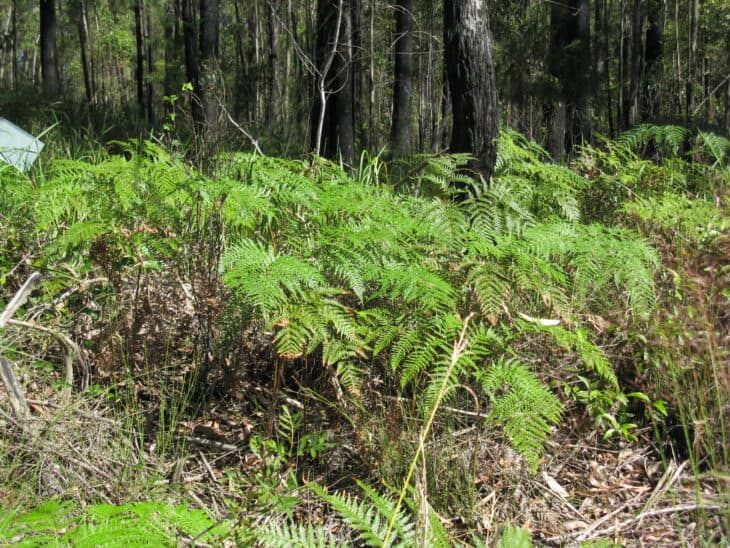
- A perennial, rhizomatous fern that forms large colonies.
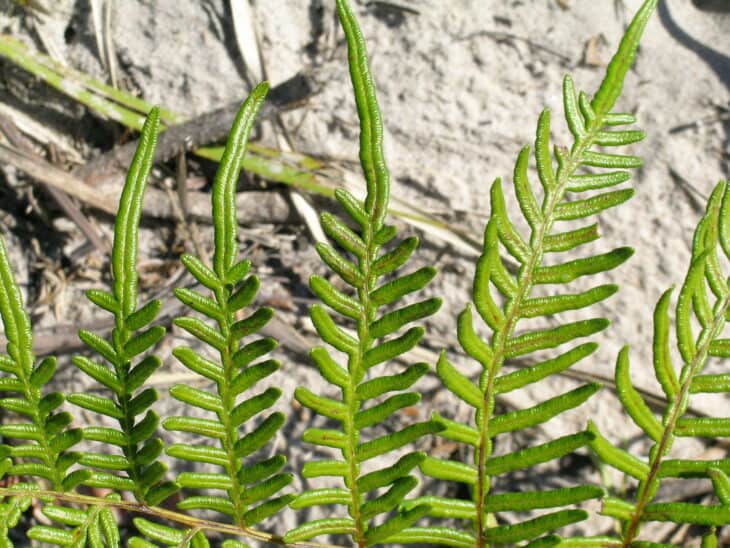
- Does not produce flowers or seeds and reproduces by spores and spreading rhizomes.
- Tolerates a wide range of soils and often grows on poor or disturbed ground.
- Can be aggressive and difficult to eradicate once established.
- Contains toxic compounds that can harm livestock and may pose risks to humans.
- Common in open woodland, grassland margins, and disturbed sites.
- Fronds typically arise from underground stems each growing season.
- Management often requires persistent removal or specialist herbicide treatment.
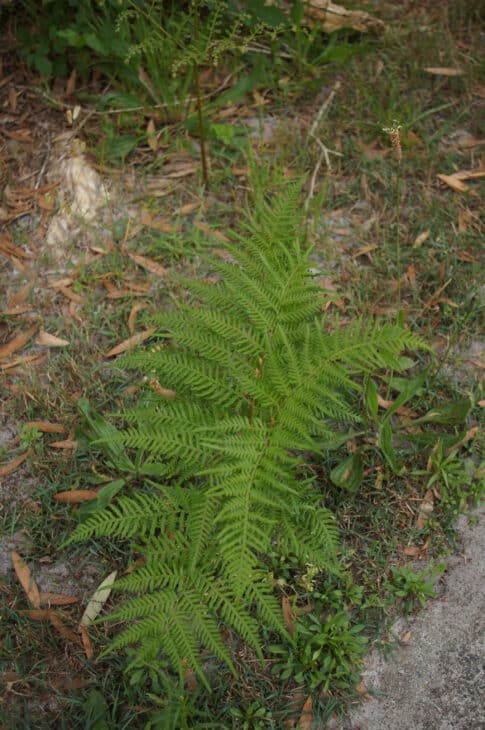
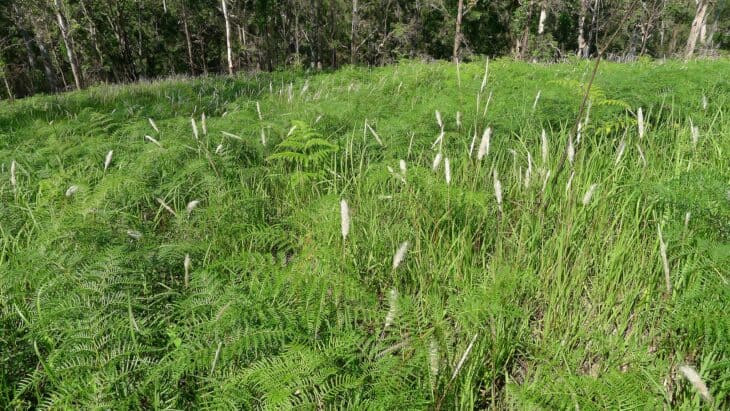
Bracken Fern Pteridium esculentum is a rhizomatous perennial that forms large colonies in open and disturbed sites. It can serve as a tough natural ground cover in rough areas but is aggressive and contains toxic compounds so use with caution.
Identification
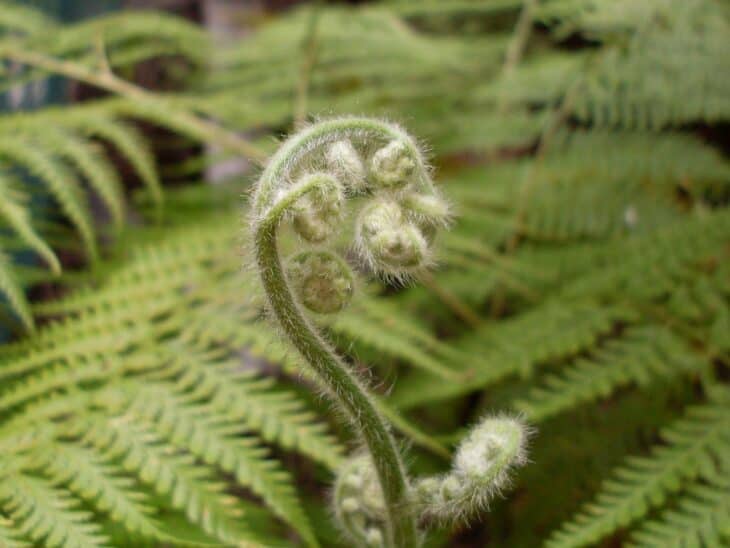
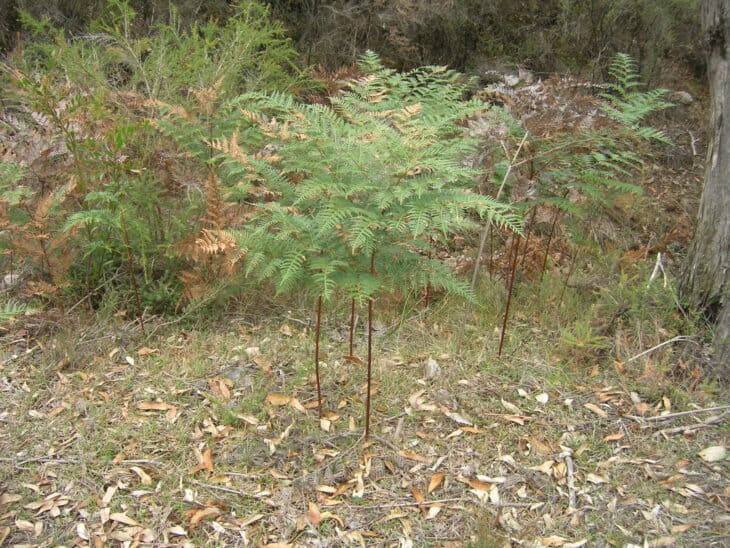
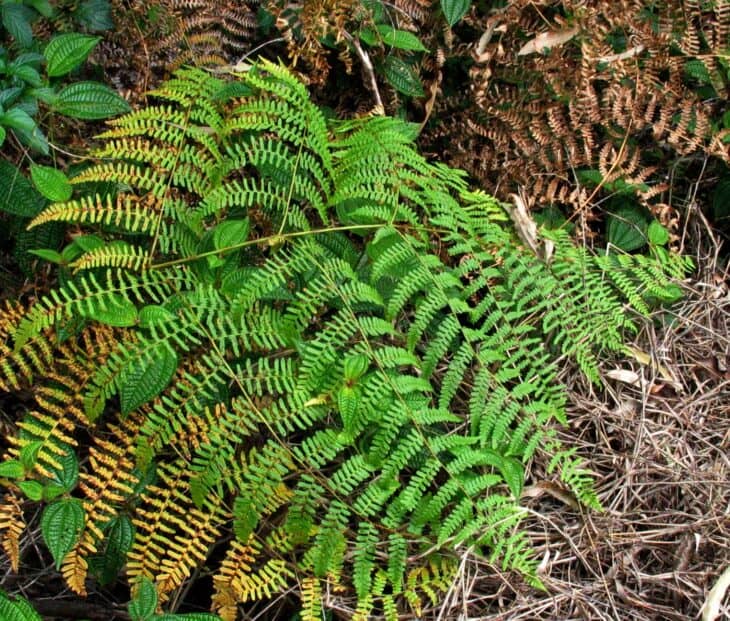
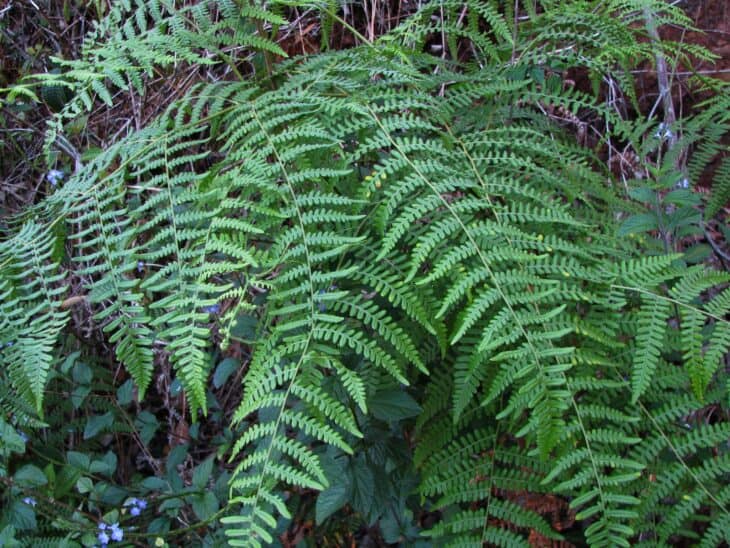
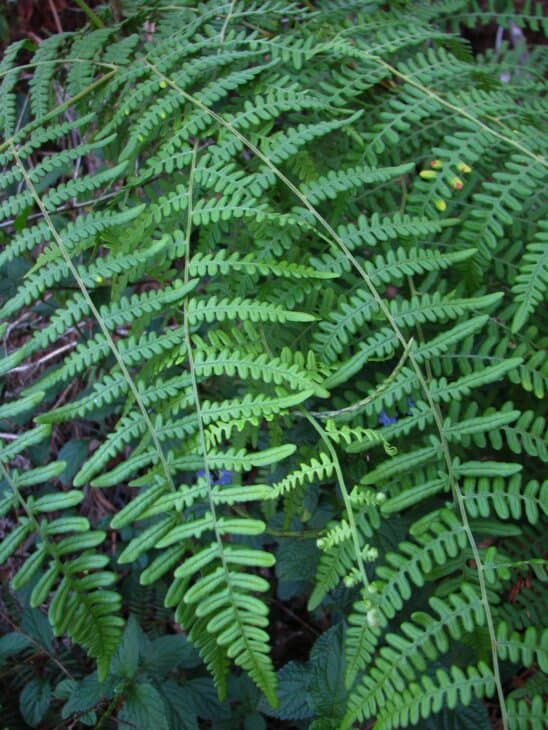
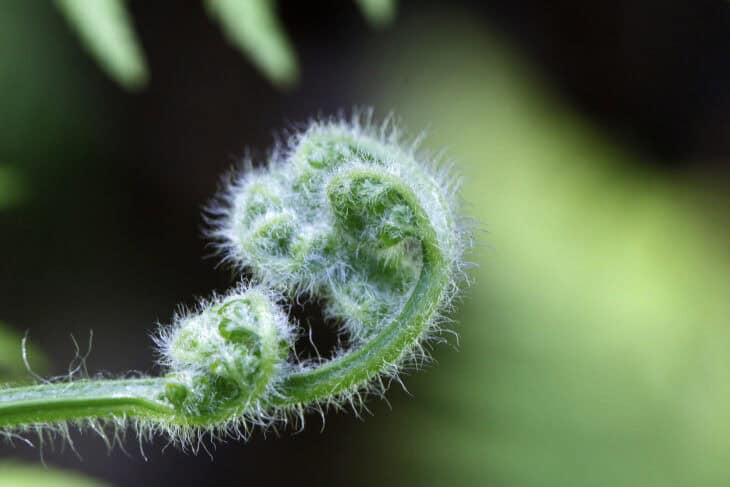
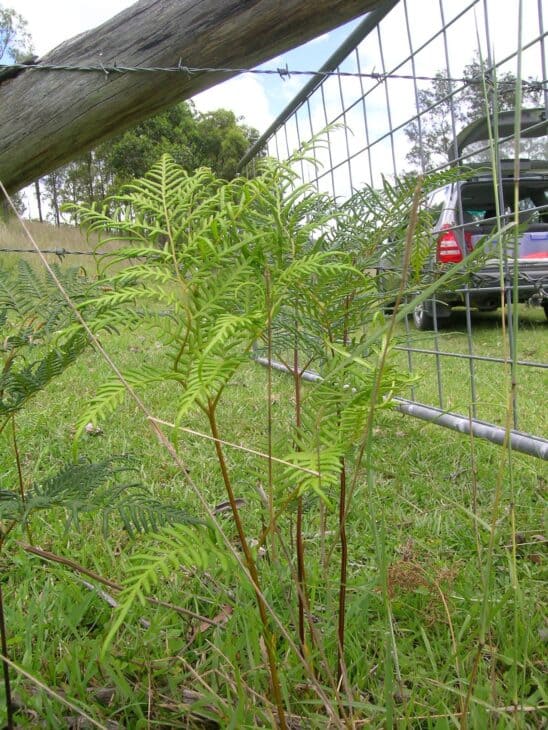
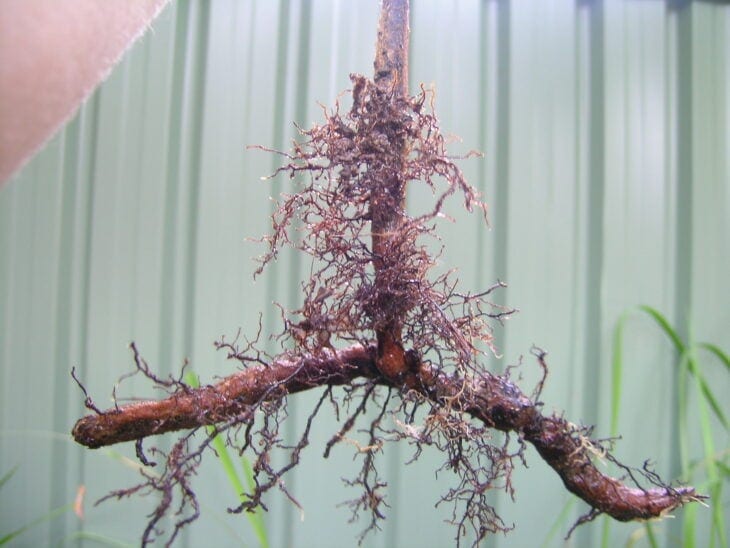
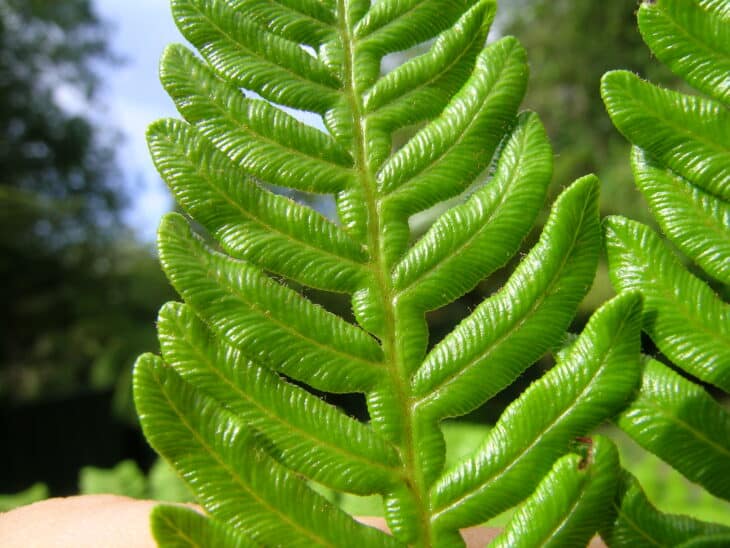
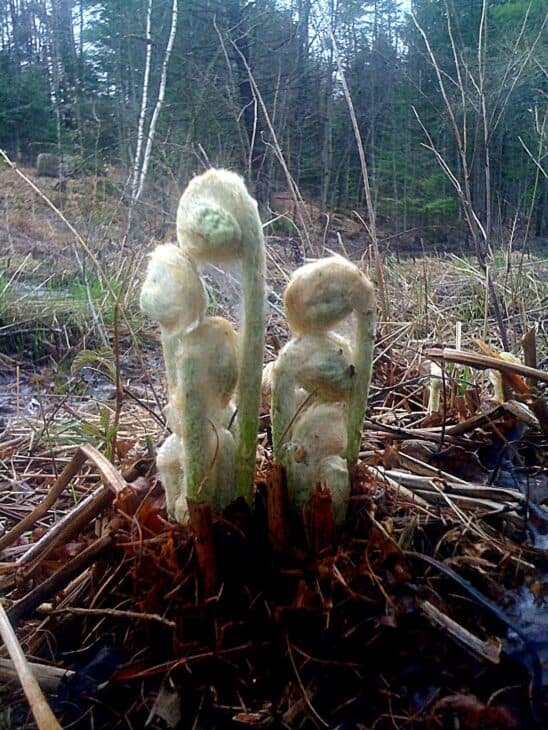
Fronds arise each season from underground stems and typically reach about 2 to 5 ft (60 to 150 cm) in height. The plant does not flower or set seed; it spreads by wind borne spores and by extensive underground rhizomes that form clonal stands.
Where to grow and best uses
Bracken tolerates full sun to partial shade and is common on poor, acidic or well drained soils and disturbed ground. It is often used in naturalized areas, woodland edges and large rough banks where a low maintenance, spreading ground cover is acceptable. USDA hardiness is generally reported around zones 4 to 10 depending on local climate and subspecies.
Planting and propagation
Propagation is primarily by division of rhizomes for predictable establishment and by spores for longer distance colonization. Allow room for individual clumps that commonly reach 3 to 6 ft (90 to 180 cm) across and expect colonies to extend much farther via rhizomes.
Watering and care
Bracken prefers well drained sites and tolerates poor, dry soils once established. Permanently waterlogged soil reduces vigour. Fronds die back and renew from rhizomes each season; removing dead fronds and monitoring the stand helps limit litter and track spread.
Control and risks
Bracken can be aggressive and difficult to eradicate because rhizomes regenerate from fragments. Management often requires persistent physical removal that reaches the rhizomes or specialist herbicide treatment. The species contains toxic compounds including ptaquiloside and thiaminase and is known to be toxic to livestock and a potential health risk to humans on ingestion or chronic exposure. Avoid grazing and handle infestations with protective measures.
Containers and landscape fit
Because of its spreading rhizomes and colony habit Bracken is generally unsuitable for small containers or formal beds. It is better suited to large naturalized plantings or unmanaged areas where its spread can be tolerated or contained.
Frequently asked questions
- How fast does Bracken Fern grow?
- Growth can be rapid under favourable conditions. Fronds reach full height in a single season and colonies expand over years by rhizome spread.
- Is Bracken Fern poisonous?
- Yes. Bracken contains toxins including ptaquiloside and thiaminase. It is toxic to livestock and poses potential human health risks if ingested or with chronic exposure.
- Can I remove Bracken by digging it out?
- Digging can help but is often ineffective unless all rhizome fragments are removed. Persistent follow up and targeting rhizomes is required and herbicide may be necessary for large stands.
- Does Bracken Fern flower?
- No. Like other ferns it does not produce flowers or seeds. Reproduction occurs by spores and vegetative rhizome spread.
- Is Bracken suitable as a ground cover?
- It can function as a coarse ground cover in wild or unmanaged areas but its aggressive spread and toxicity make it unsuitable for planting near pastures, gardens with edible plants, or small ornamental beds.
Gallery
Related Plants


Mentioned In (6)
Plants
23 Poisonous Plants in New Mexico
New Mexico is a State in the United States of America that is located in the Southwestern region. It is…

Plants
22 Poisonous Plants in Idaho
There are several beautiful types of plants in Idaho that can be dangerous or even fatal to touch or eat.…
Plants
25 Poisonous Plants in Washington State
Native and imported plants are abundantly found in Washington State. Animals and humans should avoid eating these plants since they…
Plants
23 Poisonous Plants in Arkansas
Arkansas is home to a wide range of flora that may be found in backyards, fields, forests, and hiking routes.…
Plants
15 Poisonous Plants in Kentucky
Even though plants are an essential part of our world, and they add beauty, color, and uniqueness to diverse landscapes…

Plants
24 Poisonous Plants in Florida
When we think about plants, we usually think about how magnificent and beautiful they are. They are a source of…