
Key Facts
- A compact aromatic shrub grown for fragrant foliage and flowers.
- Native to the Mediterranean region and adapted to dry, sunny sites.
- Commonly used fresh or dried and for essential oil production.
- Attracts bees and other pollinators when in bloom.
- Prefers very good drainage and dislikes winter wet.
- Best performance in full sun.
- Easily propagated by semi-ripe cuttings.
- Generally regarded as safe for culinary use in small amounts.
English Lavender is a compact aromatic shrub grown for fragrant foliage and purple flower spikes. It thrives in full sun and very well drained soils and is commonly used for borders, dried flowers and small hedges while disliking winter wet.
Identification
Lavandula angustifolia forms a low mound 12 to 36 inches tall and about the same across depending on cultivar and conditions. Narrow gray green leaves and upright purple flower spikes appear in late spring to early summer. Plants attract bees and other pollinators when in bloom and are valued for fragrance and dried flowers.
Best uses and where to grow
Use English Lavender in sunny borders, as a low hedge or in a mixed herb garden where excellent drainage is available. It is suited to USDA zones 5 to 8 with some cultivar variation. The plant is adapted to dry Mediterranean conditions so it performs best in full sun and soils that do not remain waterlogged.
Planting time, depth and spacing
Plant when soil can be worked in spring or in autumn where winters are mild to allow roots to establish. Space plants 12 to 36 inches apart depending on cultivar size and desired density. Set crowns slightly higher than surrounding soil if drainage is slow and avoid burying the crown to reduce winter rot.
Soil and watering
English Lavender prefers very well drained sandy to loamy soil and favors neutral to alkaline conditions. Water moderately at planting until established then allow the surface to dry between waterings. Winter wet or heavy clay soils lead to root rot and plant loss so amend for drainage or plant on a raised bed or mound in poorly draining sites.
After flowering and pruning
Cut back spent flower stems to keep plants tidy and encourage a compact habit. Make light shaping cuts to remove leggy growth but avoid cutting hard into old woody stems that do not reshoot. Proper pruning maintains vigor and can help delay decline in wetter climates by improving air circulation.
Propagation, containers and controlling spread
Semi ripe cuttings are the most reliable method to preserve cultivar traits while seed can be used for species types but may not come true. Lavender will work in containers if drainage is excellent and watering is conservative. Plants are not invasive but will spread more in richer, well drained soils so control by spacing and periodic renewal.
Frequently asked questions
- How fast does English Lavender grow?
- Growth is moderate and variable by cultivar and conditions. Plants commonly reach 12 to 36 inches tall and a similar spread as they mature.
- Is English Lavender safe for pets?
- Lavender is generally regarded as non toxic to cats, dogs and horses in small culinary amounts. Concentrated essential oils can irritate skin and large ingestions may cause gastrointestinal upset.
- When does English Lavender bloom?
- Bloom typically occurs in late spring to early summer with a possible short rebloom in favorable climates. Exact timing varies by local climate and cultivar.
- Can English Lavender tolerate clay soil?
- Heavy clay and winter wet are problematic. Amend clay for drainage or plant on a raised bed or mound to prevent root rot.
- How do I propagate English Lavender?
- Semi ripe cuttings taken in summer are the most reliable way to propagate and preserve cultivar characteristics. Seed can be used but offspring may differ from named cultivars.
Related Plants


Mentioned In (3)
Plants
Rabbit Resistant Plants: 20 That Rabbits Usually Skip
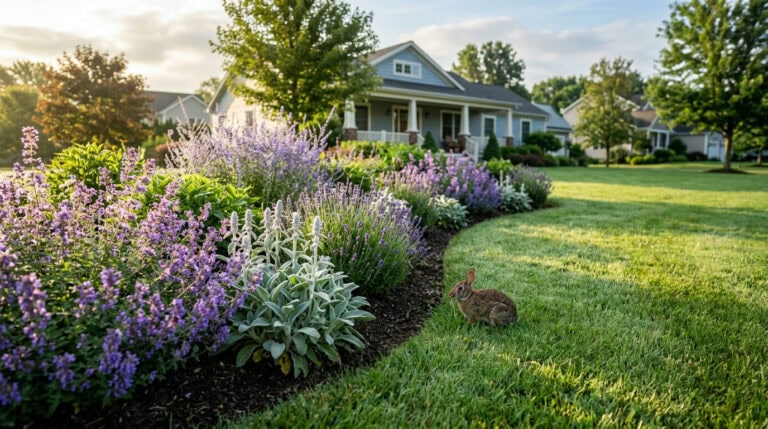
Lavender, catmint, Russian sage, lamb's ear and daffodils are the easiest rabbit resistant plants to start with, and astilbe, barrenwort,…

Plants
Companion Plants for Roses: What Works and Why
Rose aphids crowd the buds every spring, black spot spreads whenever leaves stay wet, and where Japanese beetles are established…

Plants
13 Plants That Look Like Salvia, and How to Tell Them Apart
The plants most often mistaken for salvia are its relatives in the mint family: catmint, catnip, anise hyssop, hyssop, betony,…