Key Facts
- Native to the Western Cape region of South Africa.
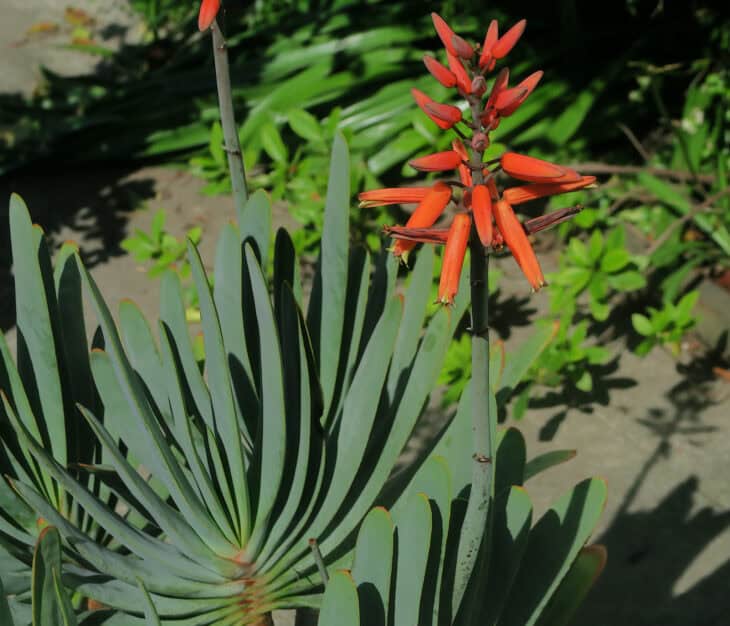
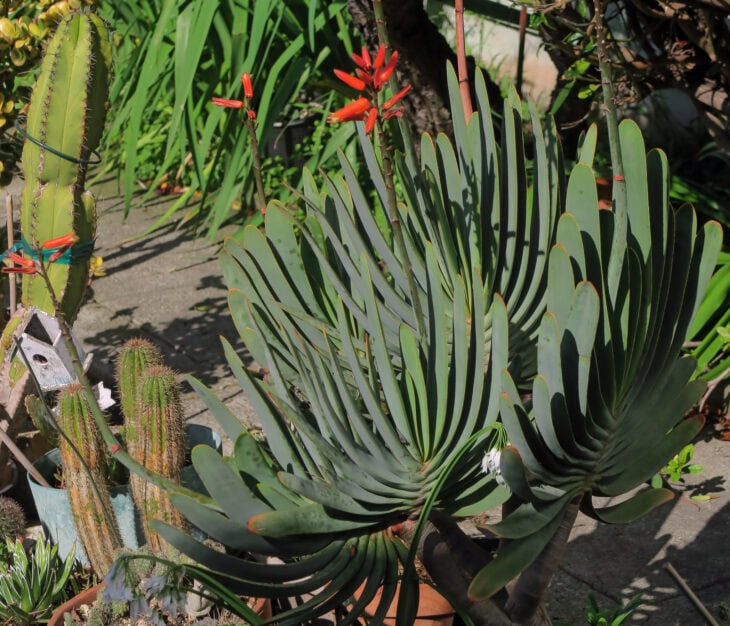
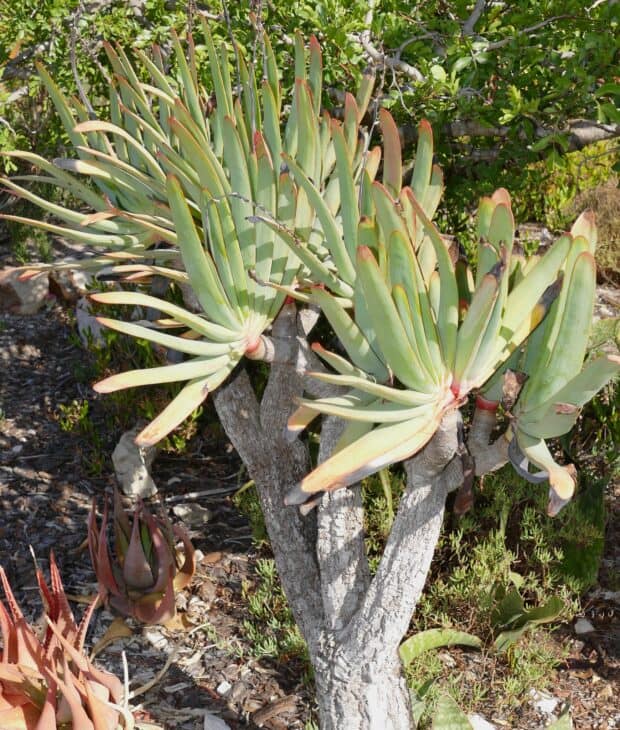
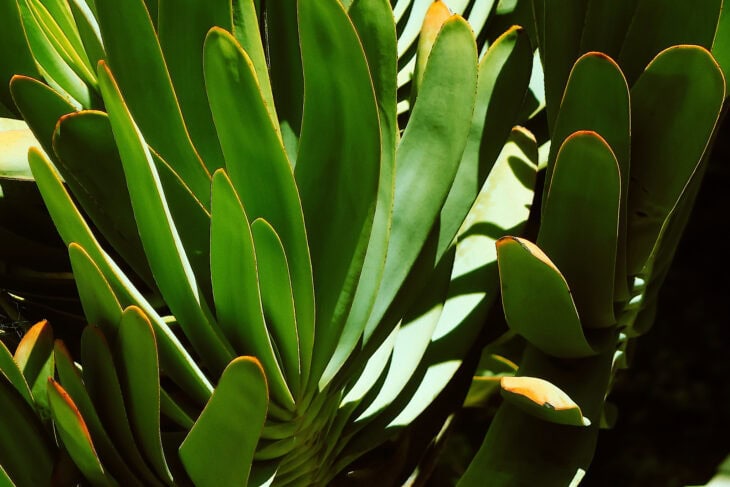
- Fan-shaped opposite leaves are arranged in distinctive flat planes.
- Forms a branching treelike succulent trunk with age.
- Drought tolerant and suited to dry, Mediterranean climates.
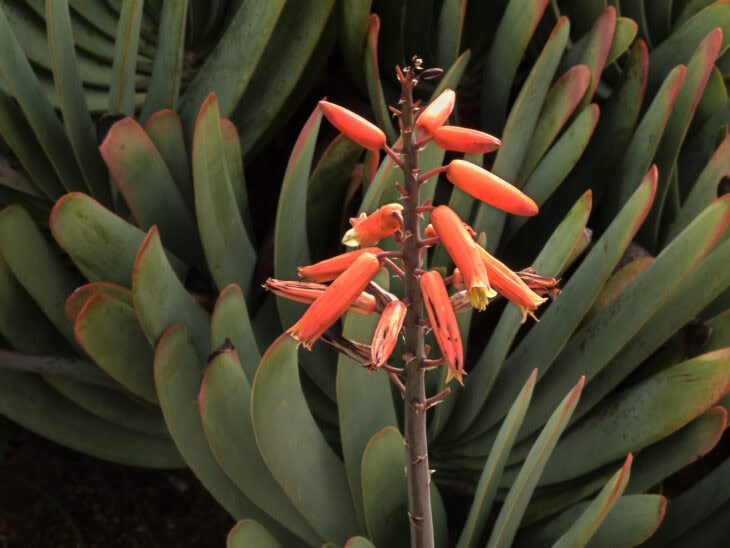
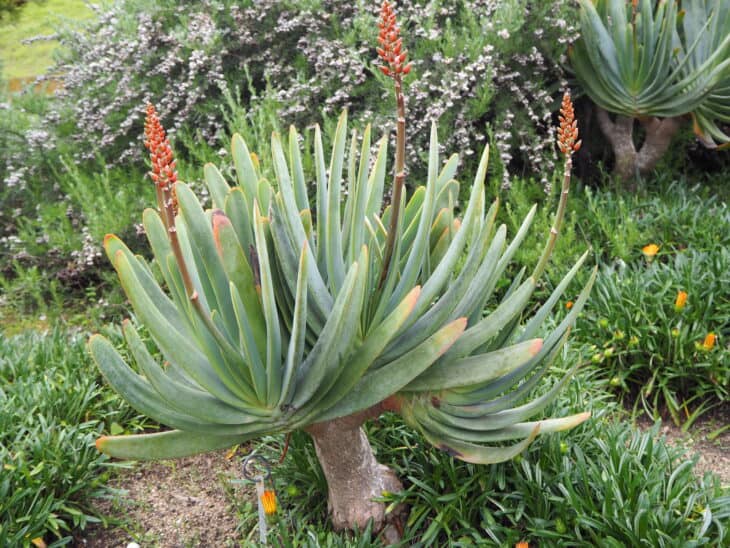
- Produces tall flower spikes with tubular orange to red flowers.
- Reclassified from the genus Aloe to Kumara in modern taxonomies.
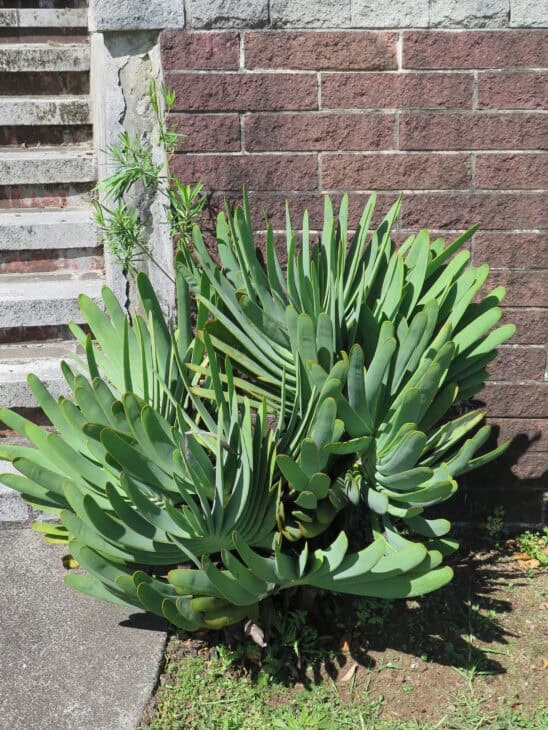
- Used in xeriscape and coastal gardens where frost is infrequent.
Fan Aloe (Kumara plicatilis) is a fan leaved, treelike succulent from the Western Cape of South Africa. Its paired flat leaves and upright winter flower spikes make it a dramatic drought tolerant choice for xeriscapes and coastal gardens, though it is tender to frost.
Identification
Leaves grow in opposite pairs arranged in flat fan shaped planes. Older plants form a branching trunk and can become treelike. Flower spikes appear in the cooler months and carry tubular orange to red flowers. The species has been reclassified from Aloe to Kumara in modern taxonomies.
Where to grow and main uses
Used in dry Mediterranean style gardens, coastal plantings and waterwise landscapes where frost is infrequent. It tolerates poor, sandy or rocky soils as long as drainage is excellent. In very hot inland sites light afternoon shade helps prevent leaf scorch.
Hardiness and size
Hardiness is generally USDA 9 to 11 probable, with tenderness below roughly 20 to 25 degrees Fahrenheit. Mature height in the landscape is commonly 6 to 13 feet 2 to 4 meters, with a spread that depends on branching and pruning and typically about 3 to 10 feet 1 to 3 meters.
Soil light and watering
Plant in very well drained sandy to loamy soil and avoid waterlogged sites. The plant is drought tolerant and prolonged wet conditions lead to root rot and collapse. Give full sun to a lightly shaded afternoon position in hot regions and reduce watering once the plant is established.
Planting and spacing
Space plants according to the expected spread, roughly 3 to 10 feet 1 to 3 meters apart depending on whether you want a single architectural specimen or a multi stem group. Use a free draining mix when planting in containers and avoid burying the stem deeper than it grew in its pot.
After flowering and maintenance
Remove spent flower spikes to tidy the plant and reduce self seeding. Prune selectively to manage height and to keep a single stem or a multi stem form. Older specimens develop a woody trunk so cuttings taken from branches are a practical way to shorten or reshape the plant.
Propagation
Propagate by seed or by stem cuttings and transplanted pups. Allow cuttings to callus before placing in a very well drained rooting medium. Germination rates and timing vary with source and climate.
Containers
Fan Aloe grows much more slowly in containers and is suitable for patios in warm climates where it can be moved for frost protection. Use a sandy, free draining potting mix and water sparingly to prevent root problems.
Pests toxicity and problems
Main problems are root rot from poor drainage and frost damage in cold locations. The plant contains compounds that can irritate skin and cause vomiting or digestive upset if eaten by pets. Toxicity guidance is based on general aloe species information. Consult a veterinarian for species specific advice.
Frequently asked questions
- How fast does Fan Aloe grow?
- Growth rate is variable but generally moderate to slow. Plants commonly reach about 6 to 13 feet 2 to 4 meters over several years depending on light soil and water.
- Is Fan Aloe safe around pets?
- It contains compounds that may irritate skin and cause vomiting or digestive upset in cats and dogs. The guidance is based on general aloe information so consult a veterinarian for specific concerns.
- What soil does Fan Aloe prefer?
- Very well drained sandy to loamy soil low in organic matter. It tolerates poor soils but waterlogged conditions cause root rot.
- When does Fan Aloe flower?
- It flowers in the cooler months in its native range with tall orange to red tubular flowers. Flowering time shifts with climate and latitude.
- How should I propagate Fan Aloe?
- By seed or by stem cuttings and pups. Allow cuttings to callus and use a free draining medium for rooting.
Gallery