
Key Facts
- Evergreen shrub or small tree with glossy elliptic leaves.
- Native to the western Iberian Peninsula and parts of northwest Africa.
- Produces clusters of small white flowers in spring.
- Develops small dark cherry like fruits in late summer to autumn.
- Commonly used as a formal hedge or screen.
- Tolerates coastal exposure and a range of garden soils when well drained.
- Can be propagated by seed, layering, or semi ripe cuttings.
- Seeds and some plant parts contain cyanogenic compounds and can be toxic if ingested.
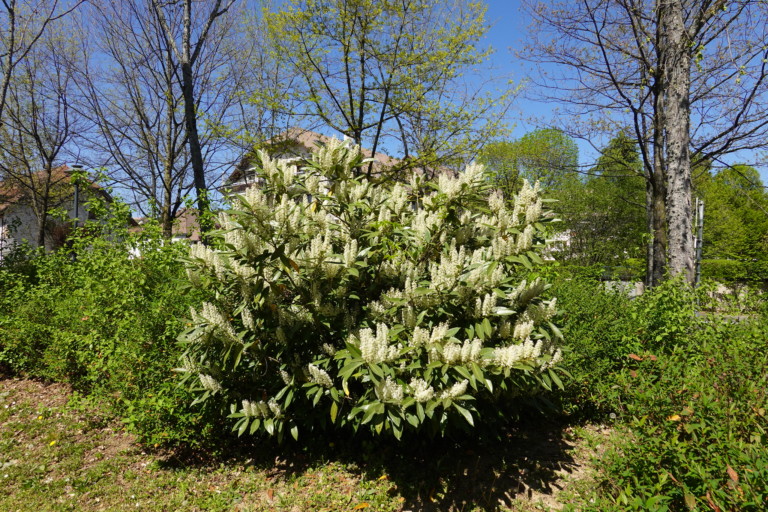
Portuguese laurel (Prunus lusitanica) is an evergreen shrub or small tree grown for glossy elliptic leaves and clusters of white spring flowers followed by small dark fruits. It is commonly used as a formal hedge or screen and tolerates coastal exposure when planted in well drained soil.
Identification
Portuguese laurel has glossy, elliptic evergreen leaves and produces clusters of small white flowers in spring with dark, cherry like fruits developing in late summer to autumn. Native to the western Iberian Peninsula and parts of northwest Africa, it commonly reaches about 15–25 ft as a mature shrub or small tree and will form a broad mass if left untrimmed.
Best uses and where to grow
Use Portuguese laurel for formal hedges, screens and windbreaks where an evergreen, dense barrier is needed. It tolerates coastal exposure and a range of garden soils provided drainage is good. Plants thrive in full sun to partial shade and are generally suited to temperate gardens roughly matching USDA zones 7 to 9, with local variation by cultivar.
Planting and spacing
Choose a cool, frost free planting period in your region and avoid waterlogged sites. For solitary specimens allow roughly the mature spread of 10–15 ft when siting. For a continuous screen plant closer and plan to prune regularly to develop a dense hedge rather than relying on untrimmed, sprawling growth.
Water and soil
Portuguese laurel prefers fertile, well drained soil and copes with a fairly broad pH range. Poor drainage causes decline so improve heavy clay or select a raised site if water stands. Water regularly while young to establish roots then reduce frequency; persistent waterlogging leads to yellowing leaves and poor vigor.
Pruning and after flowering care
Prune after flowering in spring to maintain a formal shape and encourage dense evergreen growth. Regular trimming keeps many cultivars smaller and more compact. Remove dead or crossing branches as needed for health and reshape hedges annually rather than leaving large, infrequent cuts that remove mature wood.
Propagation
Propagate by seed, layering or semi ripe cuttings. Seeds often require cold stratification to germinate and semi ripe cuttings are typically taken in summer. Layering of low stems roots readily. Propagation success depends on timing, cutting material and local conditions so follow a regionally appropriate propagation reference.
Safety
Seeds and some plant parts contain cyanogenic compounds that can release cyanide if chewed and ingestion of pits or large amounts may be toxic to people and pets. Confirm specific risks with local poison control or a veterinary toxicology source before planting where children or pets forage.
Frequently asked questions
- How fast does Portuguese laurel grow?
- Growth rate varies by cultivar and site. It can reach a mature height around 15–25 ft and will put on more rapid height if left untrimmed; regular pruning slows vertical spread and promotes density.
- Is Portuguese laurel poisonous?
- Yes. Seeds and some plant parts contain cyanogenic compounds that may release cyanide if chewed. Avoid ingestion and consult poison control for specific risk information.
- Can I use it for a formal hedge?
- Yes. It is commonly used as a formal hedge or screen and responds well to regular pruning to maintain a compact evergreen barrier.
- What light and soil does it prefer?
- Plant in full sun to partial shade in fertile, well drained soil. It tolerates a range of soil types and coastal exposure but will decline in poorly drained ground.
- How do I propagate Portuguese laurel?
- Propagate by seed with cold stratification, by summer semi ripe cuttings, or by layering. Success varies with timing and local conditions.
Related Plants


Mentioned In (1)

Hedge
The Best Evergreen Hedge Shrubs For Privacy
Evergreen hedge shrubs provide year-round privacy, wind protection, and visual interest. Choosing the right plant depends on your climate, available…