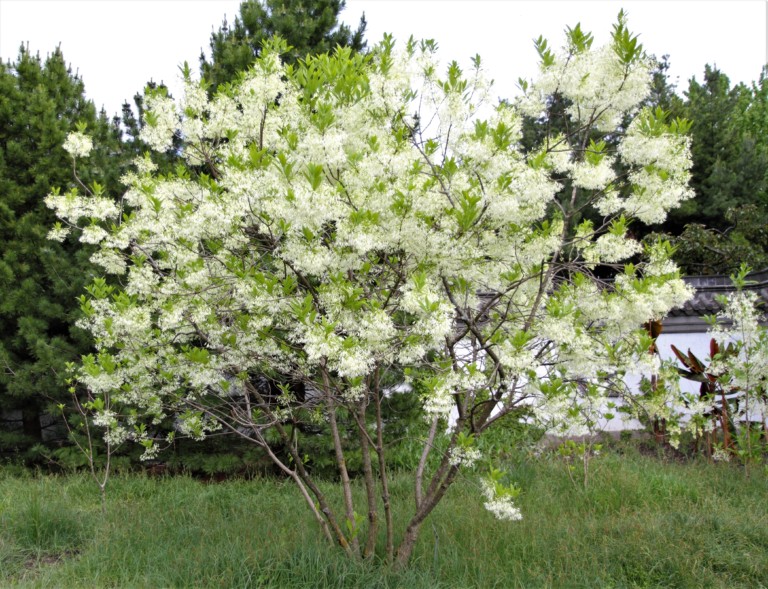
Key Facts
- Ornamental crabapple cultivar used as a small specimen tree.
- Typically grown for spring flowers and small decorative fruit.
- Attracts pollinators and provides food for birds.
- Performs best in full sun with some tolerance for partial shade.
- Prefers well drained soils and can tolerate a range of soil textures.
- May be susceptible to common Malus diseases such as apple scab and fire blight.
- Usually established by grafting to preserve cultivar traits.
Purple Prince Crabapple (Malus ‘Purple Prince’) is an ornamental crabapple cultivar grown for spring flowers and small decorative fruit. It works well as a small specimen tree in compact landscapes and provides forage for pollinators and food for birds while requiring routine disease checks.
Identification
Malus ‘Purple Prince’ is a small ornamental crabapple used for its spring bloom and small fruit. Mature specimens typically reach about 10 to 20 feet tall with a similar crown spread. Blooming occurs in spring and the tree is usually established by grafting to preserve cultivar traits.
Best uses and where to grow
Use Purple Prince as a small specimen, street tree in narrow sites, or near patios where spring flowers and fruit are enjoyed. Plant in full sun for best flowering and fruit set, though it tolerates light or dappled shade. Hardiness is generally USDA zones 4 to 8.
Planting and spacing
Plant in spring after the last hard freeze or in fall while the tree is dormant depending on local climate. Space trees roughly equal to their mature crown spread, about 10 to 20 feet apart to allow a balanced canopy. Set the root flare at soil level and keep any graft union above the soil.
Watering and after flowering care
Give regular water while the tree becomes established and avoid poorly drained sites. Prune soon after the spring bloom to shape the tree and remove crossing or dead wood, which preserves next season’s flowers. Mulch to conserve moisture and reduce weeds but keep mulch away from the trunk.
Pests and diseases
Purple Prince may be susceptible to common Malus diseases such as apple scab and fire blight. Maintain good air circulation, remove fallen leaves and infected wood, and monitor during wet springs. Selective pruning and sanitation reduce disease pressure, and consult local extension for timing of treatments if outbreaks occur.
Propagation and container growing
Named crabapple cultivars are usually grafted onto compatible rootstocks to preserve their traits. Seed will not come true to type and cuttings are less reliable. The tree can be grown in a large container for small landscapes, but root restriction will limit final size and flowering may be reduced.
Frequently asked questions
- How fast does Purple Prince Crabapple grow?
- Growth rate varies with rootstock, soil and climate. Expect the tree to reach about 10 to 20 feet over several years, with final size influenced by the chosen rootstock and pruning.
- Are the fruits edible?
- The small decorative fruit is not generally toxic and the flesh is edible, though seeds contain small amounts of cyanogenic compounds. Birds commonly eat the fruit and it is mainly ornamental rather than a table fruit.
- What USDA zones are suitable?
- Purple Prince performs well in roughly USDA zones 4 to 8. Colder zones may see slower growth or winter dieback while warmer zones can have reduced flowering and fruit set.
- Is Purple Prince resistant to apple scab or fire blight?
- This cultivar may be susceptible to apple scab and fire blight. Check local extension or arboretum sources for cultivar specific resistance information before planting in areas with high disease pressure.
- Can I grow Purple Prince in a container?
- Yes, in a large pot with good drainage, but expect restricted root growth and a smaller mature size. Container trees still need regular watering and fertilizing and may require winter protection in cold climates.
Related Plants