
Key Facts
- Native to northeastern North America.
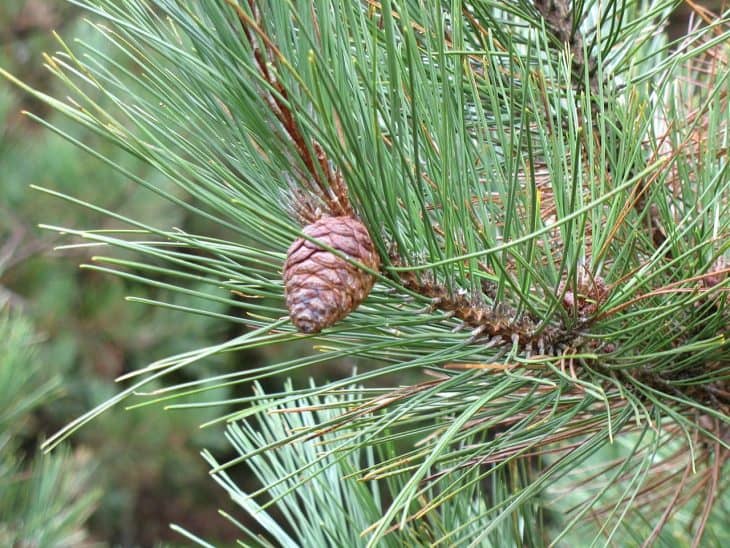
- Needles in bundles of two and relatively stiff.
- Bark often reddish brown and flaky on mature trees.
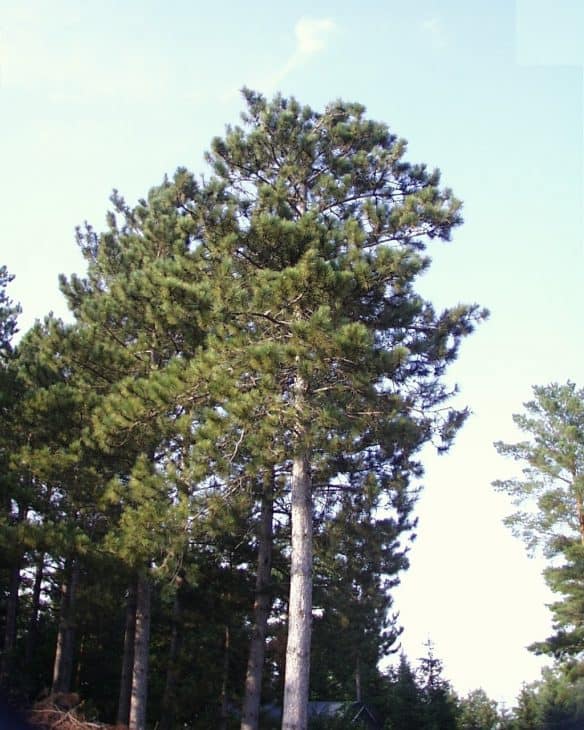
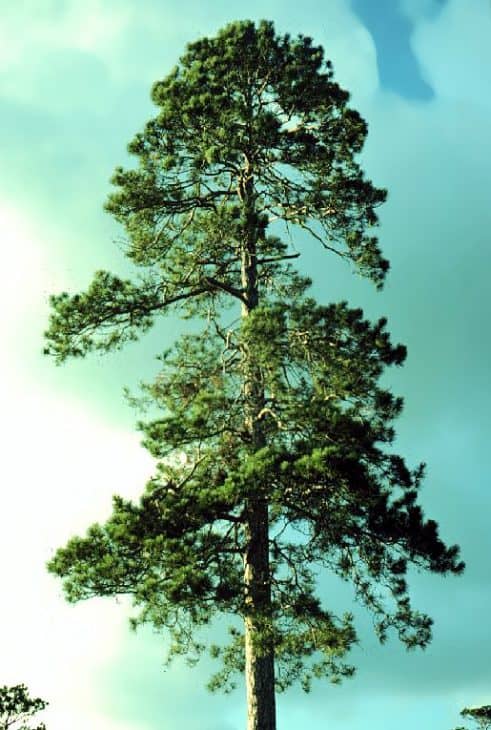
- Forms a straight trunk with a narrow, rounded crown.
- Valued for timber, windbreaks and reforestation.
- Prefers sandy or well drained soils and full sun.
- Cones form on branches in spring to summer.
Red pine is a straight trunked evergreen native to northeastern North America, valued for timber, windbreaks and reforestation. It prefers sandy well drained soils and full sun, and forms a narrow rounded crown. The tree tolerates poor dry sites but suffers on heavy or waterlogged soils, so site selection is critical.
Identification
Needles come in bundles of two and are relatively stiff, giving a classic pine silhouette. Mature bark is often reddish brown and flaky, and the trunk remains straight with a narrow rounded crown. Cones develop in spring to early summer rather than producing showy flowers, which helps distinguish it from broadleaf trees.
Best uses and where to grow
Use red pine for timber production, windbreaks and large scale reforestation where a straight fastigiate form is wanted. It performs best in USDA zones 3 to 6 and on well drained sandy or loamy soils. Avoid planting in low spots or compacted clay where root decline and mortality increase.
Planting and spacing
Plant with the root flare at ground level and backfill with native soil so roots are not buried. Space trees to allow a mature crown spread of about 20 to 40 feet, wider spacing for open grown specimens. Planting in full sun gives the best form and timber quality while light shade reduces vigor.
Soil light and watering
Red pine prefers well drained sandy or loamy soils and tolerates poor dry sites, with a preference for acidic pH. Full sun produces the best growth and straight form. Overwatering or poorly drained soils lead to root loss and decline, while occasional supplemental irrigation helps young trees establish on very dry sites.
Care and maintenance
Once established red pine needs minimal pruning beyond removal of dead or crossing branches to maintain a single leader for timber. Monitor for drought stress in warm zones and avoid fertilizer on very poor sandy sites unless soil tests indicate a deficiency. Cones form after spring pollination and require no special post flowering care.
Propagation
Propagate red pine by seed, using cold stratification for the best germination of fresh seed. Vegetative propagation is difficult and is usually limited to grafting or specialist cuttings for selected clones. Nursery protocols and stratification periods vary so follow regional forestry or nursery guidance for reliable results.
Pests disease and toxicity
Red pine can be affected by common pine pests and pathogens in susceptible sites, and stress from poor drainage or heat increases vulnerability. It is not widely regarded as highly toxic, though ingestion may cause mild gastrointestinal upset and pine sap can irritate skin. Confirm concerns with local extension or poison control.
Frequently asked questions
- How fast does Red pine grow?
- Growth rate varies with site and climate. Trees on fertile well drained sites establish faster and reach mature height over several decades, while poor dry sites produce slower growth and smaller final size.
- Is Red pine suitable for small yards?
- Because mature height commonly reaches 40 to 80 feet and crown spread is about 20 to 40 feet it is not well suited to small yards. Allow room for a tall trunk and a narrow rounded crown.
- When do cones form?
- Cones form in spring to early summer after pollination. Exact timing shifts with latitude and annual weather but spring months are when reproduction occurs rather than showy blooms.
- How should I propagate Red pine?
- Seed propagation with cold stratification is standard. Vegetative methods are difficult and generally used only by specialists for specific cultivars or restoration stock.
- Is Red pine toxic to pets or people?
- Red pine is not classified as highly toxic. Ingestion may cause mild stomach upset and sap can cause skin irritation in some individuals. For definitive guidance consult local poison control or a veterinarian.
Gallery

Related Plants


Mentioned In (12)
Trees
33 Most Common Trees in Virginia
Let's have a look at the 33 most common trees in Virginia. Which of the names of these tree species…

Trees
22 Most Common Trees in Minnesota
Minnesota is home to hundreds of species of trees, but only about 22 are common in Minnesota. These are the…

Trees
30 Most common trees in New England
The trees of New England are some of the most beautiful in the world. From maples to sycamores, here are…

Pine
6 Types Of Pine Trees In Ontario
Many different types of long and short-needles pines are found in the rich, green forests in Ontario. If you're looking…
Pine
5 Prevalent Types Of Pine Trees In New England
One of the best parts about life in New England is getting to enjoy the bountiful local flora and fauna.…
Pine
12 Most Common Types Of Pine Trees In Canada
Do you love collecting pine cones and smelling that fresh, evergreen smell of pine on your early morning jog? Well,…

Pine
3 Great Types of Pine Trees in Massachusetts
Although small in size, the state of Massachusetts still manages to have more than 3.2 million acres covered in forests.…
Pine
3 Prevalent Kinds of Pine Trees in Maine
There’s no doubt in anyone’s mind that a beautiful pine tree can lend any outdoor area some ambiance. Pines are…

Pine
51 Common Types of Pine Trees in North America (photos)
Wherever you go in North America, it is difficult not to see pine trees. These are tall, elegant trees that…
Pine
9 Different Types of Pine Trees in Virginia
Since almost two-thirds of the state of Virginia consists of forests, it isn’t surprising that there are tons of pine…
Pine
7 Common Types of Pine Trees in Pennsylvania
As with so many other states, Pennsylvania is home to numerous types of trees and this is one of the…

Pine
3 Types of Pine Trees in Wisconsin
Evergreen trees such as pines are prevalent in Wisconsin, and they offer beautiful green color, even in the winter when…