
Key Facts
- Native shrub of western and northern North America.
- Arching, mostly thornless canes form a clumping shrub.
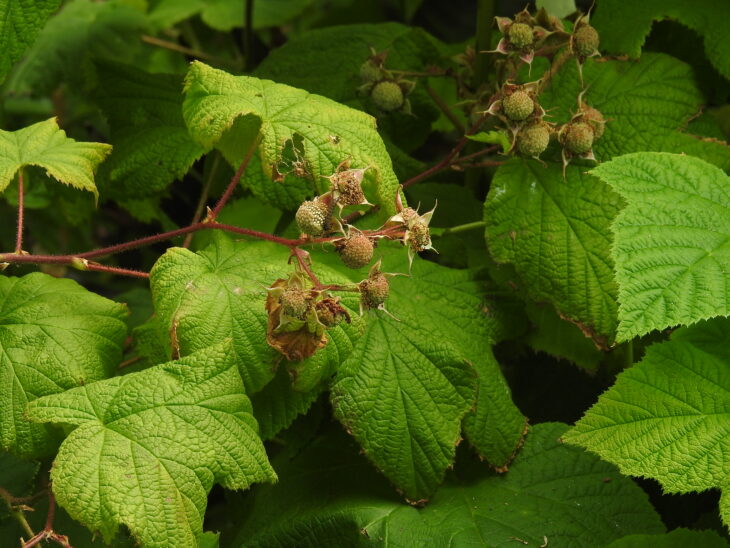
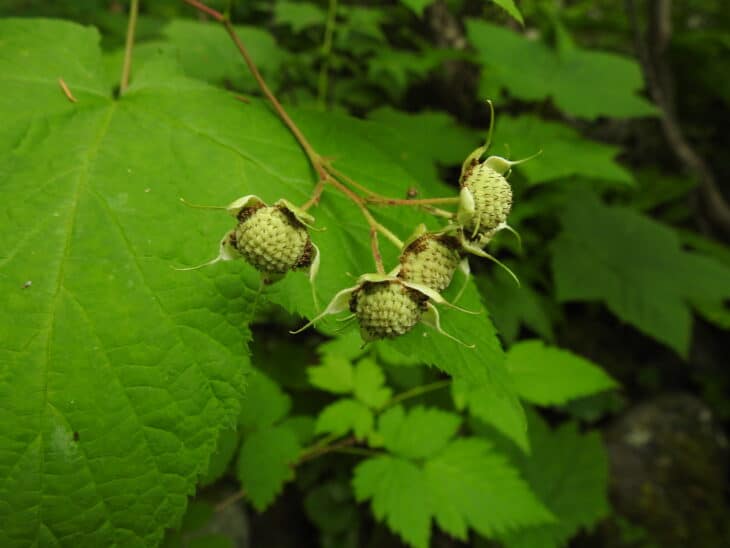
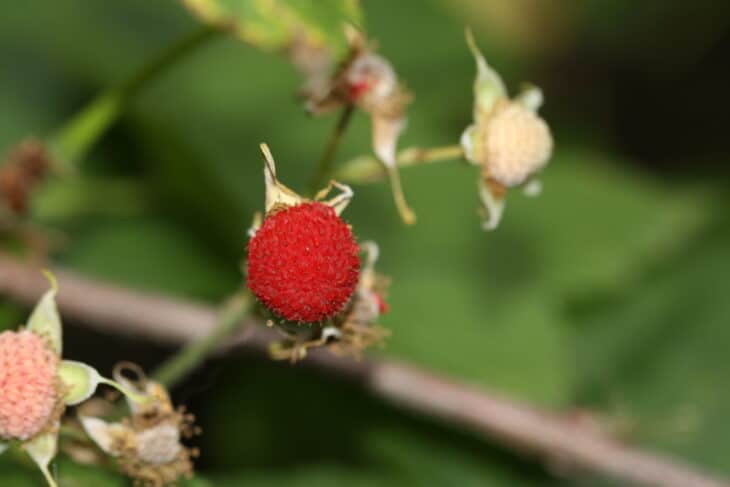
- Produces soft, red aggregate fruits that are edible but fragile.
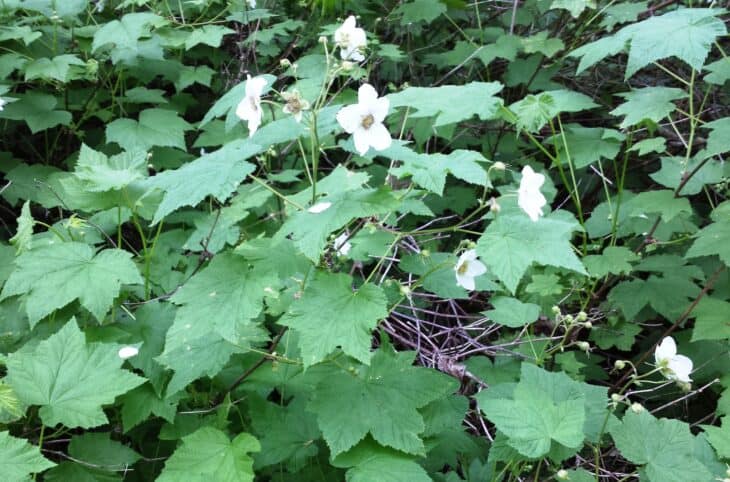
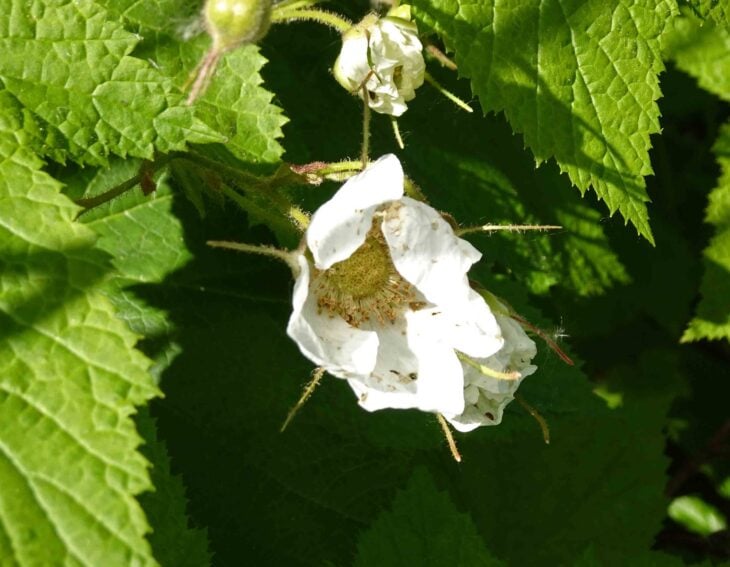
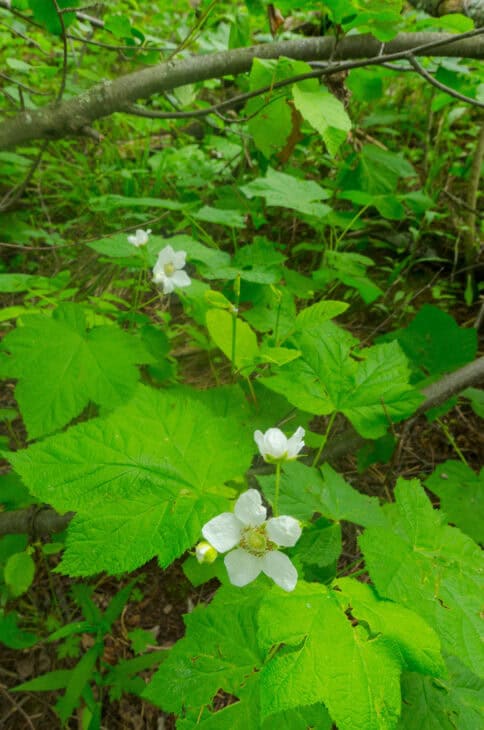
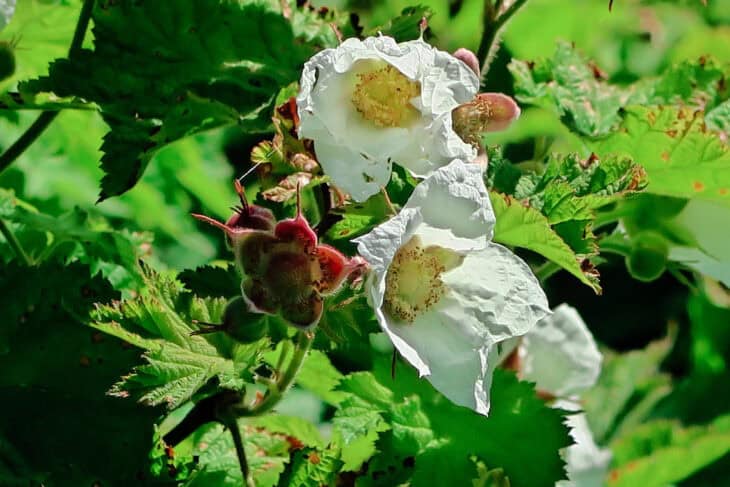
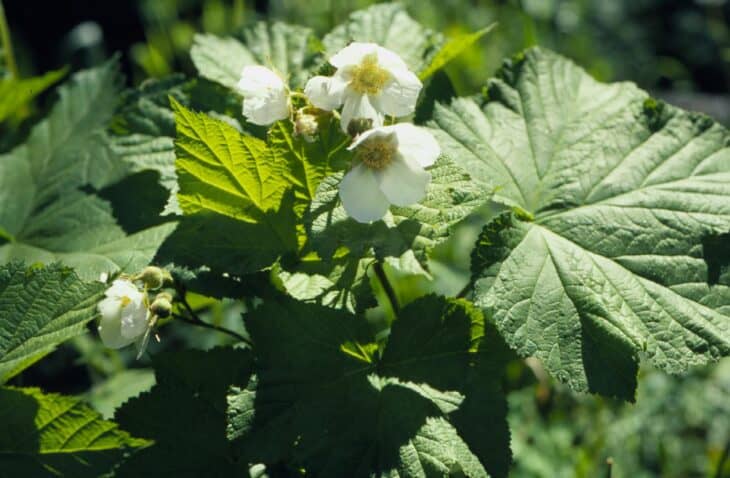
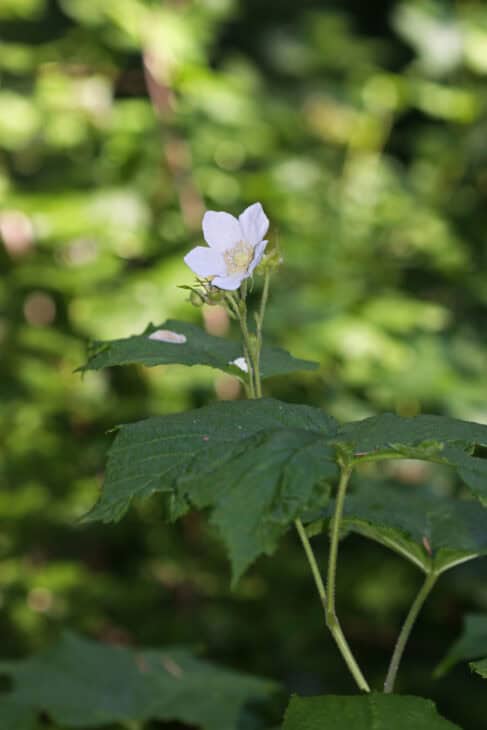
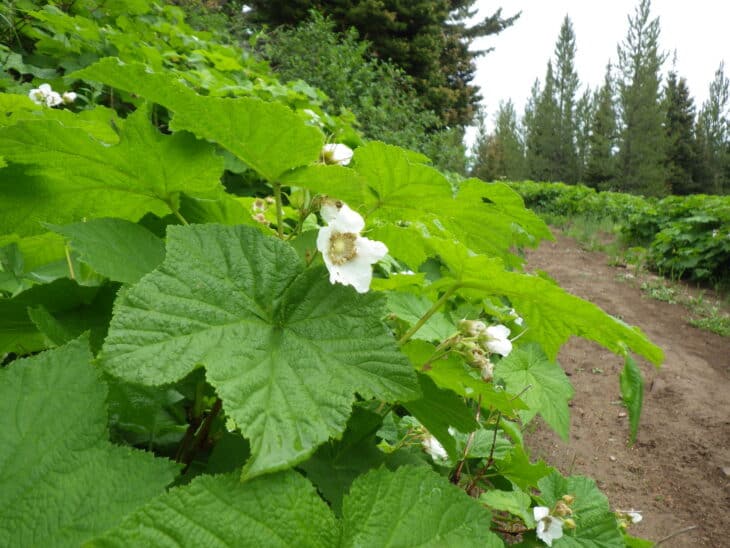
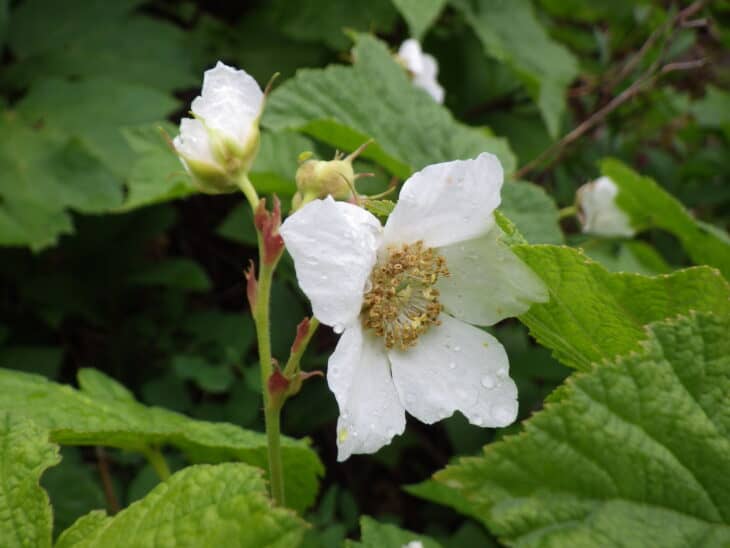
- White five-petaled flowers appear before fruit.
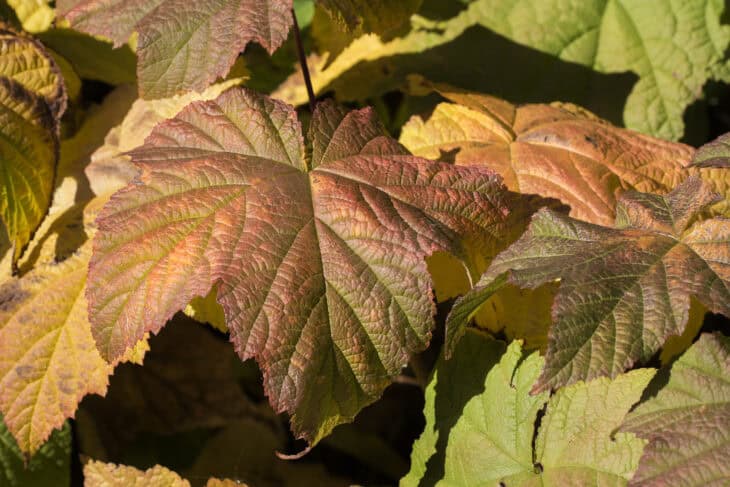
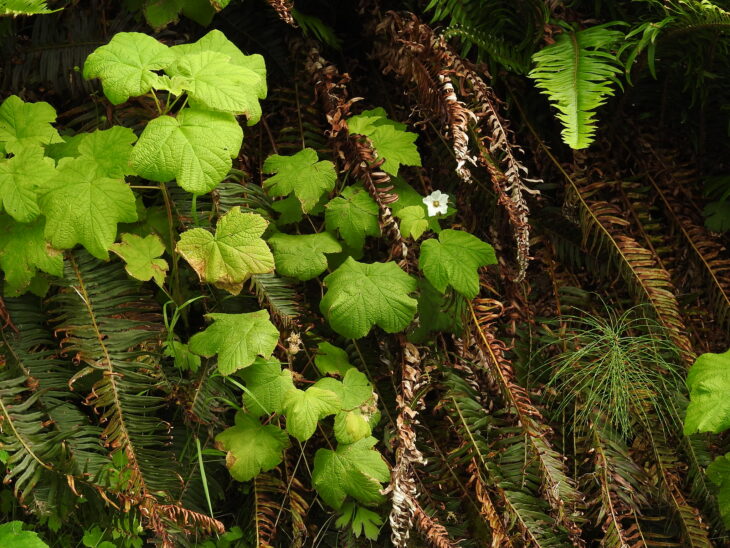
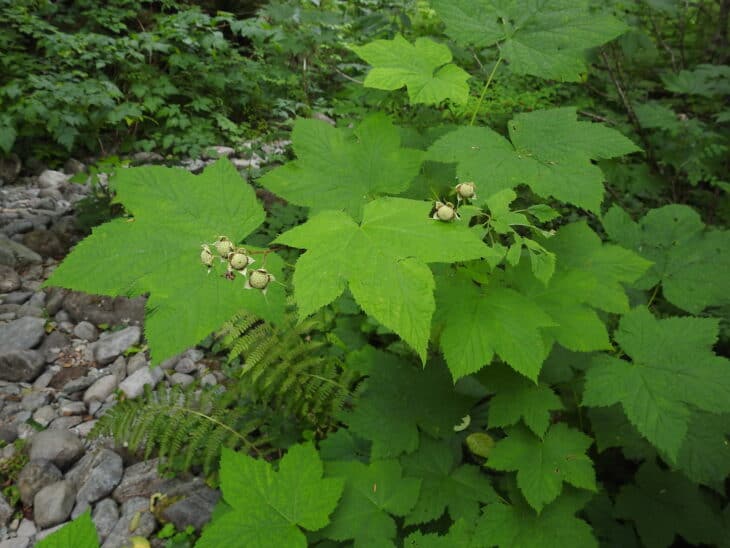
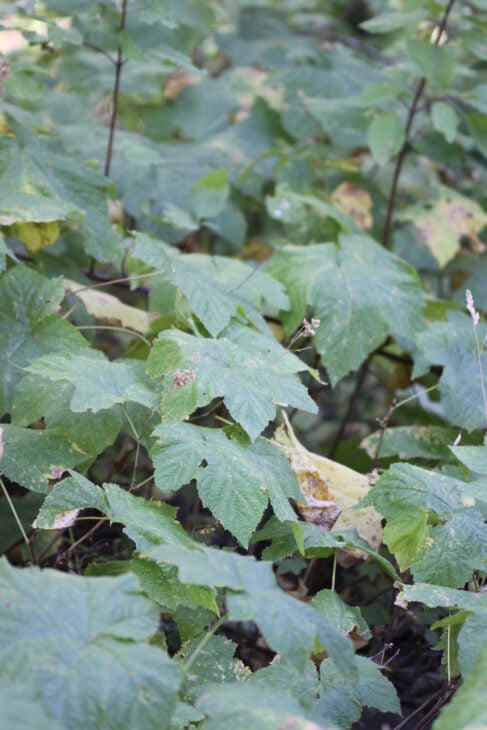
- Leaves are broadly lobed and fuzzy beneath.
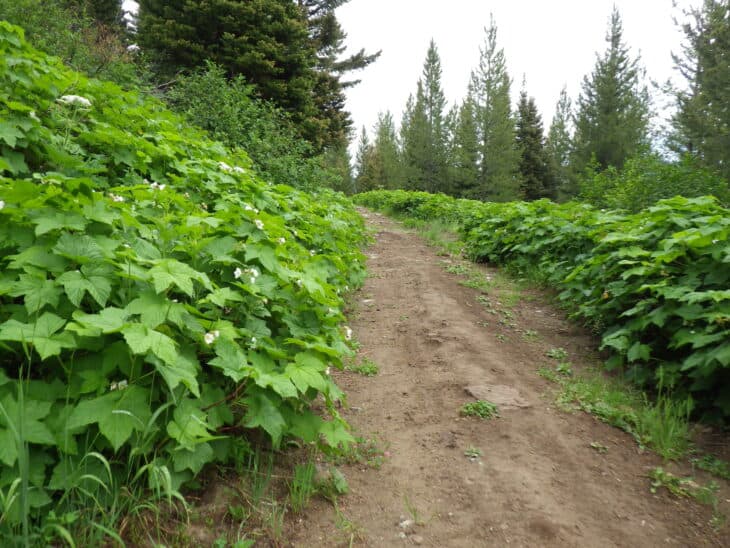
- Spreads by root suckers and can form dense patches.
- Valued by wildlife and for erosion control along edges of woods.
Thimbleberry is a native North American bramble with soft red edible fruit and mostly thornless arching canes. It forms clumps by root suckers and does best on cool moist sites near woods or streams.
Identification
Arching canes form a clumping shrub that typically reaches about 2 to 6 feet tall. Leaves are broadly lobed and often fuzzy beneath. White five petaled flowers appear in late spring and fruit follows in early to mid summer. The fruit is a soft red aggregate that is edible but fragile.
Best uses and where to grow
Use thimbleberries as a patch forming shrub at woodland edges and along streambanks for erosion control and wildlife cover. They perform in full sun to partial shade and do best in cool moist spots. Typical hardiness is USDA zones 4 to 8 which covers much of temperate western and northern North America.
Planting and spacing
Space plants roughly 3 to 6 feet apart to allow room for clonal spread by suckers. Choose a moist well drained site with slightly acidic to neutral soil. Avoid sites that stay waterlogged or suffer prolonged drought as both reduce vigor and fruiting.
Watering and soil
Keep soil consistently moist during establishment and reduce supplemental water once plants are established unless the site becomes very dry. Poor drainage and standing water sap health and can lead to decline. Fruit set is better with at least part sun and with steady moisture.
After flowering care and maintenance
Remove dead or weak canes after fruiting and thin new suckers if you need to limit patch expansion. Regular removal of unwanted suckers keeps thimbleberries from taking over planting beds. Transplant or root out suckers to expand the patch elsewhere or to divide the colony.
Propagation
Propagate by seed or vegetatively using root suckers, tip layering, or stem cuttings. Plants readily form new shoots from roots and established patches are easy to expand by transplanting rooted suckers.
Wildlife and safety
Birds and mammals feed on flowers and fruit and the shrub provides cover along edges of woods. The fruit is edible for people. There are no widespread reports of toxicity to common pets but check local poison control or extension sources for definitive pet safety guidance.
Frequently asked questions
- How fast does Thimbleberries grow?
- Growth rate varies with site but plants typically reach 2 to 6 feet tall and expand by suckering. Expect a patch to widen by several feet over multiple seasons if left to naturalize.
- Are Thimbleberries invasive?
- They are not generally described as a widespread invasive species but they do spread by root suckers and can form dense patches, so manage suckers if you do not want them to dominate nearby plantings.
- When do Thimbleberries bloom and fruit?
- Flowers open in late spring and fruits usually ripen in early to mid summer, often cited as May to July in the Northern Hemisphere. Exact timing varies with latitude and elevation.
- Are the fruits edible?
- Yes. The soft red aggregate fruit is edible and enjoyed by people and wildlife, though it bruises easily.
- How should I prune Thimbleberries?
- Cut out dead or weak canes after fruiting and thin suckers to control spread. Removing unwanted suckers is the most effective way to keep a planting in bounds.
Gallery
Related Plants


Mentioned In (1)

Plants
11 Plants That Look Like Raspberries
Raspberries (Rubus idaeus var.) are some of the most common berries in America since they are native to parts of…