
Key Facts
- Tuberous aquatic perennial native to South Africa.
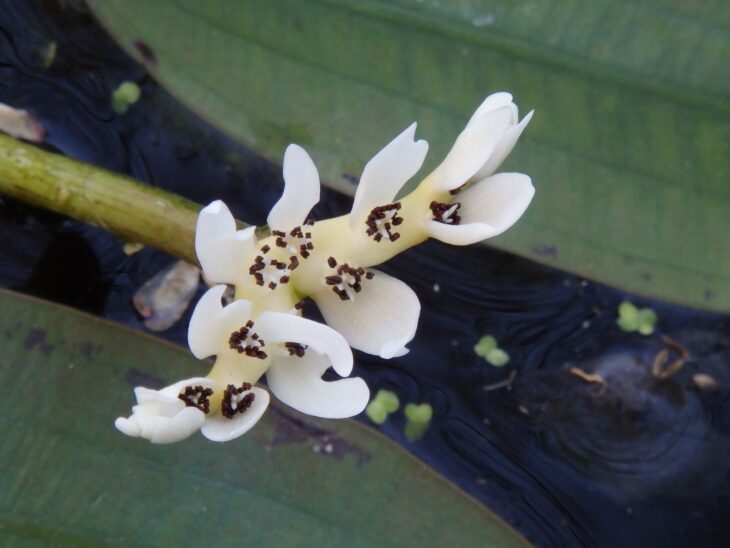
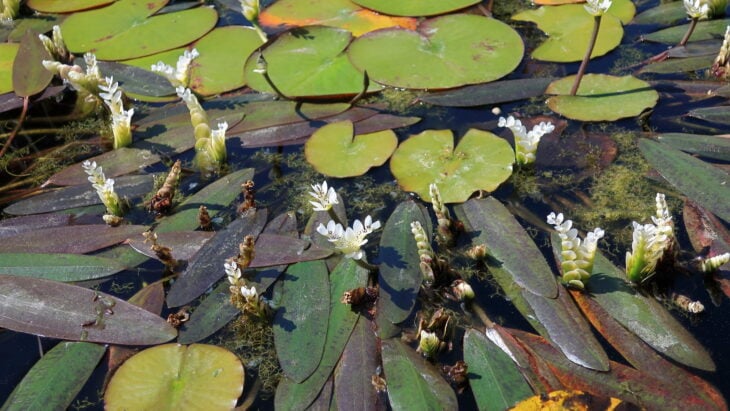
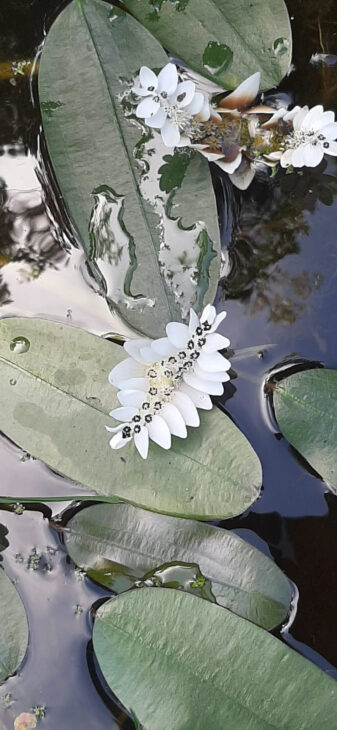
- Produces floating leaves and fragrant white flower spikes above the water.
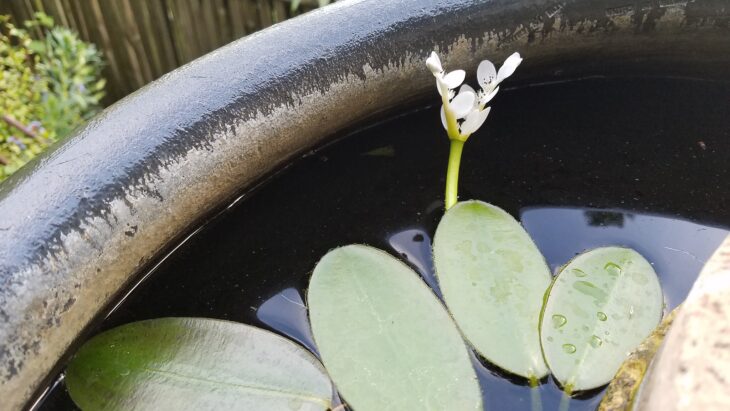
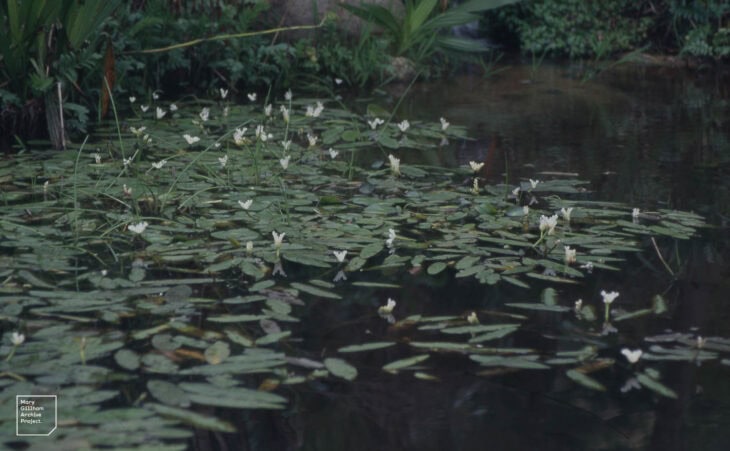
- Grows well in still or slow moving ponds and water containers.
- Propagates from tubers and from seed.
- Prefers rich aquatic loam and regular water depth over the crown.
- Dies back to a tuber in cool or adverse conditions and can be lifted for winter.
- Flowers most reliably where plants get strong sun during the growing season.
Water Hawthorn (Aponogeton distachyos) is a tuberous aquatic perennial valued for round floating leaves and fragrant white flower spikes that rise above calm water. It suits still ponds and water containers and spreads slowly by tubers so it works well where a compact clump or container display is desired.
Identification
Leaves float at the water surface and are roughly 8 to 12 inches across while fragrant white flower spikes stand about 6 to 12 inches above the water. Plants form a clump of tubers beneath the soil or container media and produce offsets that stay near the parent tuber.
Where to grow Water Hawthorn Best uses
Grow this species in still or slow moving ponds and water containers where its floating foliage and scented blooms can be enjoyed. Tubers overwinter outdoors in USDA 8 to 11 in mild climates, while gardeners in colder areas lift and store tubers for winter protection.
Planting time depth and spacing
Plant tubers in spring or when water temperatures are warming for active growth. Set tubers so the crown is kept consistently under water and space plants about 30 to 60 cm apart to allow a clump to form. Containers will limit spread while pond planting encourages natural offsets.
Watering and maintenance
Keep the planting medium submerged or at a steady waterline so crowns remain wet but not subject to extreme anaerobic muck. Consistent water over the crown supports leaf production and flowering, while erratic drying or overly compacted soils can cause tuber loss or reduced vigor.
After flowering care
Flower spikes die back after bloom and foliage will retreat to the tuber in cool or adverse conditions. Lift tubers for winter storage in regions with hard freezes and divide overcrowded clumps in spring to renew vigor and maintain chosen planting locations.
Containers and forcing
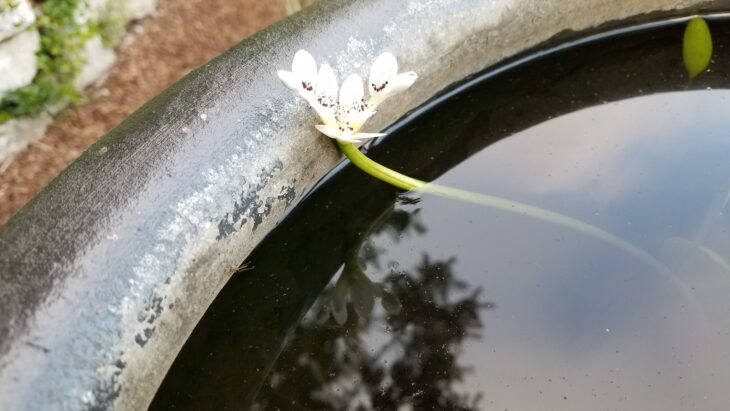
Water Hawthorn performs well in large water containers where soil can be controlled and tuber depth maintained. Containers make overwintering easier because tubers can be moved indoors or to frost free storage. Rich aquatic loam or composted pond soil supports best growth in containers.
Spread and crowding control
The species forms clumps that expand as tubers produce offsets, typically reaching about 1 to 2 ft spread over time. Control spread by lifting and dividing tubers in spring and removing excess offsets. Container culture restricts spread and simplifies maintenance without chemical control.
Propagation
Divide tubers and offsets for true to type reproduction and faster results. Seed propagation is possible but offspring may differ from the parent. Division is the quickest way to increase stock or replace damaged tubers and is commonly done when plants are lifted in spring.
Frequently asked questions
- How fast does Water Hawthorn grow?
- It expands by producing offsets from tubers and will form a 1 to 2 ft clump over several seasons. Growth rate varies with light nutrient level and water conditions.
- Can I grow Water Hawthorn in a container?
- Yes. Large water containers suit this plant well and make it easier to control spread and overwinter tubers indoors if needed.
- What depth of water does it need?
- Keep the crown consistently submerged with steady water over the tuber. Exact depth varies with container or pond design and plant size.
- How should I overwinter the tubers?
- In colder climates lift tubers and store them dry or keep them in frost free conditions. In USDA 8 to 11 tubers can usually remain outdoors with protection.
- Is Water Hawthorn toxic to pets or children?
- Reliable toxicity data is limited. Check with local poison control or botanical toxicology sources if safety information is required.
Gallery
Related Plants


Mentioned In (1)

Plants
9 Plants That Look Like Lily Pads
Lily Pads are stunning water plants that paint a picturesque image of a lush and healthy pond or lake. When…