
Key Facts
- A small tropical tree or large shrub often grown for showy tubular flowers.
- Evergreen in frost free climates and semi deciduous where light freezes occur.
- Attracts pollinators such as bees and hummingbirds.
- Tolerant of coastal exposure and salt spray.
- Prefers well drained soils and struggles in waterlogged clay.
- Responds well to pruning and is used as a specimen or informal hedge.
- White Geiger is a white flowered form or selection of Cordia sebestena rather than a distinct species.
White Geiger (Cordia sebestena) is a small tropical tree or large shrub grown for showy white tubular flowers and glossy foliage. It suits coastal and tropical landscapes where frost is rare and flower production is most abundant in warm months.
Identification
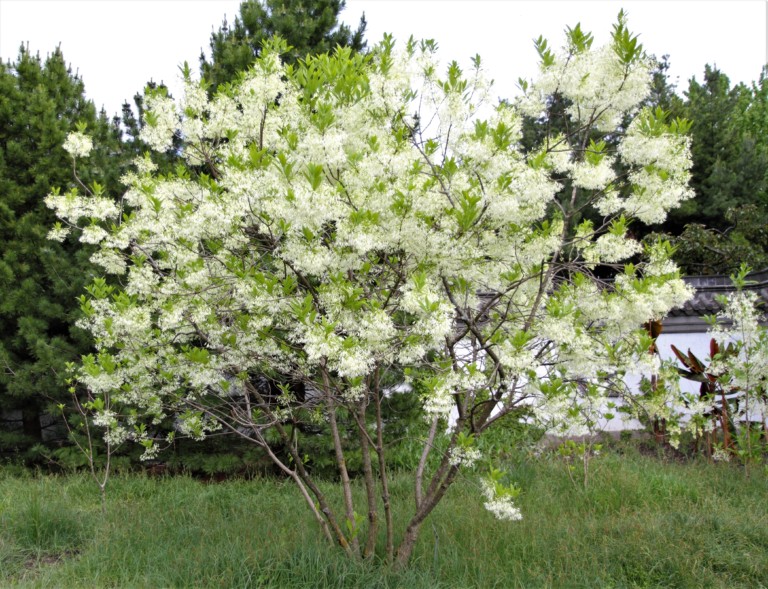
White Geiger is a white flowered selection of Cordia sebestena with tubular blooms and a broad rounded crown. In frost free climates it stays evergreen and blooms nearly year round with heavier display in spring and summer. Plants attract pollinators such as bees and hummingbirds.
Where to grow and best uses
Grow outdoors in USDA zones 10 to 11 for reliable evergreen growth and continuous flowering. Salt tolerance and coastal exposure resistance make it an excellent specimen near shorelines. Use single plants as focal trees or plant several as an informal hedge where a broad rounded crown is desired.
Planting and spacing
Choose a site with full sun or light afternoon shade and well drained soil. Allow 10 to 15 feet between specimens to accommodate a mature spread similar to its height. In cooler climates keep plants in containers or provide frost protection to prevent winter dieback.
Water and soil
White Geiger prefers sandy to loamy well drained soils and tolerates poorer soils and salt spray. Avoid waterlogged clay which leads to root rot and stunted growth. Poor drainage produces chlorosis and decline so plant on a slight rise or amend soil to improve drainage.
Pruning and after flowering care
The species responds well to pruning and can be trained as a single trunk specimen or maintained as a multi stem hedge. Prune to shape after peak flowering and remove dead wood to encourage fresh growth. Regular pruning controls height and encourages denser flowering.
Containers and propagation
White Geiger adapts to containers where root restriction and pruning keep size manageable. Propagate desirable white flower selections with semi hardwood cuttings or air layering to preserve traits. Seeds germinate readily but named forms may not come true from seed.
Pests and problems
Major issues include frost injury in marginal climates and root problems in poorly drained sites. In cooler zones expect leaf drop or dieback following light freezes. Good site selection and drainage are the primary means to avoid decline.
Frequently asked questions
- How fast does White Geiger grow?
- Growth varies by site and care. Mature height commonly ranges from 8 to 25 feet and plants grow faster in warm, well drained locations with full sun. Pruning and container culture keep plants much smaller.
- Is White Geiger evergreen?
- In frost free climates it remains evergreen. In areas that experience light freezes it can be semi deciduous and suffer winter dieback.
- What soil and light does it need?
- Full sun produces the best flower show and glossy foliage. Use sandy to loamy well drained soil and avoid sites that remain waterlogged.
- Can I plant it by the coast?
- Yes. The plant tolerates coastal exposure and salt spray which makes it suitable for seaside landscapes.
- How should I propagate a named white form?
- Use semi hardwood cuttings or air layering to preserve a named selection. Seed will germinate but may not reproduce cultivar traits.
Related Plants


Mentioned In (3)

Trees
14 Evergreen Trees in Florida
Florida is a state that can experience all four seasons, but one thing that remains constant is the evergreen trees.…

Trees
31 Most Common Trees in Florida
Florida – the Sunshine State – is known for its beautiful sandy beaches and warm weather. Like several other U.S.…

Trees
89 Best Flowering Trees for Florida Gardens
If you are always on the lookout for elegant and vivid flowering trees in Florida, you would be happy to…