
Key Facts
- Native to eastern and central North America.
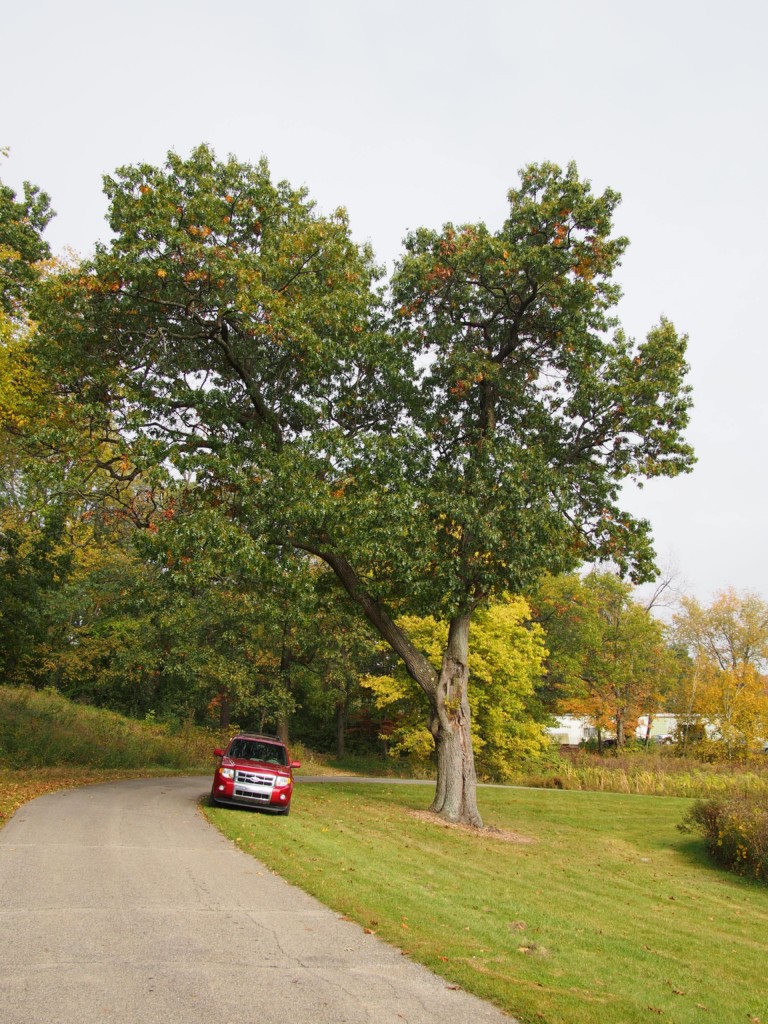
- Deciduous broadleaf tree with a rounded crown.
- Produces acorns that are an important wildlife food.
- Valued as a slow to medium grower and durable hardwood.
- Long lived often surviving for several centuries.
- Prefers well drained, deeper soils but tolerates a range of soil textures.
- Flowers are wind pollinated catkins that appear in spring.
- Develops a deep root system once established.
White Oak is a long lived deciduous tree native to eastern and central North America. It produces acorns that feed wildlife and is valued for durable hardwood and broad shade, but requires ample space and well drained soil to thrive.
Identification and key traits
White Oak has a rounded crown and broad lobed leaves, and produces acorns that are an important wildlife food. It is a slow to medium grower with durable hardwood and often survives for several centuries. Flowers are wind pollinated catkins that appear in spring.
Where to grow and best uses
Use White Oak as a large specimen for parks, wide lawns and naturalized woodlands where a long lived shade tree is wanted. It performs well on deeper well drained soils but tolerates a range of textures, making it a practical choice for urban green space when given enough rooting area.
Hardiness, height and spread
White Oak is winter hardy in USDA zones 3 to 9. Mature trees typically reach 50 to 80 feet in height and commonly develop a similar crown spread. Size varies by site quality and moisture, so allow for a very large canopy when siting the tree.
Soil and light preferences
White Oak prefers deep, well drained loam to sandy loam with acidic to neutral pH and tolerates clay and drier soils. Full sun produces the best form and growth, while shade tends to give narrower crowns and slower development. Poor drainage leads to root decline and reduced vigor.
Planting and spacing
Plant where a mature crown of roughly 50 to 80 feet will not conflict with structures, utilities or other trees. When establishing from nursery stock place the root flare at soil level and avoid deep planting. For acorns, collect ripe nuts and follow cold stratification before spring sowing.
Watering and care
Provide regular deep watering during the first two to three years to encourage a deep root system. Once established White Oak develops deep roots and tolerates periods of dryness. Avoid overwatering and poorly drained sites because excess moisture can cause root decline and reduced vigor.
After flowering and maintenance
Flowers appear as catkins in spring, typically around April and May in northern temperate zones, with exact timing varying by latitude. Acorns form after flowering and feed birds and mammals. Prune to remove dead or damaged wood and to maintain structure, keeping cuts to a minimum on mature trees.
Propagation
Propagate by seed using acorns that are cold stratified over winter and sown in spring. Acorns are seasonally viable so plant soon or store moist and cold. Nursery transplants and grafting are used to establish selected cultivars and to accelerate canopy development.
Toxicity and wildlife value
Acorns and fresh foliage contain tannins that can cause gastrointestinal upset and can be toxic to livestock when consumed in large amounts. Acorns are an important food source for wildlife and can be made edible for people after leaching. Verify pet and livestock risks with local veterinarians or extension services.
Frequently asked questions
- How fast does White Oak grow?
- White Oak is generally a slow to medium grower and may take decades to reach full size, with growth rate influenced by soil depth and moisture.
- What size does White Oak reach?
- Mature trees commonly reach 50 to 80 feet tall with a similar crown spread, occasionally taller on ideal sites.
- Is White Oak good for shade?
- Yes. When given enough space and full sun it develops a broad crown that provides long lasting shade.
- Are acorns toxic to pets and livestock?
- Acorns contain tannins that can be toxic to livestock when eaten in large amounts. Risks to pets vary so consult a veterinarian or local poison control for guidance.
- Can White Oak be grown in containers?
- Not for the long term. White Oak develops a deep root system and reaches a large mature size, which makes it unsuitable for container culture beyond early seedling stages.
Related Plants


Mentioned In (26)

Trees
8 Salt Resistant Trees
High salt levels in the soil can prevent your tree from absorbing enough water, burn its leaves, and in worst…
Trees
31 Most Common Trees in Kentucky
Located in the Southeastern region of the United States, Kentucky is a state that is filled with plentiful flora, fauna,…
Trees
34 Most Common Trees in Alabama
The 30th largest state in the United States of America, Alabama, is home to a mesmerizingly diverse landscape. From hardwood…

Trees
30 Most Common Trees in Indiana
In this article, we will talk about some of the most common trees that you will find in Indiana. Some…
Trees
33 Most Common Trees in Virginia
Let's have a look at the 33 most common trees in Virginia. Which of the names of these tree species…

Trees
21 most common trees in Connecticut
Connecticut is home to over 600 species of trees. That's a lot of shade! Some are more common than others,…
Trees
30 Most Common Trees in Kansas
Kansas is home to a wide range of trees, from the tall and hardy oak tree that can grow up…
Oak
5 Types of Oak Trees in Massachusetts
Are you looking to diversify your property in Massachusetts with hardy, attractive trees? Well, you cannot do better than various…

Trees
25 Most Common Trees in Wisconsin
Nearly 16 million acres of Wisconsin's 35 million acres are forests. Forestland reportedly accounts for 46% of Wisconsin's total land…
Oak
9 Types of Oak Trees in New Jersey
If you want to grow Oak Trees in New Jersey, you’ve come to the right place! New Jersey is home…
Oak
9 Common Types of Oak Trees in Minnesota
There are many different oak trees growing all across Minnesota, offering this state a gorgeous green cover for particularly sunny…

Oak
21 Grand Types of Oak Trees in Mississippi
Do you wish to grow Oak Trees in your home garden? Well, you will be pleased to know that Mississippi…

Oak
12 Common Types Of Oak Trees In Canada
Do you plan to grow Oak Trees in your garden? Well, you will be happy to know that there are…
Oak
19 Types of Oak Trees in Tennessee
Not only does the state of Tennessee have a lot of different trees, but the state is also home to…
Oak
19 Beautiful Types of Oak Trees in Illinois
The state of Illinois is home to more than four million acres of forested land, making it home to a…

Oak
8 Wonderful Types of Oak Trees in Wisconsin
Within Wisconsin’s forests, more than 43% include ash and maple trees, but the state is home to many other trees…
Oak
15 Amazing Types of Oak Trees in Arkansas
Arkansas has more than 18 million acres of forests that account for nearly 60% of the state, so if you’re…
Oak
10 Prevalent Types of Oak Trees in Oklahoma
Trees in Oklahoma include everything from elms to black walnuts and pines to dogwoods, and that doesn’t even include the…

Oak
7 Common Types of Oak Trees in Virginia
The state of Virginia is home to dozens of tree types, and thanks to the mild temperatures experienced throughout most…
Oak
22 Types of Oak Trees in Alabama
The fact that Alabama has a lot of trees shouldn’t be a surprise to anyone. After all, nearly 70% of…

Oak
8 Types of Oak Trees in Ohio
The state of Ohio is home to more than 100 species of trees, and the most common tree in the…

Oak
15 Types of Oak Trees in North Carolina
There are hundreds of species of trees in North Carolina, in part because there are mountains on one side of…

Oak
6 Common Types of Oak Trees in Michigan
The majestic oak tree is written about in novels and displayed across the screen in hundreds of movies, and there…
Oak
13 Types of Oak Trees in South Carolina
Not only is South Carolina home to tons of species of trees, but it also contains some of the largest…

Oak
16 Types of Oak Trees in Florida
With more than 16 million acres of forests and 180 state parks and forests, Florida is definitely a nature-lover’s paradise.…
Oak
76 Types of Oak Trees in North America (foliage photos)
Because of all the forests in North America, you can find just about every tree you can think of if…