
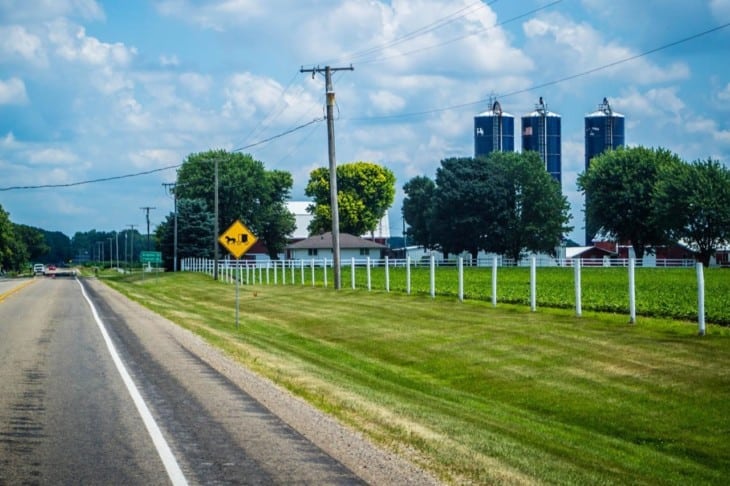
About a fifth of Indiana is forest, most of it in the hilly south, where the Hoosier National Forest and many state forests are covered in oak, hickory, sugar maple, beech and tulip tree. In the flat, farmed north, trees grow mostly in woodlots, fence rows and along streams, and cottonwood, sycamore, silver maple and hackberry line the rivers. The tulip tree has been Indiana’s state tree since 1931, and it is one of the tallest hardwoods in the state.
Contents
- Forest and Woodlot Trees
- Tulip Tree (Tulip Poplar, Yellow Poplar) (Liriodendron tulipifera)
- Sugar Maple (Acer saccharum)
- Red Maple (Acer rubrum)
- White Oak (Quercus alba)
- Northern Red Oak (Quercus rubra)
- Shagbark Hickory (Carya ovata)
- Black Walnut (Juglans nigra)
- Black Cherry (Prunus serotina)
- American Beech (Fagus grandifolia)
- White Ash (Fraxinus americana)
- Black Gum (Blackgum, Black Tupelo) (Nyssa sylvatica)
- Sassafras (Sassafras albidum)
- American Basswood (Linden) (Tilia americana)
- Eastern Red Cedar (Juniperus virginiana)
- Black Locust (Robinia pseudoacacia)
- Ohio Buckeye (Aesculus glabra)
- Kentucky Coffeetree (Gymnocladus dioicus)
- River and Bottomland Trees
- Small and Understory Trees
- One Tree Not to Plant
- Choosing a Tree for an Indiana Yard
This guide covers the 30 native trees you are most likely to see in Indiana, grouped by where they grow, and one widely planted tree you shouldn’t plant.
- Forest and Woodlot Trees
- River and Bottomland Trees
- Small and Understory Trees
- One Tree Not to Plant
- Choosing a Tree for an Indiana Yard
| Tree | Botanical name | Native to IN | Where you’ll see it |
|---|---|---|---|
| Tulip Tree (Tulip Poplar, Yellow Poplar) | Liriodendron tulipifera | Yes | Forests statewide, most common in the south; the state tree |
| Sugar Maple | Acer saccharum | Yes | Moist forests statewide; yards and parks |
| Red Maple | Acer rubrum | Yes | Wet and dry forests statewide; yards and streets |
| White Oak | Quercus alba | Yes | Upland forests and woodlots statewide |
| Northern Red Oak | Quercus rubra | Yes | Forests statewide; yards and parks |
| Shagbark Hickory | Carya ovata | Yes | Upland and bottomland forests statewide |
| Black Walnut | Juglans nigra | Yes | Bottomlands, fence rows and woodlots statewide |
| Black Cherry | Prunus serotina | Yes | Woodland edges, fence rows, old fields |
| American Beech | Fagus grandifolia | Yes | Moist forests statewide, especially old woods |
| White Ash | Fraxinus americana | Yes | Forests statewide; formerly streets |
| Black Gum (Blackgum, Black Tupelo) | Nyssa sylvatica | Yes | Upland and lowland forests, mostly in the south |
| Sassafras | Sassafras albidum | Yes | Old fields, woodland edges, fence rows |
| American Basswood (Linden) | Tilia americana | Yes | Moist forests statewide; parks and streets |
| Eastern Red Cedar | Juniperus virginiana | Yes | Old fields, fence rows, roadsides, limestone bluffs |
| Black Locust | Robinia pseudoacacia | Native to the Southeast; widespread | Old fields, roadsides, reclaimed mine land |
| Ohio Buckeye | Aesculus glabra | Yes | Moist forests and stream banks, mostly central and south |
| Kentucky Coffeetree | Gymnocladus dioicus | Yes | Bottomlands and moist slopes; parks and streets |
| American Sycamore | Platanus occidentalis | Yes | Stream and river banks statewide |
| Eastern Cottonwood | Populus deltoides | Yes | Riverbanks, floodplains and wet ground statewide |
| Silver Maple | Acer saccharinum | Yes | Riverbanks and floodplains; older yards and streets |
| Hackberry | Celtis occidentalis | Yes | Bottomlands, fence rows, towns statewide |
| American Elm | Ulmus americana | Yes | Bottomlands, fence rows, towns |
| Bald Cypress | Taxodium distichum | Yes (rare) | Swamps in the far southwest; planted statewide |
| Tamarack | Larix laricina | Yes (rare) | Bogs and fens in the northern counties |
| Eastern Redbud | Cercis canadensis | Yes | Woodland edges, roadsides; yards statewide |
| Flowering Dogwood | Cornus florida | Yes | Forest understory, especially in the south; yards |
| Pawpaw | Asimina triloba | Yes | Shady, moist bottomlands and ravines |
| Common Persimmon | Diospyros virginiana | Yes | Old fields and woodland edges, mostly in the south |
| Allegheny Serviceberry | Amelanchier laevis | Yes | Woodland edges and slopes; yards |
| American Plum | Prunus americana | Yes | Thickets, fence rows, woodland edges |
| Callery Pear (Bradford Pear) | Pyrus calleryana | No (invasive, from China) | Streets, subdivisions, highway edges, old fields |
Forest and Woodlot Trees
Tulip Tree (Tulip Poplar, Yellow Poplar) (Liriodendron tulipifera)

The tulip tree is Indiana’s state tree and also the state tree of Kentucky and Tennessee. Despite its common names, it is a magnolia relative, not a poplar. It grows 80 to 120 feet tall, with a tall, straight trunk and leaves shaped like a tulip flower, with a flat or notched tip. In May and June it has cup-shaped, tulip-like flowers, green-yellow with an orange band. They grow high in the canopy, so most people only notice them when they fall. Its soft, even wood was used for Indiana cabins, barns and furniture.
Sugar Maple (Acer saccharum)
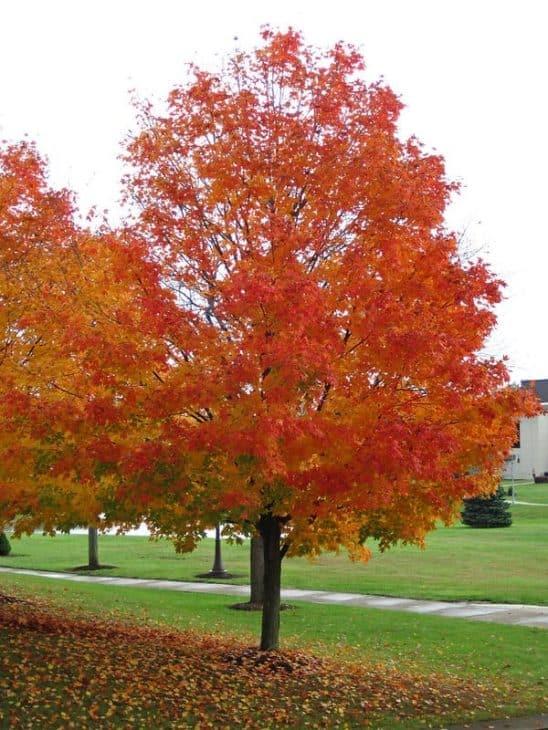
Sugar maple is one of the most common trees in Indiana’s forests, especially on moist slopes, and a favorite shade tree. It grows 60 to 80 feet tall, and can reach 100. Its five-lobed leaves have smooth, U-shaped gaps between the lobes and turn yellow, orange and scarlet in fall. Indiana has a small maple syrup industry, and parks and nature centers hold sugaring demonstrations in late winter. Sugar maples are sensitive to road salt, compacted soil and drought, so they do better in yards and parks than along busy streets.
Red Maple (Acer rubrum)

Red maple grows almost anywhere, from swampy ground to dry ridges, and it has become more common in Indiana forests over the past century. It grows 40 to 70 feet tall. Something on it is red in every season: the flowers in late winter, the leaf stalks and seeds in spring, the leaves in fall and the buds in winter. Its leaves have three main lobes with V-shaped gaps and toothed edges, which set it apart from sugar maple.
White Oak (Quercus alba)

White oak is one of the most important trees in Indiana, both in forests and for the timber industry. It grows 60 to 100 feet tall and can live for centuries, with light gray, flaky bark. Its leaves are 5 to 9 inches long, with 7 to 9 rounded lobes, and turn wine-red to brown in fall. White oak wood is watertight, so it is the wood used for whiskey and wine barrels. Its sweet acorns are a top food for deer, turkeys and squirrels.
Northern Red Oak (Quercus rubra)

Northern red oak is a fast-growing oak, 60 to 80 feet tall, with leaves that have 7 to 11 pointed, bristle-tipped lobes. Its bark has flat-topped ridges that look like ski tracks running down the trunk. It is a valuable timber tree and a popular shade tree, because it handles city conditions better than most oaks and turns russet to bright red in fall. Indiana also has black oak, shingle oak, bur oak, chinkapin oak and several other native oaks.
Shagbark Hickory (Carya ovata)

Shagbark hickory is easy to spot by its bark, which peels off in long, curling strips, as if the trunk needs a shave. It grows 60 to 80 feet tall, with alternate leaves divided into five leaflets (sometimes seven) that turn golden yellow in fall. Its sweet nuts are eaten by people, squirrels and other wildlife. The wood is very hard and shock-resistant, and it is used for tool handles and for smoking meat.
Black Walnut (Juglans nigra)

Black walnut is one of Indiana’s most valuable trees: its dark, straight-grained wood is prized for furniture, gunstocks and veneer, and walnut is a mainstay of the state’s hardwood industry. It grows 70 to 90 feet tall, with long leaves of 15 to 23 leaflets and round green husks that stain your hands black. The nuts are rich and edible but hard to crack. The roots release juglone, which stunts tomatoes, peppers and many other garden plants growing nearby.
Black Cherry (Prunus serotina)

Black cherry is the largest native cherry, growing 50 to 80 feet tall, with dark bark that breaks into small, curved plates, like burnt potato chips. It has hanging clusters of small white flowers in spring and small, dark purple cherries in late summer that birds love. Its reddish-brown wood is a prized furniture wood. Its wilted leaves release cyanide, so cattle and horses can be poisoned when storms bring down branches in pastures.
American Beech (Fagus grandifolia)

American beech is easy to recognize by its smooth, pale gray bark, which stays smooth even on old trees. It grows 50 to 80 feet tall and is a key tree in Indiana’s old-growth forests, where it grows with sugar maple. Young beeches keep their papery, tan leaves through winter. Its triangular nuts feed deer, turkeys and squirrels. Watch for beech leaf disease, which was first found in Ohio in 2012 and has been spreading west. It causes dark-striped, thickened leaves and can kill young trees.
White Ash (Fraxinus americana)

White ash is a tall forest tree, 50 to 80 feet, with leaves of 5 to 9 leaflets that turn yellow to purple in fall, and bark with diamond-shaped ridges. Its strong, springy wood was the classic material for baseball bats and tool handles. The emerald ash borer, found in Indiana in 2004, has killed millions of Indiana ash trees, and nearly every untreated ash dies within a few years. Don’t plant new ash trees, and have large ash trees near your home treated or removed.
Black Gum (Blackgum, Black Tupelo) (Nyssa sylvatica)

Black gum is a medium-sized tree, 30 to 50 feet tall, with glossy, oval leaves that turn one of the brightest scarlet colors of any Indiana tree in fall. It has small, blue-black fruits that are eaten by birds, and its bark breaks into small blocks like alligator skin. It makes an excellent yard tree for wet or dry soil, and it is one of the few trees that thrive in poorly drained clay.
Sassafras (Sassafras albidum)

Sassafras is easy to recognize because it has three different leaf shapes on the same tree: oval, mitten-shaped and three-lobed. Its twigs and leaves smell spicy and citrusy when crushed. It grows 30 to 60 feet tall, often in thickets, and turns orange, red and purple in fall. The root bark was once used to flavor root beer, but its main oil, safrole, was banned as a food additive in 1960 because it causes cancer in lab animals.
American Basswood (Linden) (Tilia americana)

American basswood is a large tree, 60 to 80 feet tall, with big, heart-shaped, lopsided leaves and hanging clusters of fragrant, pale yellow flowers in June, attached to a narrow, leaf-like wing. Bees love the flowers, and basswood honey is prized. Its soft, light wood is the favorite of woodcarvers. It often sprouts several trunks from the base after cutting.
Eastern Red Cedar (Juniperus virginiana)

Eastern red cedar is the dense, cone-shaped evergreen that fills old fields, fence rows and rocky bluffs, especially in southern Indiana. It grows 30 to 50 feet tall, with tiny scale-like leaves, shreddy reddish bark and blue, berry-like cones that feed cedar waxwings and many other birds. It is a juniper, not a true cedar, and it is one of the few native evergreens in Indiana.
Black Locust (Robinia pseudoacacia)

Black locust is native to the Appalachians and the Ozarks but has been planted so widely that it now grows throughout Indiana, often on old fields and reclaimed strip mines. It grows 40 to 70 feet tall, with leaves of small, oval leaflets, pairs of short thorns on the twigs, and hanging clusters of fragrant white flowers in May. Its wood is extremely rot-resistant and makes the best natural fence posts. It spreads aggressively by root suckers, so don’t plant it next to a lawn or garden. The bark, leaves and seeds are poisonous.
Ohio Buckeye (Aesculus glabra)

Ohio buckeye is a medium-sized tree, 30 to 60 feet tall, with leaves of five leaflets spread like fingers, upright clusters of pale yellow-green flowers in spring and spiny husks holding glossy brown nuts in fall. The leaves are among the first to come out in spring and among the first to turn and drop in late summer. The nuts look like edible chestnuts but are poisonous to people and livestock.
Kentucky Coffeetree (Gymnocladus dioicus)

Kentucky coffeetree has some of the biggest leaves of any North American tree: they are divided twice into dozens of small leaflets and can be 3 feet long. It grows 60 to 80 feet tall, with scaly, ridged bark and thick, bare-looking twigs in winter. Female trees produce thick, leathery pods with hard seeds. Settlers roasted the seeds as a coffee substitute, but raw seeds and pulp are poisonous. It is a tough, pest-free street tree, especially the seedless male cultivars.
River and Bottomland Trees
American Sycamore (Platanus occidentalis)

The sycamore is easy to spot along almost any Indiana stream: its upper bark peels off in patches, leaving the branches smooth and bright white. It grows 70 to 100 feet tall, with large, maple-like leaves 4 to 10 inches wide, and round seed balls that hang on through winter. It has the thickest trunk of any native hardwood in the eastern US, and old trees are often hollow. In wet springs, a fungal disease called anthracnose browns and drops the first leaves, but the tree grows a new set.
Eastern Cottonwood (Populus deltoides)
Read our guide to Eastern Cottonwood

Eastern cottonwood is one of the fastest-growing trees in North America, often reaching 80 to 100 feet. It has triangular, coarsely toothed leaves on flattened stalks that make them flutter in the wind, and thick, deeply furrowed gray bark. Male and female flowers grow on separate trees. In late spring, female trees release huge amounts of cottony seeds, which is why most planted cottonwoods are seedless males.
Silver Maple (Acer saccharinum)

Silver maple grows wild on riverbanks and floodplains and was planted in countless Indiana yards because it grows very fast. It reaches 50 to 80 feet. Its leaves are deeply cut into five lobes, with silvery-white undersides that flash in the wind. The downsides: its wood is weak and breaks in ice storms, and its shallow roots lift sidewalks and invade sewer pipes.
Hackberry (Celtis occidentalis)

Hackberry is a tough, common tree of bottomlands, fence rows and city lots, 40 to 60 feet tall. The bark is gray with odd corky ridges and warts. The leaves are lopsided at the base, and they often have small bumps (nipple galls) made by tiny insects, which are harmless. Its small, purple fruits are sweet and are eaten by many birds through the winter. It handles drought, wind and poor soil, which makes it a good replacement for ash along streets.
American Elm (Ulmus americana)

American elm once lined the streets of most Indiana towns, with vase-shaped trunks that arched over the road. Dutch elm disease, a fungus spread by bark beetles, killed most large elms in the mid-1900s, but the species is still common as a young tree in bottomlands and fence rows. It grows 60 to 80 feet tall, with lopsided, double-toothed leaves. Indiana also has slippery elm, whose inner bark is slimy and was used in herbal remedies.
Bald Cypress (Taxodium distichum)

In Indiana, bald cypress grows wild only in a few swamps near the Ohio and Wabash rivers in the far southwest, most famously at Hovey Lake in Posey County. It is a conifer that drops its soft, feathery needles in fall after they turn rusty orange, hence the name “bald”. In water, it grows knobby “knees” from its roots. It grows 50 to 100 feet tall and is also planted as an ornamental all over the state, even in ordinary, well-drained yards.
Tamarack (Larix laricina)

Tamarack is a conifer that loses its needles every fall, after turning them bright gold. In Indiana it grows only in bogs and fens in the northern counties, left behind by the glaciers. It grows 40 to 80 feet tall, with soft needles in tufts along the twigs and small, upright cones. It needs cold, wet, acidic ground and full sun, so it is rarely planted in yards.
Small and Understory Trees
Eastern Redbud (Cercis canadensis)

Eastern redbud is the small tree that turns Indiana’s roadsides and woodland edges pink-purple in April. It grows 20 to 30 feet tall and about as wide. The small, pea-like flowers grow right on the bare branches and even on the trunk, and they are followed by heart-shaped leaves and flat, brown seed pods. It grows well in sun or part shade and in most soils, including clay. The flowers are edible and add color to salads.
Flowering Dogwood (Cornus florida)

Flowering dogwood is a small tree, 15 to 30 feet tall, that blooms in April and May, before or as its leaves come out. What look like four large white petals are actually bracts around a small cluster of true flowers. In fall it has glossy red berries and red-purple leaves. It grows best in part shade and well-drained, acidic soil, and struggles in full sun on hot, dry sites.
Pawpaw (Asimina triloba)

The pawpaw has the largest edible fruit of any tree native to North America. The greenish-yellow fruits are 3 to 6 inches long and ripen in September. Their soft, custardy flesh tastes like a mix of banana and mango. It is a small tree, 15 to 30 feet tall, with large, drooping, tropical-looking leaves, and it often grows in clonal patches in shady bottomlands. You need two genetically different trees for good fruit set.
Common Persimmon (Diospyros virginiana)

Common persimmon is a small to medium tree, 30 to 60 feet tall, with thick, dark bark broken into small square blocks. Its round, orange fruits, about an inch across, ripen in fall. Unripe persimmons are so astringent they make your mouth pucker. Only completely soft fruit, usually after it falls, is sweet enough to eat. Southern Indiana loves persimmon pudding, and Mitchell holds a Persimmon Festival every September.
Allegheny Serviceberry (Amelanchier laevis)
Read our guide to Allegheny Serviceberry

Serviceberries are among the first native trees to bloom in Indiana, with clouds of white flowers in early April. Allegheny serviceberry grows 15 to 30 feet tall, and its new leaves are bronze-purple when the flowers open. Indiana also has downy serviceberry (Amelanchier arborea), which is more common in the south. The small, purple-black berries ripen in June. They taste like blueberries with a hint of almond and are loved by birds. Its orange-red fall color makes it a great yard tree.
American Plum (Prunus americana)
Read our guide to American Plum

American plum is a small tree or large shrub, 10 to 25 feet tall, that spreads by root suckers into dense thickets. In early spring it is covered in small, fragrant white flowers before its leaves come out. Its red to yellow plums, about an inch across, ripen in late summer and make good jelly. Its thickets give birds nesting cover and shelter. Some of its side branches end in a sharp spur.
One Tree Not to Plant
Callery Pear (Bradford Pear) (Pyrus calleryana)

Callery pear, sold as ‘Bradford’ and other cultivars, was planted all over Indiana for its white spring flowers, which smell unpleasant. Different cultivars cross-pollinate, and birds spread the small fruits, so it now forms dense, thorny thickets along highways and in old fields. The trees are also weak: their tight branch angles make them split apart in storms after 15 to 20 years. Indiana lists callery pear as an invasive plant. Plant serviceberry, redbud or dogwood instead.
Choosing a Tree for an Indiana Yard
- Replace ash with variety: after the emerald ash borer, no single species should make up more than about 10% of the trees on a street. Hackberry, Kentucky coffeetree, black gum, tulip tree and oaks are good native replacements.
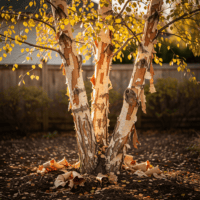
- Check your soil: much of northern and central Indiana has heavy clay, and some areas are alkaline. River birch, black gum, bald cypress and swamp white oak tolerate wet clay, and bur oak and hackberry handle alkaline soil.
- Give big trees room: tulip trees, oaks, sycamores and walnuts grow into huge trees. Plant them at least 20 feet from your house and away from power lines.
- Buy seedlings cheaply: the Indiana DNR sells low-cost native tree seedlings every year from its state nurseries.
Related: Most Common Trees in Iowa · Most Common Trees in Tennessee · Trees of Missouri



,_Chicago,_IL.jpg)
