
Key Facts
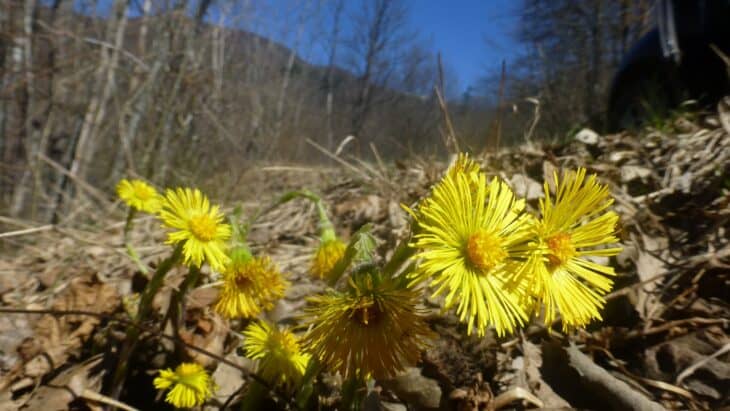
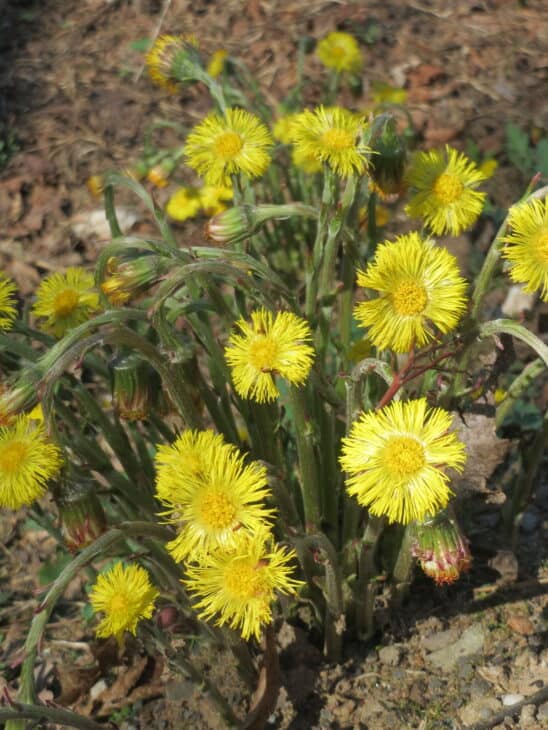
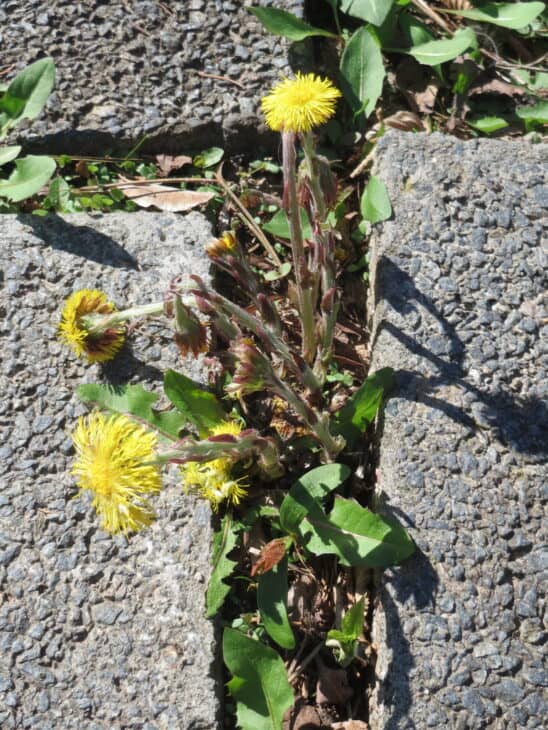
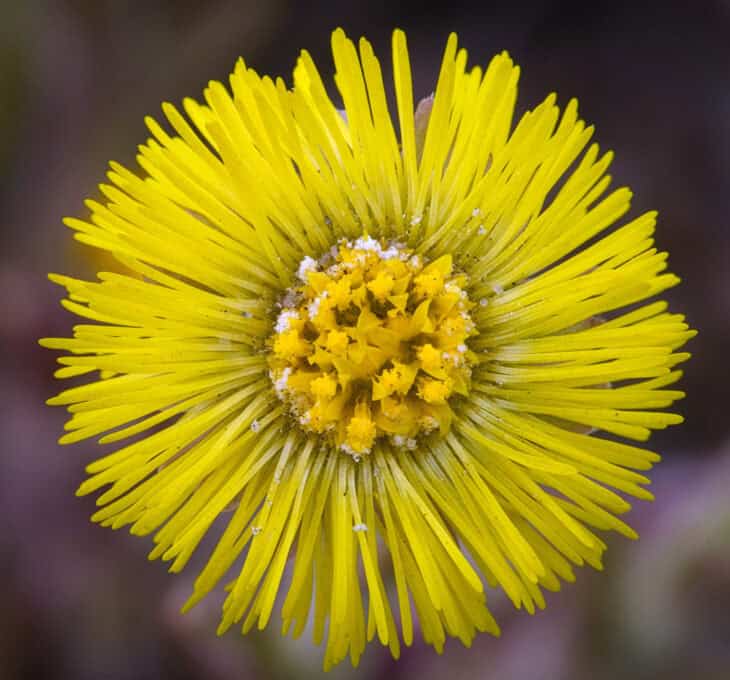
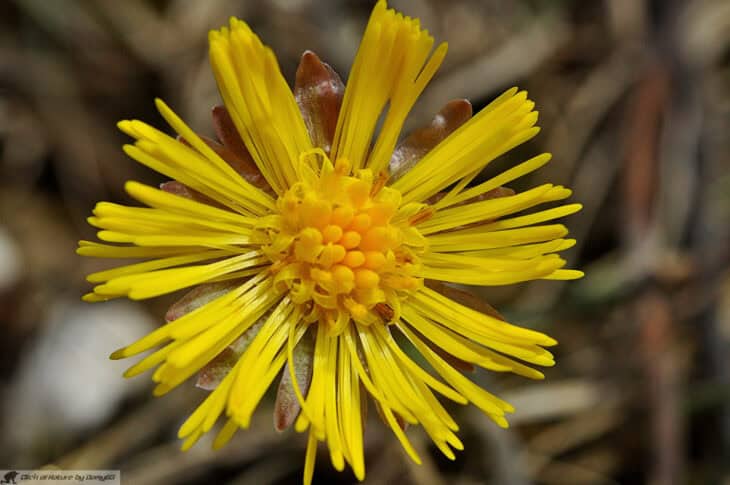
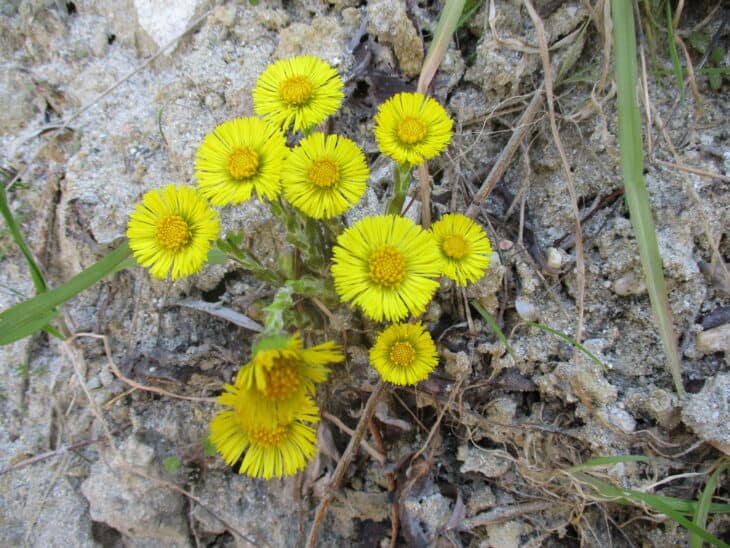
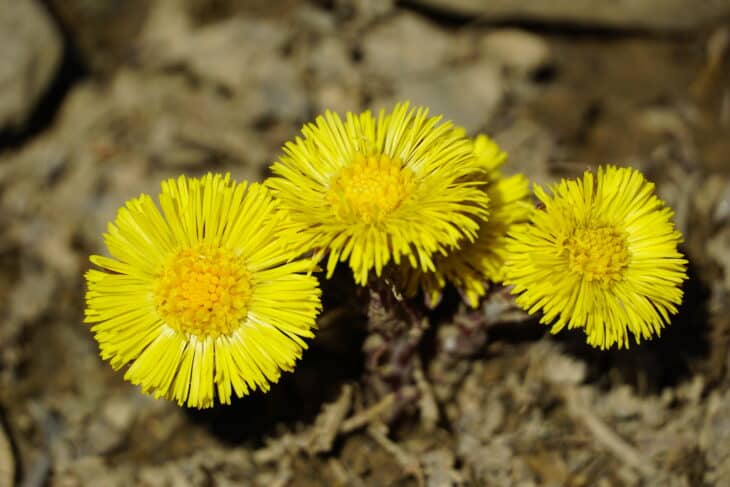
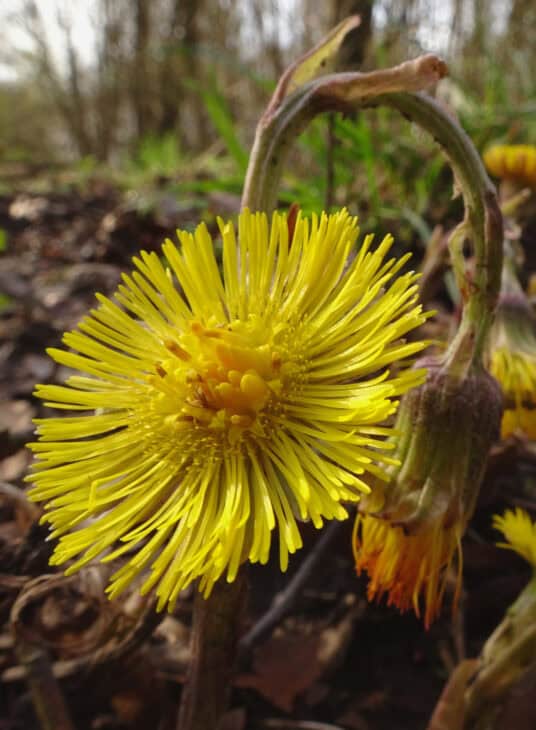
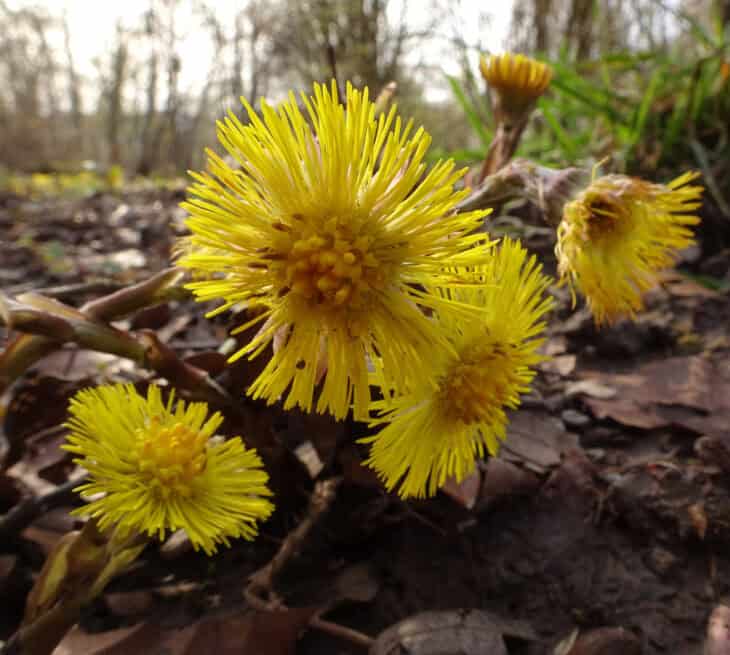
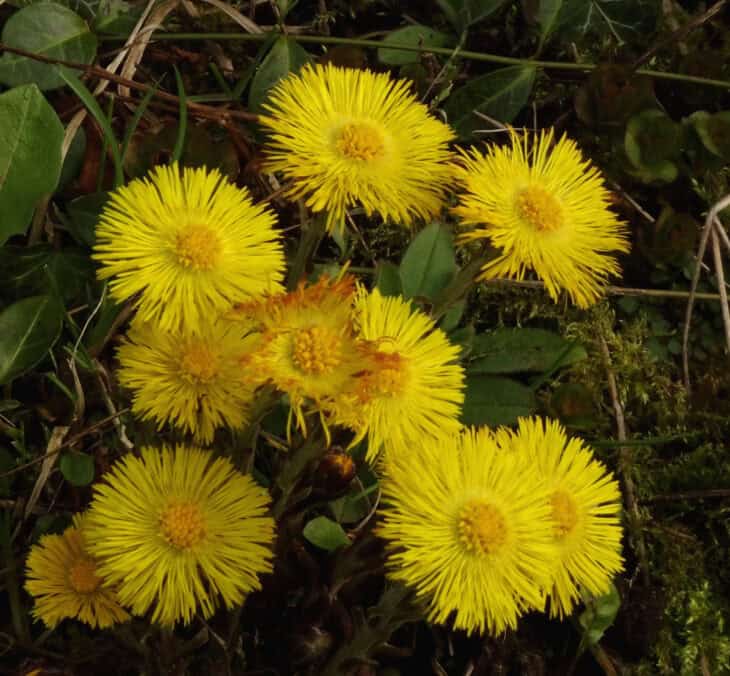
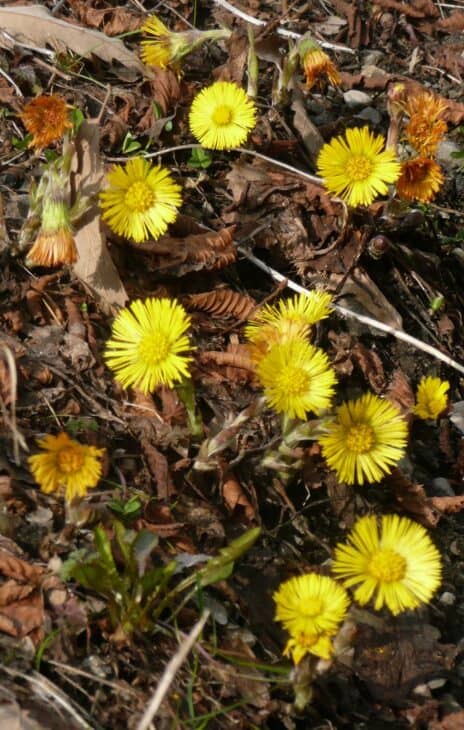
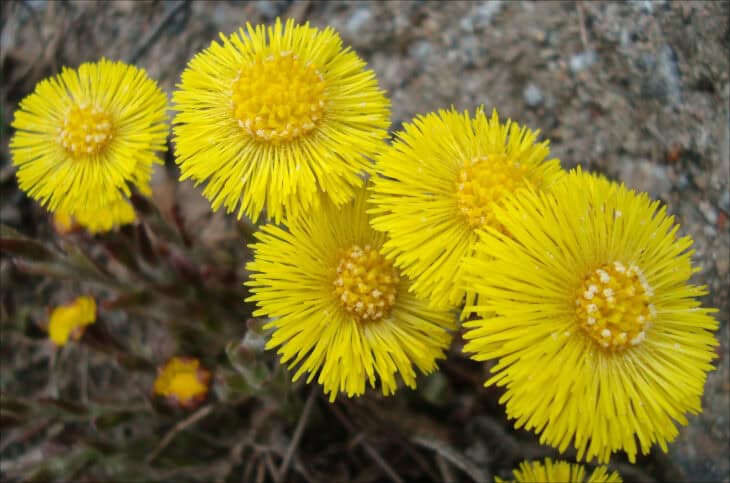
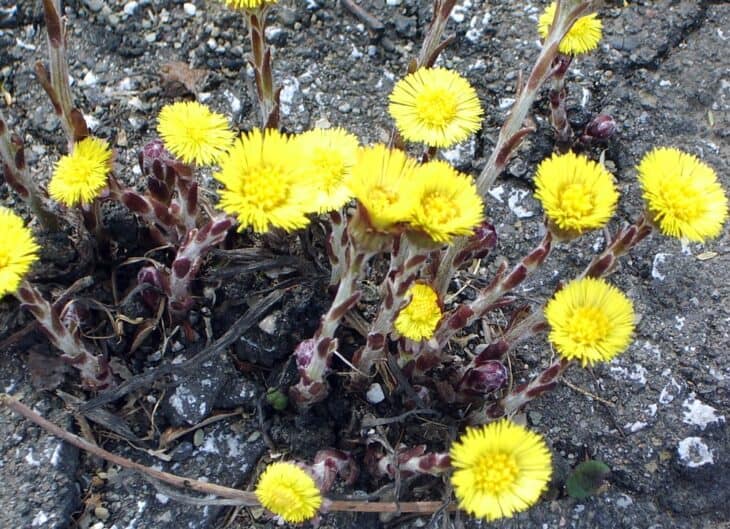
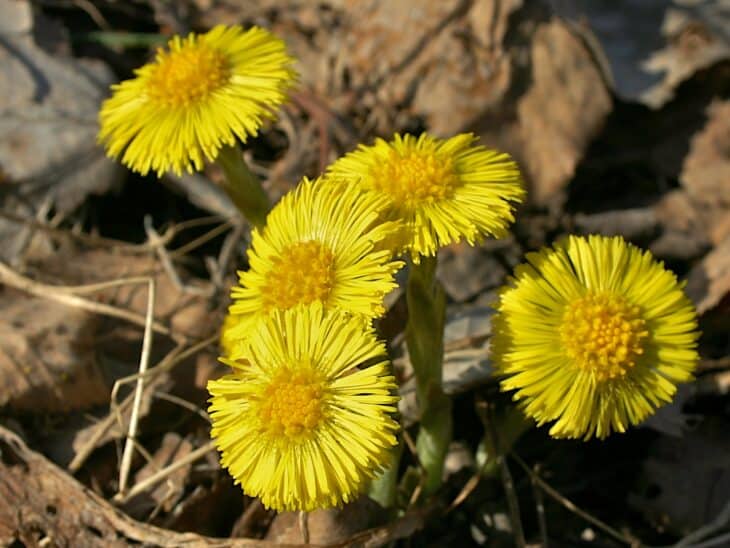
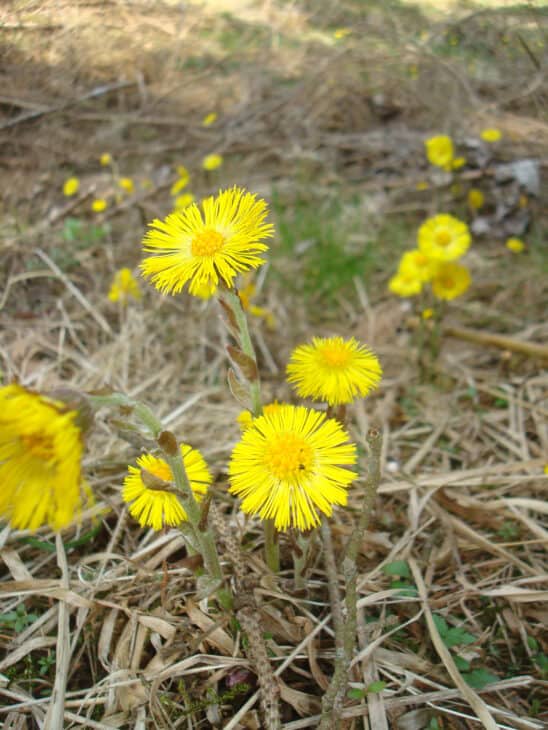
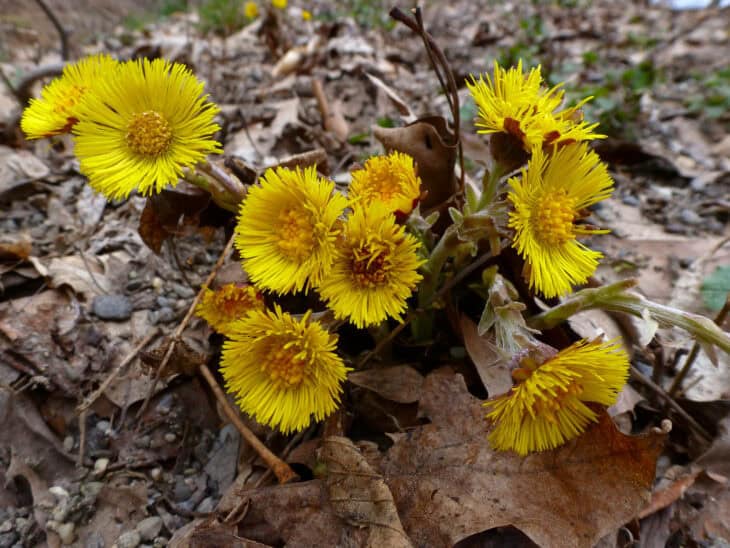
- Bright yellow, dandelion-like flowers appear before the leaves.
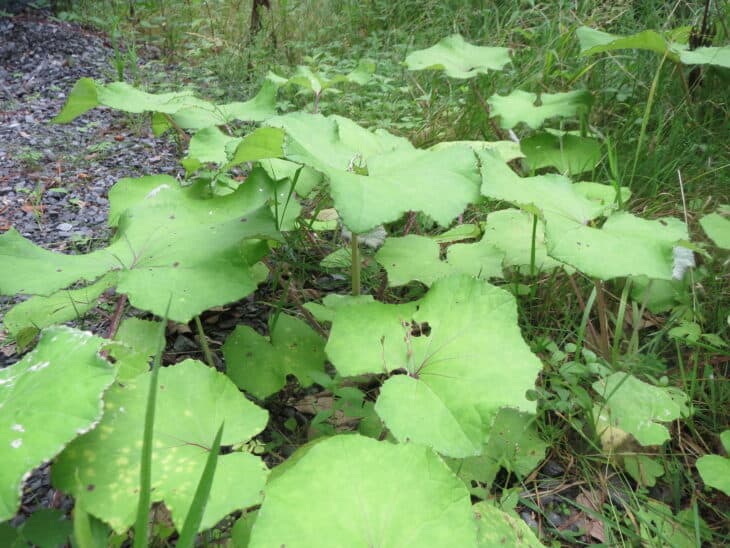
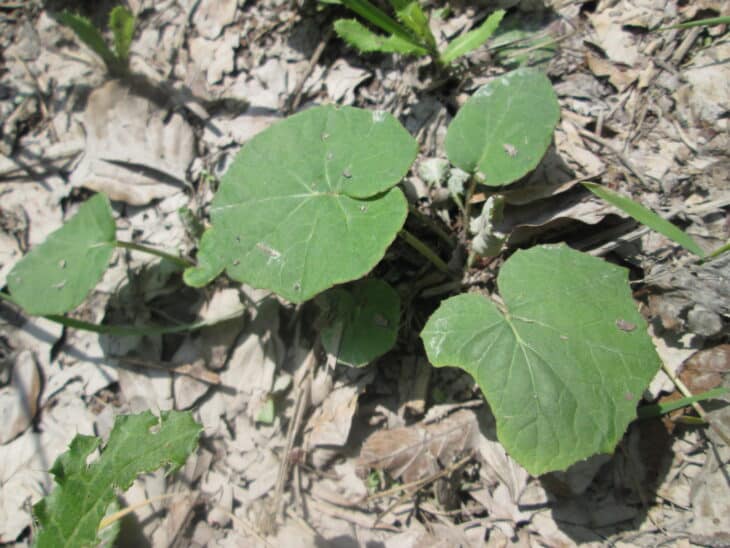
- Leaves are rounded with toothed margins and appear after flowering.
- Spreads vegetatively by creeping rhizomes and by wind-dispersed seed.
- Native to Europe and parts of Asia and introduced to other regions including North America.
- Can form dense colonies and is considered invasive in some areas.
- Prefers moist or disturbed soils but tolerates poor and compacted ground.
- Contains pyrrolizidine alkaloids which can cause liver damage if ingested.
- Common along roadsides, banks and other open disturbed sites in early spring.
Coltsfoot is an early spring wildflower with bright yellow, dandelion-like flower heads that open before the leaves. It is useful for quick color on damp banks and disturbed ground but spreads aggressively by rhizomes and contains toxic alkaloids.
Identification
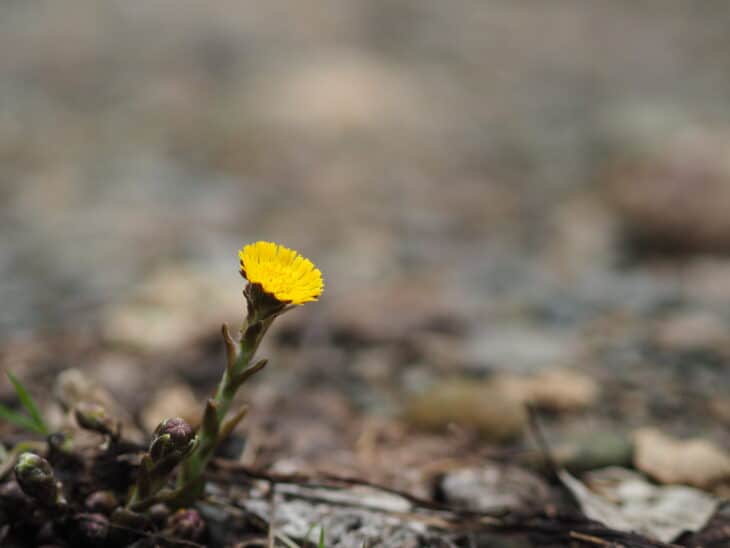
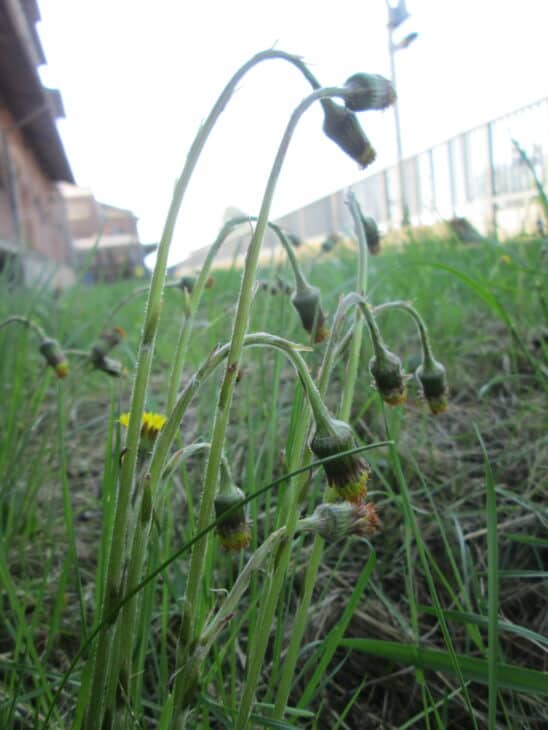
Flowers are bright yellow and appear on short, bare stems before leaves emerge. Leaves are rounded with toothed margins and appear after the flowers. Overall plant height is low, typically about 2 to 12 inches depending on site and stage.
Where to grow and best uses
Use Coltsfoot for early spring color in naturalized areas and for stabilizing moist disturbed banks where aggressive spread is acceptable. It tolerates poor and compacted ground and performs in full sun to part shade.
Hardy to about USDA zones 3 to 8 though reports vary by source and local conditions.
Soil light and watering
Prefers moist to wet soils and is common in damp disturbed sites and riverbanks. It tolerates heavy clay and compacted ground and dislikes very dry sites. Soil moisture strongly influences vigor and spread so drier well drained conditions reduce persistence.
Spread naturalizing and invasive potential
Coltsfoot spreads vegetatively by creeping rhizomes and also by wind dispersed seed. It can form dense colonies and naturalize aggressively. Once rhizomes are established the plant can be difficult to remove.
Controlling Coltsfoot
Physical control requires removing the entire rhizome network and repeated cultivation because fragments will regrow. Pulling or digging is most effective when soil is moist. Keep the area mulched or planted with competitive desirable species to reduce reinvasion.
Propagation
Propagate by dividing creeping rhizomes or by sowing seed. Vegetative division is the fastest way to expand a colony. Handle root fragments carefully to avoid unintentionally spreading the plant.
After flowering care
Leaves follow the flowers and are often larger and noticeable through the growing season. Remove unwanted plants before they set seed and remove dug rhizomes from the site to prevent reestablishment.
Frequently asked questions
- How fast does Coltsfoot grow?
- Growth rate varies by site but spread can be rapid because of creeping rhizomes and wind dispersed seed and colonies can expand quickly in moist disturbed ground.
- Is Coltsfoot invasive?
- Yes it can form dense colonies and is considered invasive in some regions so avoid planting where it could escape into wild areas or beds you want to keep free of runners.
- Are Coltsfoot leaves edible or safe for teas?
- Coltsfoot contains pyrrolizidine alkaloids that can damage the liver so internal use and homemade teas are not recommended.
- Is Coltsfoot poisonous to pets or livestock?
- It contains hepatotoxic alkaloids so monitor grazing animals and pets for exposure and consult poison control or a veterinarian for specific concerns.
- Can I plant Coltsfoot in a lawn?
- It tolerates compacted turf and can colonize lawns. Expect control to be difficult once rhizomes establish.
Gallery
Related Plants


Mentioned In (1)

Plants
7 Plants That Look Like Dandelions – Can You Distinguish Them?
Common dandelions (Taraxacum officinale) grow like weeds all over the world. Their happy little yellow flowers are a favorite for…