
Key Facts
- A semi woody climbing vine or scrambling shrub.
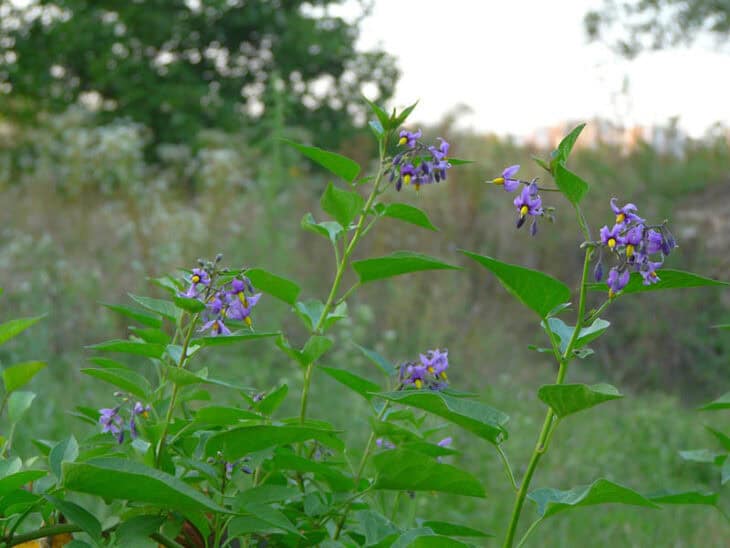
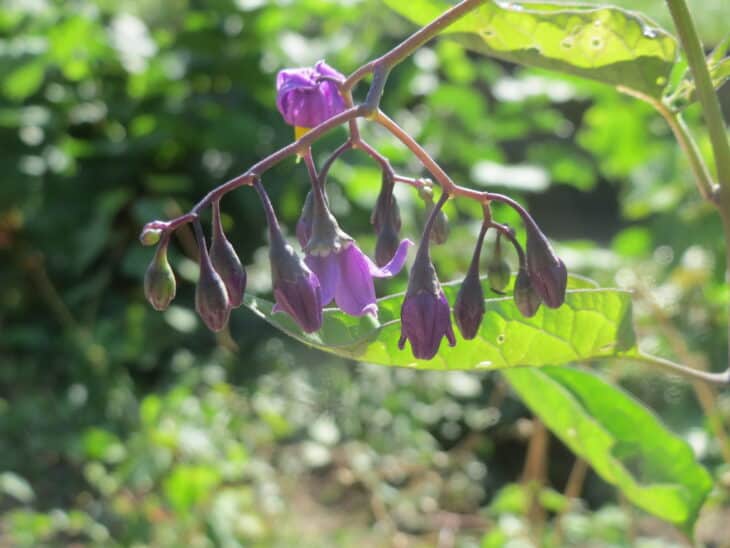
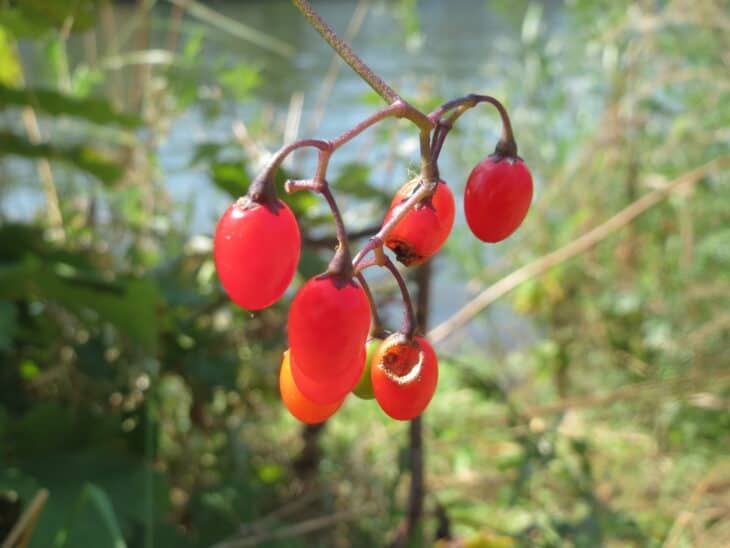
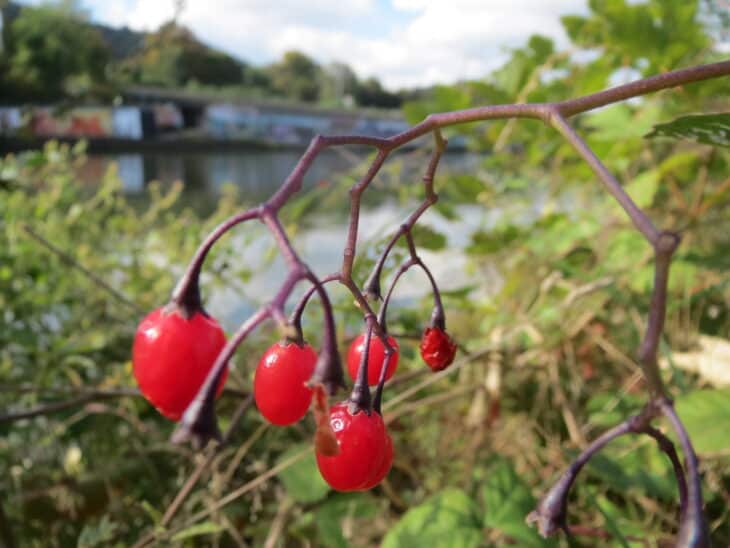
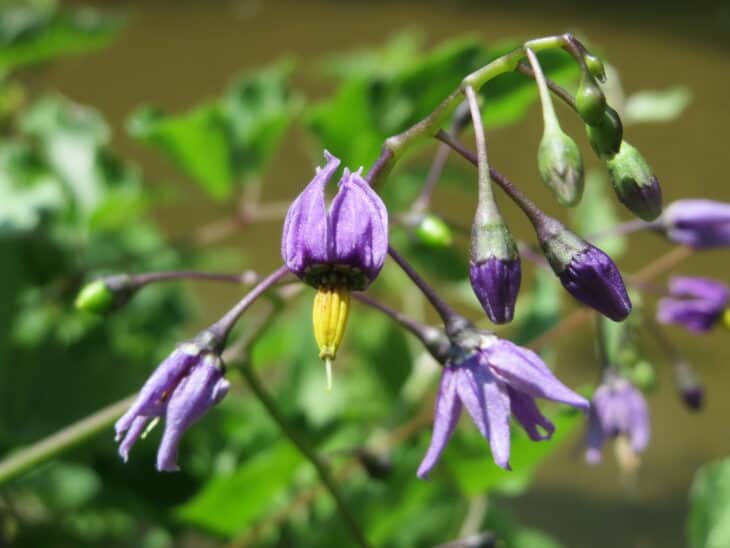
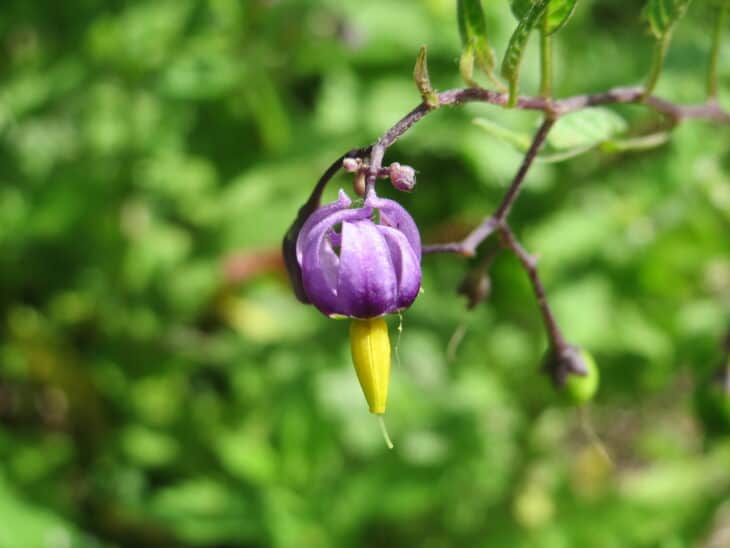
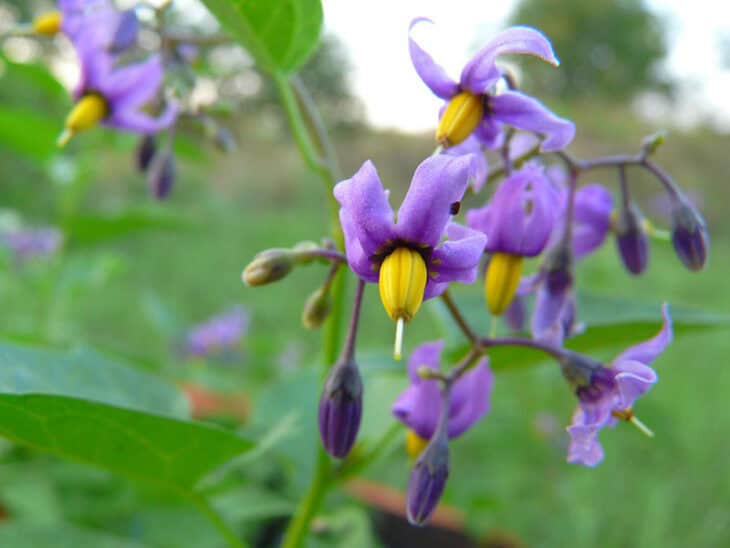
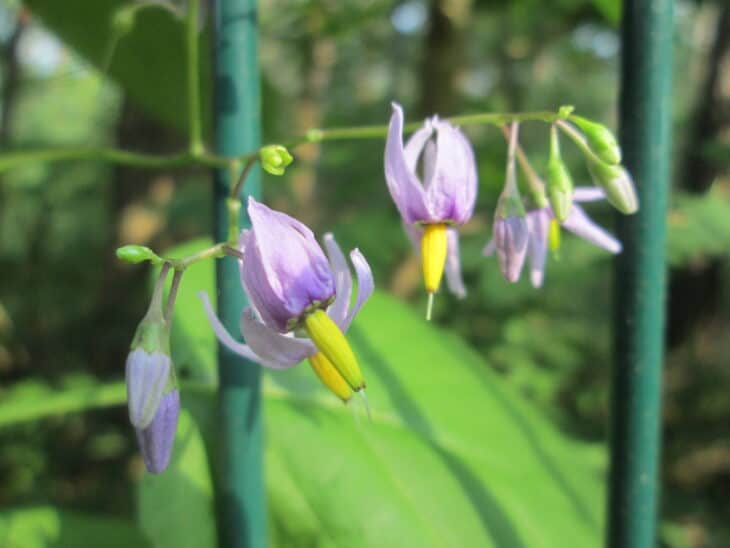
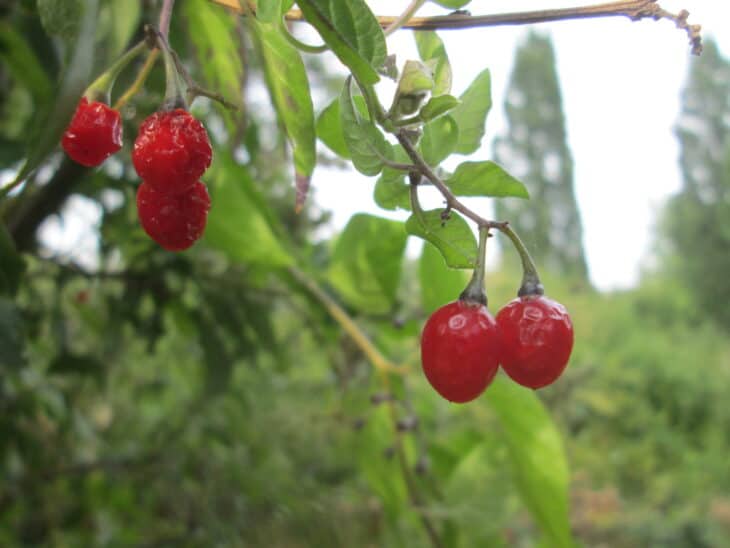
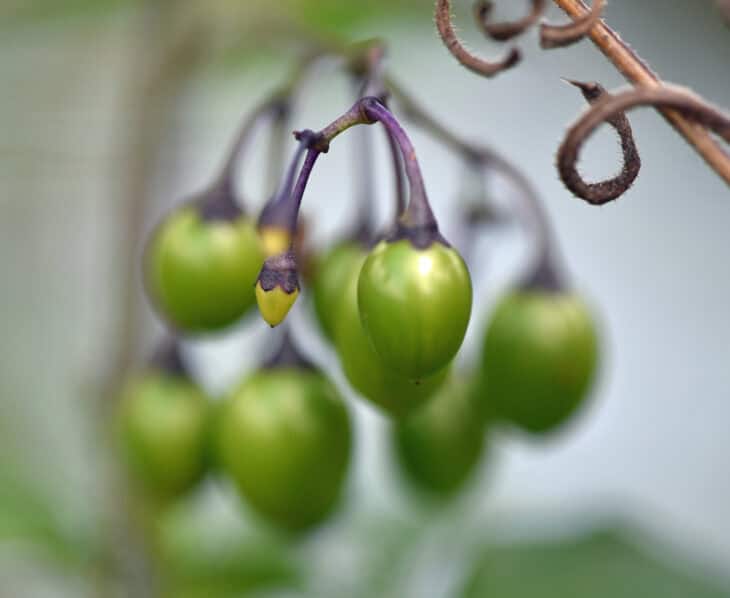
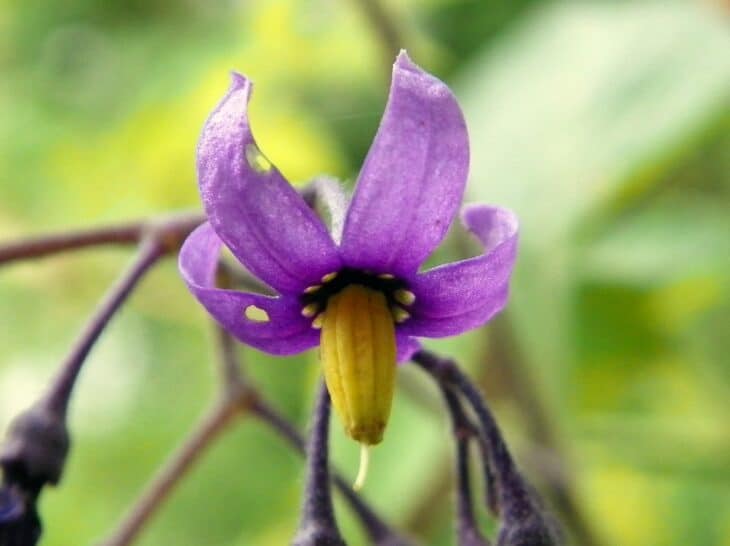
- Small purple star shaped flowers often followed by red berries.
- Native to Europe and Asia and introduced in North America and other regions.
- Berries and other plant parts are poisonous to people and animals.
- Prefers moist sites and can tolerate poorly drained soils.
- Flowers occur in the warmer months and may continue into fall.
- Can spread by seed and by stems that root where they touch soil.
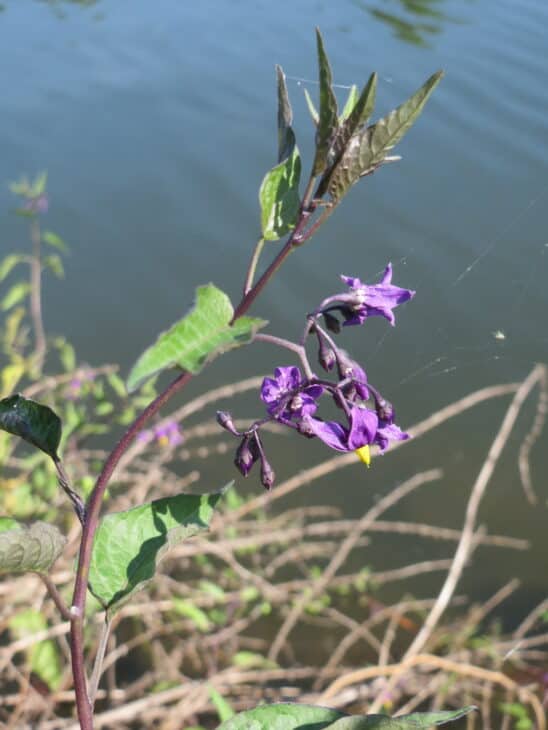
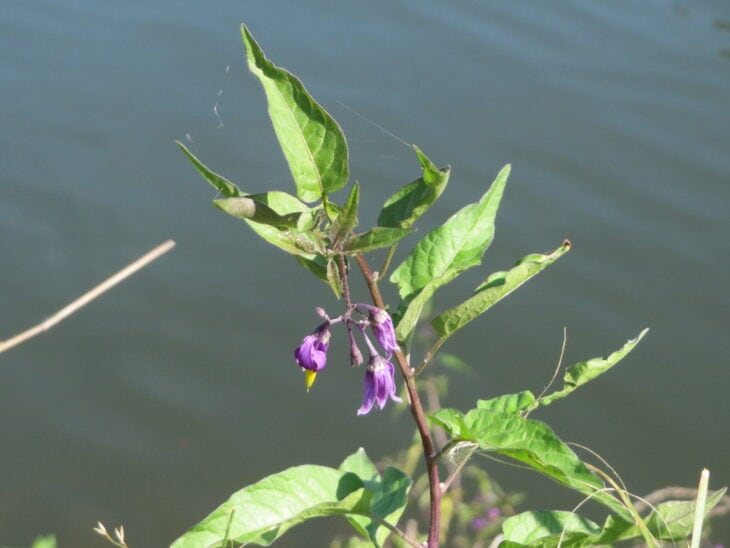
- Often found along hedgerows waterways and in disturbed sites.
Bittersweet or woody nightshade is a semi woody climbing vine with purple star shaped flowers and red berries. The plant is often used where a scrambling climber or informal groundcover is acceptable but it is toxic and can spread aggressively in moist sites.
Identification
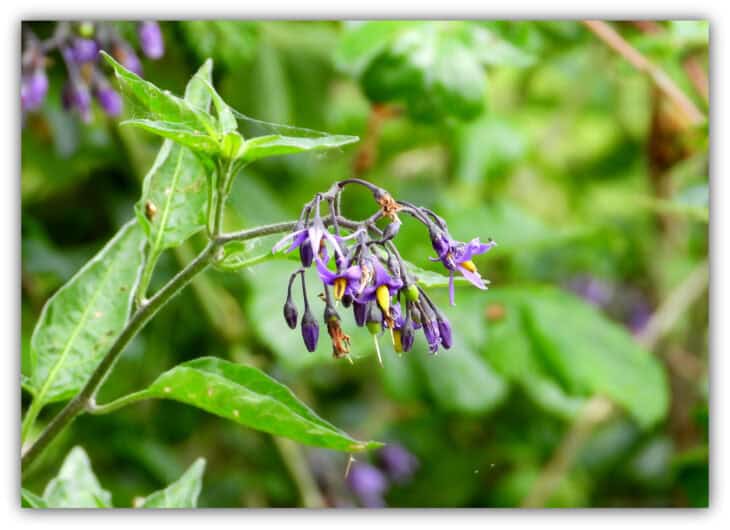
Plants are semi woody and either climb or scramble across the ground. Typical height and spread are about 3–10 ft where stems can root or find support. Flowers are small and purple with a star shape and usually appear in the warmer months. Berries turn red and persist after flowering.
Where to grow and best uses
Grows well in full sun to part shade and prefers moist fertile soils but will tolerate poor drainage. Often found along hedgerows waterways and in disturbed sites. Use as a quick scrambler on fences or in wild hedgerows when the risk from toxicity and spread is acceptable.
Bloom and hardiness
Flowers normally appear from late spring into early fall in temperate northern hemisphere locations. Reported hardiness is roughly USDA zones 4 to 9 but local performance varies with provenance and climate.
Planting and watering effects
Plants perform best with regular moisture. Moist soils encourage vigorous growth and abundant berries. In drier soils growth is reduced and flowering can be sparse.
After flowering care
Remove or collect berries to limit seed spread. Prune or cut back sprawling stems to keep plants from layering and forming patches. Repeated removal of seedlings and layered stems helps reduce established colonies.
Spread and control
Bittersweet or woody nightshade spreads by seed and by stems that root where they touch soil. In favorable moist habitats it can form thickets and scramble into shrubs potentially smothering other plants. Control focuses on removing berries digging up seedlings and cutting or pulling rooted stems before they set seed. Dispose of removed material carefully to avoid spreading seed.
Toxicity and safety
All parts of the plant are toxic to people and animals. Berries are especially hazardous and can cause gastrointestinal upset and neurological effects. Keep children pets and livestock away and contact local poison control or veterinary services if ingestion is suspected.
Propagation
Propagates by seed and by vegetative layering or cuttings. Seedlings readily establish in disturbed soil so restricting berry production is the most effective way to limit spread.
Frequently asked questions
- How fast does Bittersweet/Woody Nightshade grow?
- Growth rate varies with soil and moisture. In moist fertile soils it can grow and spread quickly by seed and by stems that root. Typical mature size is about 3–10 ft depending on support.
- Is it invasive?
- It can be invasive in favorable habitats because it forms patches from seedlings and layering stems. It is commonly found along waterways and in disturbed areas.
- Are the berries poisonous to pets?
- Yes. Berries and other plant parts are toxic to dogs cats and horses. Contact your veterinary services or local poison control if ingestion is suspected.
- How do I remove established plants?
- Pull or dig up rooted stems and seedlings and remove berry clusters before ripening. Repeated removal over seasons is often necessary to reduce colonies.
- Will it climb walls and damage structures?
- The vine will climb fences and scramble into shrubs. It can smother other plants but it is not known for structural damage in the way some woody vines are.
Gallery
Related Plants


Mentioned In (2)
Plants
22 Poisonous Plants in Ohio (and What to Do After Contact)
The poisonous plants that cause the most trouble in Ohio are poison ivy and wild parsnip, which injure skin, and…
Plants
25 Poisonous Plants in Pennsylvania (and What to Do After Contact)
The poisonous plants you are most likely to meet in Pennsylvania are poison ivy, which grows in every county, and…