
Key Facts
- Native spring ephemeral of eastern North America.
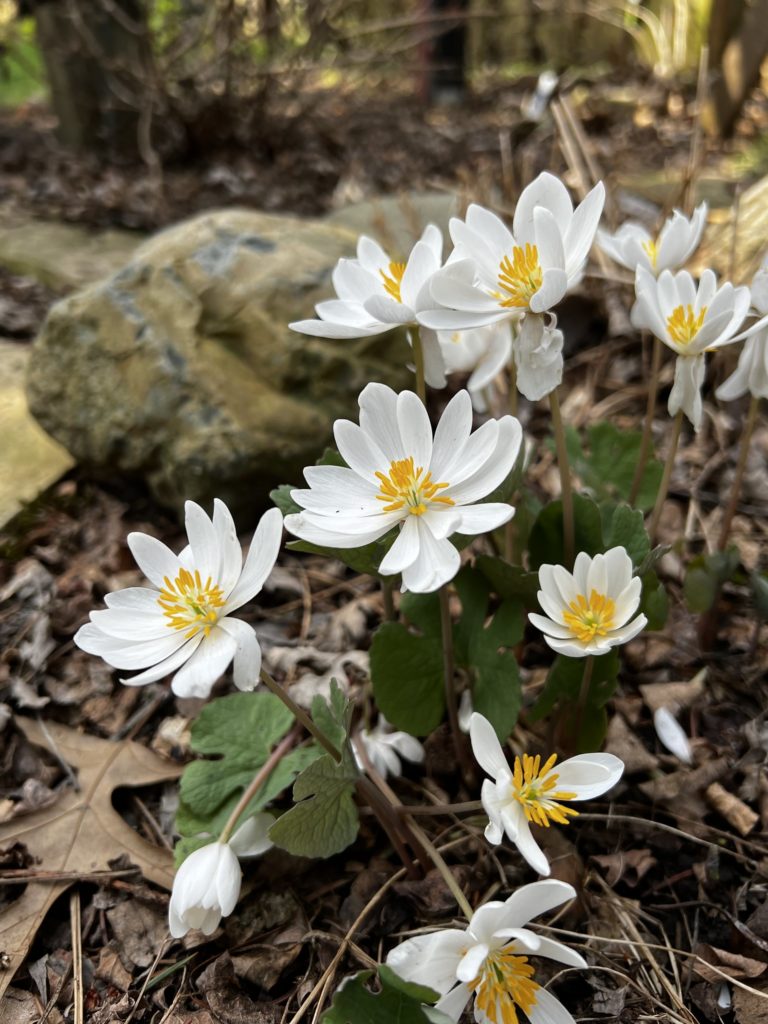
- Produces a single white flower in early spring often before leaves fully expand.
- Rhizomatous perennial that spreads to form colonies.
- Prefers rich, humusy, moist but well drained soils.
- Performs best in part shade to full shade in woodland settings.
- Contains alkaloids including sanguinarine and can cause skin irritation and toxicity if ingested.
- Propagate by dividing rhizomes or by seed with cold stratification.
Bloodroot is a low spring ephemeral native to eastern North America that forms small colonies from rhizomes. It opens a single white flower in early spring often before leaves fully expand and does best in part shade to full shade.
Identification
Low clumps reach about 6 to 12 inches tall with round leaves and a single white flower in early spring, typically March to April in the northern hemisphere. Plants spread slowly by creeping rhizomes to form patches over time.
Best uses in the garden
Use Bloodroot as a shady woodland groundcover or to add early spring interest under deciduous trees where dappled light appears before canopy leaf out. It is valuable for naturalizing in humusy beds but contains alkaloids that can irritate skin and cause toxicity if ingested, so avoid planting where children or pets might chew the plants.
Planting and spacing
Choose a site with rich, humusy soil that stays moist but drains well and receives part shade to full shade. Space divisions roughly 12 to 24 inches apart to allow colonies to form without overcrowding.
Water and soil care
Keep soil consistently moist in summer to maintain vigor. Plants in dry or compacted soil will decline. Mulch with leaf litter or compost to hold moisture and build humus.
After flowering care
Allow foliage to ripen and die back naturally after flowering so rhizomes can store energy. Expect spring dieback as the plant goes dormant for the summer and avoid disturbing the soil around the patch.
Propagation
Propagate by dividing rhizomes in the dormant season or by seed. Seeds generally need cold stratification and germination can be slow, so allow time when starting from seed.
Pests and toxicity
Bloodroot is not known as an aggressive pest magnet but can decline in hot dry summers. The sap contains sanguinarine and related alkaloids that can irritate skin and damage mucous membranes. Wear gloves when handling root material and consult ASPCA or local poison control to confirm pet safety before planting where animals roam.
Frequently asked questions
- How fast does Bloodroot grow?
- It spreads slowly by rhizomes to form small colonies rather than forming large beds quickly.
- When does Bloodroot bloom?
- It blooms in early spring, often in March to April depending on latitude and local climate.
- Where is the best place to plant Bloodroot?
- Plant in part shade to full shade in rich, humusy soil that stays moist and drains well.
- Is Bloodroot poisonous to pets and people?
- Yes, the plant contains alkaloids that can irritate skin and be toxic if ingested. Check with ASPCA or local poison control for specific pet risk information.
- How do I divide Bloodroot rhizomes?
- Divide in the dormant season and replant into prepared humusy soil. Keep roots moist as the divisions establish.
- Are seeds easy to grow?
- Seeds need cold stratification and germination can be slow, so patience and proper chilling are required.
Related Plants


Mentioned In (4)
Plants
25 Poisonous Plants in Pennsylvania
Pennsylvania has a diverse landscape that grows many varieties of flora, including a large variety of vines, trees, and shrubs.…

Plants
18 Poisonous Plants in Connecticut
Connecticut is home to a few varieties of poisonous plants. Some may look attractive, drawing more people, children, and animals…
Plants
16 Poisonous Plants in Maine
There are thousands of poisonous plant species in the world, and some might even be in your backyard, locality, city,…

Plants
12 Plants That Close At Night
It's always fascinating to see a plant with its leaves or flowers wide open and in full bloom during the…