
Key Facts
- Cold hardy perennial herb in the onion family.
- Forms clumping, grasslike hollow leaves used fresh or cooked.
- Produces rounded clusters of purple to pink flowers in spring.
- Attracts bees and other pollinators.
- Grows well in borders, herb beds, and containers.
- Easily increased by division or grown from seed.
- Prefers fertile, well drained soil but tolerates a range of soils.
- Edible for people but can be toxic to dogs and cats if ingested.
Chives are a cold hardy clump forming perennial in the onion family grown for mild onion flavored leaves and edible purple flowers. They work well in herb beds, borders and containers while attracting bees and other pollinators.
Identification
Chives form tufts of grasslike hollow leaves and produce rounded clusters of purple to pink flowers in late spring to early summer. Typical plants reach about 8 to 20 inches including flower scapes and form clumps that are shorter when only foliage is present.
Best places to grow and uses
Use chives at the front of borders, in dedicated herb beds or in containers beside a kitchen door for easy snipping. Leaves are eaten fresh or cooked and flower heads are edible while also attracting pollinators. Note that chives are edible for people but can be toxic to dogs and cats if eaten in sufficient quantities.
Planting time and spacing
Plant divisions in spring or fall and start seed in spring if growing from seed. Space plants about 12 to 18 inches apart to match the clumping spread and allow airflow. Chives are hardy in USDA zones 3 to 9 and will die back to the crown in cold winters then resprout in spring.
Light, soil and watering
Grow chives in full sun to part shade with best leaf production in full sun and some afternoon shade where summers are hot. They prefer fertile well drained soil with pH roughly 6.0 to 7.5 and will tolerate average garden soils. Avoid waterlogged sites because poor drainage leads to crown rot and plant decline.
After flowering and spread control
Remove spent flower heads to reduce unwanted self seeding and cut flower scapes back to the base to keep leaves vigorous. Divide established clumps every 2 to 4 years to refresh the planting and control gradual spread by clump expansion and seed.
Propagation and maintenance
Propagate by division of clumps in spring or fall for fastest true to type results or by seed when you want new plants that might naturalize. Division keeps plants vigorous and is also the recommended way to rejuvenate overcrowded clumps and maintain harvestable leaf production.
Containers and harvesting
Chives grow well in containers on patios or windowsills where drainage is good and soil is fertile. Keep the soil evenly moist but not soggy. Harvest by snipping leaves near the base rather than pulling the whole clump to preserve the crown and encourage steady regrowth.
Frequently asked questions
- How fast does Chives grow?
- Chives form clumps that expand slowly over seasons to about 12 to 18 inches across. New divisions reestablish quickly while seed grown plants may take longer to fill a bed.
- When do chives bloom?
- Chives bloom in late spring to early summer with rounded clusters of purple to pink flowers. Exact timing varies with climate and hemisphere.
- Are chives safe for pets?
- Chives are edible for people in culinary amounts but are toxic to dogs and cats if ingested in sufficient quantity. Contact a veterinarian or poison control for concerns about pet exposure.
- How do I propagate chives?
- Divide clumps in spring or fall for reliable true to type plants. Seed can be sown for additional plants but may produce variable results and more naturalizing.
- How often should I divide chives?
- Divide every 2 to 4 years to maintain vigor and control the spread of the clump while renewing harvestable foliage.
Related Plants

Mentioned In (5)
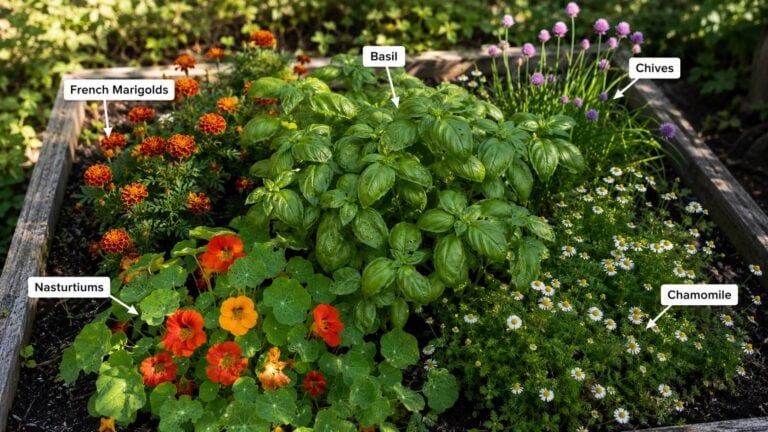
Plants
Companion Plants for Basil: What Works and Why
Basil bolts faster than almost any other herb in the summer garden, and once it flowers, the leaves turn bitter…
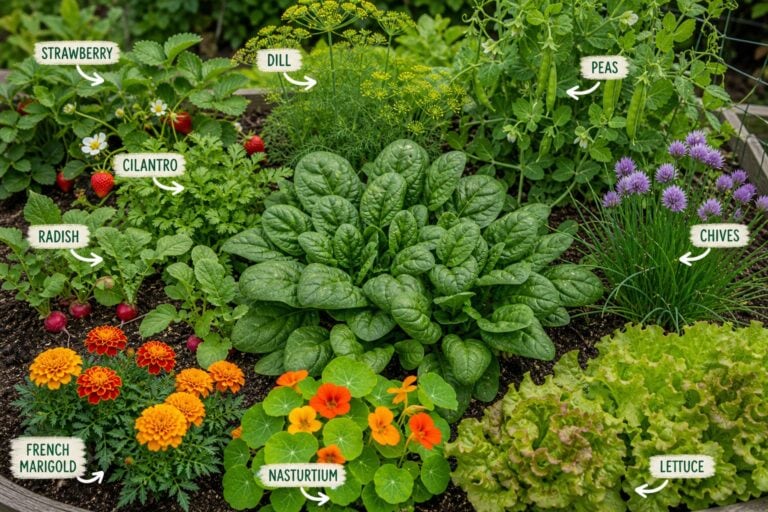
Plants
Companion Plants for Spinach: What Works and Why
Spinach growers fight a near-constant battle with leaf miners — tiny larvae that tunnel between the leaf surfaces and ruin…
Plants
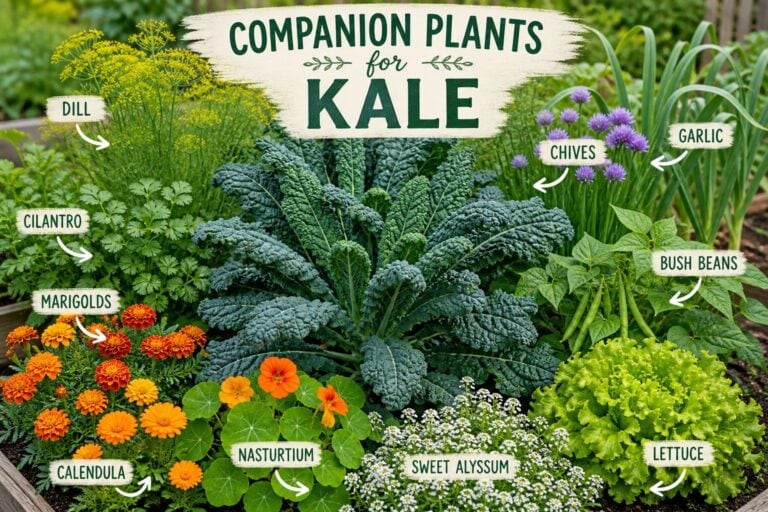
Companion Plants for Kale: What Works and Why
Kale is one of the easiest crops to grow — until the aphids arrive, the flea beetles strike, and the…

Plants
8 Plants That Look Like Onions
The common onion (Allium cepa) is a well-known vegetable in most households worldwide. Onions have many uses and are often…
Plants
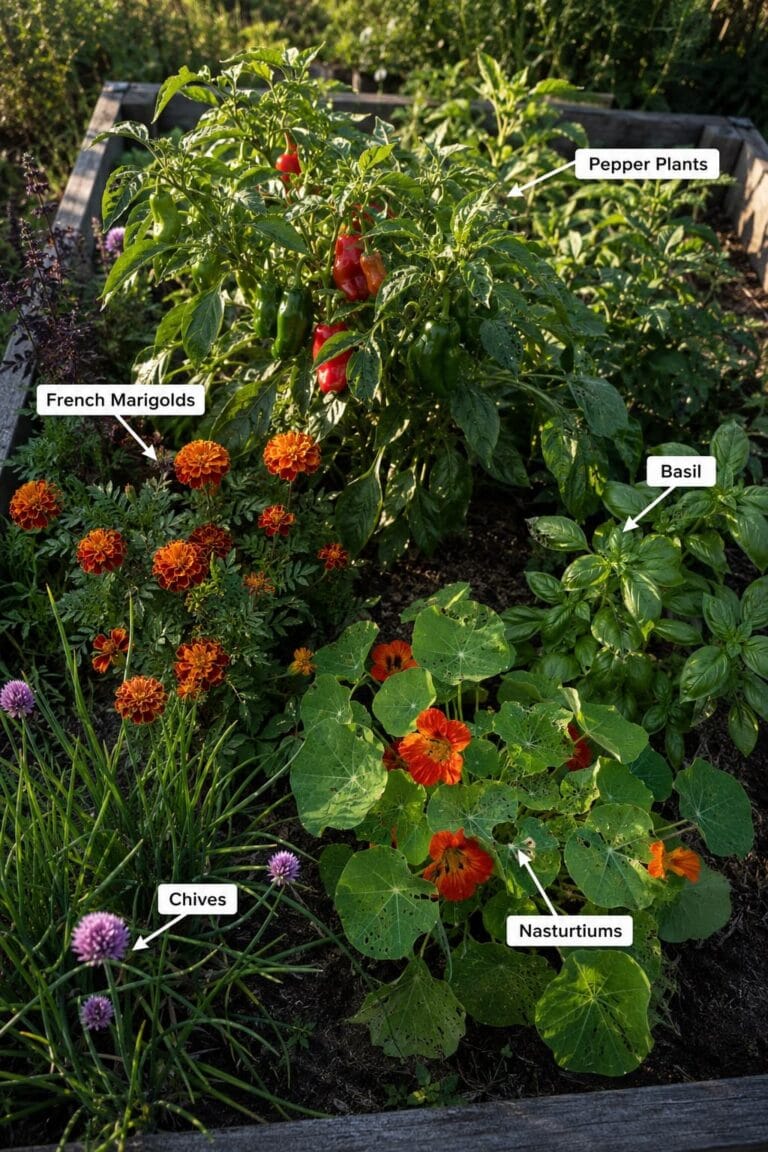
Companion Plants for Peppers: What Works and Why
Peppers are a magnet for aphids and thrips from the moment they go in the ground, and a plant this…