
Key Facts
- Native to eastern and central North America.
- Shows red flowers and stems in early spring.
- Prefers moist acidic soils but is highly adaptable.
- Grows as a medium to large deciduous shade tree.
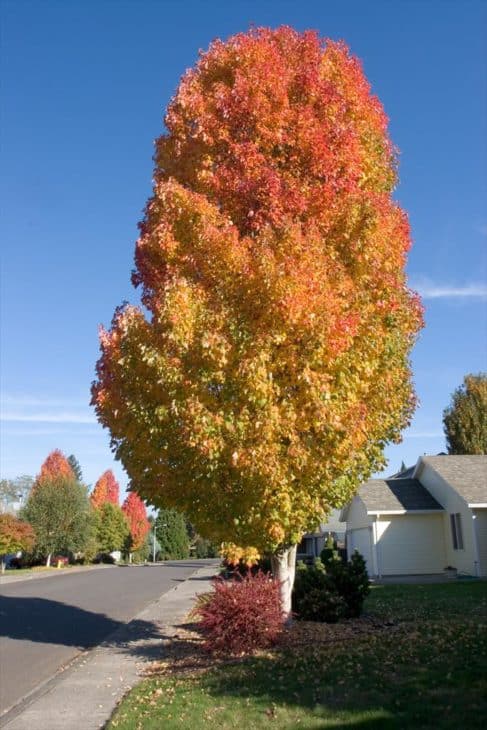
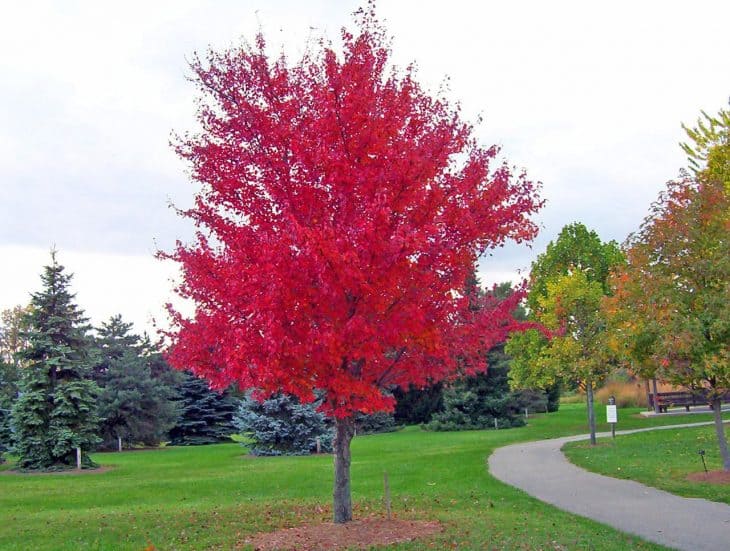
- Valued for red fall color in many climates.
- Tolerates wet sites and urban conditions better than many maples.
- Wilted leaves can be toxic to horses and cause serious illness.
Red Maple (Acer rubrum) is a medium to large native North American shade tree prized for its early red flowers and reliable autumn color, while also tolerating wet sites and urban conditions better than many maples. Plant it where its mature size and moisture needs fit the landscape to enjoy color without long term stress.
Identification
Red Maple has small red flowers and often red stems in early spring, followed by a rounded to oval crown of leaves that turn red in autumn. Typical landscape specimens commonly reach about 40 to 70 feet tall with a 30 to 50 foot canopy spread, though cultivars and site conditions can produce much smaller trees.
Where to grow and best uses
Use Red Maple as a street or shade tree where moisture is moderate to high and space allows a broad canopy. It performs well in parks, large yards and rain gardens because it tolerates wet soils and urban conditions. Full sun gives the best fall color while partial shade is tolerated, especially for younger trees.
Planting and spacing
Choose a planting location with room for a 30 to 50 foot mature canopy and avoid long term standing water. Space single specimen trees at least the expected mature spread from buildings and other trees to reduce future pruning and root conflicts. Young trees benefit from a settled, well prepared planting hole and mulch kept away from the trunk.
Soil and watering
Red Maple prefers moist, acidic soils but adapts to clay, seasonally wet sites and drier soils when established. Maintain regular watering during the first two to three years to establish roots; moisture stress shows as leaf scorch or early leaf drop. Avoid chronic poor drainage as that accelerates decline in urban or compacted soils.
Care after flowering
After the early spring bloom there is no special feeding required for most landscapes; monitor tree vigor and irrigate in extended dry spells. Prune dead or crossing branches in dormant seasons to maintain structure. Expect the best form and fall color with full sun and good rooting space, and reduce stressors like compacted soil or repeated root damage.
Controlling spread and pruning
Manage canopy spread with formative pruning while the tree is young to avoid large corrective cuts later. Mature Red Maples can be pruned to reduce shade or clear structures but avoid excessive crown reduction which stresses the tree. In confined urban sites choose smaller cultivars or accept a reduced canopy compared with open-grown specimens.
Propagation and cultivars
Seed produces variable offspring so named cultivars are typically grafted to retain desired traits. Softwood and semi-ripe cuttings can root with effort but are less reliable for matching cultivars. Verify propagation method for any specific cultivar before purchasing or attempting propagation from nursery stock.
Toxicity and animal safety
Wilted Red Maple leaves are known to be toxic to horses and can cause hemolytic anemia if eaten in sufficient quantities. Risks to dogs, cats and humans are not generally documented as severe but avoid ingestion and contact when concerned. Confirm details with veterinary sources before giving animal care advice.
Frequently asked questions
- How fast does Red Maple grow?
- Growth rate varies by site and cultivar. Many trees establish and grow moderately fast under favorable moisture and soil conditions, eventually reaching the typical 40 to 70 foot mature height in suitable climates.
- What USDA zones does Red Maple grow in?
- Red Maple is generally hardy in USDA zones 3 to 9, though cold provenance and local conditions affect eventual size and longevity.
- When does Red Maple bloom?
- Red Maple blooms in early spring with small red flowers, typically March to April in much of the Northern Hemisphere. Exact timing shifts by latitude and local climate.
- Can Red Maple grow in wet soils?
- Yes. Red Maple tolerates seasonally wet soils and poorly drained sites better than many maples but prolonged standing water can cause decline, so avoid permanently saturated conditions.
- Are Red Maple leaves toxic to pets?
- Wilted leaves are a known equine hazard. There is limited evidence of severe toxicity to dogs, cats and humans, but avoid ingestion and consult veterinary resources for animal safety specifics.
Gallery



Related Plants


Mentioned In (14)
Trees
Tree Seed Pod Identification: 19 Trees With Pods and How to Tell Them Apart
To identify seed pods from trees, sort the fruit into one of four shapes first: long flat pods, spiky or…

Trees
Trees of New England: Common Trees, State Trees & Massachusetts
New England is the most heavily forested region in the United States. About 80% of the six states is covered…

Trees
Trees of South Carolina: Common Trees & Oaks
South Carolina runs from the Blue Ridge in the Upstate, across the Piedmont and the Sandhills, down to the Lowcountry…
Trees
Trees of Louisiana: 41 Common Native Trees (and 4 to Avoid)
The most common trees in Louisiana are loblolly pine, sweetgum, water oak, red maple, sugarberry, bald cypress and water tupelo,…

Trees
Trees of North Carolina: Common, Oak & Flowering Trees
North Carolina has three distinct regions, the Mountains, the Piedmont and the Coastal Plain, and each has its own tree…
Trees
Trees of New York State: 21 Common Native and Street Trees
About 60% of New York State is forest, and most of it is northern hardwood forest of sugar maple, red…
Trees
Trees of Tennessee: 42 Common Native Trees (and 4 to Avoid)
The most common trees in Tennessee are red maple, tulip poplar (the state tree), white oak, chestnut oak, sugar maple,…
Trees
Trees of West Virginia: 30 Common Native Trees (and 2 Not to Plant)
About three-quarters of West Virginia is forest, making it one of the most heavily forested states in the country, behind…
Trees
27 Most Common Trees in Canada, by Region
The most common trees in Canada are the conifers and hardy broadleaf trees of the boreal forest, which covers most…
Trees
The 34 Most Common Trees in North America, by Region
The most common trees in North America depend on the region. Red maple is the most abundant tree in the…
Trees
Trees of Pennsylvania: Common Trees & Native Pines
Pennsylvania means "Penn's Woods", and the name still fits: close to 60% of the state, about 17 million acres, is…
Trees
Trees of Georgia: Common Trees & Native Pines
Georgia runs from the Blue Ridge and the Ridge and Valley in the north, across the Piedmont, down to the…
Trees
Trees of Indiana: 30 Common Native Trees (and 1 Not to Plant)
About a fifth of Indiana is forest, most of it in the hilly south, where the Hoosier National Forest and…
Trees
Trees of Alabama: 36 Common Trees (and 3 Not to Plant)
About 70 percent of Alabama is forest, roughly 23 million acres, and pines dominate it. Loblolly pine is by far…