
Key Facts
- Native to New Caledonia.
- Tall evergreen conifer with a very narrow, columnar crown.
- Gymnosperm that produces cones rather than showy flowers.
- Commonly used as an ornamental or street tree in warm coastal climates.
- Tolerant of sandy and well drained soils.
- Prefers full sun.
- Propagation is primarily by seed. Cuttings are difficult.
- Can be confused with the Norfolk Island pine but is more columnar.
Cook pine (Araucaria columnaris) is a tall, narrow evergreen conifer from New Caledonia used as an ornamental and street tree in warm coastal landscapes. It keeps a strict columnar silhouette and produces cones rather than showy flowers, making it a dramatic vertical accent where height is wanted but width is limited.
Identification
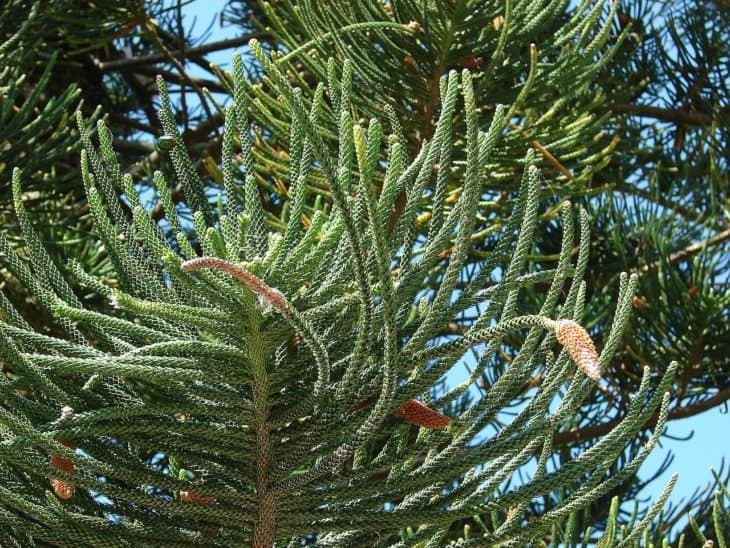
Cook pine has a very narrow columnar crown with regularly spaced horizontal branches on younger trees and a dense evergreen foliage habit. It is a gymnosperm that produces male and female cones rather than flowers. It can be confused with Norfolk Island pine but is typically slimmer and more columnar in outline.
Where to grow and best uses
Grow Cook pine in warm coastal landscapes and mild temperate sites where winters are not severe. It is commonly used as a street tree, windbreak, or vertical specimen in parks and large gardens. Allow plenty of vertical clearance because cultivated trees commonly reach tens of feet in height.
Planting and spacing
Plant in a sunny site with good drainage. Space trees at least as far apart as their expected mature spread, typically three to nine metres, and allow extra clearance for tall specimens. In areas with colder winters follow local hardiness guidance because Cook pine performs best in mild coastal climates.
Soil and light
Prefers full sun for the strongest columnar form and tolerates light afternoon shade. It does well on sandy to loamy soils and tolerates poor or rocky sites. Avoid waterlogged ground because poor drainage will stress roots and increase susceptibility to decline.
Watering and general care
Water regularly while the tree establishes to encourage a deep root system. Once established in a well drained coastal site irrigation can be reduced. Overwatering or persistent wet soil leads to root decline and increased risk of root rot, so improve drainage or avoid planting in heavy, waterlogged soils.
Propagation
Propagate mainly by seed for reliable, true-to-type results. Vegetative propagation is difficult and not commonly used in home settings. Commercial nurseries sometimes use grafting or specialist techniques for selected forms, so buy established plants if you need a specific habit or size.
Size, planting clearance and container use
Cook pine commonly reaches about nine to thirty metres in cultivation and maintains a narrow spread of roughly three to nine metres. The species is generally too large for long term container culture. Provide generous vertical clearance when planting near buildings or under power lines.
Pests, cones and volunteer seedlings
Cones are produced rather than flowers and cone production can be irregular. Fallen cones and seeds can create volunteer seedlings in some locations since seed is the main propagation method. Remove unwanted seedlings and monitor root health because waterlogged conditions raise the risk of root disease.
Frequently asked questions
- How fast does Cook pine grow?
- Growth rate varies with climate and site. Trees often grow faster in warm coastal zones with mild winters and good drainage. Growth can be slower in marginal or cooler sites.
- Is Cook pine suitable for a small yard?
- Not usually. Mature height and trunk size require substantial vertical and root space. Choose this species only if you can provide long term clearance and distance from structures.
- How cold hardy is Cook pine?
- Cook pine commonly suits mild climates roughly matching USDA zones ten to eleven. In colder zones expect winter damage unless the tree is in a very sheltered microclimate.
- Can Cook pine be grown in a container?
- It is generally unsuitable for long term container culture due to its ultimate height and root development. Use containers only for temporary transport or very young stock.
- How do you propagate Cook pine?
- Seed is the standard method for home and nursery propagation. Cuttings are difficult and grafting is reserved for specialist propagation by commercial growers.
Gallery

Related Plants
