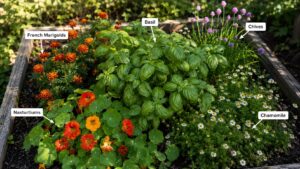
Want to enjoy your patio without the constant buzz and bite of mosquitoes? While no plant alone will eliminate these pests, certain species emit natural oils and fragrances that can help deter mosquitoes and other insects when planted in outdoor living spaces. This guide highlights 10 of the most effective insect-repelling plants supported by research and practical experience.
Contents
- 1. Citronella Grass (Cymbopogon nardus and C. winterianus)
- 2. Lemongrass (Cymbopogon citratus)
- 3. Lavender (Lavandula spp.)
- 4. Mint (Mentha spp., Especially Peppermint)
- 5. Catnip (Nepeta cataria)
- 6. Lemon Eucalyptus (Corymbia citriodora)
- 7. Basil (Ocimum basilicum)
- 8. Rosemary (Salvia rosmarinus)
- 9. Scented Geraniums (Pelargonium spp.)
- 10. Alliums (Garlic, Chives, and Ornamental Onions)
- 11. Lemon Balm (Melissa officinalis)
- 12. Wormwood (Artemisia absinthium)
- How to Maximize the Repellent Effect of These Plants
- Final Recommendations
For best results, plant several of these species close to seating areas, crush or brush their foliage to release oils, and combine them with other mosquito-control strategies like removing standing water and using fans. Keep in mind that simply growing these plants nearby provides modest deterrent effects — direct application of extracted oils or crushed leaves is often more effective.
1. Citronella Grass (Cymbopogon nardus and C. winterianus)
Read our guide to Citronella Grass

True citronella is a tall, clumping grass native to tropical Asia—not the scented geranium often sold as “mosquito plant.” Citronella grass (Cymbopogon nardus and C. winterianus) is the actual source of citronella oil, the active ingredient in many commercial mosquito candles, sprays, and coils. The oil works by masking human scent, making it harder for mosquitoes to locate you.
Growing tips: Citronella grass thrives in full sun and warm, humid climates (hardy in USDA zones 10–12). In cooler regions, grow it in large containers and bring it indoors before the first frost. The plant can reach 5 to 6 feet tall and prefers consistently moist, well-drained soil. Crushing or brushing the leaves releases more of the repellent oils.
Effectiveness note: The plant’s repellent effect is strongest when the foliage is disturbed or when oil is extracted and applied. Simply having the plant nearby provides modest protection.
2. Lemongrass (Cymbopogon citratus)

Lemongrass is a close relative of citronella grass and shares many repellent properties thanks to its high citral content. This aromatic, citrus-scented grass is widely used in culinary dishes and natural insect repellent formulations. Like citronella, lemongrass is most effective when the leaves are crushed or when essential oil is extracted and applied to the skin or clothing.
Growing tips: Lemongrass forms dense clumps 3 to 4 feet tall and wide. It prefers full sun, warm temperatures, and moist, fertile soil. Hardy only in zones 9–11, it must be grown as an annual or container plant in cooler climates. Harvest outer stalks for cooking while allowing the plant to continue producing new growth.
Best use: Plant lemongrass in large pots near patios or entryways. For stronger repellent action, rub fresh leaves on exposed skin or steep crushed stalks in boiling water to create a natural insect spray.
3. Lavender (Lavandula spp.)

Lavender’s sweet, herbal fragrance is beloved by gardeners but disliked by mosquitoes, flies, moths, and even rabbits. The plant’s essential oils—particularly linalool and camphor—naturally repel a variety of pests. Lavender is also prized for its beauty, drought tolerance, and versatility in the garden.
Growing tips: English lavender (Lavandula angustifolia) is the most cold-hardy species (zones 5–9), while Spanish and French lavenders prefer warmer climates. All types need full sun, excellent drainage, and lean to moderately fertile soil. Avoid overwatering, which can lead to root rot. Prune after flowering to maintain shape and encourage new growth.
Best use: Plant lavender along pathways, in borders, or in pots near seating areas. Hang dried bundles indoors to repel moths and other household insects. Rub fresh flowers on skin for a mild, natural repellent effect.
4. Mint (Mentha spp., Especially Peppermint)
Read our guide to Variegated Mint

Peppermint and spearmint are among the most potent insect-repelling herbs. Their menthol-rich oils deter mosquitoes, ants, spiders, and even rodents. Mint is also valued for culinary use and ease of growth—though its aggressive spreading habit requires careful management.
Growing tips: Mint thrives in partial shade to full sun and moist, well-drained soil. Because it spreads rapidly via underground runners, grow mint in containers or use root barriers to prevent it from overtaking other plants. Hardy in zones 3–9, mint is highly adaptable and tolerates a range of conditions.
Best use: Place potted mint plants on patios, steps, or near doorways. Crush leaves and rub on skin for a cooling, natural repellent. Steep fresh mint in hot water to create a spray for clothing and outdoor fabrics.
5. Catnip (Nepeta cataria)

Catnip is one of the most scientifically supported mosquito-repellent plants. Its active compound, nepetalactone, has been shown in studies to repel mosquitoes more effectively than DEET in some controlled tests. Catnip also deters cockroaches, termites, and other pests—though it attracts cats, which may roll in or chew the foliage.
Growing tips: Catnip is a hardy perennial (zones 3–9) that grows 2 to 3 feet tall. It prefers full sun to partial shade and well-drained soil. The plant self-seeds readily and can become invasive in ideal conditions. Trim back after flowering to maintain a tidy appearance and encourage fresh growth.
Best use: Plant catnip in borders, herb gardens, or pots near outdoor seating. Crush fresh leaves and rub on skin, or steep leaves to make a homemade repellent spray. Be prepared for visiting cats to show great interest in the plant.
6. Lemon Eucalyptus (Corymbia citriodora)
Read our guide to Lemon Eucalyptus
Oil of lemon eucalyptus (OLE), derived from the lemon eucalyptus tree, is one of the few plant-based mosquito repellents recommended by the CDC and EPA. The refined extract, known as PMD (p-menthane-3,8-diol), provides protection comparable to low-concentration DEET products. While the tree itself is too large and tender for most home gardens, it deserves mention as the source of a highly effective botanical repellent.
Growing tips: Lemon eucalyptus is a fast-growing evergreen tree native to Australia, hardy only in zones 9–11. It can reach 50 feet or more in ideal conditions. In cooler climates, young trees can be grown in large containers and overwintered indoors. The tree prefers full sun and well-drained soil.
Effectiveness note: The repellent effect comes from the refined oil extract, not from simply having the tree nearby. For practical mosquito protection, purchase commercial OLE or PMD products rather than relying on the living plant.
7. Basil (Ocimum basilicum)
Read our guide to Liquorice Basil

Basil is a versatile culinary herb that also acts as a natural fly and mosquito deterrent. Its strong, spicy-sweet aroma—produced by compounds like estragole and linalool—masks attractant scents and confuses mosquitoes. All varieties of basil offer some repellent effect, but lemon basil and cinnamon basil are particularly pungent.
Growing tips: Basil is a warm-season annual that requires full sun, rich soil, and consistent moisture. Pinch back growing tips regularly to encourage bushy growth and delay flowering. In hot climates, provide afternoon shade to prevent leaf scorch. Basil is frost-sensitive and should be planted after all danger of frost has passed.
Best use: Grow basil in containers near doors, windows, and outdoor dining areas. Rub fresh leaves on skin for a mild repellent effect. To make a simple basil insect spray, steep 4–6 ounces of fresh leaves in 4 ounces of boiling water, let cool, strain, mix with 4 ounces of vodka (as a preservative), and store in the refrigerator.
8. Rosemary (Salvia rosmarinus)

Rosemary
Rosemary is an aromatic evergreen shrub grown for its needle like leaves and culinary use. It prefers full sun and well drained soil and is drought tolerant once established.
Read our guide to RosemaryRosemary is an aromatic evergreen herb widely recommended for mosquito deterrence. Its resinous, pine-like fragrance—rich in camphor, eucalyptol, and other volatile oils—is pleasant to humans but off-putting to many insects. Rosemary is also valued for culinary use and ornamental appeal, making it a practical addition to patios and herb gardens.
Growing tips: Rosemary thrives in full sun and well-drained, slightly alkaline soil. It is hardy in zones 7–10; gardeners in colder regions should grow it in containers and move it indoors for winter. Rosemary is drought-tolerant once established and benefits from occasional pruning to maintain shape and promote dense growth.
Best use: Plant rosemary near seating areas or grill stations. Toss fresh sprigs on hot coals or a fire pit to release fragrant smoke that deters mosquitoes. Rub crushed leaves on skin or clothing for added protection.
9. Scented Geraniums (Pelargonium spp.)
Read our guide to Scented Geraniums

Scented geraniums—especially citronella-scented varieties—are often marketed as “mosquito plants,” but their effectiveness is frequently overstated. While the foliage does emit fragrant oils (including citronellol and geraniol) when crushed, simply having the plant nearby provides minimal protection. These plants are better appreciated for their ornamental value and pleasant scents than as a reliable mosquito solution.
Growing tips: Scented geraniums are tender perennials (hardy in zones 10–11) usually grown as annuals or container plants in cooler climates. They prefer full sun, well-drained soil, and moderate watering. Pinch back stems to encourage bushiness. Bring containers indoors before frost to overwinter in a sunny window.
Best use: Grow scented geraniums in pots near doorways or seating areas where their foliage can be brushed, releasing fragrance. Crush and rub leaves on skin for a mild, temporary repellent effect. Enjoy the variety of scents available, from rose and lemon to peppermint and apple.
Related: Are Geraniums Poisonous?
10. Alliums (Garlic, Chives, and Ornamental Onions)

Members of the allium family—including garlic, chives, and ornamental onions—emit a pungent sulfur scent that may help deter some garden pests, including aphids, carrot flies, and slugs. While evidence for mosquito repellency is less robust than for other plants on this list, alliums are often included in companion planting schemes to protect vegetables and add visual interest.
Growing tips: Ornamental alliums like Allium giganteum produce striking, globe-shaped flower heads on stems up to 6 feet tall. They prefer full sun, well-drained soil, and are hardy in zones 4–8. Plant bulbs in fall for late spring to early summer bloom. Chives and garlic are more modest in size and can be grown as edible perennials or annuals.
Best use: Interplant alliums with vegetables like tomatoes, peppers, and carrots to deter aphids and other pests. Use ornamental varieties as dramatic focal points in borders. Harvest chives and garlic for culinary use while benefiting from their pest-deterrent properties.
11. Lemon Balm (Melissa officinalis)

Lemon balm is a member of the mint family with a bright, lemony fragrance that mosquitoes find unpleasant. The plant’s citronellal and citral content give it natural repellent properties, and crushed leaves can be rubbed on skin for temporary protection. Lemon balm is also valued for its calming herbal tea and ease of growth.
Growing tips: Lemon balm is a hardy perennial (zones 4–9) that grows 1 to 2 feet tall. It prefers partial shade to full sun and moist, well-drained soil. Like other mints, lemon balm spreads vigorously and is best grown in containers or confined spaces. Trim back regularly to prevent self-seeding and maintain compact growth.
Best use: Plant lemon balm in pots near patios or garden benches. Crush fresh leaves and rub on exposed skin, or steep leaves to make a fragrant insect-repellent spray. Harvest regularly for tea and to encourage fresh, aromatic foliage.
12. Wormwood (Artemisia absinthium)
Read our guide to Absinthe Wormwood

Wormwood is a hardy perennial with striking silver-gray foliage and a strong, bitter aroma that repels mosquitoes, flies, fleas, and moths. While effective as a landscape plant, wormwood should not be applied directly to skin due to its potent essential oils and compounds (including thujone), which can cause irritation.
Growing tips: Wormwood grows 2 to 4 feet tall and thrives in full sun and well-drained, poor to moderately fertile soil. It is drought-tolerant and hardy in zones 4–8. The plant’s silvery foliage makes it an excellent choice for borders and dry gardens. Prune in early spring to remove dead stems and encourage new growth.
Best use: Plant wormwood in borders or along pathways where its foliage can be admired but not touched. Combine with rue (Ruta graveolens) for a particularly potent insect-deterrent planting. Hang dried stems indoors to repel moths and other household pests.
How to Maximize the Repellent Effect of These Plants
While these plants contain natural insect-repelling compounds, their effectiveness is limited when they are simply growing in the garden. To get the most protection:
- Crush or bruise the foliage to release volatile oils. Rubbing fresh leaves on skin provides temporary, localized protection.
- Plant in clusters near seating areas, doorways, and windows to concentrate fragrance where you spend time.
- Make homemade sprays by steeping fresh or dried leaves in hot water, straining, and mixing with a small amount of alcohol or witch hazel as a preservative.
- Combine with other strategies like removing standing water, using fans (mosquitoes are weak fliers), and applying EPA-registered repellents containing DEET, picaridin, or oil of lemon eucalyptus for reliable protection.
- Burn dried herbs or fresh sprigs (like rosemary or sage) on a fire pit or grill to create insect-repelling smoke.
Final Recommendations
No plant alone will create a mosquito-free yard, but incorporating several of these species into your landscape can reduce insect pressure while adding beauty, fragrance, and culinary value. For the strongest natural repellent effect, prioritize catnip, lemon eucalyptus oil (OLE/PMD), citronella grass, and lemongrass, and use them in combination with active strategies like crushing foliage or making sprays.
Pair these plants with good mosquito-control practices—eliminate standing water, maintain screens, use fans, and apply proven repellents—for a comprehensive, effective approach to enjoying your outdoor spaces throughout the season.