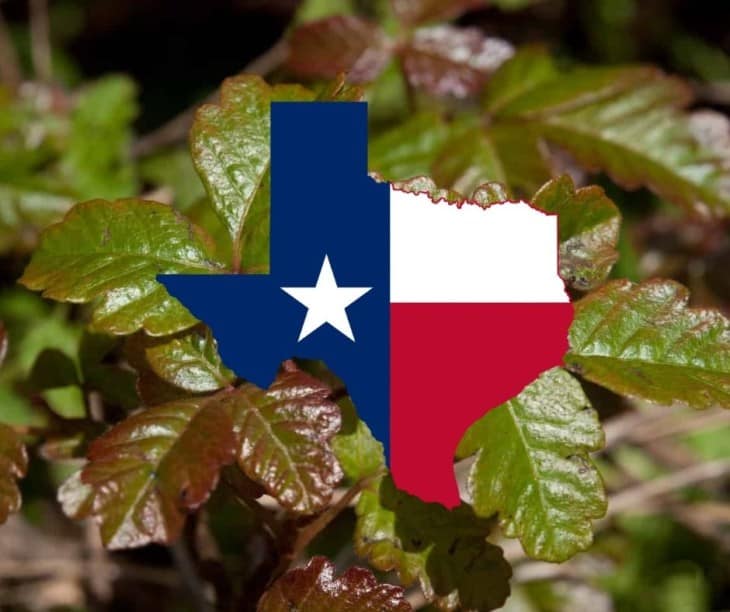
The poisonous plants you are most likely to meet in Texas are poison ivy, poison oak and Texas bull nettle, which hurt by touch, and a group of common yard and roadside plants that are dangerous to eat: oleander, sago palm, Texas mountain laurel seeds, castor bean, jimsonweed and poison hemlock. Several native range plants, such as locoweed and larkspur, are mainly a danger to horses and livestock. Most poisonings in people happen when young children put berries, seeds or leaves in their mouths, so the garden is the place to start.
Contents
- Plants That Hurt by Touch
- Plants That Are Dangerous to Eat
- Oleander (Nerium oleander)
- Sago Palm (Cycas revoluta)
- Texas Mountain Laurel (Dermatophyllum secundiflorum)
- Castor Bean (Ricinus communis)
- Jimsonweed (Datura stramonium)
- Poison Hemlock (Conium maculatum)
- Spotted Water Hemlock (Cicuta maculata)
- Carolina Jessamine (Gelsemium sempervirens)
- Chinaberry (Melia azedarach)
- Pokeweed (Phytolacca americana)
- Garden Plants That Are Poisonous to Eat
- Plants That Mainly Harm Livestock and Horses
- What to Do After Contact or Poisoning
If someone has eaten part of a plant, call Poison Control at 1-800-222-1222, which connects you to the Texas Poison Center Network around the clock. Call 911 for trouble breathing, seizures or unconsciousness. For pets, call your vet or the ASPCA Animal Poison Control Center at (888) 426-4435.
- Plants That Hurt by Touch
- Plants That Are Dangerous to Eat
- Garden Plants That Are Poisonous to Eat
- Plants That Mainly Harm Livestock and Horses
- What to Do After Contact or Poisoning
| Plant | Botanical name | Toxic part | Main risk |
|---|---|---|---|
| Poison Ivy | Toxicodendron radicans | All parts, including bare winter stems | Itchy, blistering rash (urushiol) |
| Poison Oak (Atlantic Poison Oak) | Toxicodendron pubescens | All parts | Same rash as poison ivy |
| Poison Sumac | Toxicodendron vernix | All parts | Severe rash, stronger than poison ivy |
| Texas Bull Nettle | Cnidoscolus texanus | Stinging hairs on leaves and stems | Intense burning pain for hours |
| Oleander | Nerium oleander | All parts, including dried leaves and smoke | Heart rhythm problems; can be fatal |
| Sago Palm | Cycas revoluta | All parts, especially the seeds | Liver failure; very often fatal in dogs |
| Texas Mountain Laurel | Dermatophyllum secundiflorum | Seeds | Vomiting; confusion and seizures in large doses |
| Castor Bean | Ricinus communis | Seeds | Severe vomiting and diarrhea; can be fatal if chewed |
| Jimsonweed | Datura stramonium | All parts, especially the seeds | Hallucinations, racing heart, high fever |
| Poison Hemlock | Conium maculatum | All parts | Paralysis; can be fatal |
| Spotted Water Hemlock | Cicuta maculata | All parts, especially the roots | Violent seizures; often fatal |
| Carolina Jessamine | Gelsemium sempervirens | All parts, including the nectar | Muscle weakness, breathing trouble |
| Chinaberry | Melia azedarach | Berries, bark, leaves | Vomiting, weakness, seizures |
| Pokeweed | Phytolacca americana | Roots, berries, mature leaves and stems | Severe vomiting and diarrhea |
| Lantana | Lantana camara | Unripe green berries, leaves | Vomiting in children; liver damage in livestock |
| Wisteria | Wisteria sinensis | Seeds and pods | Vomiting, stomach pain, dehydration |
| Azaleas | Rhododendron spp. | Leaves, flowers, nectar | Vomiting, low blood pressure, slow heart |
| Daffodil | Narcissus spp. | Bulbs, less so leaves and flowers | Vomiting, diarrhea, stomach pain |
| Yaupon and Other Hollies | Ilex vomitoria | Berries | Vomiting and diarrhea |
| Mistletoe | Phoradendron leucarpum | Berries and leaves | Stomach upset; more serious in pets |
| Morning Glory | Ipomoea spp. | Seeds | Vomiting, hallucinations in large amounts |
| Woolly Locoweed | Astragalus mollissimus | Whole plant, fresh or dry | Nerve damage; “locoed” behavior in horses and cattle |
| Larkspur | Delphinium spp. | Whole plant, especially young plants and seeds | Paralysis and death in cattle |
| Bitterweed | Hymenoxys odorata | Whole plant | Poisoning of sheep, often fatal |
| Silverleaf Nightshade | Solanum elaeagnifolium | Berries and leaves | Stomach upset; poisoning in livestock |
| Carolina Cherry Laurel | Prunus caroliniana | Leaves, especially wilted; seeds | Cyanide poisoning in livestock |
| Red and Texas Buckeye | Aesculus pavia | Seeds and young shoots | Vomiting, muscle twitching, staggering |
Plants That Hurt by Touch
These plants hurt you by touch, not by being eaten. Wear long sleeves, long pants and gloves when clearing brush, and wash your skin, clothes and tools afterwards.
Poison Ivy (Toxicodendron radicans)

Poison ivy grows across most of Texas, from the Pineywoods to the Hill Country and the coast, and is scarce only in the driest parts of West Texas. It can be a groundcover, a shrub or a hairy vine climbing a tree or fence. Look for leaves made of three leaflets, with the middle leaflet on a longer stalk. The edges can be smooth, toothed or lobed. All parts contain urushiol, an oil that causes an itchy, blistering rash in most people. It sticks to clothes, tools and pets’ fur and stays active on bare winter stems. Never burn it: the smoke carries urushiol into the lungs.
Poison Oak (Atlantic Poison Oak) (Toxicodendron pubescens)
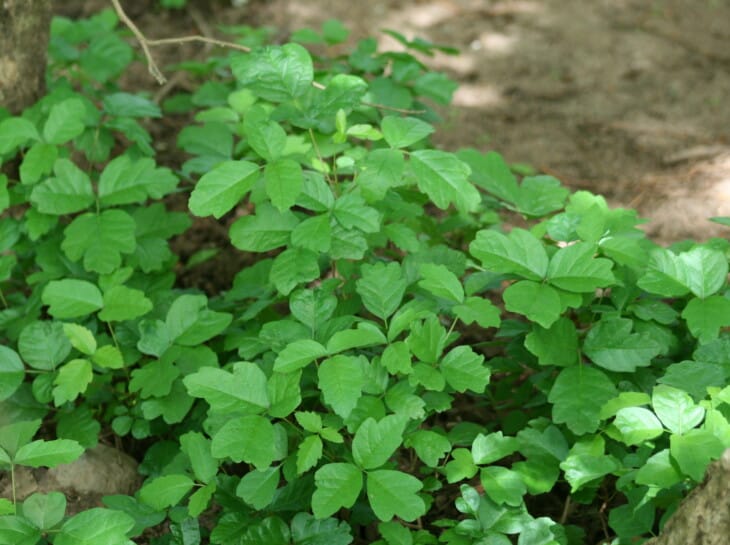
The poison oak that grows in Texas is Atlantic poison oak, a low shrub, usually 1 to 3 feet tall, of sandy soils and open pine and oak woods in East and Central Texas. It also has three leaflets, but they are lobed like small oak leaves and fuzzy on both sides, and the plant doesn’t climb. It contains the same urushiol as poison ivy and causes the same rash. Pacific poison oak (T. diversilobum), the species in many photos, grows only along the West Coast.
Poison Sumac (Toxicodendron vernix)

In Texas, poison sumac is found only in the wet eastern part of the state: bogs, swamp edges and wet woods in the Pineywoods and the Big Thicket. It is a shrub or small tree, usually 5 to 20 feet tall. Each leaf has 7 to 13 smooth-edged leaflets on a red stalk, and in fall it carries loose, drooping clusters of whitish berries. The common sumacs of Texas, like flameleaf sumac, have red berries in upright clusters and are harmless. Poison sumac contains even more urushiol than poison ivy, and its rash is usually worse.
Texas Bull Nettle (Cnidoscolus texanus)
Read our guide to Texas Bull Nettle

Texas bull nettle grows in sandy soils across the eastern two-thirds of the state, in pastures, roadsides and sandy yards. It is a sprawling perennial, 1 to 3 feet tall, with deeply lobed leaves, white flowers and milky sap. Every part is covered in stiff, glassy stinging hairs. Brushing against it causes sharp, burning pain that can last for several hours, and it is much worse than a common nettle sting. It is a common injury for barefoot children and people mowing in shorts.
Plants That Are Dangerous to Eat
These plants cause serious or fatal poisoning when swallowed. Several of them are sold as landscape plants and grow in thousands of Texas yards. Teach children never to eat any seed, berry, leaf or root without an adult who knows it.
Oleander (Nerium oleander)

Oleander is one of the most planted shrubs along the Texas coast, where Galveston calls itself the Oleander City. It is an evergreen shrub, 6 to 20 feet tall, with narrow, leathery leaves and clusters of pink, red or white flowers all summer. Every part contains cardiac glycosides, which disturb the heart rhythm. Eating a few leaves can be dangerous for a child and fatal for a dog, cat or horse, and dried leaves in hay stay toxic. Don’t burn the prunings and don’t use the branches as cooking skewers.
Sago Palm (Cycas revoluta)

The sago palm is not a palm but a cycad, and it is planted everywhere in South and Central Texas landscapes. It has stiff, glossy, feather-shaped leaves 3 to 5 feet long from a short, shaggy trunk. Female plants make orange-red seeds in a woolly cluster at the center. All parts contain cycasin, and the seeds are the most toxic. In dogs, eating even one or two seeds can cause vomiting, then liver failure, and many don’t survive. It is dangerous to children as well.
Texas Mountain Laurel (Dermatophyllum secundiflorum)

Texas mountain laurel is a native evergreen shrub or small tree, 10 to 25 feet tall, of the Hill Country, the Edwards Plateau and West Texas, and a favorite landscape plant in Austin and San Antonio. In early spring it has drooping clusters of purple flowers that smell like grape soda. They are followed by woody, silvery pods holding bright red seeds (often called mescal beans), which attract children. The hard seed coat usually lets a swallowed seed pass through, but chewed seeds release cytisine and related alkaloids, which cause nausea, vomiting and, in large doses, confusion and seizures. The older botanical name is Sophora secundiflora.
Castor Bean (Ricinus communis)

Castor bean is a tall, fast-growing plant from Africa, 6 to 15 feet in a single season, with huge, star-shaped leaves, often red or bronze, and spiny seed pods. It is sometimes grown as an ornamental and has escaped along rivers and waste ground in South and Central Texas. The mottled, shiny seeds contain ricin, one of the most toxic natural substances known. A seed swallowed whole may pass harmlessly, but a few chewed seeds can cause severe vomiting, diarrhea and dehydration that can be fatal, especially in children.
Jimsonweed (Datura stramonium)

Jimsonweed and its relative, sacred datura (Datura wrightii), grow on roadsides, in pastures and in disturbed ground across Texas. They are coarse, bad-smelling plants 2 to 5 feet tall, with big, white or pale purple trumpet flowers that open in the evening and spiny seed pods. All parts contain atropine and scopolamine. Poisoning causes dry mouth, dilated pupils, hot and flushed skin, a racing heart, confusion and hallucinations. Most cases are teenagers who eat the seeds or drink a tea on purpose, and some end in hospitalization or death.
Poison Hemlock (Conium maculatum)
Read our guide to Poison Hemlock

Poison hemlock is a European weed that has spread widely along creeks, ditches, roadsides and field edges in North and Central Texas. It is a biennial 5 to 10 feet tall, with fern-like, finely divided leaves, smooth hollow stems with purple blotches and many small white umbrella-shaped flower heads in spring. The leaves smell musty when crushed. Every part contains coniine, which paralyzes the muscles, including the ones used for breathing. People have died after mistaking it for wild carrot or parsley. Wear gloves when you pull it.
Spotted Water Hemlock (Cicuta maculata)
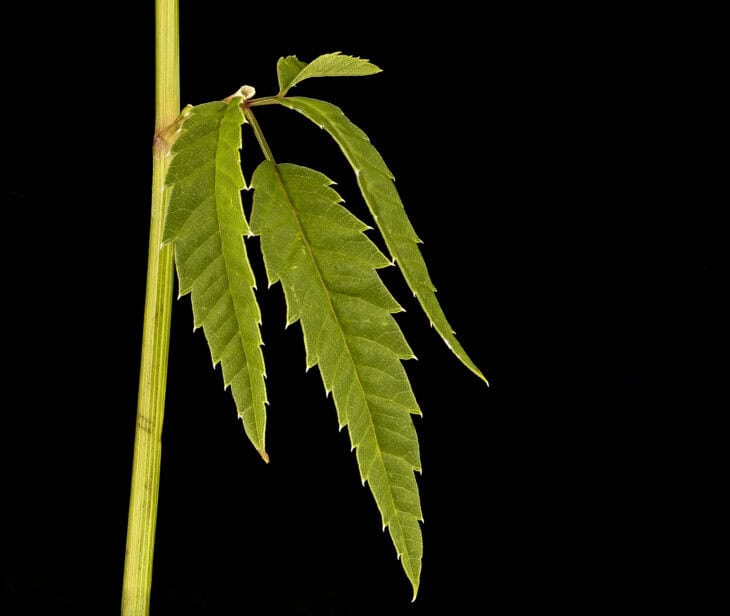
Spotted water hemlock is a native plant of wet ground in the eastern two-thirds of Texas: marshes, wet ditches, stream banks and pond edges. It grows 3 to 6 feet tall, with purple-streaked stems, leaves divided into narrow, toothed leaflets, and white umbrella-shaped flower heads in summer. It is often called the most poisonous plant in North America. Its thick root base, which has hollow chambers when cut, holds cicutoxin, and a single bite can cause seizures and death within hours. Cattle die from eating the roots when wet soil lets them pull the plants up.
Carolina Jessamine (Gelsemium sempervirens)

Carolina jessamine is a native evergreen vine of East Texas woods, and it is a popular garden vine for fences and arbors across the state. From late winter to early spring it is covered in fragrant, yellow, trumpet-shaped flowers. All parts contain alkaloids related to strychnine, and the plant can be fatal if eaten. Children have been poisoned by sucking the nectar from the flowers, and honey made mainly from its nectar can be toxic. It is not a true jasmine.
Chinaberry (Melia azedarach)

Chinaberry is an Asian tree, 30 to 40 feet tall, that was widely planted around Texas farms and towns and has spread into fields and woods, where it is now considered invasive. It has fern-like compound leaves, fragrant lilac flowers in spring, and clusters of round, yellow berries that hang on the bare tree through winter. The berries contain neurotoxins. Eating them can cause vomiting, diarrhea, weakness and seizures in children, dogs and pigs. Birds eat them without harm and spread the seeds.
Pokeweed (Phytolacca americana)
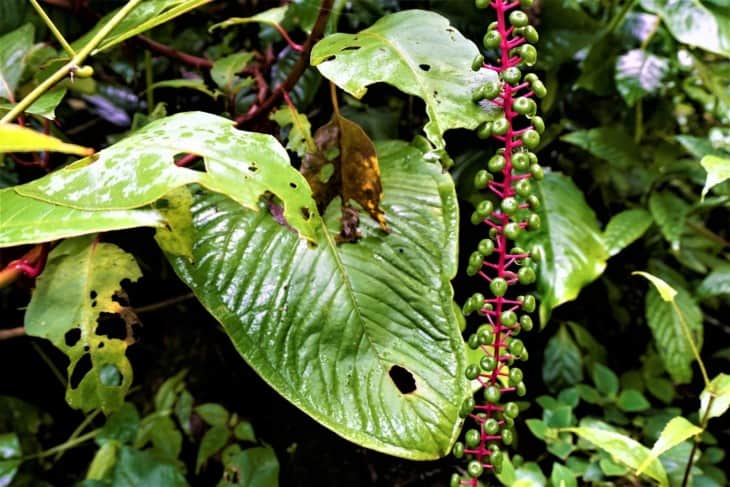
Pokeweed is a native perennial of the eastern half of Texas that springs up along fences, woodland edges and in neglected gardens. It grows 4 to 10 feet tall, with thick, smooth, magenta stems, large leaves and long, drooping clusters of dark purple berries in late summer. The root is the most toxic part, followed by the seeds and mature leaves. The young spring shoots are eaten as “poke salad” in the South, but only after boiling in several changes of water, and they are still risky. Children are drawn to the berries, which can cause vomiting and diarrhea.
Garden Plants That Are Poisonous to Eat
These are common Texas garden plants. They are rarely dangerous to adults, but they can make children and pets sick.
Lantana (Lantana camara)

Lantana is a mainstay of Texas gardens because it blooms in full sun and heat from spring to frost. Common lantana (L. camara) is a shrub 2 to 6 feet tall with clusters of small flowers in mixed colors, and the native Texas lantana (L. urticoides) has orange-red and yellow flowers. The unripe green berries are the most toxic part for children and pets, causing vomiting and diarrhea. The leaves cause liver damage and sunlight sensitivity in cattle, sheep and goats that graze them.
Wisteria (Wisteria sinensis)

Chinese and Japanese wisteria are woody vines with long, drooping clusters of purple flowers in spring, and they grow over many old Texas fences and porches. Both escape into East Texas woods, where they smother trees. The flat, velvety seed pods and the seeds inside cause vomiting, stomach pain and diarrhea in children and pets. If you want a wisteria, the native American wisteria (W. frutescens) is far less aggressive, though its seeds are just as toxic.
Azaleas (Rhododendron spp.)

Azaleas are the signature shrub of East Texas, where Tyler and Nacogdoches hold azalea trails every spring. All parts contain grayanotoxins. A few leaves or flowers usually cause only mouth irritation and vomiting in people, but larger amounts can slow the heart and drop blood pressure. They are more dangerous to dogs, cats, goats and horses. Honey made mainly from rhododendron nectar (“mad honey”) can also cause poisoning.
Daffodil (Narcissus spp.)

Daffodils and their relatives, such as paperwhites and the heirloom narcissus that come back in old Texas yards, bloom in late winter. All parts contain lycorine, and the bulbs have the most. Eating them causes vomiting, diarrhea and stomach pain, and bulbs are sometimes mistaken for onions. Dogs that dig up and chew bulbs can get very sick. See our daffodil entry for more.
Yaupon and Other Hollies (Ilex vomitoria)

Yaupon holly is a native evergreen shrub or small tree of East and Central Texas and one of the most common hedge plants in the state. Possumhaw (I. decidua) and American holly (I. opaca) also grow here. All of them carry bright red berries in fall and winter. Eating more than a few berries causes vomiting and diarrhea, mostly in children and pets. Despite its botanical name, yaupon leaves are safe to brew as a tea, and it is usually described as the only native North American plant that contains caffeine.
Mistletoe (Phoradendron leucarpum)

American mistletoe grows as clumps of evergreen leaves on the branches of oaks, elms, mesquite and other trees across Texas. It has white, sticky berries in winter. Eating a few berries usually causes only stomach upset in people, but larger amounts, or tea made from the leaves, can be more serious. It is a greater risk to dogs and cats, so keep holiday sprigs out of their reach. See our mistletoe entry for more.
Morning Glory (Ipomoea spp.)

Morning glories are twining vines with trumpet-shaped flowers that open in the morning, and many grow wild along Texas fences and fields. The seeds of some species, especially the garden ‘Heavenly Blue’ type, contain lysergic alkaloids, and eating a large number causes vomiting and hallucinations. The leaves and flowers are much less of a risk.
Plants That Mainly Harm Livestock and Horses
Most livestock losses in Texas happen after a drought or overgrazing, when animals eat plants they normally avoid. Keep pastures in good condition, and don’t turn hungry animals onto unfamiliar ground.
Woolly Locoweed (Astragalus mollissimus)

Woolly locoweed is a low, silvery-haired native plant of West and Central Texas rangeland, with spikes of purple, pea-like flowers in spring. It contains swainsonine, which damages the nervous system. Horses and cattle that eat it for weeks become “locoed”, with stumbling, nervousness and strange behavior, and many animals seek it out once they start. The damage is often permanent.
Larkspur (Delphinium spp.)

Larkspurs have tall spikes of blue, purple, pink or white spurred flowers in spring. The native prairie larkspur (D. carolinianum) grows in Texas grasslands, and garden larkspur (Consolida ajacis) has naturalized along roadsides. They contain alkaloids that paralyze muscles, and they are a major cause of cattle deaths. Eating a garden larkspur can also make a person seriously ill.
Bitterweed (Hymenoxys odorata)
Bitterweed is a small annual, 6 to 24 inches tall, with thin, strong-smelling leaves and small yellow daisy flowers. It grows on the Edwards Plateau and in West Texas, especially on overgrazed range after a wet winter. It is one of the most costly poisonous plants for Texas sheep ranchers, because sheep eat it when other forage is short.
Silverleaf Nightshade (Solanum elaeagnifolium)
Silverleaf nightshade is a spiny, silvery-gray perennial weed found in fields, roadsides and yards across Texas. It is 1 to 3 feet tall, with narrow, wavy-edged leaves, violet star-shaped flowers with yellow centers, and round berries that turn yellow. The berries and leaves contain solanine. They cause stomach upset in people and are a common cause of poisoning in cattle, sheep and goats. Its eastern relative, horsenettle, is toxic in the same way.
Carolina Cherry Laurel (Prunus caroliniana)
Carolina cherry laurel is a native evergreen tree of East and Central Texas, 20 to 30 feet tall, and a common hedge and screen plant. It has glossy leaves that smell of almond when crushed, small white flowers in spring and black fruits. The leaves and seeds contain compounds that release cyanide. Wilted leaves, from fallen or pruned branches, are the most dangerous and can kill cattle, goats and horses within an hour. Don’t throw hedge clippings over the fence into a pasture.
Red and Texas Buckeye (Aesculus pavia)
Read our guide to Red and Texas Buckeye

Red buckeye is a native shrub or small tree of East and Central Texas woods, with spikes of red tubular flowers in spring that hummingbirds love. Texas buckeye (A. glabra var. arguta) grows farther west. Both make large, shiny brown seeds in leathery husks. The seeds and young shoots contain aesculin and saponins. They cause vomiting and weakness in people, and staggering and trembling in cattle that eat the sprouts in spring.
What to Do After Contact or Poisoning
- Poison ivy, oak or sumac: wash the skin with soap and cool water as soon as possible, ideally within 10 to 30 minutes, and wash clothes, gloves and tools separately. See a doctor if the rash covers a large area or reaches the face, eyes or genitals.
- Bull nettle: don’t rub the area. Lift out the hairs with tape, then wash with soap and water. A cold pack eases the pain.
- Swallowed any plant on this list: call Poison Control at 1-800-222-1222. Keep a sample or photo of the plant for identification. Don’t wait for symptoms after eating oleander, water hemlock, poison hemlock or jimsonweed: call 911.
- Pets: call your vet or the ASPCA Animal Poison Control Center at (888) 426-4435. A dog that has chewed a sago palm needs a vet right away, even if it seems fine.
- Livestock: call your veterinarian and move animals off the pasture. Your county extension office can identify plants from a sample.
Not on this list: plants that older lists include but that are rare in Texas yards or wild areas, such as lily of the valley, bleeding heart and rosary pea, and houseplants like dumb cane.
Related: Poisonous Plants Guide · Poisonous Plants in Michigan