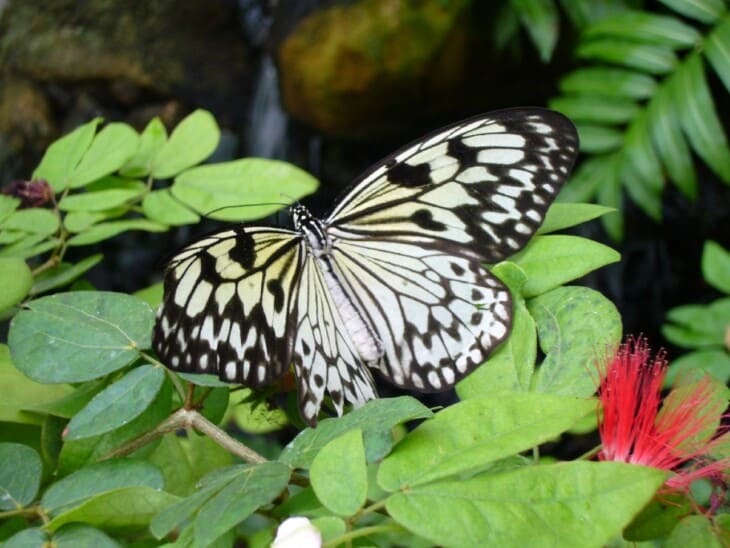
Some plants look like butterflies because of their leaves, and some because of their flowers. The leaf group is led by the red butterfly wing plant, whose paired triangular leaflets hover like wings, the orchid tree, whose leaves are split into two rounded lobes, and angel wing begonias. The flower group includes blue butterfly bush, whirling butterfly (gaura), the Florida butterfly orchid, moth orchids, butterfly ginger, butterfly pea, cyclamen and the butterfly flower, schizanthus. Most of them also attract real butterflies, though the best plants for that, such as butterfly weed and milkweed, look nothing like one.
Contents
- Plants With Butterfly-Shaped Leaves
- Flowers That Look Like Butterflies
- Blue Butterfly Bush (Rotheca myricoides ‘Ugandense’)
- Whirling Butterfly (Gaura) (Oenothera lindheimeri)
- Florida Butterfly Orchid (Encyclia tampensis)
- Butterfly Orchid (Psychopsis) (Psychopsis papilio)
- Moth Orchid (Phalaenopsis hybrids)
- Butterfly Ginger Lily (Hedychium coronarium)
- Butterfly Pea (Clitoria ternatea)
- Cyclamen (Cyclamen persicum and C. hederifolium)
- Butterfly Flower (Poor Man’s Orchid) (Schizanthus pinnatus)
- Plants Named for Butterflies That Don’t Look Like One
- How to Actually Attract Butterflies
A word on names: “butterfly bush” usually means Buddleja davidii, which draws butterflies but has ordinary flower spikes, while “blue butterfly bush” is a completely different tropical shrub whose flowers really do look like butterflies. This list covers the plants that look the part.

- Plants With Butterfly-Shaped Leaves
- Flowers That Look Like Butterflies
- Plants Named for Butterflies That Don’t Look Like One
- How to Actually Attract Butterflies
| Plant | Botanical name | Butterfly part | Where it grows |
|---|---|---|---|
| Red Butterfly Wing Plant | Christia vespertilionis | Leaves | Houseplant; outdoors in zones 10–11 |
| Orchid Tree | Bauhinia variegata | Leaves and flowers | Zones 9–11 |
| Angel Wing Begonia | Begonia × corallina and other cane begonias | Leaves | Houseplant; outdoors in zones 10–11 |
| Blue Butterfly Bush | Rotheca myricoides ‘Ugandense’ | Flowers | Zones 9–11; a container plant elsewhere |
| Whirling Butterfly (Gaura) | Oenothera lindheimeri | Flowers | Zones 5–9 |
| Florida Butterfly Orchid | Encyclia tampensis | Flowers | Zones 9b–11, on trees |
| Butterfly Orchid (Psychopsis) | Psychopsis papilio | Flowers | A warm greenhouse or bright windowsill |
| Moth Orchid | Phalaenopsis hybrids | Flowers | A houseplant anywhere |
| Butterfly Ginger Lily | Hedychium coronarium | Flowers | Zones 8–11 |
| Butterfly Pea | Clitoria ternatea | Flowers | Zones 10–11; an annual vine elsewhere |
| Cyclamen | Cyclamen persicum and C. hederifolium | Flowers | Houseplant; hardy species in zones 5–9 |
| Butterfly Flower (Poor Man’s Orchid) | Schizanthus pinnatus | Flowers | A cool-season annual |
Plants With Butterfly-Shaped Leaves
Red Butterfly Wing Plant (Christia vespertilionis)
The red butterfly wing plant, or mariposa plant, is grown entirely for its leaves: each one is a pair of wide, triangular leaflets held horizontally, veined in deep red and green, so a plant in a breeze looks like a swarm of butterflies. It comes from Southeast Asia, grows 2 to 4 feet tall and is a short-lived perennial in the pea family. Give it bright, indirect light, warmth, moderate humidity and soil that dries slightly between waterings. It is easy from seed and often grown as an annual.
Orchid Tree (Bauhinia variegata)
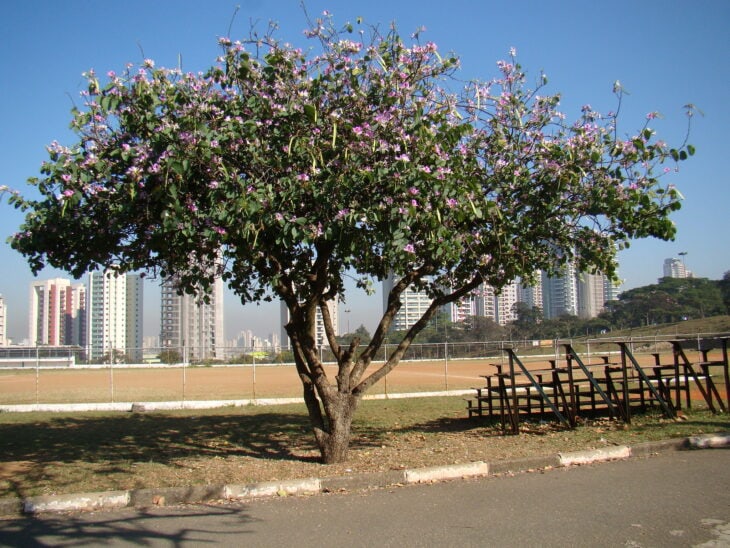
The orchid tree is also called the butterfly tree, because every leaf is split at the tip into two rounded lobes, like a pair of wings, and folds together at night. It grows 20 to 35 feet tall and covers itself in fragrant, orchid-like flowers of pink, magenta or white in late winter and spring. It needs frost-free winters. In Florida, Bauhinia variegata has escaped into natural areas and shouldn’t be planted; the sterile hybrid Hong Kong orchid tree (B. × blakeana) is a better choice.
Angel Wing Begonia (Begonia × corallina and other cane begonias)

Cane begonias have long, lopsided leaves shaped like a single wing, usually spotted silver and red underneath, on bamboo-like jointed stems. They grow 1 to 4 feet tall indoors and hang clusters of pink, red or white flowers most of the year in good light. Rex begonias, grown for their swirled, metallic leaves, give the same effect in a shorter plant. Both like bright, indirect light and soil that dries slightly between waterings, and both are toxic to cats and dogs. See our list of plants that look like begonias.
Flowers That Look Like Butterflies
Blue Butterfly Bush (Rotheca myricoides ‘Ugandense’)
Read our guide to Blue Butterfly Bush

Blue butterfly bush, or blue glory bower, is an East African shrub whose flowers look startlingly like small blue butterflies: four pale blue petals spread like wings, one deep violet-blue petal below like a tail, and long, curving stamens that arch out like antennae. It grows 3 to 10 feet tall and flowers from spring to fall. Grow it in full sun to part shade, in rich, well-drained soil, and prune it after flowering to keep it bushy. Where it isn’t hardy, grow it in a pot and bring it in before frost.
Whirling Butterfly (Gaura) (Oenothera lindheimeri)
Read our guide to Whirling Butterfly (Gaura)

Whirling butterfly, still sold as Gaura lindheimeri, is a native of Texas and Louisiana, not Mexico. Its wiry, 2- to 4-foot stems carry dozens of small, four-petaled pink or white flowers with long, curved stamens that bob and spin in the wind like a cloud of tiny butterflies. It flowers from late spring until frost, thrives in full sun and lean, sharply drained soil, and is best treated as short-lived: it rots in heavy, wet ground.
Florida Butterfly Orchid (Encyclia tampensis)

The Florida butterfly orchid grows on the bark of live oaks, cypress and buttonwoods in Florida, Cuba and the Bahamas. From each plant a branched spike carries up to 40 fragrant flowers, about an inch across, in green, yellow and bronze, each with a white lip marked in magenta, and they flutter in the slightest wind. Grow it mounted on a slab or in an open bark mix, in bright, filtered light with high humidity. It is protected in Florida, so buy nursery-grown plants and never collect it from the wild.
Butterfly Orchid (Psychopsis) (Psychopsis papilio)
This tropical American orchid produces a single flower at a time on a tall, wiry stem, with two long, upright petals like antennae, spreading yellow-and-brown barred sepals like wings and a wide, ruffled lip. It genuinely looks like a butterfly resting on a stick, and it flowers again and again from the same spike over several years, so never cut the old spike off. It needs warmth, bright light and excellent drainage.
Moth Orchid (Phalaenopsis hybrids)
Moth orchids are named for their resemblance to moths in flight: the genus name comes from the Greek for moth. Their flat, rounded flowers, carried in a row along an arching stem, are the most common orchid in stores and last two to three months. Grow them in a bark mix in bright, indirect light, water once a week when the mix is nearly dry, and cut the spike back above a node after flowering to get a second flush.
Butterfly Ginger Lily (Hedychium coronarium)
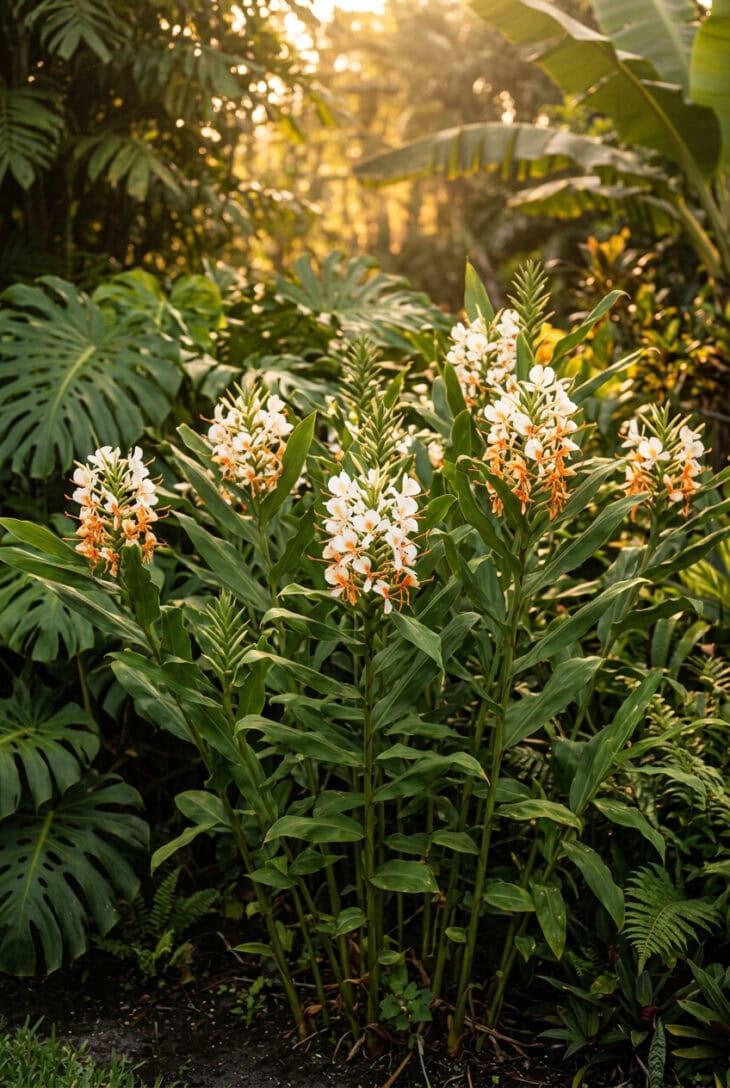
Butterfly ginger carries clusters of pure white, intensely fragrant flowers at the top of 4- to 6-foot leafy stems in late summer and fall, each one shaped like a butterfly in flight. It is the national flower of Cuba, where it is called mariposa. It comes from the Himalayas and grows from rhizomes in moist, rich soil in sun or part shade. Note that it has escaped and become invasive in Hawaii, Brazil and parts of the Gulf Coast, so check before planting it there.
Butterfly Pea (Clitoria ternatea)

Butterfly pea is a slender tropical vine, 6 to 10 feet long, with vivid deep-blue flowers that sit sideways on the stem like a resting butterfly. The flowers are used across Southeast Asia to make a brilliant blue tea that turns purple-pink when lemon is added. It grows easily from soaked seed in one season, needs full sun and warmth, and fixes nitrogen like other legumes.
Cyclamen (Cyclamen persicum and C. hederifolium)

A cyclamen flower is held upside down, with its five petals swept up and back, which makes each one look like a butterfly hovering above the marbled, heart-shaped leaves. Florist’s cyclamen is a winter houseplant that wants cool rooms, bright light and water from below, and it goes dormant in summer. Hardy cyclamen, such as C. hederifolium, come back each year outdoors in shade. The tubers are poisonous to pets.
Butterfly Flower (Poor Man’s Orchid) (Schizanthus pinnatus)
Schizanthus is a Chilean annual, 1 to 2 feet tall, smothered in small flowers with fringed, spreading petals blotched in pink, purple, white and yellow, each one like a butterfly with painted wings. Its leaves are fern-like. It needs cool temperatures, so sow it in late winter for spring bloom, or in fall in mild-winter areas, and grow it in bright light with regular water. It fades in summer heat.
Plants Named for Butterflies That Don’t Look Like One
- Butterfly bush (Buddleja davidii): long cones of purple flowers that butterflies feed on. It is invasive in Oregon, Washington and parts of the Northeast, so plant sterile varieties such as the Lo & Behold series, or a native alternative.
- Butterfly weed (Asclepias tuberosa): a native milkweed with flat orange flower heads. Its leaves feed monarch caterpillars, which matters far more than nectar.
- Butterfly bulb and butterfly iris: names used for several plants, including Moraea, whose flowers are only loosely butterfly-like.
How to Actually Attract Butterflies
- Plant host plants, not just flowers: caterpillars need specific leaves, such as milkweed for monarchs, pawpaw for zebra swallowtails, and parsley, dill and fennel for black swallowtails.
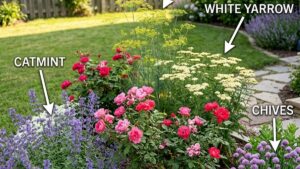
- Plant nectar flowers in drifts: coneflower, joe-pye weed, liatris, zinnia, lantana and aster, grouped rather than dotted about.
- Keep something in bloom from spring to fall, especially late-season flowers for migrating monarchs.
- Skip the insecticides, including systemic treatments, which stay in nectar and pollen.
- Leave a sunny, sheltered corner with a flat stone for basking and a damp patch of sand or mud for drinking.