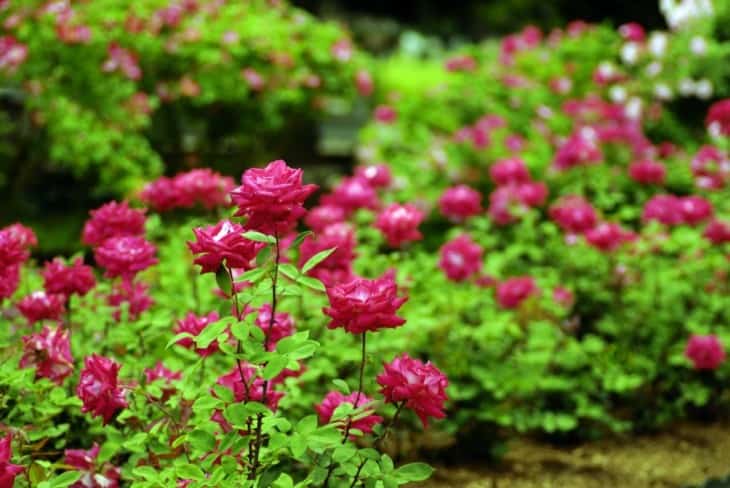
Roses are a classic choice for gifts and gardens, but they’re not the only plants that can deliver that layered, romantic look. If you love the shape of a rose—tight buds, ruffled petals, or a rose-like rosette—there are several flowers and succulents that create a very similar effect.
Contents
Roses (genus Rosa) are widely grown because they come in many forms—from climbers to shrubs—and a huge color range. Depending on the cultivar, they can be grown in containers, trained on supports, or planted as landscape shrubs, which is why they’re so common in nurseries and home gardens.
Rose petals are also used in culinary and fragrance traditions (like rose water for desserts and preserves), though not every garden rose is intended for eating. Colors also carry traditional meanings—red for romance, pink for admiration, yellow for friendship, and white often used for remembrance or sympathy.
Botanically, roses are perennial woody plants, and many are prized for both flower form and fragrance. While they’re iconic, rose care isn’t always simple—some varieties need regular pruning, feeding, and disease management—so choosing a “rose look” plant can be a practical alternative.
Most wild rose species are native to temperate regions of the Northern Hemisphere, with a large share originating in Asia and others from Europe, North America, and northwest Africa. Modern garden roses are the result of extensive breeding and hybridizing, which is why there’s so much variation from one rose to the next.
Below are nine plants that can mimic roses in either bloom shape or rosette structure—some are classic cut flowers, and others are succulents that look like living rosebuds. If you want something different from a traditional rose bush, these options can add a similar visual style with different care needs.
Related: Are Roses Poisonous? | When Are Roses In Season?
1. Peony (Paeonia spp)

The peony is one of the most recognizable “rose-like” flowers thanks to its many-petaled, ruffled blooms. This flowering plant belongs to the Paeonia genus, and many varieties have lush, rounded flowers that can resemble old-fashioned garden roses—just without the thorns.
Peonies can look especially rose-like when they have dense, layered petals that form a rosette or cup shape. Depending on the variety, you’ll see single, semi-double, and fully double flower forms, which can mimic everything from an open rose to a tightly packed, multi-petal bloom.
Color is another reason they’re often compared to roses: peonies commonly bloom in shades of white, blush, pink, coral, and deep red. They’re also popular as cut flowers, but keep in mind their bloom season is relatively short, typically in late spring to early summer (timing varies by climate and cultivar).
Related: Are Peonies Poisonous? | When Are Peonies In Season?
2. Echeveria spp

Many Echeveria succulents are sold as “rose” types because their leaves naturally form a tight, symmetrical rosette. “Blue Rose” is a common trade name for a blue-green, waxy-looking echeveria that resembles a rosebud from above, especially when grown in bright light that keeps the rosette compact.
Even though the rosette silhouette is similar, echeveria “petals” are actually thick leaves. They tend to be broader and more structured than real rose petals, which makes the plant look like a sculpted rose that holds its shape for months.
Care is also very different from roses: echeverias generally need strong light (often several hours of sun), fast-draining soil, and infrequent watering once the potting mix dries. Leaf shape varies a lot by species and cultivar, so not every echeveria will be rounded—many have pointed tips—but the rose-like rosette form is common across the genus.
3. Persian buttercup (Ranunculus asiaticus)
Read our guide to Persian buttercup

Ranunculus—especially Ranunculus asiaticus (Persian buttercup)—is a classic rose look-alike thanks to its tightly layered petals and rounded bloom shape. The flowers sit on sturdy stems and can look like small roses or peonies, which is why they’re a favorite in bouquets and spring containers.
Many popular series and cultivars have dense, multi-petal flowers that create a rose-like “pompon” or cup effect. When the blooms first open, they often look like a compact rosebud; as they mature, they expand into a fuller, ruffled flower.
Like roses, ranunculus comes in a wide range of colors, including white, cream, yellow, orange, red, and multiple shades of pink. For best results, they typically prefer cool-season growing conditions and well-draining soil, since hot weather can shorten bloom time.
4. Ghost Plant (Graptopetalum Paraguayense)

Ghost plant (Graptopetalum paraguayense) is a rosette-forming succulent with pale, bluish-gray leaves that can resemble a dusty rose from above. In brighter light or under mild stress (like cool nights), the leaves may blush pink or yellowish tones, which can make the rosette look even more flower-like.
Compared with true rose petals, ghost plant leaves are thick, smooth, and slightly pointed, with a matte-to-waxy finish. The rosettes often form on trailing stems, creating clusters of “rose heads” that spill over pots or soften rock garden edges.
Ghost plant is commonly grown as a warm-climate outdoor succulent or as a container plant that can be protected from frost. In many areas it does best outdoors in USDA Zones 9–11, while colder regions typically grow it in pots and overwinter it indoors in bright light.
5. Camellia

This evergreen flowering shrub is one of the best-known rose look-alikes, especially when seen in bud and early bloom. Camellia japonica is a popular camellia species, and many cultivars produce full, layered flowers that closely mimic rose form.
Camellias are sometimes called the “rose of winter” because many types bloom from late fall through early spring (exact timing depends on species, cultivar, and climate). Their flowers often open from a neat, rounded bud into a formal double or semi-double bloom with multiple rows of overlapping petals.
Camellias come in whites, pinks, reds, and bicolors, and red varieties can be especially rose-like at a glance. Unlike roses, camellias are shrubs that generally prefer acidic, well-draining soil and some protection from harsh afternoon sun, depending on your region.
Related: 9 Camellia alternatives
6. Mountain Rose (Aeonium aureum, syn. Greenovia aurea)

Mountain rose (Aeonium aureum, sometimes still sold under the older name Greenovia aurea) is famous for looking like a closed rosebud. Its thick, overlapping leaves create a tight, rounded rosette that can look remarkably like a rose—especially when the plant is more “closed” during parts of its growth cycle.
As it opens, the rosette becomes more cup-shaped, with smooth, waxy green leaves arranged in clean layers. The overall effect is less like a soft flower and more like a perfectly formed, living rose carved from green wax.
Like rose petals that get larger toward the outside, the outer leaves are typically longer than the inner leaves, and the rosette can appear slightly concave near the top. When it flowers, it sends up a bloom stalk with yellow flowers from the center, which changes the look from “rosebud” to a more typical succulent bloom display.
7. Roseroot (Rhodiola rosea)

Rhodiola rosea (often listed in older sources as Sedum roseum or Sedum rosea) is sometimes included in rose look-alike lists because its fleshy foliage can create a clustered, layered look. While it doesn’t mimic a rose bloom the way peonies or ranunculus do, the overlapping leaves can give a rosette-like impression in dense growth.
The foliage is typically green, and depending on conditions and the plant’s stage of growth, it can take on warmer tones that read as pinkish or reddish in the garden. That color shift is one reason people compare it to red-toned “rose” succulents, even though it’s a different type of plant with a different overall habit.
Compared with rose bushes, Rhodiola rosea is generally lower maintenance once established, but it still needs the right site—good drainage is important, and performance varies by climate. It’s best thought of as a foliage-based “rose-like” option rather than a true rose-flower substitute.
8. Lisianthus (Eustoma grandiflorum)

Lisianthus (Eustoma grandiflorum) is often mistaken for a rose in arrangements because its blooms can have a similar cup shape and soft, layered petal look. Many varieties open like a rose that’s partway unfurled—showing a delicate, elegant flower without the tightly packed center typical of some rose forms.
Lisianthus flowers typically have fewer petals than very double roses, and the bloom is often more open, with outer petals that flare wider than the inner petals. That shape is similar to many cupped garden roses where the center is visible rather than fully packed.
The petals are thin and rose-like in texture, and you can find them in white, cream, pink, purple, and blue tones—often with bicolor edges (for example, white petals with purple tips). Because they’re widely used as cut flowers, lisianthus is a great pick when you want a “rose look” in bouquets with a slightly different color palette.
9. Green Rose (Aeonium arboreum)

Green rose (green rosette forms of Aeonium arboreum) is another succulent that earns its name from its rose-like rosettes. The glossy green leaves are arranged in a layered spiral, creating the look of a rose made entirely of foliage.
Compared with rose petals, the leaves are thicker and more durable, and many forms have fine edging that can appear slightly hairy or textured up close. When the plant blooms, it can produce showy yellow flower clusters, which is a striking contrast against the green rosettes.
Aeonium arboreum is in the Crassulaceae family, and individual rosettes commonly reach several inches across—often around 6–10 inches in diameter depending on variety and growing conditions. Like many succulents, it prefers bright light and well-draining soil, and it’s often easiest to grow in containers where you can protect it from hard frost.