
Key Facts
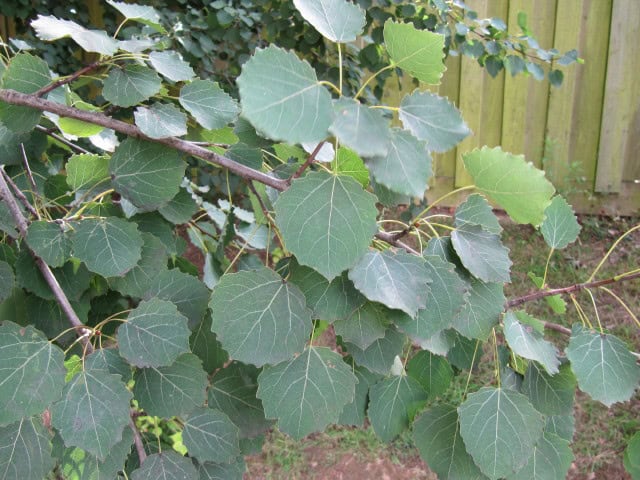
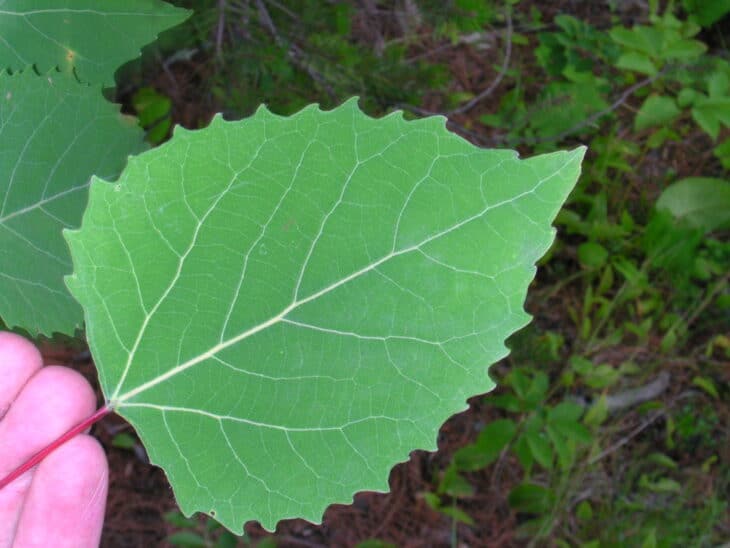
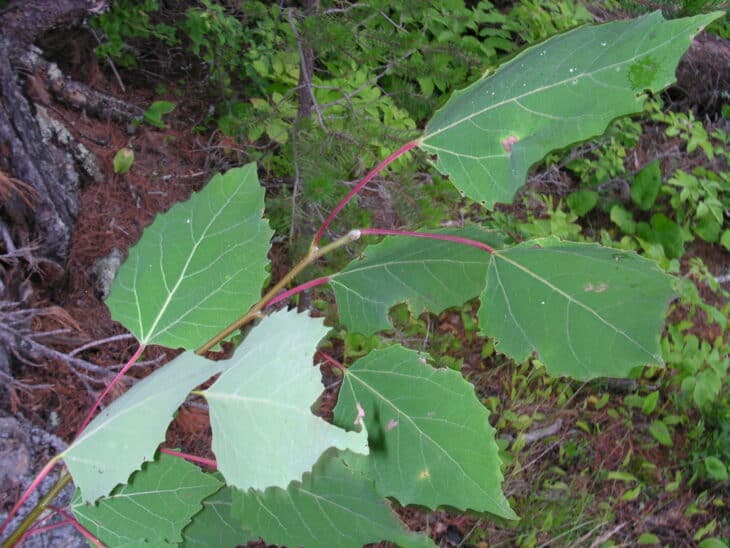
- Deciduous North American tree with leaves that have large, coarse teeth.
- Fast growing and relatively short lived compared with many hardwoods.
- Reproduces by seed and widely by root suckers that form colonies.
- Produces spring catkins before or as leaves emerge.
- Prefers full sun and moist, well drained soils but tolerates a range of soil types.
- Important for wildlife as cover and browse.
- Shallow roots and brittle wood can lead to storm damage and root suckering into lawns and sites nearby.
- Native to eastern and north central North America.
Bigtooth Aspen is a fast growing deciduous North American tree with large, coarse-toothed leaves and early spring catkins, valued for quick shade and wildlife cover but prone to root suckering and brittle wood. Use it where rapid establishment and naturalizing are desired and where regular maintenance can manage suckers and storm-damaged limbs.
Identification
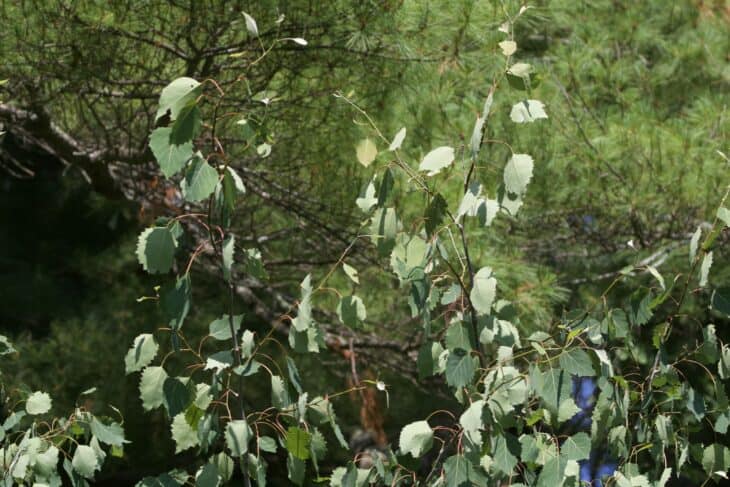
Leaves are round to triangular with conspicuous large teeth along the margins and the tree produces catkins in spring before or as leaves unfurl. Mature trees most often reach about 30 to 50 feet tall with a 20 to 40 foot spread in favorable conditions, forming single trunks or clonal colonies via root suckers.
Best uses and where to grow
Native to eastern and north central North America, Bigtooth Aspen performs best in full sun on moist, well drained soils but tolerates a range from sandy to clay. Hardy roughly to USDA zones 3 to 7, it works well for naturalizing, wildlife cover and quick shade, though shallow roots and brittle wood limit use near structures and high-traffic lawns.
Planting and spacing
Plant when the root ball or soil is workable to reduce transplant stress, typically during the dormant season in many climates. For a specimen allow space to reach its 20 to 40 foot spread, and for clonal screens expect multiple stems from root suckers; avoid tight plantings near foundations and paved areas to limit root competition and sucker intrusion.
Watering and soil
Prefers consistently moist, well drained loam or sandy loam and tolerates heavier soils but will decline on very dry or poorly drained sites. Maintain even moisture through establishment because prolonged drought or standing wet conditions increase dieback and susceptibility to pests and root disease, while erratic water stress accelerates decline in older trees.
After flowering and maintenance
After spring catkins appear there is little special care required other than routine inspection and pruning of dead or cracked branches. Because wood is moderately brittle prune out storm-damaged limbs promptly, and remove crossing branches to reduce breakage. Monitor for suckers and remove them at the root collar to focus growth on the desired trunk or stems.
Controlling spread and suckers
Bigtooth Aspen reproduces by seed and widely by root suckers that form colonies, so it readily naturalizes. Control suckering by removing shoots at their base, cutting roots between parent and unwanted shoots, or installing root barriers where feasible. Avoid planting where suckers would invade lawns, garden beds or paved areas.
Wildlife value and safety
The species provides cover and browse for many wildlife species and is often used in riparian and successional plantings for habitat. It is not widely listed as highly toxic to people or common pets but handling can irritate sensitive skin and large quantities of foliage may upset livestock digestion, so verify local toxicity guidance with poison control or veterinary sources.
Frequently asked questions
- How fast does Bigtooth Aspen grow?
- It is fast growing compared with many hardwoods and commonly reaches 30 to 50 feet at maturity in favorable sites, though lifespan is shorter than many slower-growing hardwoods.
- Is Bigtooth Aspen invasive?
- It is not classed broadly as an invasive species but spreads aggressively by root suckers and can form dense clonal colonies that take over lawns and nearby beds if unmanaged.
- What USDA hardiness zones suit Bigtooth Aspen?
- Generally hardy in USDA zones 3 through 7; check local extension guidance for performance in warmer or drier areas near the upper range.
- Can I plant it near a house or sidewalk?
- Avoid planting too close to foundations, sidewalks or driveways because shallow roots, suckering and brittle limbs increase the risk of lift, intrusion and storm damage.
- Are leaves or bark toxic to pets?
- Populus grandidentata is not widely listed as highly toxic to common pets, but confirm with regional poison control or the ASPCA before concluding safety for specific animals.
Gallery
Related Plants


Mentioned In (7)
Trees
22 Most Common Trees in Maine
The state of Maine is home to many different species of trees, but according to the forestry department, only about…
Trees
30 Most Common Trees in Indiana
In this article, we will talk about some of the most common trees that you will find in Indiana. Some…
Trees
33 Most Common Trees in Virginia
Let's have a look at the 33 most common trees in Virginia. Which of the names of these tree species…
Trees
19 Most common trees in Iowa
Iowa is home to many common trees that are spread throughout the state. Most Iowans live in or near a…

Trees
30 Most common trees in New England
The trees of New England are some of the most beautiful in the world. From maples to sycamores, here are…
Trees
19 Most Common Trees in Pennsylvania
The state of Pennsylvania is located in the Mid-Atlantic, Northeastern, and Appalachian regions of the United States. With a total…
Trees
27 Most Common Trees in Canada
There are many different types of trees in Canada. Some unique to certain regions, others common across the country. This…