
Key Facts
- Grown for its edible immature flower buds.
- Perennial in mild winter areas, often grown as an annual in colder regions.
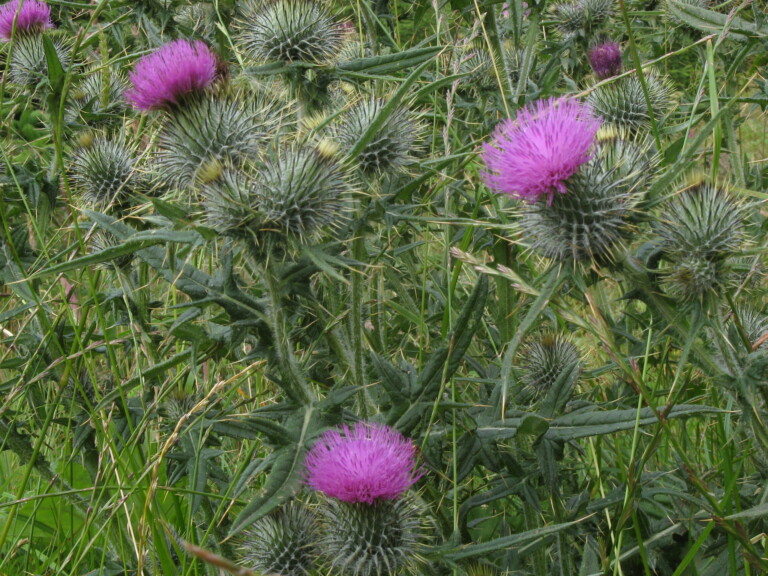
- Produces large thistlelike purple flowers if buds are allowed to open.
- Prefers fertile, well drained soil rich in organic matter.
- Best bud production in full sun, tolerates some afternoon shade in hot climates.
- Usually propagated by seed for annual crops and by crown division or suckers for perennial plantings.
- Plants form a clumping rosette, with flowering stalks often taller than the basal leaves.
Globe artichoke (Cynara cardunculus var. scolymus) is a thistlelike perennial grown for its large edible immature flower buds and striking purple blooms when buds are allowed to open. Plants form a broad clumping rosette with basal leaves and flowering stalks that can tower above the foliage, offering both kitchen value and architectural interest in temperate beds.
Identification
Large silvery green, deeply lobed leaves form a 2 to 4 foot rosette while the edible portion is the immature flower bud. Flower stalks commonly reach 5 to 6 feet and produce thistlelike purple flowers if buds are left to open. The plant spreads as a clump with offsets and suckers over time.
Best uses and where to grow
Grow artichokes as a perennial in mild winter climates or as an annual farther north where winters kill the crown. They perform best in full sun for reliable bud set and tolerate some afternoon shade in hot regions. Use them as a kitchen crop, an architectural border plant, or a focal specimen in sunny beds.
Planting and timing
Start seed for annual production early enough to develop buds by the main bloom window which is typically May through July in temperate regions. Establish crowns or plant divisions in times that allow the plant to develop before bud set. Exact planting dates vary considerably with local climate and cultivar.
Soil light water and spacing
Choose fertile, well drained soil rich in organic matter and aim for a pH near the mid neutral range to support yields. Full sun gives the best bud production while some afternoon shade is acceptable in hot sites. Space plants about 3 to 4 feet apart to allow clumping and good air circulation. Poor drainage leads to crown rot and reduced bud set.
After flowering and maintenance
Harvest immature buds before they begin to open to preserve flavor. If you let buds open you get large purple thistle flowers that add ornamental value. Remove spent flower stalks to tidy the clump and consider dividing crowns or removing offsets to renew vigor or limit spread in the bed.
Propagation and controlling spread
Propagate by seed for annual crops and by crown division or removing suckers to establish perennial clumps. Offsets will increase clump size so remove or replant them to control naturalizing. Division also serves as a reliable way to replace older, declining crowns with fresh productive plants.
Frequently asked questions
- How fast does Globe Artichoke grow?
- Growth rate varies by climate and care. Under good conditions plants typically form a 2 to 4 foot foliage rosette in a single season while flowering stalks can reach 5 to 6 feet when mature.
- Is Globe Artichoke perennial?
- Yes in mild winter areas it behaves as a perennial and can produce for several years. In colder zones it is often grown as an annual because winter cold can kill the crown.
- When do you harvest the buds?
- Harvest immature buds before they begin to open. Primary bud set and harvest commonly occur in late spring to early summer with timing dependent on local climate.
- How far apart should I plant artichokes?
- Space plants about 3 to 4 feet apart to allow room for the clumping habit and to maintain air flow for healthy bud production.
- Can I grow Globe Artichoke in containers?
- Large clumping habit and root space needs make in-ground planting preferable for steady production. Containers may restrict growth and yield unless very large and deeply planted.
- Are artichokes safe for pets?
- Immature buds and leaf tissue are edible and the plant is not listed as toxic to dogs and cats by major resources. Be aware that spiny mature leaves can cause mechanical irritation on contact.
Related Plants


Mentioned In (1)
Plants
6 Plants That Look Like Thistle
Thistles are quite pretty flowering plants that are common in most gardens and can sprout without warning and without planting…